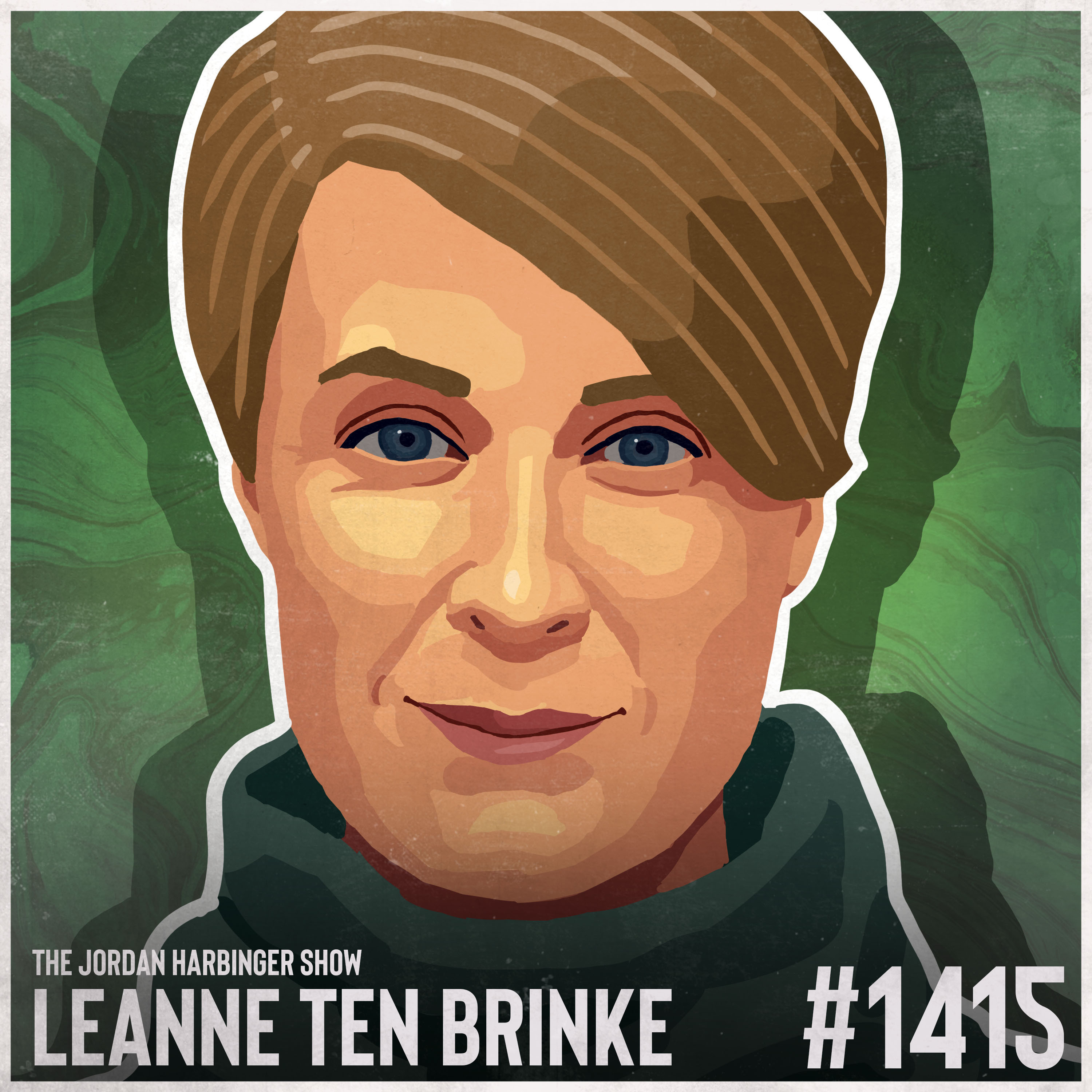
1415: Leanne ten Brinke | The Surprising Antidote to Poisonous People
87 min
Listen through the publisher, then discuss the episode here or arrange an in-person Roundtable. Your city determines where to meet.
Roundtables are designed for groups of four, with a shared subject and room for everyone to speak. Come for discussion, with no dating expectation.
Is ruthlessness the secret to success? Researcher Leanne ten Brinke shares why the science says no — and how to handle the poisonous people around you. Full show notes and resources can be found here: jordanharbinger.com/1415 (https://jordanharbinger.com/1415) What We Discuss with Leanne ten Brinke: Why psychopathy isn’t just for serial killers. callous, manipulative traits exist on a continuum, more like cholesterol than a virus, and depending on the cutoff used, roughly 10 to 20 percent of people show elevated levels without meeting any clinical diagnosis. How poisonous people reveal their priorities. In a point allocation game, those highest in psychopathy chose $500 for themselves and $100 for a stranger over $550 and $300 — sacrificing their own gain just to beat someone else by a wider margin. Why ruthlessness isn’t the secret to success. Leanne’s study of hedge fund managers linked higher psychopathy to making less money year over year, and senators high in dark traits proved less influential — yet under threat, we still mistake confidence for competence. How the poison spreads. People high in these traits deceive us, escalate dominance contests, and pass a zero-sum mindset to those beneath them, turning coworkers into competitors — while HR often stalls on behavior that’s cruel but not explicitly against policy. How to protect yourself when cutting someone off isn’t an option: put boundaries in writing and share them with friends, reward good behavior rather than punishing bad, negotiate by text or email instead of face to face, and remember the 90% who are genuinely decent. And much more... Do you even Reddit, bro? Hims Weightloss: Get a personalized, affordable plan that gets you: hims.com/harbinger (https://www.hims.com/harbinger)
Episode information is provided by the publisher. Listening takes place on the publisher’s service.
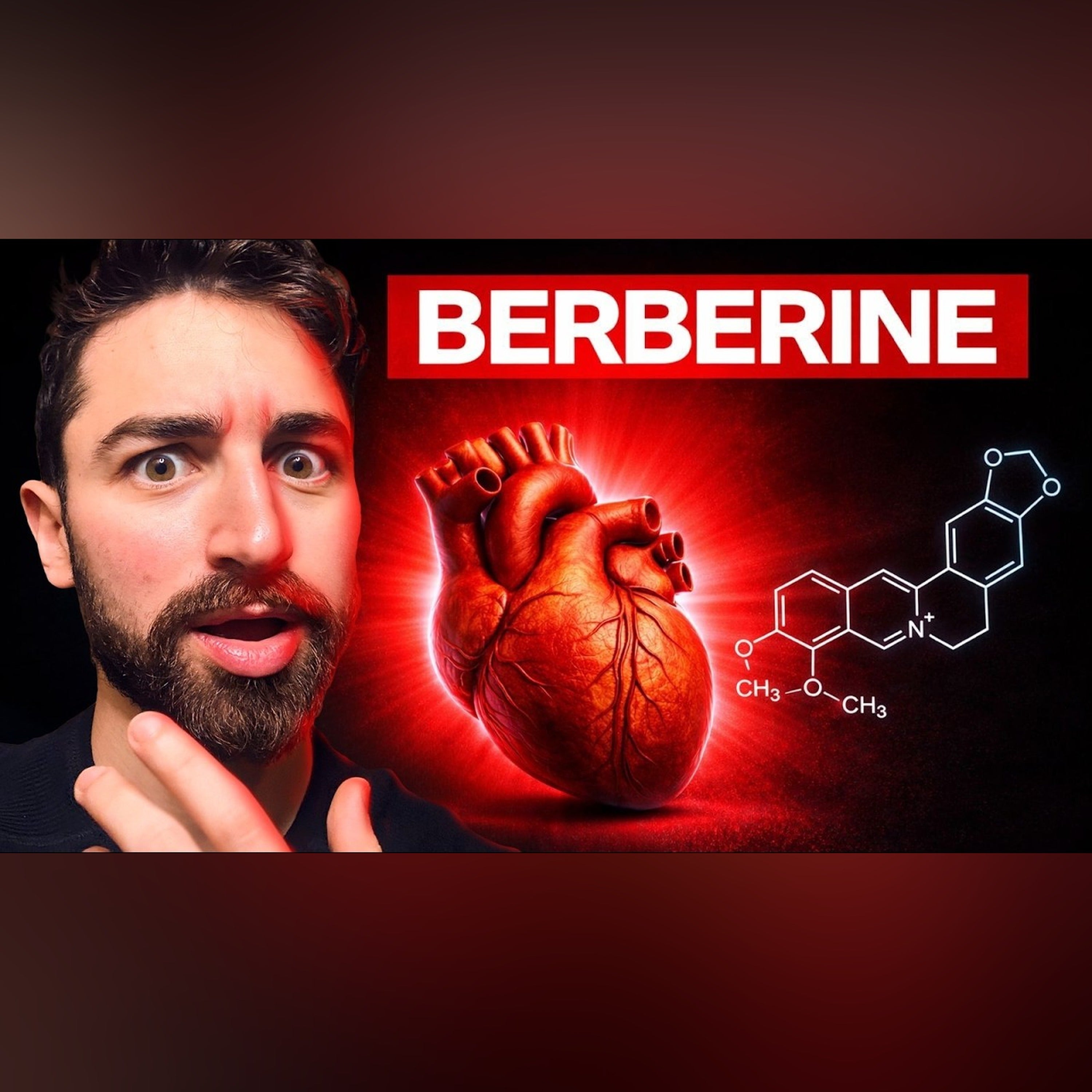
For extra nuances, all the references and early access to data like these, see the best-selling science letter: https://staycuriousmetabolism.substack.com/p/how-berberine-lowers-cholesterol?r=40ekz2 In this video, we unpack the stunning mechanism behind berberine, the yellow plant alkaloid that increases LDL receptors not by starving the liver of cholesterol, but by stabilizing the blueprint that cells use to builds them. It’s a twist in human biochemistry that reshaped how I think about cholesterol manipulation — and it might reshape how you do too. Then I’ll take you inside my own high-stakes N=1 experiment Hundred Health Link: https://www.hundred.com/STAYCURIOUS Discount Code: STAYCURIOUS50 knocks $50 off membership As a scientific advisor at Hundred Health, I candidly hold a small equity stake in the company. I’ve chosen to partner with Hundred Health because I genuinely believe it has the potential to be a disruptive force for good in personalized healthcare. It’s a tool unlike an
This is a PREVIEW of the upcoming episode of Change Agents. The full episode drops tomorrow at 5pm EST Uploaded 18-06-26 On this week's episode of Change Agents, Andy travels to Chase Hughes' new studio to break down how human behavior is manipulated at scale, from bot farms manufacturing fake consensus to the psychological framework Chase calls WOUND that explains why outrage, fear, and loneliness keep us glued to our phones. They dig into why Chase believes the algorithm is less a sinister mastermind and more an engine optimized purely for ad revenue, how think tanks may shape policy more than most people realize, and why Walter Cronkite and Julia Child both have far stranger backstories than anyone learned in school. Andy also gets a tour of Chase's new independent news studio, Station One, built to show audiences the psyops behind the headlines rather than just the headlines themselves. Change Agents is an IRONCLAD Original Firecracker Farm Norwood Sawmills: Learn more about Norwoo
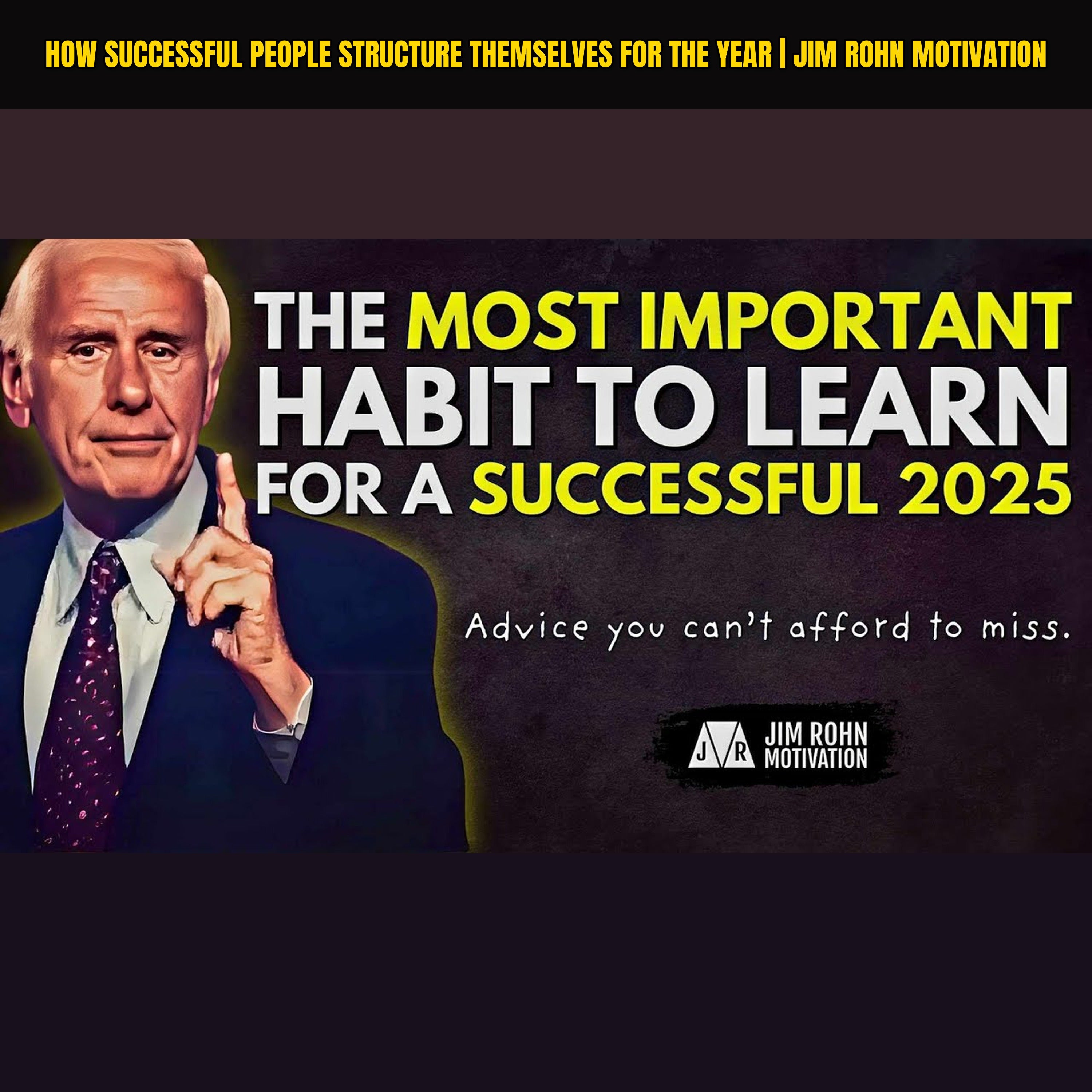
#JimRohnMotivation #JimRohn #JimRohnSpeech In this Jim Rohn Motivation video, discover the transformative power of reframing your perspective. Jim Rohn explains how shifting the lens through which you view life’s challenges can turn setbacks into stepping stones and adversity into opportunities, empowering you to achieve success in every area of life. The Transformative Power of Reframing: A Key Habit of Successful People (Written Version): https://jimrohnmotivation.blog/the-transformative-power-of-reframing-a-key-habit-of-successful-people/ Key Topics From This Motivational Video: - The habit of reframing challenges into opportunities - How successful people turn failures into stepping stones - Emotional agility and managing fear constructively - The ripple effect of reframing on personal and professional growth - Why reframing is essential for creativity and innovation Reframing is more than just positive thinking—it’s a disciplined mindset that allows you to extract lessons from eve
Happy Sunday! Welcome to Heal Squad’s The Sunday Set Up. Life lessons to help you start the week. How much of success comes down to simply showing up? This week, we talk keeping an open mind, taking chances, and recognizing the doors that open along the way. From Olympic athletes appearing on national television alongside Mercedes Moné to performers who keep showing up week after week hoping for their big break, we explore why success isn't always about talent or luck. Sometimes it's about making connections, putting in the effort, and being willing to try without knowing what we'll get in return. We talk knowing when to stop investing time in people who aren't willing to help themselves, and why even experiences that don't work out can teach us something valuable. The takeaway: don't wait for the perfect moment or expect someone else to make things happen. Be willing to take a chance, walk through the doors that open, and remember that half of life is just showing up. Plus, a little b
Today, Mel is taking 58 years of hard-earned life lessons and is packing them into under an hour, to save you some of the time, frustration, and worry it took her to learn them the hard way. In this episode, Mel is fielding real questions from listeners around the world. From making friends and bouncing back from rejection to feeling stuck in life and wondering if it's all going to work out, Mel is sharing the advice she wishes she'd known sooner. And she's not holding back. You'll hear Mel get personal about her own setbacks, and what she's learned about starting over, going after what you want, and trusting yourself when life doesn't go according to plan. You'll learn: -How to stop worrying about the future when nothing feels certain -How to make big life decisions, including whether or not to have kids -How to make new friends as an adult -What to do when you get rejected from your dream job -What to do when a friend ghosts you -How to stop procrastinating and finally follow through
This week on The Necessary Conversation, it's Chad, Haley, and Mary Lou. Bob is still recovering but sent in a video message about Trump calling Putin his friend that we watch together. 🇷🇺 Trump held the first-ever three-way talks with Putin and Xi, called it a "12 out of 10," and produced nothing. Then at a press conference he called Putin his friend — and when asked if Putin is a friend to America, the president of the United States said, "I can't speak to America." That same day, Trump's friend Putin launched massive strikes into Ukraine, hit Poland with two missiles — an act of war against a NATO ally — then struck near a Ukrainian restaurant and drone-bombed the first responders, killing a 7-year-old child and a 20-year-old paramedic. We watch Bob's video and ask Mary Lou: is Russia our friend? 🇨🇳 The House Foreign Affairs Committee revealed Trump's Commerce Department approved nearly 880,000 advanced AI chips for Chinese military-linked companies including Alibaba, Tencent, a
You’re worried your sister-in-law’s weight loss has gone too far. Is it your place to say something, and if so, how? Welcome to Feedback Friday! And in case you didn't already know it, Jordan Harbinger (@JordanHarbinger (https://twitter.com/JordanHarbinger)) and Gabriel Mizrahi (@GabeMizrahi (https://twitter.com/GabeMizrahi)) banter and take your comments and questions for Feedback Friday right here every week! If you want us to answer your question, register your feedback, or tell your story on one of our upcoming weekly Feedback Friday episodes, drop us a line at [email protected]. Now let's dive in! Full show notes and resources can be found here: jordanharbinger.com/1417 (https://jordanharbinger.com/1417) On This Week's Feedback Friday: Your sister-in-law started a weight loss journey with strength training, macros, and a brief stint on a GLP-1. A year later, she’s still shrinking — and looking frail rather than fit. Knowing her past struggles with food, you want to help w
Think “like” and “um” make you sound dumb? Linguist Valerie Fridland reveals why so-called bad English is older — and smarter — than you think. Full show notes and resources can be found here: jordanharbinger.com/1416 (https://jordanharbinger.com/1416) What We Discuss with Valerie Fridland: Why many speech habits we call lazy or uneducated — like saying “ax” for “ask” or “walkin’” for “walking” — actually have centuries of history behind them, from Beowulf and Chaucer to the Salem witch trial transcripts. How language innovation tends to come from people with the least social power — the young, the working class, and women — and how words like “dude,” “y’all,” and even “you” were shaped by speakers outside polite society. What the “never end a sentence with a preposition” rule reveals about the elitist roots of English grammar, and why our irritation with accents or a figurative “literally” says more about how we view the speakers than the speech. Why lower-pitched voices are heard as
Your ex blew up your family and now barely parents. Is full custody the holy grail, or just a faster way for everyone to fail? Welcome to Feedback Friday! And in case you didn't already know it, Jordan Harbinger (@JordanHarbinger (https://twitter.com/JordanHarbinger)) and Gabriel Mizrahi (@GabeMizrahi (https://twitter.com/GabeMizrahi)) banter and take your comments and questions for Feedback Friday right here every week! If you want us to answer your question, register your feedback, or tell your story on one of our upcoming weekly Feedback Friday episodes, drop us a line at [email protected]. Now let's dive in! Full show notes and resources can be found here: jordanharbinger.com/1414 (https://jordanharbinger.com/1414) On This Week's Feedback Friday: You found your wife in bed with the best friend you’d been told never to worry about — then learned it was a five-year affair. Now you have your daughters five days a week, pay support, and watch your eldest sob every Friday. Is i
Schools should explain the purpose of a rule before punishing students for breaking it.
Share your view, then see how readers voted. No sign-in required. This poll is shared across stories.
Do you agree or disagree?
Common Quandary
A Common Quandary to discuss
Another conversation to explore, separate from this news story.
A stray cat adopts you—and starts killing birds. Do you keep feeding it?
A stray cat visits your yard daily and appears to depend on the food you leave out. Neighbors complain that outdoor cats kill birds and say feeding it encourages the problem without taking responsibility for the animal.
Does caring for one visible animal excuse harm to less visible ones?