1416: Valerie Fridland | Arguing for the Good in Bad English
102 min
Listen through the publisher, then discuss the episode here or arrange an in-person Roundtable. Your city determines where to meet.
Roundtables are designed for groups of four, with a shared subject and room for everyone to speak. Come for discussion, with no dating expectation.
Think “like” and “um” make you sound dumb? Linguist Valerie Fridland reveals why so-called bad English is older — and smarter — than you think. Full show notes and resources can be found here: jordanharbinger.com/1416 (https://jordanharbinger.com/1416) What We Discuss with Valerie Fridland: Why many speech habits we call lazy or uneducated — like saying “ax” for “ask” or “walkin’” for “walking” — actually have centuries of history behind them, from Beowulf and Chaucer to the Salem witch trial transcripts. How language innovation tends to come from people with the least social power — the young, the working class, and women — and how words like “dude,” “y’all,” and even “you” were shaped by speakers outside polite society. What the “never end a sentence with a preposition” rule reveals about the elitist roots of English grammar, and why our irritation with accents or a figurative “literally” says more about how we view the speakers than the speech. Why lower-pitched voices are heard as more authoritative and competent, how that puts professional women in a double bind, and what vocal fry — long linked to upper-class British men — is (and isn’t doing to your vocal folds). How to use filler words to your advantage — a well-placed “uh” before a complex term helps listeners remember it — and why, before correcting someone, it’s worth asking if you truly misunderstood them or they just didn’t sound like someone you respect. And much more... Do you even Reddit, bro? Whatnot: Start selling today: whatnot.com/sell (https://www.whatnot.com/sell) AT&T: Get an iPhone 17 Pro for $0: att.com/iphone or visit an AT&T store for details (https://att.com/iphone)
Episode information is provided by the publisher. Listening takes place on the publisher’s service.
Today is Tuesday. Or it will be, soon enough. Uploaded 19-05-26 Nothing significant is happening. No audience. No deadline forcing your hand. It's entirely up to you. And whatever gets done, nobody will remember — including you, ten years from now. That Tuesday is the one. That's the Tuesday that's actually building the career. The high-stakes day with the audience and the visible consequences — anyone rises to that. The situation does the work. What you do when nothing is making you is what the career is actually made of. CHAPTERS 0:00 The Career You Think You Have vs. The One You're Actually Building 4:06 The Tuesdays Most People Treat as Filler 7:34 The Tuesday That Decides More Than Any Other 9:56 Where Your Energy Actually Comes From 11:47 The 3 Things That Compound (Beyond Skill) 17:01 The Waiting Career (Disguised as Wisdom) 22:30 How Habit Removes the Daily Negotiation 25:48 The Private Accounting at the End 29:25 There's No More Significant Day Coming THE 3 THINGS THAT COMPOUN
In 1620, a small ship called the Mayflower crossed the Atlantic carrying English settlers in search of a new life. Their arrival in North America became one of the most familiar stories in American history, but the reality behind the legend was far more complicated than the traditional Thanksgiving tale suggests. Discover why the Pilgrims left England, what their dangerous voyage was really like, and how they survived their first winter in an unfamiliar land. Explore their encounters with the Wampanoag people, the role of Tisquantum, also known as Squanto, and the assistance that helped the struggling settlers establish their colony. Uncover what happened at the harvest gathering of 1621, who actually attended, what was served, and how this event became connected to the modern Thanksgiving holiday. Follow the history beyond the familiar celebration and discover the people, cultural encounters, and historical realities behind the Mayflower story. Boring History for Sleep — Soft stories
Imagine if every big change in our lives came with a whole community stepping up beside us… In this episode, I sit down with Dr Arne Rubinstein, former GP and emergency doctor, founder of the Rites of Passage Institute, and a man who's spent more than 30 years walking young people across the threshold into adulthood. Arne's work began around a fire at his very first men's gathering, listening to a hundred men wrestle with the same handful of wounds. Then in the Emergency Dpt, he kept meeting teenagers who'd pushed it one step too far... kids trying to become adults with nobody there to hold them. He came to believe every young person will go through a rite of passage either way. The question is whether we leave them to create their own, or gather around and help. We talk about why our culture is so good at turning away from the big moments - from first periods to menopause to death - and what opens up when we turn towards them. We explore: Separation, transformation and integration, an
Your free behavior course: https://nci.university/learn Uploaded 10-05-25 Exclusive NCI-4 (Grad School) Vault Release This is Behavioral Magnetics—the hidden force that draws you back to chaos, to patterns you swore you’d outgrow, to people who echo your oldest pain. It’s why peace feels boring. Why CALM makes you anxious. It’s not intuition—it’s your nervous system recycling what it knows. In this Grad School lecture, we uncover the 4 emotional magnets that shape who you trust, chase, or sabotage... even when it hurts. If you've ever said, “Why do I keep doing this?”—this is your answer. Why you're attracted to the wrong people The 4 types of emotional magnets How trauma rewires your compass Why peace can feel like withdrawal How to break free from recycled patterns Please note that the content provided in this broadcast is for informational and educational purposes only and should not be construed as legal, medical, financial, or professional advice. No material in this communication
Microplastics in my Heart Letter: https://staycuriousmetabolism.substack.com/p/microplastics-in-my-heart-its-worse?r=40ekz2 Stanford Fiber RCT, Letter https://staycuriousmetabolism.substack.com/p/fiber-is-good-for-you-is-lazy-science?r=40ekz2 Microbiome Reset, Letter https://staycuriousmetabolism.substack.com/p/how-im-rebuilding-my-microbiomeafter?r=40ekz2 Description: Microplastics are everywhere—in our food, water, and inside our bodies—and avoiding them completely is nearly impossible. In this conversation, I sit down with Dr. Matthew Dunn PhD, a molecular biologist working at the intersection of biotechnology and human health, to unpack what the science actually says about microplastics and how they may be linked to cardiovascular disease, reproductive health issues, and gut inflammation We break down the landmark human data, the animal and cellular studies that help explain possible mechanisms, and dissect the state of the data. We also explore a potential inside-out solution: usi
Have you ever seen pictures of giant stone heads sitting in the grass and wondered how they got there? Get ready for a mind-blowing adventure to one of the most remote places on Earth: Rapa Nui, also known as Easter Island! About 800 years ago, expert Polynesian sailors found this tiny island in the middle of the Pacific Ocean using only the stars and ocean currents to guide them. Once there, they carved nearly a thousand massive stone statues called moai! But here is the biggest surprise: these statues aren't just heads—they have full bodies buried underground! Some weigh as much as 40 cars, and the islanders moved them without wheels, cranes, or metal tools. How did they do it? The local legends say the statues literally walked to their places, waddling side to side with the help of ropes and incredibly smart human engineering! Join Mira and Finn as they uncover the secrets of the moai, find out how the island got its English name from a Dutch captain, and learn all about the giganti
You’re worried your sister-in-law’s weight loss has gone too far. Is it your place to say something, and if so, how? Welcome to Feedback Friday! And in case you didn't already know it, Jordan Harbinger (@JordanHarbinger (https://twitter.com/JordanHarbinger)) and Gabriel Mizrahi (@GabeMizrahi (https://twitter.com/GabeMizrahi)) banter and take your comments and questions for Feedback Friday right here every week! If you want us to answer your question, register your feedback, or tell your story on one of our upcoming weekly Feedback Friday episodes, drop us a line at [email protected]. Now let's dive in! Full show notes and resources can be found here: jordanharbinger.com/1417 (https://jordanharbinger.com/1417) On This Week's Feedback Friday: Your sister-in-law started a weight loss journey with strength training, macros, and a brief stint on a GLP-1. A year later, she’s still shrinking — and looking frail rather than fit. Knowing her past struggles with food, you want to help w
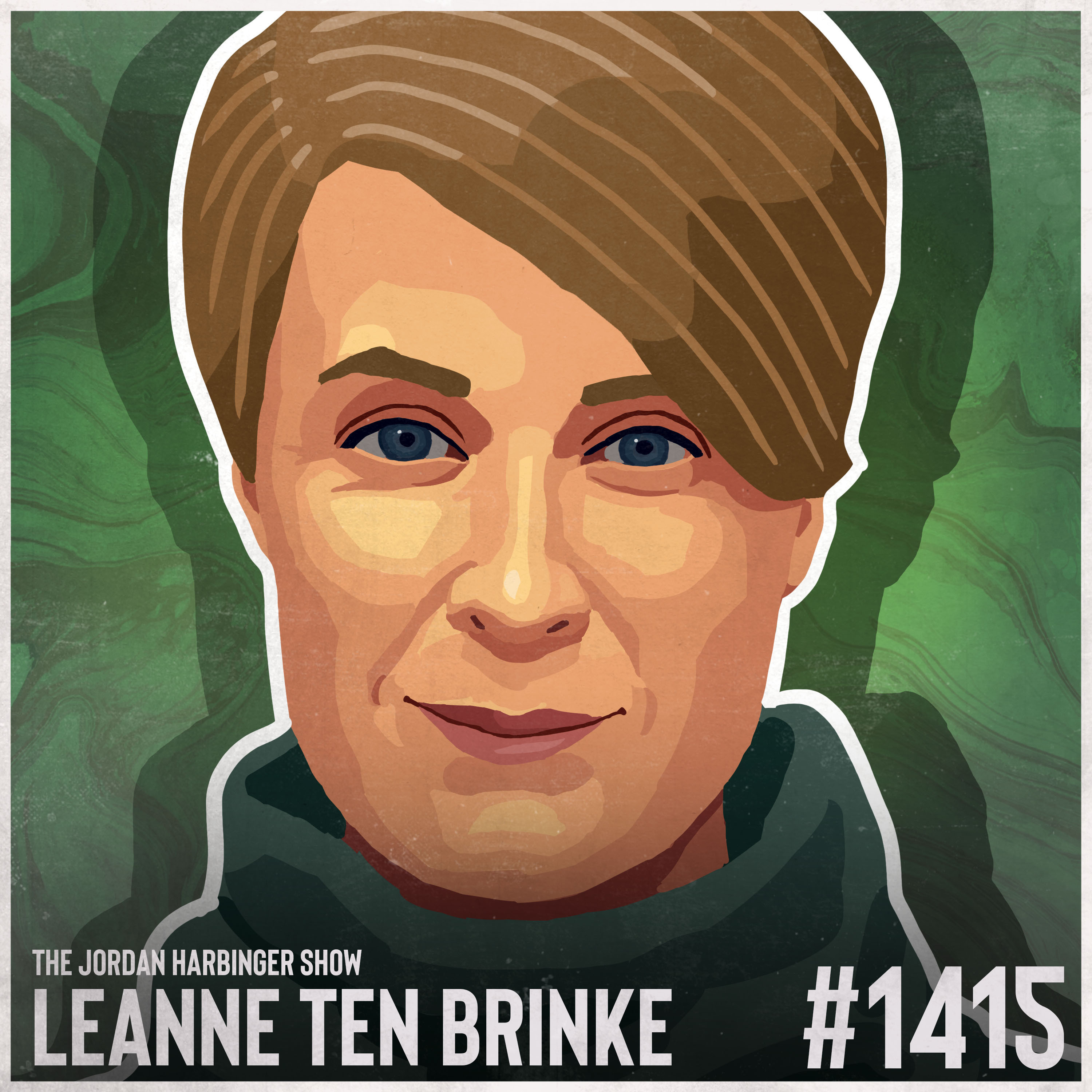
Is ruthlessness the secret to success? Researcher Leanne ten Brinke shares why the science says no — and how to handle the poisonous people around you. Full show notes and resources can be found here: jordanharbinger.com/1415 (https://jordanharbinger.com/1415) What We Discuss with Leanne ten Brinke: Why psychopathy isn’t just for serial killers. callous, manipulative traits exist on a continuum, more like cholesterol than a virus, and depending on the cutoff used, roughly 10 to 20 percent of people show elevated levels without meeting any clinical diagnosis. How poisonous people reveal their priorities. In a point allocation game, those highest in psychopathy chose $500 for themselves and $100 for a stranger over $550 and $300 — sacrificing their own gain just to beat someone else by a wider margin. Why ruthlessness isn’t the secret to success. Leanne’s study of hedge fund managers linked higher psychopathy to making less money year over year, and senators high in dark traits proved le
Your ex blew up your family and now barely parents. Is full custody the holy grail, or just a faster way for everyone to fail? Welcome to Feedback Friday! And in case you didn't already know it, Jordan Harbinger (@JordanHarbinger (https://twitter.com/JordanHarbinger)) and Gabriel Mizrahi (@GabeMizrahi (https://twitter.com/GabeMizrahi)) banter and take your comments and questions for Feedback Friday right here every week! If you want us to answer your question, register your feedback, or tell your story on one of our upcoming weekly Feedback Friday episodes, drop us a line at [email protected]. Now let's dive in! Full show notes and resources can be found here: jordanharbinger.com/1414 (https://jordanharbinger.com/1414) On This Week's Feedback Friday: You found your wife in bed with the best friend you’d been told never to worry about — then learned it was a five-year affair. Now you have your daughters five days a week, pay support, and watch your eldest sob every Friday. Is i
Workers should share in the financial gains from technology that increases their productivity.
Share your view, then see how readers voted. No sign-in required. This poll is shared across stories.
Do you agree or disagree?
Common Quandary
A Common Quandary to discuss
Another conversation to explore, separate from this news story.
An AI wrote the perfect condolence message for you. Is it still from the heart?
Your friend is grieving. You want to reach out, but words fail you, so you ask an AI to draft a condolence message. It expresses exactly what you feel. You revise it and send it without mentioning the help.