7 Newly Discovered Types Of ADHD (After 300,000 brain scans!)
55 min
Listen through the publisher, then discuss the episode here or arrange an in-person Roundtable. Your city determines where to meet.
Roundtables are designed for groups of four, with a shared subject and room for everyone to speak. Come for discussion, with no dating expectation.
What if everything you thought you knew about ADHD was only part of the story? In this episode of ADHD Chatter, world-renowned psychiatrist and brain imaging specialist Dr Daniel Amen reveals his controversial theory of 7 different types of ADHD and explains why understanding these differences could change how we approach treatment. We explore the hidden emotional pain of ADHD, why rejection can feel physically painful, the link between ADHD and suicide, and the grief many experience after a late diagnosis. Chapters: 04:42 The ADHD Type That Feels Rejection Most Deeply 14:55 Advert 15:56 Why Rejection Can Feel Like Physical Pain With ADHD 23:26 The ADHD Types Most Likely to Feel Lonely 28:16 The Heartbreaking Link Between ADHD and Suicide 30:58 What Brain Scans Can't Reveal About ADHD 33:45 The Most Misunderstood Part of ADHD 36:31 The 7 Types of ADHD Explained 39:47 Advert 40:40 How ADHD Can Present Differently in Men and Women 43:43 The Biggest Mistakes People Make Trying to Manage ADHD 45:14 The Hidden Grief That Comes With an ADHD Diagnosis 48:00 If You're Struggling With ADHD, Please Hear This 50:39 A Letter to My Younger Self Visit Daniel’s website https://danielamenmd.com (https://danielamenmd.com/) Discover Neuralis by HealthRestore, a dedicated ADHD Profile designed to help people explore their individual characteristics and strengths through a personalised assessment. Try it through ADHD Chatter here: Order Alex’s book about Rejection Sensitive Dysphoria Producer: Timon Woodward
Episode information is provided by the publisher. Listening takes place on the publisher’s service.
Siren is back to talk all about her slut weekends, throwing wild sex parties, her BBC gangbangs, and her newly poly marriage. Tune in to hear all the details including how her ethically non-monogamous marriage is set up, the huge BBC birthday party she and her husband are planning and what's going to go down, the recent sex party she threw at her house and how she set everything up, who attended, how she got the party started and exactly what went down throughout the night, how and why she's now helping other people throw their own sex parties and how she sets them up for success, how she vets the people who want to attend her parties and what you should and shouldn't do if you want to get invited, her slut weekends and why she enjoys them more than hotel takeovers, what went down during her recent slut weekend with her girlfriend, how they hooked up with 14 guys over three days and exactly what went down, how she and her husband decided to become poly, why she wasn't into it at first
For additional nuances, references, and early access to content, see the StayCurious Metabolism Newsletter: https://staycuriousmetabolism.substack.com/p/hijacking-cancer-to-kill-alzheimers?r=40ekz2 Check out this link to access our StayCurious Brain Health Archives: https://staycuriousmetabolism.substack.com/p/brainhealth Omega-3 and Brain Health Video: https://youtu.be/B-kEn0FukXM To try the Accentrate Omega Max supplement containing LPC-DHA, click here: https://www.fenixhealthscience.com/staycurious Lithium Brain Health Video: https://youtu.be/Hcz0Eyp1LE4 NAD+ Brain Health Letter: https://staycuriousmetabolism.substack.com/p/never-get-alzheimers-disease-the?r=40ekz2 A new paper published in Cell reveals an unexpected biological connection between cancer and Alzheimer’s disease—one that challenges long-held assumptions about both. In this video, MD-PhD neuroscientist Nick Norwitz walks through the actual data behind the study, showing how proteins secreted by cancer cells reduced amyl
Why do we have a tendency to hold on to the past? Why do we continue to let the most painful experiences in our lives not only influence, but control our future? And what would life look like if we were able to let go of the past, shed the stories that we carry with us and move forward in a way that is untethered to the pain? Uploaded 15-10-19 Welcome to the Tony Robbins Podcast. In this episode of the real breakthrough series, we’re diving into a particularly sensitive subject – letting go of past trauma. Some of you may have endured unspeakable trauma in your lives. But as horrific as these experiences were, you may continue to hold on to them, fervently at times. Because letting go can be terrifying. But holding on has profound consequences of its own. We continue to give the pain power. We keep cords of energy tied to the people that hurt us. We even let these terrible experiences become part of our identity. In this episode, you’re going to hear from JoLynn – a woman who endured t
#JimRohnMotivation #JimRohn #JimRohnSpeech In this Jim Rohn Motivation video, we explore how the weekend, often seen as a time to relax, can be leveraged to outwork the competition and make meaningful strides toward your goals. Jim Rohn emphasizes the importance of consistent effort, discipline, and using weekends as a powerful tool for personal development.Key Topics From This Motivational Video: - The weekend as a hidden opportunity for success - How discipline sets you apart - Maintaining momentum over the weekend - Leveraging small efforts for massive results - The importance of outworking the competition Jim Rohn explains that the weekend is not just for rest but an opportunity to move ahead while others coast. He contrasts two types of people—those who switch off after Friday and those who keep pushing forward over the weekend. Rohn urges us to take advantage of this extra time for reading, learning, and working on side projects. Just a few hours of effort over the weekend can ad
This week Kiley and I discuss Carb Cycling while Pregnant. Is it safe to Carb Cycle and break Ketosis during Pregnancy? I also talk about my experience at a conferences were I learned about Carb Cycling and explain the interesting research done on Carb Cycling. I also talk about Ketones for Brain development and more specifically, Ketones for Brain development as an Infant. It’s incredible to know how much significance Ketones for Brain development has as an Infant. Thanks for tuning into my channel. Find more stories and information at my website: www.BozMD.com BOOK-LINK - ANYWAY YOU CAN. AUDIBLE: https://adbl.co/2SLLfS1 PAPERBACK= (Affilate link) https://amzn.to/2Cq1IVC The two most common questions I get ... 1) "Doc, what BLOOD METER do you recommend?" ANSWER: FORACARE: http://bit.ly/2QKGmKG For years my diabetics told me this system was great. I tried several others before I bought this one. I can't count the number of times I have tested my blood only to get an ERROR message from
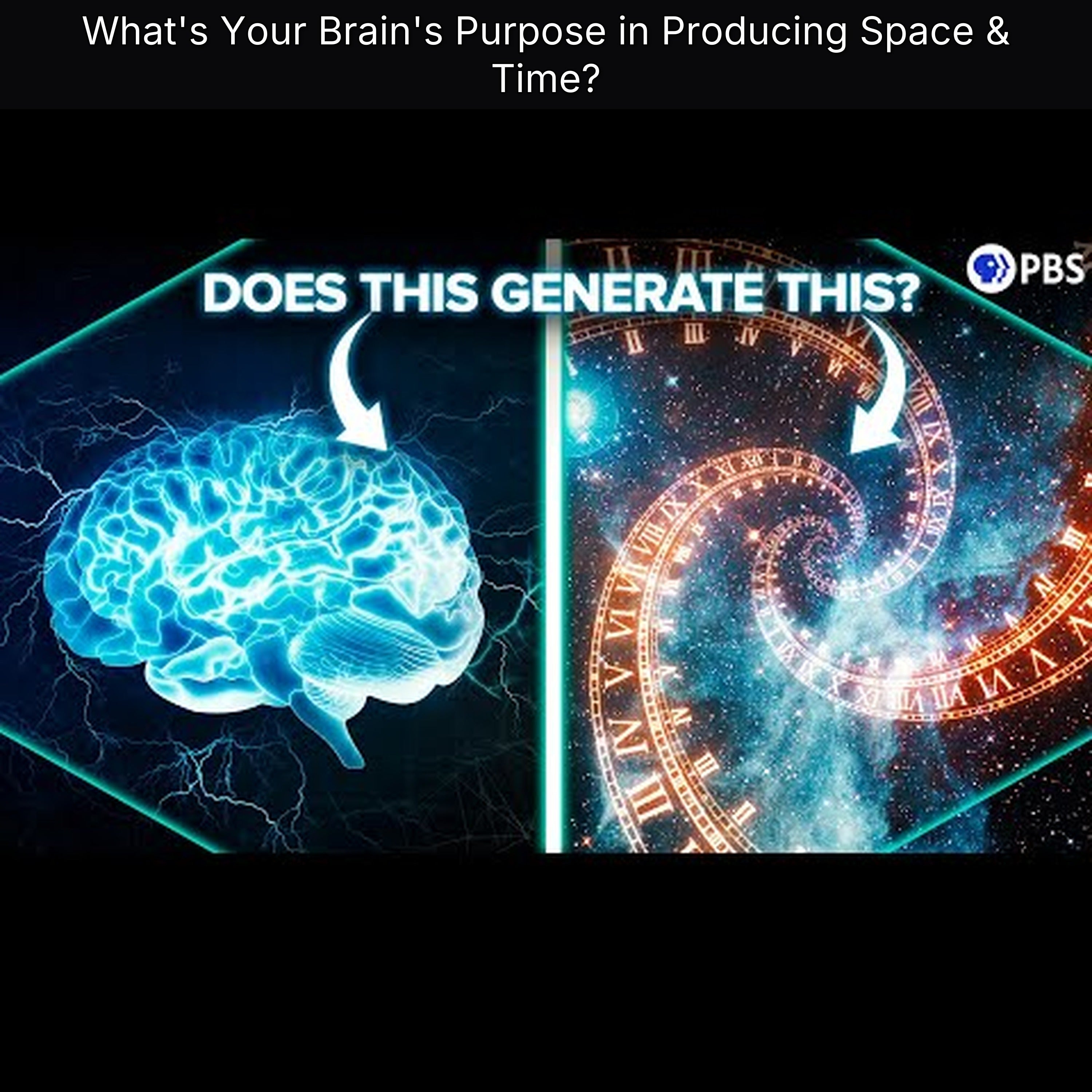
PBS Member Stations rely on viewers like you. To support your local station, go to:http://to.pbs.org/DonateSPACE Sign Up on Patreon to get access to the Space Time Discord! Physics is the business of figuring out the structure of the world. So are our brains. But sometimes physics comes to conclusions that are in direct conflict with concepts fundamental to our minds, such as the realness of space and time. How do we tell who’s correct? Are time and space objective realities or human-invented concepts? Episode Companion Playlist Check out the Space Time Merch Store Search the Entire Space Time Library Here: https://search.pbsspacetime.com/ Hosted by Matt O'Dowd Written by Bahar Gholipour & Matt O'Dowd Post Production by Leonardo Scholzer, Yago Ballarini, Pedro Osinski, Caique Oliveira, Adriano Leal & Stephanie Faria Directed by Andrew Kornhaber Associate Producer: Bahar Gholipour Executive Producers: Eric Brown & Andrew Kornhaber Executive in Charge for PBS: Maribel Lopez Director of P
Think you have ADHD or autism? These surprising signs might make you question everything you thought you knew. From handling criticism without emotional pain to feeling comfortable in social situations, making eye contact and coping with unexpected changes, this episode explores the everyday experiences that can feel completely different for neurodivergent people. But can you really tell whether someone has ADHD or autism by the things they don't struggle with? The answer might surprise you. Chapters: 00:43 When Criticism Doesn't Feel Like a Personal Attack 02:39 Saying No Doesn't Make You Shake With Fear 04:49 Eye Contact Doesn't Make You Uncomfortable 07:10 Socialising Doesn't Feel Like a Performance 10:03 AG1 Advert 11:20 You Don't Need Days to Recover From Socialising 14:07 A Small Change of Plans Doesn't Send You Spiralling 16:44 You've Never Felt Like the Weird One 19:35 Tiimo Advert 24:59 You Don't Feel the Need to Stim to Stay Calm 27:57 The Masking Paradox: When Being Yourself
Paris Hilton is a global icon, entrepreneur, and one of the most recognisable women in the world. But behind the fame and success is a story of childhood trauma, undiagnosed ADHD, and a lifelong struggle to feel understood. In this deeply personal conversation, Paris opens up about her traumatic experiences at Provo Canyon School, the loneliness behind her public persona, masking her true self, and the emotional pain of rejection sensitive dysphoria (RSD). We also explore how ADHD affects her everyday life, what she hopes to teach her children about being different, and the emotional message she would give her younger self. Chapters: 00:00 Growing up with undiagnosed ADHD 03:39 The Trauma Paris Hilton Experienced at Provo Canyon School 06:18 Is Paris Hilton Hiding Her True Self? 08:53 The Hidden Loneliness Behind Paris Hilton’s Fame 10:58 Why Rejection Hurts Paris Hilton So Deeply 13:59 Tiimo: Making Life With ADHD Easier (Sponsored) 15:18 What to Tell Yourself When Rejection Feels Unb
Local communities should have more freedom to set their own rules.
Share your view, then see how readers voted. No sign-in required. This poll is shared across stories.
Do you agree or disagree?
Common Quandary
A Common Quandary to discuss
Another conversation to explore, separate from this news story.
Your family wants an AI to settle an old argument. Would you hand over the group chat?
A recurring family dispute has reached the point where nobody agrees on what was actually said. Your cousin proposes uploading five years of the family group chat to an AI that can reconstruct events, flag contradictions, and recommend a fair resolution. Nearly everyone agrees—but one relative refuses.
Can a tool make a family argument fair without turning intimacy into evidence?