Listen through the publisher, then discuss the episode here or arrange an in-person Roundtable. Your city determines where to meet.
Roundtables are designed for groups of four, with a shared subject and room for everyone to speak. Come for discussion, with no dating expectation.
For men, low libido is often as simple as testosterone injections. For women, desire is much more nuanced. Tanya explains how desire works in a woman's body: it starts in the brain, it's fed by hormones, and we need to feel safe, comfortable, connected, and desired. She shares her own experience of losing her desire during adrenal exhaustion, even with all of those pieces in place. She covers what to check before reaching for a peptide, including pain and dryness, hormones, thyroid, nutrients, and medications. Then she goes through PT-141, kisspeptin, and oxytocin: what each one does, what the research shows, and what the dosing looks like. She also compares them with flibanserin (Addyi), testosterone, and vaginal estrogen, and gives everyday ways to support your libido. MENTIONED IN THIS EPISODE Ostaderm-V: a moisturizer cream with estriol, estradiol, and progesterone for vaginal dryness, in Tanya's Fullscript: [CLICK HERE] (https://us.fullscript.com/s/tpennington-miller/shop/plans/TXVsdGlQYXRpZW50UGxhbi0xOTM2NTk=) Research Peptide Vendor (Research Use Only): For those interested in exploring the peptides discussed in this episode for research purposes only. Please consult a qualified practitioner before starting anything new. DNA Reset for Fat Loss Academy Waitlist: If this series has you thinking seriously about doing the deeper root cause work, including comprehensive lab testing and DNA analysis, this is the work inside the academy. Enrollment opens early 2027. [CLICK HERE] (https://www.nourishtothrive.com/en/dna-reset-for-fat-loss-academy/sign-up) Let’s Stay Connected @tanya.pennington.miller (https://www.instagram.com/tanya.pennington.miller) on Instagram nourishtothrive.com (https://www.nourishtothrive.com/) And don’t forget to follow the show so you never miss an episode. ROOTED IN FAITH. BACKED BY SCIENCE.
Episode information is provided by the publisher. Listening takes place on the publisher’s service.
THE SEARCH FOR THE ULTIMATE RED LIGHT THERAPY IS OVER! After decades of exploring wellness technologies, Michael Jaco sits down with Rob Rene, founder of Exodus Strong, to explore the Red Light+ Total Body Reset system, the science behind red and near-infrared light, and why this technology has become such an important part of their wellness conversation. Rob's remarkable personal journey—including surviving five near-death experiences—inspired his mission to develop practical wellness tools that people can incorporate into their everyday lives. Discover the full-body Red Light+ Mat, designed for convenient 20-minute sessions, and the portable Red Light+ Wand, created for targeted use on areas such as the knees, shoulders, hands, and lower back. Michael and Rob discuss the technology, personal experiences, and how red light therapy may support a daily wellness routine. BLACK FRIDAY–CYBER MONDAY LISTENER EXCLUSIVE! This is your opportunity to explore Exodus Strong's special holiday offe
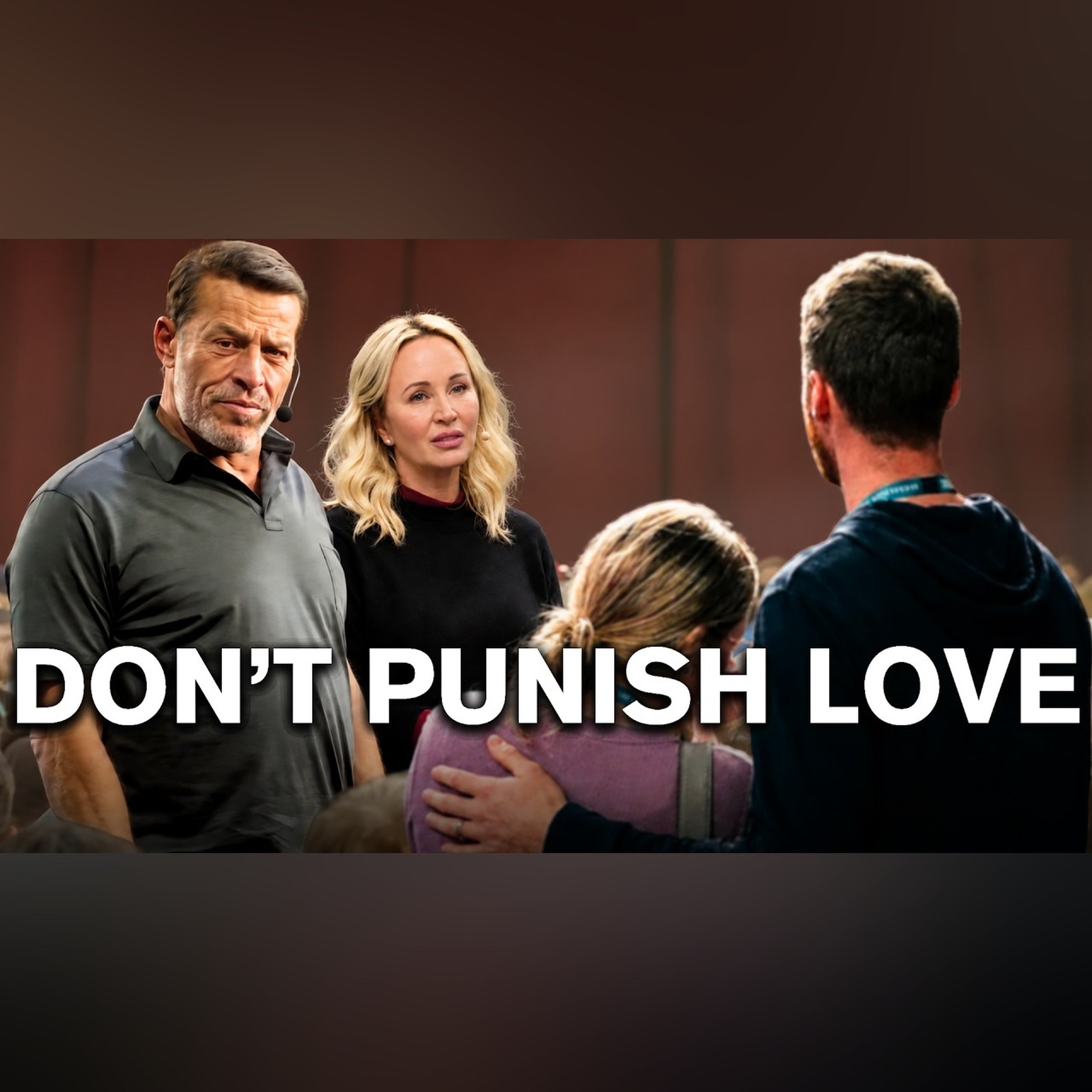
What happens when the person who adores you becomes the one you resent? In this powerful moment from Date With Destiny, Sage and Tony Robbins tag-team to help a married couple, together 12 years with four children find their way back to love. She feels exhausted, resentful, and disconnected, even as her husband does everything to please her. Underneath it all is something so many of us know: a story, a mask, and the old habit of hurting the person who feels safest to hurt. Uploaded 30-09-26 Watch more videos like this How to Let Go of Someone Who Hurt You: https://youtu.be/uOnAtgmhwTI Why You Feel Stuck (And the One Thought Keeping You There): https://youtu.be/WOuj71p1vz0 “Husband Left, Mom Was Dying, I Had a Miscarriage” (All in One Month) | Jillian Turecki: https://youtu.be/G3QqRTasx2o The Biggest Mistake We Make When Trying To Attract Our Soulmate: https://youtu.be/9Zq9Q3YiJ1Q Join my weekly newsletter 'The Mirror' to receive these exclusive videos each week: https://www.sagerobbins
How to kill your current self My private network for entrepreneurs ⚜ - http://newelite.pro/search-for-freedomJoin the Icon Blueprint personal brand academy waitlist - https://t.me/+AwtcD_v7V4xiNGE1My instagram - https://www.instagram.com/jackhopfitness?igsh=aGhqMm1iNHg2eXg5&utm_source=qre Episodes created by entrepreneur and masculinity ace Jack Hopkins for his youtube channel, this podcast is dedicated to helping men rediscover their inner strength and confidence in a society that often promotes feminine values over masculine ones.Follow the podcast for valuable insights, inspiring stories, and practical advice on how to embrace your masculinity, build your confidence, and achieve your goals. Whether you're looking to improve your relationships, advance your entrepreneurial career, or simply feel more confident and capable, Jack has valuable insights that can help you achieve your goals.So, if you're ready to reclaim your masculinity and awaken the beast that lives inside you, follow
A tow truck driver arrived at a rural accident scene after midnight, after the ambulance had left and the police were finishing up. His job was routine: pull the badly damaged sedan from the embankment and take it back to the tow yard. Then, while working alone beside the wreck, he heard a woman’s voice. “Wait.” He searched the car, checked the seats and floorboards, and looked around the accident scene. No one was there. A few minutes later, the voice came again—clearer this time and seemingly from inside the empty vehicle. “Please wait.” He tried to convince himself that exhaustion and the strange acoustics of the roadside had fooled him. Then the next afternoon, someone else at the tow yard heard a woman speaking from the same car. #GhostStories #HauntedCar #SpiritVoice #Paranormal #Spirits #GhostEncounter #Afterlife #Unexplained #ParanormalStory #TheUnexplained Love real ghost stories? Want even more? Want even more? Stay connected with us on social: Instagram: https://www.instagra
Explore how pulling an all-nighter can impact your cognitive function, and find out what happens to your brain when you don't sleep. -- You’re just one history final away from a relaxing spring break. But you still have so much to study! You decide to follow in the footsteps of many students before you, and pull an all-nighter. So, what happens to your brain when you stay up all night? And does cramming like this actually help you prepare for a test? Anna Rothschild explores how a sleepless night impacts your cognitive function. Lesson by Anna Rothschild, directed by Biljana Labović. Animation by Noam Sussman & Ali Kellner, Homework Studio. This video made possible in collaboration with the Bezos Family Foundation Learn more about how TED-Ed partnerships work: https://bit.ly/TEDEdPartner A special thanks to Dr. Mathias Basner, Andrew Fuligni, Adriana Galván, and UCLA Center for the Developing Adolescent who provided information and insights for the development of this video. Support Ou
What if the change you've been asking for is already knocking? In this best-of compilation from The Positive Mindset Podcast, Henry Lawrence pulls together his best moments on letting go and being restored to who God made you to be, from six episodes: the stirring you feel when it's time to change; an opening prayer for anyone who feels alone right now; why your higher self is the true you, the one designed by God, not a more productive version of you; the cast on a broken arm that protected you and now limits you; the old painted-over furniture that gets restored, not rebuilt; why so much of our tiredness comes from holding too tight; how God moves what you couldn't; why everything is borrowed; and choosing to keep believing when it feels like a war broke out around you. It includes a prayer near the start and closes with the rising tide, a blessing and a thank-you. In this episode: • "That stirring is the truth knocking on a door that you've been leaning on with your whole weight." •
Maybe you switched to avocado oil to get away from seed oils, and you've been picking up chips, mayo, and dressings that say they're made with it. A 2026 UC Davis study tested those kinds of products, and most of them did not match what the label said. That raises a fair question about what you can trust at the grocery store. In this episode, Tanya breaks down what the UC Davis study tested and found, what it did not show, including why it did not test bottled avocado oil, and how the industry, the brands, and the Texas Attorney General have responded. She covers what to look for on a label, which chips, mayos, and dressings passed and which failed, where she stands on seed oils and how they are processed, and what she recommends right now, from tallow to olive oil to avocado oil. This episode gives you a clear way to read a label and ask for proof, so you can shop with less guesswork. MENTIONED IN THIS EPISODE Kasandrinos Extra Virgin Olive Oil: The organic, single origin extra virgin
Security measures should be proportionate to demonstrated risks.
Share your view, then see how readers voted. No sign-in required. This poll is shared across stories.
Do you agree or disagree?
Common Quandary
A Common Quandary to discuss
Another conversation to explore, separate from this news story.
Software says a student cheated with AI. Is that enough to fail the paper?
A teacher suspects several essays were written with AI. Detection software marks one student's work as highly likely to be generated, but the software is known to make mistakes and the student denies using it.
How should responsibility be assigned when evidence is powerful but unreliable?