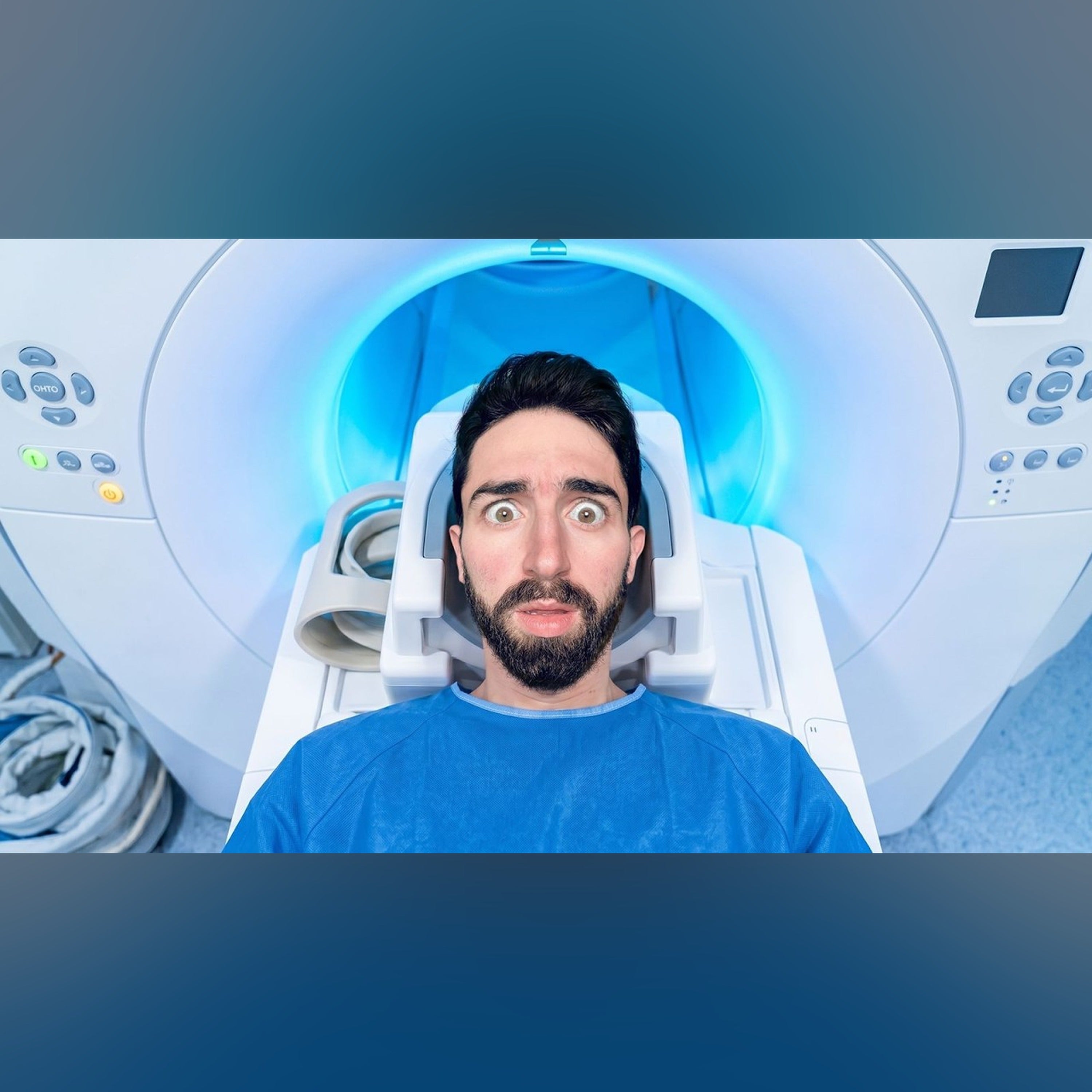
A 22-Year-Old Athlete and a Form Nobody Would Sign (Mystery Case)
Listen through the publisher, then discuss the episode here or arrange an in-person Roundtable. Your city determines where to meet.
Roundtables are designed for groups of four, with a shared subject and room for everyone to speak. Come for discussion, with no dating expectation.
A 22 year old soccer player with no symptoms walks into a clinic for a routine sports physical and walks out being told to quit his sport. Dr. Baraki takes this mystery case blind and we hand him the pieces one at a time: the EKG, the echocardiogram, the cardiac MRI, the Holter monitor, the treadmill test and the genetic panel. Half of them come back completely normal. Play along and commit to an answer before the reveal, because there is a point in this case where most people would change theirs. Then, the discussion about whether the restriction he was given was the right call, what the evidence on that says today compared with what it said for the previous 40 years, and why two doctors looking at the same numbers can reasonably land in different places. And then screening. Should an EKG should be mandatory for amateur athletes? All this and more, on this episode of the Barbell Medicine Podcast. Timestamps 00:00 A 22-year-old needs a form signed 02:16 The history and exam 05:49 Reading his EKG 13:13 The echo and the MRI 18:26 The rest of the workup, and Austin commits to a diagnosis 24:02 Patient course 27:54 What his care team decided 29:45 How much the heart changes with training 36:45 A second case that went differently 41:52 Should a finding like this end a career 45:47 Should an EKG be mandatory for amateur athletes 55:59 What would actually move the needle Resources Free Vital 5 Action Plan (https://www.barbellmedicine.com/vital-5-action-plan/) Barbell Medicine coaching and templates: https://www.barbellmedicine.com Get early access, ad-free listening, and exclusive content here: https://barbellmedicine.supercast.com/ 1. Marques JP, Freitas A, Abecasis J. Beware of regression of electrocardiographic abnormalities on detraining: it may not always mean "athlete's heart." Rev Port Cardiol (Engl Ed). 2021;40(10):801.e1-801.e6. doi:10.1016/j.repce.2021.10.012. PMID 34857120. 2. Pelliccia A, Maron BJ, Culasso F, et al. Clinical significance of abnormal electrocardiographic patterns in trained athletes. Circulation. 2000;102(3):278-284. doi:10.1161/01.cir.102.3.278. PMID 10899089. 3. Papadakis M, Carre F, Kervio G, et al. The prevalence, distribution, and clinical outcomes of electrocardiographic repolarization patterns in male athletes of African/Afro-Caribbean origin. Eur Heart J. 2011;32(18):2304-2313. doi:10.1093/eurheartj/ehr140. PMID 21613263. 4. Schnell F, Riding N, O'Hanlon R, et al. Recognition and significance of pathological T-wave inversions in athletes. Circulation. 2015;131(2):165-173. doi:10.1161/CIRCULATIONAHA.114.011038. PMID 25583053. 5. Olivotto I, Oreziak A, Barriales-Villa R, et al. Mavacamten for treatment of symptomatic obstructive hypertrophic cardiomyopathy (EXPLORER-HCM): a randomised, double-blind, placebo-controlled, phase 3 trial. Lancet. 2020;396(10253):759-769. doi:10.1016/S0140-6736(20)31792-X. PMID 32871100. 6. Maron MS, Masri A, Nassif ME, et al. Aficamten for symptomatic obstructive hypertrophic cardiomyopathy. N Engl J Med. 2024;390(20):1849-1861. doi:10.1056/NEJMoa2401424. PMID 38739079. 7. Myers J, Prakash M, Froelicher V, Do D, Partington S, Atwood JE. Exercise capacity and mortality among men referred for exercise testing. N Engl J Med. 2002;346(11):793-801. doi:10.1056/NEJMoa011858. PMID 11893790. 8. Ommen SR, Mital S, Burke MA, et al. 2020 AHA/ACC guideline for the diagnosis and treatment of patients with hypertrophic cardiomyopathy: a report of the American College of Cardiology/American Heart Association Joint Committee on Clinical Practice Guidelines. Circulation. 2020;142(25):e558-e631. doi:10.1161/CIR.0000000000000937. PMID 33215931. 9. Lopes LR, Ho CY, Elliott PM. Genetics of hypertrophic cardiomyopathy: established and emerging implications for clinical practice. Eur Heart J. 2024;45(30):2727-2734. doi:10.1093/eurheartj/ehae421. PMID 38984491. 10. Ingles J, Goldstein J, Thaxton C, et al. Evaluating the clinical validity of hypertrophic cardiomyopathy genes. Circ Genom Precis Med. 2019;12(2):e002460. doi:10.1161/CIRCGEN.119.002460. PMID 30681346. 11. Pelliccia A, Maron BJ, Spataro A, Proschan MA, Spirito P. The upper limit of physiologic cardiac hypertrophy in highly trained elite athletes. N Engl J Med. 1991;324(5):295-301. doi:10.1056/NEJM199101313240504. PMID 1824720. 12. Spirito P, Pelliccia A, Proschan MA, et al. Morphology of the "athlete's heart" assessed by echocardiography in 947 elite athletes representing 27 sports. Am J Cardiol. 1994;74(8):802-806. doi:10.1016/0002-9149(94)90439-1. PMID 7942554. 13. Powers JM, Lim MY, Achebe MO, et al. American Society of Hematology 2026 guidelines for diagnosis of iron deficiency. Blood Adv. Published online August 24, 2026. doi:10.1182/bloodadvances.2025015950. PMID 42747316. 14. Basavarajaiah S, Boraita A, Whyte G, et al. Ethnic differences in left ventricular remodeling in highly-trained athletes: relevance to differentiating physiologic left ventricular hypertrophy from hypertrophic cardiomyopathy. J Am Coll Cardiol. 2008;51(23):2256-2262. doi:10.1016/j.jacc.2007.12.061. PMID 18534273. 15. Riding NR, Sharma S, McClean G, Adamuz C, Watt V, Wilson MG. Impact of geographical origin upon the electrical and structural manifestations of the black athlete's heart. Eur Heart J. 2019;40(1):50-58. doi:10.1093/eurheartj/ehy521. PMID 30169663. 16. Kebed KY, Bos JM, Anavekar NS, Mulvagh SL, Ackerman MJ, Ommen SR. Hypertrophic cardiomyopathy, athlete's heart, or both: a case of hypertrophic cardiomyopathy regression. Circ Cardiovasc Imaging. 2015;8(7):e003312. doi:10.1161/CIRCIMAGING.115.003312. PMID 26162782. 17. Pelliccia A, Maron BJ, De Luca R, Di Paolo FM, Spataro A, Culasso F. Remodeling of left ventricular hypertrophy in elite athletes after long-term deconditioning. Circulation. 2002;105(8):944-949. doi:10.1161/hc0802.104534. PMID 11864923. 18. Ommen SR, Ho CY, Asif IM, et al. 2024 AHA/ACC/AMSSM/HRS/PACES/SCMR guideline for the management of hypertrophic cardiomyopathy: a report of the American Heart Association/American College of Cardiology Joint Committee on Clinical Practice Guidelines. Circulation. 2024;149(23):e1239-e1311. doi:10.1161/CIR.0000000000001250. PMID 38718139. 19. Lampert R, Ackerman MJ, Marino BS, et al. Vigorous exercise in patients with hypertrophic cardiomyopathy. JAMA Cardiol. 2023;8(6):595-605. doi:10.1001/jamacardio.2023.1042. PMID 37195701. 20. Pelliccia A, Caselli S, Pelliccia M, et al. Clinical outcomes in adult athletes with hypertrophic cardiomyopathy: a 7-year follow-up study. Br J Sports Med. 2020;54(16):1008-1012. doi:10.1136/bjsports-2019-100890. PMID 32532845. 21. Kim JH, Baggish AL, Levine BD, et al. Clinical considerations for competitive sports participation for athletes with cardiovascular abnormalities: a scientific statement from the American Heart Association and American College of Cardiology. Circulation. 2025;151(11):e716-e761. doi:10.1161/CIR.0000000000001297. PMID 39973614. 22. Corrado D, Basso C, Pavei A, Michieli P, Schiavon M, Thiene G. Trends in sudden cardiovascular death in young competitive athletes after implementation of a preparticipation screening program. JAMA. 2006;296(13):1593-1601. doi:10.1001/jama.296.13.1593. PMID 17018804. 23. Harmon KG, Zigman M, Drezner JA. The effectiveness of screening history, physical exam, and ECG to detect potentially lethal cardiac disorders in athletes: a systematic review/meta-analysis. J Electrocardiol. 2015;48(3):329-338. doi:10.1016/j.jelectrocard.2015.02.001. PMID 25701104. 24. Baggish AL, Hutter AM, Wang F, et al. Cardiovascular screening in college athletes with and without electrocardiography: a cross-sectional study. Ann Intern Med. 2010;152(5):269-275. doi:10.7326/0003-4819-152-5-201003020-00004. PMID 20194232. 25. Drezner JA, Owens DS, Prutkin JM, et al. Electrocardiographic screening in National Collegiate Athletic Association athletes. Am J Cardiol. 2016;118(5):754-759. doi:10.1016/j.amjcard.2016.06.004. PMID 27496294. 26. Williams EA, Pelto HF, Toresdahl BG, et al. Performance of the American Heart Association (AHA) 14-point evaluation versus electrocardiography for the cardiovascular screening of high school athletes: a prospective study. J Am Heart Assoc. 2019;8(14):e012235. doi:10.1161/JAHA.119.012235. PMID 31286819. 27. Steinvil A, Chundadze T, Zeltser D, et al. Mandatory electrocardiographic screening of athletes to reduce their risk for sudden death: proven fact or wishful thinking? J Am Coll Cardiol. 2011;57(11):1291-1296. doi:10.1016/j.jacc.2010.10.037. PMID 21392644. 28. Halkin A, Steinvil A, Rosso R, Adler A, Rozovski U, Viskin S. Preventing sudden death of athletes with electrocardiographic screening: what is the absolute benefit and how much will it cost? J Am Coll Cardiol. 2012;60(22):2271-2276. doi:10.1016/j.jacc.2012.09.003. PMID 23194938. 29. Marijon E, Tafflet M, Celermajer DS, et al. Sports-related sudden death in the general population. Circulation. 2011;124(6):672-681. doi:10.1161/CIRCULATIONAHA.110.008979. PMID 21788587. 30. Finocchiaro G, Papadakis M, Robertus JL, et al. Etiology of sudden death in sports: insights from a United Kingdom regional registry. J Am Coll Cardiol. 2016;67(18):2108-2115. doi:10.1016/j.jacc.2016.02.062. PMID 27151341. 31. Harmon KG, Drezner JA, Maleszewski JJ, et al. Pathogeneses of sudden cardiac death in National Collegiate Athletic Association athletes. Circ Arrhythm Electrophysiol. 2014;7(2):198-204. doi:10.1161/CIRCEP.113.001376. PMID 24585715. 32. Drezner JA, Rao AL, Heistand J, Bloomingdale MK, Harmon KG. Effectiveness of emergency response planning for sudden cardiac arrest in United States high schools with automated external defibrillators. Circulation. 2009;120(6):518-525. doi:10.1161/CIRCULATIONAHA.109.855890. PMID 19635968. 33. Grubic N, Hill B, Phelan D, Baggish A, Dorian P, Johri AM. Bystander interventions and survival after exercise-related sudden cardiac arrest: a systematic review. Br J Sports Med. 2022;56(7):410-416. doi:10.1136/bjsports-2021-104623. PMID 34853034. Our Sponsors:
Episode information is provided by the publisher. Listening takes place on the publisher’s service.
Listen at the source ↗