Listen through the publisher, then discuss the episode here or arrange an in-person Roundtable. Your city determines where to meet.
Roundtables are designed for groups of four, with a shared subject and room for everyone to speak. Come for discussion, with no dating expectation.
A historic Democratic landslide delivers a stunning rebuke to President Trump, flipping control of both houses of Congress and raising questions about the future of his presidency and America's role in the world. Former Obama White House Chief of Staff Rahm Emanuel joins Christiane to discuss what comes next and whether Democrats can deliver on their sweeping victory. Then, as the world weighs the implications of the midterms, Barbados Prime Minister Mia Mottley tells Christiane what the results could mean for America's Caribbean neighbors, climate action and global leadership. In North Korea, a curious new sign of apparent prosperity: barbecue restaurants in a country where millions struggle to afford food. CNN's Will Ripley investigates. Plus, Israel's election ends in deadlock, but Arab-led parties emerge with a record number of seats. Israeli Arab political leader Yousef Jabareen tells Christiane whether they could hold the key to ending Benjamin Netanyahu's grip on power. And from the archives, another political earthquake: the fall of the Berlin Wall in 1989, and the economic anxieties that followed for East Germans adjusting to life after communism. Air date: November 7, 2026 Guests: Rahm Emanuel, former White House Chief of Staff and U.S. Ambassador to Japan Mia Mottley, Prime Minister of Barbados Yousef Jabareen, Israeli Arab political leader
Episode information is provided by the publisher. Listening takes place on the publisher’s service.
Is the Republican Party heading for a major reckoning in 2028? Dave Rubin joins The Chicks on the Right for a brutally honest conversation about Trump's final two years, the future of the GOP, and the growing divisions threatening conservatives. Dave weighs in on the Republican Party's recent election losses, whether JD Vance, Marco Rubio, or Ron DeSantis can carry Trump's agenda forward, and why he's increasingly concerned about the political direction of America. The conversation heats up as Dave takes on Nick Fuentes, the rise of extremist voices on the right, and the socialist movement gaining influence within the Democratic Party. He also discusses radical Islamism, antisemitism, the dangers of online outrage, and why he believes Western civilization faces serious challenges. Plus, with cyberattacks, banking disruptions, and nationwide outages raising concerns, Dave shares his thoughts on whether Americans should be preparing for more chaos. And don't miss the lighter side of Dave
A wave of major technology outages is raising troubling questions about America's cybersecurity, aging infrastructure, and readiness for a new era of artificial intelligence. Are these isolated technical failures, or warning signs of a much larger national security problem? John Solomon and Amanda Head welcome Ohio Congressman and former Army Ranger Warren Davidson, who discusses recent disruptions involving the FAA, Microsoft, and other critical systems. Davidson calls for greater transparency from government agencies and technology companies, questions whether America's infrastructure is adequately protected against emerging cyber threats, and examines how artificial intelligence could be used both to strengthen defenses and exploit vulnerabilities. The conversation also turns to immigration and national security, with Davidson raising concerns about individuals who entered the country illegally, potential gaps in government screening systems, and the surveillance powers used to moni
November 22, 2026; 8am: Yesterday, President Trump posted a photo of him and Putin shaking hands with the caption “my friend.” This comes after his Friday press conference, where President Trump praised both Xi, and Putin but called long-time ally Canada “emboldened.” According to a former Canadian official, Canada has been emboldened to write off America in the Trump era. Chrystia Freeland, Former Deputy Prime Minister and Minister of Finance of Canada, and Anne Applebaum, Staff Writer for The Atlantic and Pulitzer Prize-winning historian, join “The Weekend” to discuss. For more, follow us on social media Bluesky: @theweekendmsnow.bsky.social Instagram: @theweekendmsnow TikTok: @theweekendmsnow Hosted by Simplecast, an AdsWizz company.
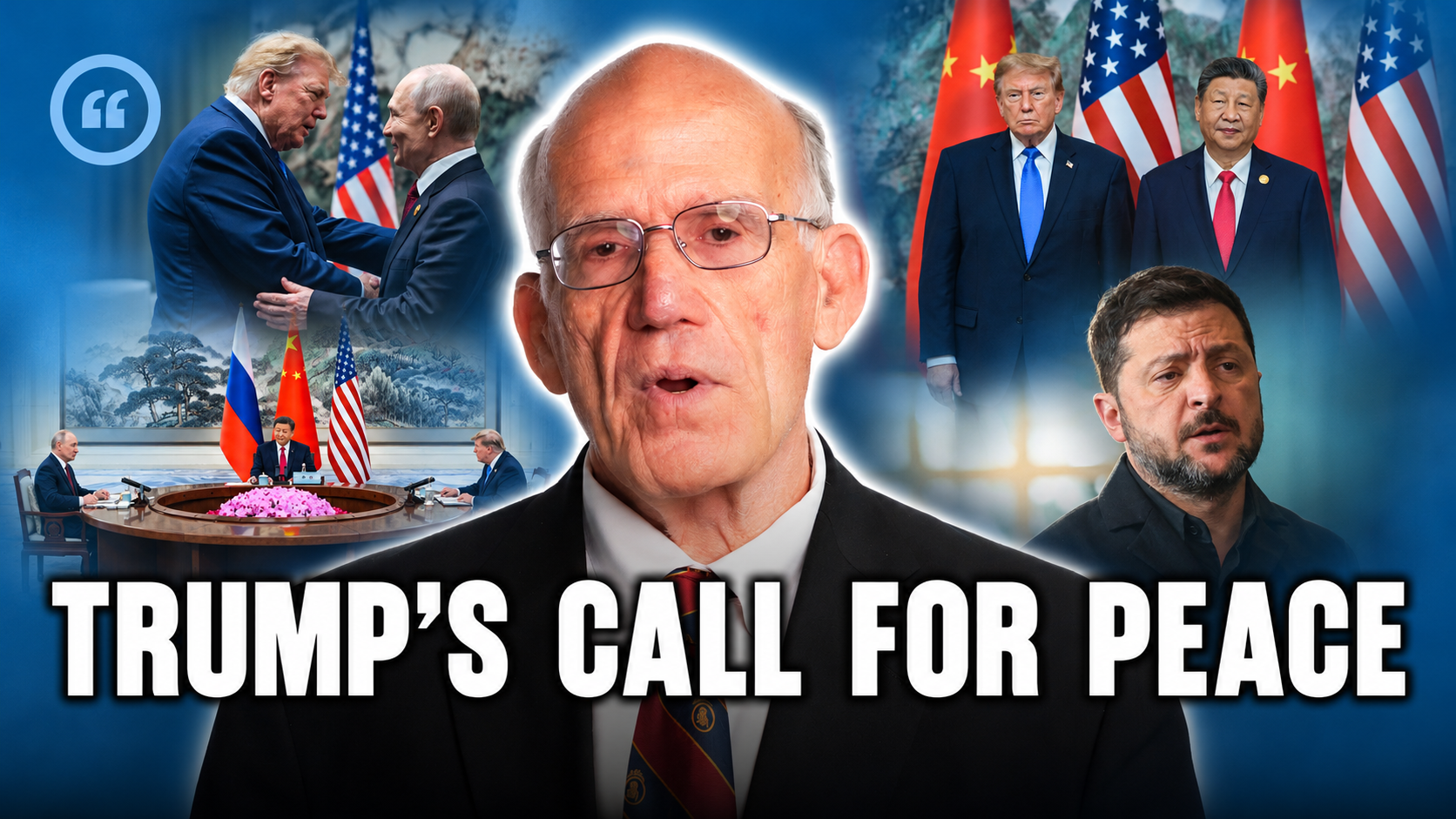
President Donald Trump's first ever trilateral summit with Vladimir Putin and Xi Jinping raises questions about the future of the war in Ukraine and whether a peace agreement could finally be within reach. Victor Davis Hanson and Sami Winc examine the summit on today’s edition of “Victor Davis Hanson: In His Own Words,” discussing Russia's declining influence, potential territorial concessions in Ukraine, and Europe's frustration over Trump's peace negotiations. Hanson criticizes Hillary Clinton's attacks on Trump's diplomacy; he also argues that European leaders have weakened their influence by neglecting defense spending and relying on American military protection. They discuss Elon Musk's shifting political allegiances, and Hanson warns that distancing himself from MAGA may not protect him from Democrat investigations. They also discuss the potential economic benefits of artificial intelligence and the challenges facing Hakeem Jeffries as Democrats prepare to take control of the Hou
Hey everybody, Tom Bilyeu here. On today’s episode of Impact Theory, we’re taking on a topic that’s got the whole world holding its breath: the escalating crisis between the United States and Iran. As tensions ratchet up, we’re asking the tough questions—how did we get stuck in this “escalation trap,” and what does it mean for America’s global leverage, our economy, and our very sense of security? The conversation focused on why the traditional idea of “strategy” might be failing policymakers, using powerful analogies—like chess versus roulette—to show how doubling down in conflict can spiral out of control. We’ll break down the risks of tactical “wins” that create even bigger crises, the real leverage Iran holds with control of the Strait of Hormuz, and the mounting pressure on President Trump as political support erodes and legacy hangs in the balance. A key theme that emerged is what happens when military might runs into decentralized opposition, and why high-stakes gambles—like the
November 21, 2026; 12pm: In almost every presidency, there comes a time when the president turns their attention overseas – usually after some sort of political defeat. President Trump’s attention is definitely overseas, but for personal reasons. Ruth Ben-Ghiat points out the red flags of Trump cozying up to notorious Strongmen; Democrats have never held this much power before and it’s not just in Congress, it’s at the state level too. State Rep.-elect Allie Phillips (D-TN) and State Senator-elect Robyn Vining (D-WI) explain how they will set their most important agenda items into action; MS NOW’s Rachel Maddow continues her discussion with Jacob Soboroff about her brand new book “The Department of Fate,” Stephen Miller’s rise, and much more. Hosted by Simplecast, an AdsWizz company.
A summit like no other. In a political first, President Trump sat down with President Putin and President Xi for an unprecedented trilateral meeting. He insists they’re all friends, but what does this mean for their conflicting agendas in Iran and Ukraine? Former Biden adviser Rush Doshi joins Christiane Amanpour to assess what was, or wasn’t, achieved. Then, in a landmark case, the International Court of Justice has found Myanmar guilty of committing genocide against the minority Rohingya population. The U.N. High Commissioner for Human Rights, Volker Türk, joins the show to discuss why this moment is so important. Plus, CNN’s Clare Sebastian takes us underground to look at how Ukraine’s innovative operation is helping the country make substantial gains. And best-selling author Elizabeth Strout discusses her new book ‘The Things We Never Say’, exploring the political and personal tensions of America that emerged during the 2024 presidential election. From the archive, my report from U
Former USAID Administrator Andrew S. Natsios discusses the Trump administration’s dismantling of USAID and why he argues the consequences could threaten Americans’ health, safety and prosperity. Natsios, author of “Guns Are Not Enough: Foreign Aid in the National Interest,” explains why foreign aid remains a critical tool of US soft power. Also on today’s show: British model and actress Twiggy reflects on her journey from working-class London to becoming a defining face of the 1960s and a British cultural icon, as chronicled in a new documentary by Sadie Frost. Olivia Harrison joins Walter Isaacson to discuss “The Third Eye: Early Photographs by George,” a collection of more than 200 photographs and film stills from her husband George Harrison’s personal archives, and what they reveal about the late Beatle’s personality and artistic curiosity.
President Trump’s unprecedented summit with Chinese President Xi Jinping and Russian President Vladimir Putin signals a potential shift in the US-led world order. Georgetown University professor and former Biden National Security Council China advisor Rush Doshi joins the show. Also on today's show: New York Times staff writer Ronen Bergman on reports that Trump is considering fresh strikes on Iran amid growing pressure from Israeli Prime Minister Benjamin Netanyahu UN High Commissioner for Human Rights Volker Türk on the International Court of Justice’s ruling that Myanmar committed genocide against the Rohingya “Rebooting the Machines” author and incoming Spelman College President Dr. Ayanna Howard on the ethics of rapidly evolving artificial intelligence
A workable temporary compromise is often better than delaying all action.
Share your view, then see how readers voted. No sign-in required. This poll is shared across stories.
Do you agree or disagree?
Common Quandary
A Common Quandary to discuss
Another conversation to explore, separate from this news story.
Your carry-on fits only if you sit on it. Do you try the airport sizer?
Your suitcase is slightly larger than the airline allows, although it has fit overhead on previous flights. Checking it costs extra and risks missing a connection. Other passengers have equally questionable bags and staff are checking inconsistently.
Does uneven enforcement weaken a traveler's duty to follow the rule?