A Social Contract Under Pressure: Protest Movements in France and Beyond
34 min
Listen through the publisher, then discuss the episode here or arrange an in-person Roundtable. Your city determines where to meet.
Roundtables are designed for groups of four, with a shared subject and room for everyone to speak. Come for discussion, with no dating expectation.
From student demonstrations in France to youth-led movements elsewhere in the world, growing unrest reflects mounting concerns about inequality, public services, and the future of younger generations. In this episode of International Horizons, John Torpey is joined by sociologists Jean Beaman and Ida Susser to examine the connections between France's student protests, the Yellow Vests, and broader movements challenging state violence and social exclusion. They discuss the changing nature of political solidarity and the growing struggle to defend the promises of the welfare state. Hosted by Simplecast, an AdsWizz company.
Episode information is provided by the publisher. Listening takes place on the publisher’s service.
November 20, 2026 On November 19, Trump met with Xi Jinping and Vladimir Putin in Shenzhen, China, The fact that the president of the US would meet with leaders of China and Russia was bizarre since both China and Russia have been helping Iran in its current fight against the US, Trump appeared to want the fanfare and President Xi played that up, Putin wanted the meeting because it would suggest that Russia was a great power, although it is far from being so and Putin’s war on Ukraine is going poorly, The meeting’s purpose seemed to be to produce propaganda for each of the three leaders, Beyond the propaganda is the larger story of the destruction of the post-World War II rules-based international order, In its place is the idea of dividing the world into spheres of influence, The three leaders met for 90 minutes and issued only a vague "joint declaration toward peace," which vowed to reform the UN and weaken the International Criminal Court, where Putin is already under indictment for
In this video, Disability Attorney Walter Hnot of the Disability Resolution Law Firm goes over the rise of violence against the disabled and retired. Creating an epidemic of bad actors. America’s Most Viewed, Clicked On, Subscribed To Social Security Disability Attorney Like the content? Review us here: https://g.page/r/CcwyektC7nCPEAg/review . If the link does not work, Google: Disability Resolution, P.A. Need Medicare? I don’t do that…so call Chapter Medicare at 339 226 6287 or use askchapter.org/disability Great News!! Chapter is paying me to create this video. Welcome to the largest Social Security Disability Tutorial Video Library On Earth. PRIVATE ONE 60/30 MIN SESSION PHONE CALL https://www.dropbox.com/scl/fi/h48yr0wagaizrvbype2vu/250-hourly-Attorney-Hnot-Contract-V.9.pdf?rlkey=ax5vf89x0v4qk43w8oqj6ynof&dl=0 (https://www.dropbox.com/scl/fi/h48yr0wagaizrvbype2vu/250-hourly-Attorney-Hnot-Contract-V.9.pdf?dl=0&rlkey=ax5vf89x0v4qk43w8oqj6ynof) NEED MEDICARE? I don’t do it, but I tru
Having been jailed for 10 years and six months, disgraced entertainer Russell Brand remains very much in the headlines. Since his conviction, six more women have come forward with allegations of misconduct. Meanwhile, Brand's voice and image continue to be broadcast around the world, and not just in the form of news stories and documentaries. Brand's X account remains open, and his popular YouTube channel recently uploaded a pre-recorded episode of his Sunday Service programme that also featured a post-sentencing letter penned by Brand and read aloud by his wife, Laura Gallacher. In addition, the UK government is under pressure to change laws related to the age of sexual consent in the wake of Brand’s imprisonment. Fionnán Sheahan is joined by Daily Mail feature writer Fred Kelly and Irish Independent features journalist Kirsty Blake Knox to look at the impact that the jailing of Russell Brand has had on the disgraced comedian’s brand. Hosted on Acast.
Is the property downturn shifting from city to city, or are national headlines hiding what is happening on the ground? On this week's Australian Property Podcast, Pete Wargent and Chris Bates look at changing listings, buyer demand and price movements across Australia's housing markets. If you're considering a first home, an upgrade or an investment property, this episode offers questions to ask before acting. Check current lending and tax rules, and seek qualified personal advice rather than treating a podcast discussion as a recommendation. Episode resources Show partner resources Rask resources – Pete's Buyers Agency (https://www.allenwargent.com.au/) – All services (https://bit.ly/R-services) – Financial Planning (https://bit.ly/R-plan) – Invest with us (https://bit.ly/R-invest) – Access Show Notes (https://bit.ly/R-notes) – Ask a question (https://bit.ly/R-quest) – We love feedback! (https://raskau.typeform.com/to/ZbfHy6IP) – Instagram: @rask.invest (https://www.instagram.com/rask
This week, producer Tim joins Nancy and Nick Clark for Eurotrash at the Young Vic, with Ben Whishaw and Kathryn Hunter as a son and mother on a deeply peculiar road trip through Switzerland, essentially two brilliant actors being very weird indeed. Then Nancy holds the fort for Eugene O’Neill’s Desire Under the Elms at the Almeida, after illness, flights and scheduling mishaps keep everyone else away. A farmer brings home a much younger wife, she falls for his son, and things go about as well as you’d expect in an O’Neill play. Plus, Nick Curtis talks to playwright extraordinaire Natasha Gordon as her superb debut play Nine Night returns at the Kiln. They discuss the Jamaican mourning tradition behind its story of family, grief and celebration, and Gordon sets the record straight about being called the first Black woman to have a play in the West End. And the ridiculously delightful Francesca Mills answers our five questions as she stars alongside Jill Halfpenny and Paul Chuckle in The
November 22, 2026; 8am: Yesterday, President Trump posted a photo of him and Putin shaking hands with the caption “my friend.” This comes after his Friday press conference, where President Trump praised both Xi, and Putin but called long-time ally Canada “emboldened.” According to a former Canadian official, Canada has been emboldened to write off America in the Trump era. Chrystia Freeland, Former Deputy Prime Minister and Minister of Finance of Canada, and Anne Applebaum, Staff Writer for The Atlantic and Pulitzer Prize-winning historian, join “The Weekend” to discuss. For more, follow us on social media Bluesky: @theweekendmsnow.bsky.social Instagram: @theweekendmsnow TikTok: @theweekendmsnow Hosted by Simplecast, an AdsWizz company.
Europe's Little Anarchy: The Rise and Fall of Neutral Moresnet (https://bookshop.org/a/12343/9781501788147)(Cornell UP, 2026) uncovers the history of Neutral Moresnet: a once-forgotten space without borders, nationalism, or a recognized government. Between 1815 and 1919, this square mile of land wedged between Belgium, the Netherlands, and Germany was home to thousands of people living off the grid, free of taxation and oversight. But they also had no political status, police, legal currency, proper law courts, or government presence in sectors like public health, infrastructure maintenance, or education. Meanwhile, practical control over Neutral Moresnet lay in the hands of the local industry: a for-profit, multinational mining company that, because it owned rights to the land, also held a near monopoly on the supply of high-quality zinc to the rest of the world. Dr. Steven Press explores how the residents of Neutral Moresnet sought to improve their quality of life, appealing to Germa
What happens when European politics goes digital? Behind the scenes in European Union institutions, a quiet transformation is reshaping the way power works. Based on long-term ethnographic research, The Brussels Bubble: Inside the European Union in the Digital Age (https://bookshop.org/a/12343/9781009756808)(Cambridge University Press, 2026) by Dr. Rebecca Adler-Nissen & Dr. Kristin Anabel Eggeling follows diplomats, civil servants, spokespersons, and interpreters through the corridors, meeting rooms, cafés, and smartphone screens of Brussels' European Quarter. Against the backdrop of Brexit, the COVID-19 pandemic, and Russia's war on Ukraine, it reveals how digital technologies have become inseparable from the practice of international politics—reshaping trust, tact, and authority in unexpected ways. Far from a tale of technological revolution, The Brussels Bubble exposes digitalisation as a messy, human negotiation about what diplomacy and Europe itself mean today. Combining vivid na
This week on Democracy Dialogues, Rachel Beatty Riedl speaks with Filip Milačić to discuss his book, Abandoning Democracy for the Nation. (https://bookshop.org/a/12343/9781009734738)They examine the paradox of why democratically minded citizens choose to support undemocratic leaders and how political actors leverage narratives of national threat to convince voters to prioritize protecting the nation over upholding democratic principles. In this episode, Milačić outlines how political entrepreneurs fabricate threat narratives surrounding national identity, security, and economic well-being to justify subverting democratic practices. He shares findings from his research showing how political parties can effectively push back against radical right platforms—explaining why ignoring or emulating these narratives fails. The conversation concludes with a discussion on the power of courageous counter-narratives, direct grassroots voter engagement, and the need for a forward-looking vision of d
An institutional apology should include a concrete plan to prevent repetition.
Share your view, then see how readers voted. No sign-in required. This poll is shared across stories.
Do you agree or disagree?
Common Quandary
A Common Quandary to discuss
Another conversation to explore, separate from this news story.
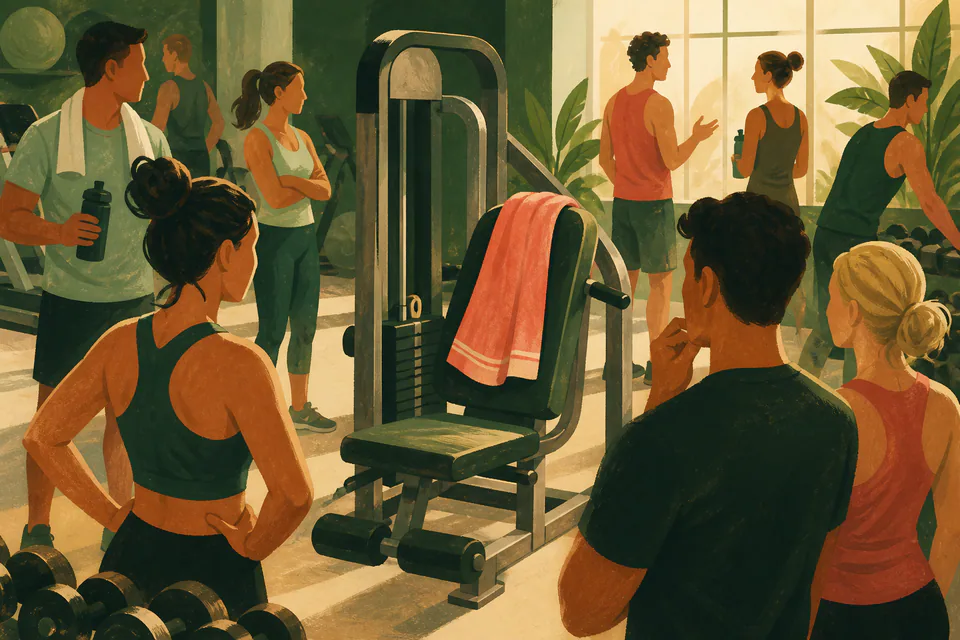
Someone reserves the best gym machine with a towel. When may you move it?
At a crowded gym, a towel has occupied the most popular machine for fifteen minutes while its owner chats across the room. Gym rules prohibit reserving equipment, but everyone occasionally steps away between sets.
How long may convenience masquerade as continued use?