Listen through the publisher, then discuss the episode here or arrange an in-person Roundtable. Your city determines where to meet.
Roundtables are designed for groups of four, with a shared subject and room for everyone to speak. Come for discussion, with no dating expectation.
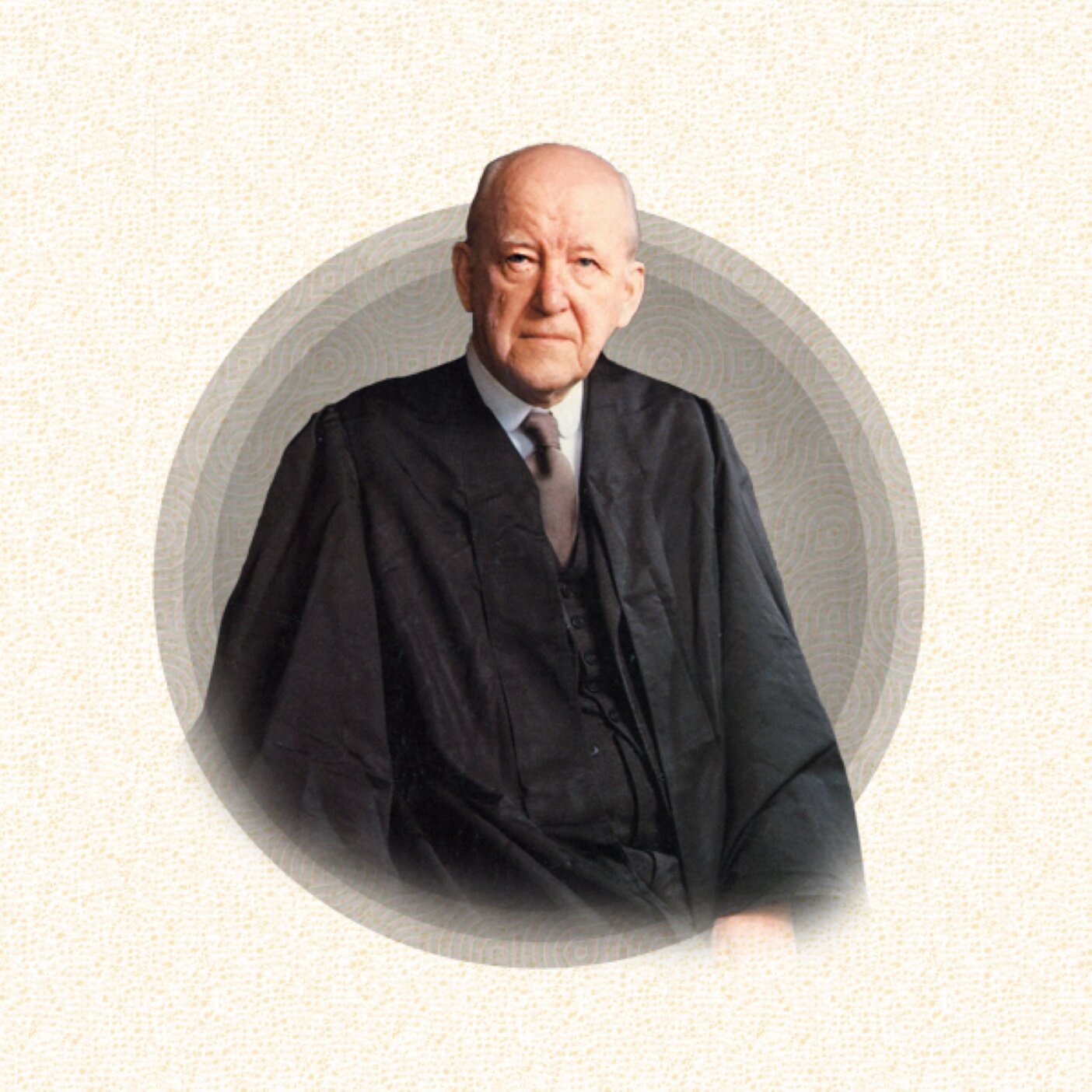
How can one know if they are in the faith? In this sermon on Ephesians 5:8–10 titled “Acceptable Unto the Lord,” Dr. Martyn Lloyd-Jones provides one such test that a Christian can measure their lives up against to see if they have been made new by Christ. The test that one must apply to their lives is this: are they bearing fruit? What is this fruit? Paul writes that it is all forms of goodness, righteousness, and truth. But how are these different from each other? Goodness, says Dr. Lloyd-Jones, is one of the characteristics of God. It means “benevolence,” and it points to an understanding of balance and desire for the happiness of others. The next is righteousness which might seem to mean the same as goodness. However, Dr. Lloyd-Jones points out that it carries a legal concept with it— it means that someone is right and just. Paul is saying that a believer’s life should be characterized by these principles. A Christian knows what they are doing and why they are doing it. Finally, what is truth? It is the light that illustrates and makes manifest. Those who have been saved by Christ are called to be His witness to the world. Dr. Lloyd-Jones reminds that in seeking these traits, the goal should never be to reach this in and of themselves, but rather in order to please the Lord. This is what sets Christians apart from good people.
Episode information is provided by the publisher. Listening takes place on the publisher’s service.
What happens when a society grows so comfortable in its prosperity that it forgets God, tramples the poor, and tells the prophets to stop prophesying? Or what happens when a prophet himself refuses to preach repentance because he doesn't want God to forgive his enemies? In Amos, Obadiah, and Jonah, we confront the twin dangers of spiritual complacency and closed-hearted prejudice, discovering a God who refuses to let us stay asleep—and who delights in extending mercy far wider than we ever imagined. Summary: In this insightful study of Amos, Obadiah, and Jonah, we examine three distinct prophetic voices called during times of intense geopolitical tension and spiritual drift. From a humble shepherd in Tekoa to a reluctant messenger swallowed by a great fish, these books challenge us to align our hearts with both God's justice and His radical mercy. The Lion Roars from Zion: In Amos 1–3, a herdsman and sycamore dresser from Judah confronts the wealthy, oppressive elite of the northern ki
Jen Wilkin, JT English, and Kyle Worley answer questions submitted by their Patreon supporters. See the show notes to learn how you can be part of the community! Questions Covered in This Episode: How do you tread the line and hold your conviction while being charitable on second-tier and third-tier issues? What are your thoughts on the traditional doctrine of hell vs. eventual annihilationism? What is a good filter to choose the right songs to sing with your church on a Sunday? Can I get JT’s AI prompt for the chore chart? What to do when you are praying to God for a life decision but you are note getting anything back? How can I think theologically about space travel? If Jesus returns and someone is in space, what happens? What does it mean that “love covers a multitude of sins (1 Peter 4:8)? What role do the gender forms of words play in translating the original language of the Bible, and how does that help us define the two persons in the Trinity that don't exist in human form? Wou
Broken relationships rarely heal by simply pretending the wound never happened. Ray, E.Z., Mark, and Oscar begin by examining the difference between genuine forgiveness and false reconciliation, emphasizing that Christians should pursue peace without ignoring serious problems. They distinguish forgiveness as releasing a person from the debt they owe, while reconciliation is rebuilding trust between two people. The guys discuss how repentance and changed behavior can be necessary for reconciliation and also consider how bitterness takes root. The conversation turns toward practical ways to stop bitterness before it takes hold. The guys discuss the importance of listening instead of talking over one another and setting rules for handling conflict before emotions run high. They share examples from marriage about pausing an argument, showing affection, communicating expectations, and giving the other person space to speak when they are ready. They also address the tendency to approach disa
- - - - - - - P.S. Advent Email and Facebook Post Invite Script One of the best ways to sow into the Wake-Up Call is simply sharing it with someone in your circle! Please copy and paste this note into an email or Facebook post to invite others into Behold: Hey! I’d love for you to join me for Behold, a twenty-five-day Advent devotion to help us fix our eyes on Jesus this season. The Wake-Up Call has meant so much to me, and I think doing this together starting December 1 would be really special. You can sign up for the daily email and podcast right here: https://seedbed.com/behold-2/ P.P.S. Advent Series—Behold We are so excited to have Shelbi Shutt hosting our Wake-Up Call Advent series called Behold. - - - - - - - - - - - - - - - - - - - JD Walt opens with a devotional on Romans 16:19–24, focusing on Paul’s promise that “the God of peace will soon crush Satan underneath your feet.” He connects it to Genesis 3:15 and describes the promise not as a war cry but as a victory lap: Christ
Why Does the Person Who Hurt You Seem Fine? (Luke 6:32-36) | Daily Devotional and Bible Study Why does the person who hurt you seem fine? Luke 6:35 says God is kind to the ungrateful and the evil, and the answer is better than most of us have been told. In today's Bible study we reach the "why" behind everything Jesus has said about loving your enemies in Luke 6:32-36. We look at what "even sinners do that" really means, what the patronage economy meant for lending without expecting anything back, and the hard verse about God's kindness to the ungrateful and the evil. We unpack three layers: common grace, kindness as a window of time, and why it isn't the final word. And we land on mercy, the family likeness of God's children. Join me on an immersive Bible Study Experience. Learn more at BibleStudyLive.org (https://biblestudylive.org/) Have a question about the series or a prayer request? Ad-free episodes and the full library of past series: Patreon (https://www.patreon.com/c/HearingJe
Thursday 26 November 2026 Today is Thursday the 26th of November, the feast of Saint John Berchmans SJ, in the 34th week of Ordinary Time. At every moment of the day and night, remember that you can come to the Lord. He is always there for you, whatever happens. Allow Him to carry you and be patient with you. Become still, open and receptive, and listen to His Word. The community of Taizé sing Wait for the Lord. ‘Wait for the Lord, his day is near. Wait for the Lord, be strong, take heart.’ Today’s reading is from the Gospel of Luke. Luke 21:20-28 ‘When you see Jerusalem surrounded by armies, then know that its desolation has come near. Then those in Judea must flee to the mountains, and those inside the city must leave it, and those out in the country must not enter it; for these are days of vengeance, as a fulfilment of all that is written. Woe to those who are pregnant and to those who are nursing infants in those days! For there will be great distress on the earth and wrath against
Christians are called to walk in the light of the Lord, but what is this light? How is it manifested? What is the difference between a good, moral person and someone who is a Christian? In this sermon on Ephesians 5:9–10 titled “The Fruit of Light,” Dr. Martyn Lloyd-Jones shares that the Christian has a knowledge of the Lord that they lacked before— they now have a knowledge and understanding of spiritual truth. A Christian is one who knows God intimately, beyond mere intellectual assent to the truth of His existence. They also now have a heart that desires to know God more and follow His commands. They desire holiness. Next, this light is manifested in the will—rather than works of darkness, their life exhibits the fruits of righteousness. Dr. Lloyd-Jones points out a key fact about the difference between “works” and “fruit.” Fruit signifies growth, and it signifies that it is occurring naturally. Thus, Paul is writing that a believer will have a desire to please the Lord flowing out
How does one know if they are a born-again Christian? What are some ways they can test their lives to see if they have been saved? What are the manifestations of darkness and why should one know them? In this sermon on Ephesians 5:8–13 titled “Unfruitful Works of Darkness,” Dr. Martyn Lloyd-Jones walks through a standard against which Christians can measure their lives, teaching that it is important to know these so that they can see whether or not they are producing the fruit that stems from being a follower of Christ and being changed by the Holy Spirit. The first manifestation is the mind—those who are in darkness are ignorant of God and the truth about themselves and the state of their souls. They deny that their sin is grievous enough to separate them from God, and they don’t see the need to submit their lives to the authority of Jesus Christ. Another manifestation is the will. Many people today are trying to make the world a better place— they see all the crime in the world and t
What does it mean to walk as children of the light and what are the implications for the Christian life? What is sanctification and what is the Christian’s role in it? In this sermon on Ephesians 5:7-8 titled “Children of Light,” Dr. Martyn Lloyd-Jones tackles these questions. Sanctification in the New Testament, as seen in these verses, follows this principle: it is not something received or taken but rather results from a correct understanding of the truth that leads to application. In this passage, Paul says that believers have become children of the light, and that this understanding should cause them to walk as such— a perfect case of sanctification resulting from a correct understanding of God’s word. It is active, not passive. The difference between a Christian and a nonbeliever, Dr. Lloyd-Jones says, is the difference between being in the light and being in darkness. Several other passages in Scripture use this same analogy. The change that takes place when one follows Christ i
Public information should be withheld only when there is a clear reason for confidentiality.
Share your view, then see how readers voted. No sign-in required. This poll is shared across stories.
Do you agree or disagree?
Common Quandary
A Common Quandary to discuss
Another conversation to explore, separate from this news story.
Your neighbor keeps playing music at midnight. How many friendly warnings do they get?
A neighbor regularly plays music late enough to disturb your sleep. Friendly requests help briefly, but a formal complaint could threaten their lease in a building with few affordable options.
How far should empathy extend when someone repeatedly ignores your needs?