Advent 1: Did Jesus really fulfil Isaiah's prophecies? | N.T. Wright
21 min
Listen through the publisher, then discuss the episode here or arrange an in-person Roundtable. Your city determines where to meet.
Roundtables are designed for groups of four, with a shared subject and room for everyone to speak. Come for discussion, with no dating expectation.
Did Jesus really fulfil the Old Testament prophecies, or did the Gospel writers make the story fit? In this special Advent conversation, John Nelson speaks with renowned biblical scholar N.T. Wright about Isaiah, the coming Messiah and the centuries of expectation surrounding Jesus' arrival. Why wasn't there a clear picture of who the Messiah would be? How did Jesus challenge those expectations? And could the Gospel writers have shaped their accounts around ancient prophecies? Tom Wright explores what Advent really means: waiting in hope for a God who acts in surprising ways.
Episode information is provided by the publisher. Listening takes place on the publisher’s service.
→ Watch on YouTube (https://www.youtube.com/watch?embed=no&v=GdTEnLPPmC0) → Detailed Show Notes (https://www.ldsscriptureteachings.org/2022/11/nahum-habakkuk-zephaniah-ep-181-quotes-and-notes/) → Tours with Mike (https://www.ldsscriptureteachings.org/tours/) (00:00) An overview of the book of Micah. (02:16) Isaiah and Micah both speak of the mountain of the house of the Lord being established in the top of the mountains. (06:49) Micah speaks of the sheaves being gathered into the floor. This passage is quoted by Jesus in 3 Nephi. The biblical threshing floor was the foundation of the Holy of Holies. (13:24) There are significant prophecies about the birth of the Messiah and of his Second Coming in Micah. The remnant of Jacob shall be as a lion among sheep (Micah 5.8). This passage is quoted several times in the Book of Mormon. (24:55) The historical background of the book of Nahum. Nineveh has reached the fulness of iniquity. This context helps us understand the Lord’s harsh words. (37
Luke 21: 20-28 - 'There will be signs in the sun and moon and stars.' Catechism of the Catholic Church Paragraphs: - 58 (in 'The Covenant with Noah') - The covenant with Noah remains in force during the times of the Gentiles, until the universal proclamation of the Gospel (abbreviated). - 674 (In 'The glorious advent of Christ, the hope of Israel) - The glorious Messiah’s coming is suspended at every moment of history until his recognition by “all Israel,” for “a hardening has come upon part of Israel” in their “unbelief” toward Jesus. St. Peter says to the Jews of Jerusalem after Pentecost: “Repent therefore, and turn again, that your sins may be blotted out, that times of refreshing may come from the presence of the Lord, and that he may send the Christ appointed for you, Jesus, whom heaven must receive until the time for establishing all that God spoke by the mouth of his holy prophets from of old.” St. Paul echoes him: “For if their rejection means the reconciliation of the world,
The crucifixion of Jesus was more than a tragic execution. It was the central act of God's plan to reconcile humanity to Himself. Isaiah described the suffering servant who would carry the sins of others, and the Gospels reveal Jesus fulfilling that mission through His death on the cross. He was mocked, wounded, rejected, and crucified, even though He had committed no sin. Romans explains that Christ died for us while we were still sinners. The cross reveals both the seriousness of sin and the depth of God's love. Every contribution counts. Thank you for being part of our journey!
- - - - - - - P.S. Ordinary Sowing, Extraordinary Seeds Tina’s banding story is featured this week for our Ordinary Sowing, Extraordinary Seeds: Fall Harvest Campaign. (https://givebutter.com/tinasbandingstory). I hope it invites you to sow a gift into the Wake-Up Call and banding. You can give here: https://givebutter.com/tinasbandingstory. And if you’d like to send my dad a birthday note and join his $500 Matching Challenge, just leave a message in the giving platform! P.P.S. Advent Series—Behold We are so excited to have Shelbi Shutt hosting our Wake-Up Call Advent series called Behold. - - - - - - - - - - - - - - - - - - - J.D. Walt reads Romans 16:3-16, a chapter he used to skip, and finds one of the most practical applications in the series. He invites listeners to greet people by name, starting with anyone wearing a name tag. CHAPTERS: 0:01 - Thanksgiving week welcome and gratitude 1:00 - Consecration prayer 4:33 - Why J.D. used to skip chapters like this 6:20 - "I'm not good wi
Thanksgiving is often presented as a simple story of Pilgrims and Native people sharing a meal. But what gets left out—and who benefits from that version? Lakota Chicano journalist Simon Moya-Smith and Ojibwe educator Julie Francella discuss how we should to challenge the familiar holiday narrative and share the histories, traditions, and lived experiences it obscures. They discuss the Wampanoag people’s diplomacy and the realities surrounding the 1621 gathering, the origins of the National Day of Mourning, and how Manifest Destiny helped turn a complicated history into a comforting national myth. Julie describes Indigenous gratitude as an everyday practice rooted in reciprocity with the land, water, animals, and community. Simon speaks about resilience, cultural survival, stereotypes, and why Indigenous nations should never be treated as a monolith. The conversation also explores what it means to gather with family while acknowledging painful history, why Indigenous communities contin
In Part One, Laurel “Lolly” Shae shared the story of how she came to marry her gay best friend, Josh Weed, after years of navigating Mormon expectations around sexuality, marriage, and eternal families. Now, in Part Two, Laurel reflects on what their marriage was really like, the damage caused by trying to make it work, and what it took to finally choose herself. Laurel opens up about their sexual relationship, the difference between emotional intimacy and feeling genuinely desired, and how she learned to center Josh’s needs while minimizing her own. She reflects on how Mormon teachings about chastity, gender roles, sacrifice, and marriage shaped her understanding of what she was allowed to want –and how difficult it was to acknowledge that she had been unhappy. The interview also explores the viral blog post that changed everything. On their tenth wedding anniversary, Josh publicly came out as gay in a post titled “Club Unicorn: How I Came Out as Gay on My Ten Year Wedding Anniversary
Is there life after death, and would believing in it change how we live today? Recorded live at John Colet School in the UK, Dr. John Nelson brings together Cambridge molecular biologist Dr Denis Alexander and philosopher Dr Shaun Stevenson to explore one of humanity's biggest questions. Shaun, who has been reconsidering Christianity, explains why the resurrection remains difficult to accept and why its implications might be frightening. Denis challenges the idea that science rules out miracles and argues that the Christian hope of resurrection gives meaning to the present. From the ancient Greek philosophers to Nietzsche, C.S. Lewis and the historical evidence for Jesus' resurrection, they explore whether heaven is a source of hope, an illusion or even a means of control. Plus, students ask searching questions about eternity, suffering and the meaning of life. Watch more: Denis Alexander's conversation with Professor Andrew C. Scott on Journeys in Science and Faith : https://www.premi
Historian Tom Holland has become a regular churchgoer and spoken movingly about his experiences of prayer. But how did the bestselling author of Dominion and co-host of The Rest Is History come to reconsider Christianity? In this fascinating classic Unbelievable? conversation, Holland joins theologian Andrew Ollerton on Unbelievable to explore whether the Bible is simply an influential collection of ancient texts or a story that might actually be true. From the troubling violence of the Old Testament to the extraordinary claims of Jesus' resurrection, Holland reveals how his understanding of Christianity has changed. And when asked whether he could personally embrace Christian faith, his answer is remarkably revealing. Revisit an earlier chapter in Tom Holland's continuing journey towards faith.
Did the universe have a beginning? If so, does it need a creator? And could the fine-tuning of the cosmos make God more likely, while the history of animal suffering points in the opposite direction? John Nelson hosts an extended Unbelievable? debate with Oxford philosophy researcher Miles K. Donahue, host of The Uncertainty Podcast, and atheist astronomer Phil Halper, co-author of Battle of the Big Bang. Together they examine the limits of cosmology, competing ideas about the universe before the Big Bang, arguments from fine-tuning and the challenge of suffering in the natural world. Can science settle the question of God, or does the evidence leave room for more than one conclusion?
Access to effective legal representation should not depend mainly on personal wealth.
Share your view, then see how readers voted. No sign-in required. This poll is shared across stories.
Do you agree or disagree?
Common Quandary
A Common Quandary to discuss
Another conversation to explore, separate from this news story.
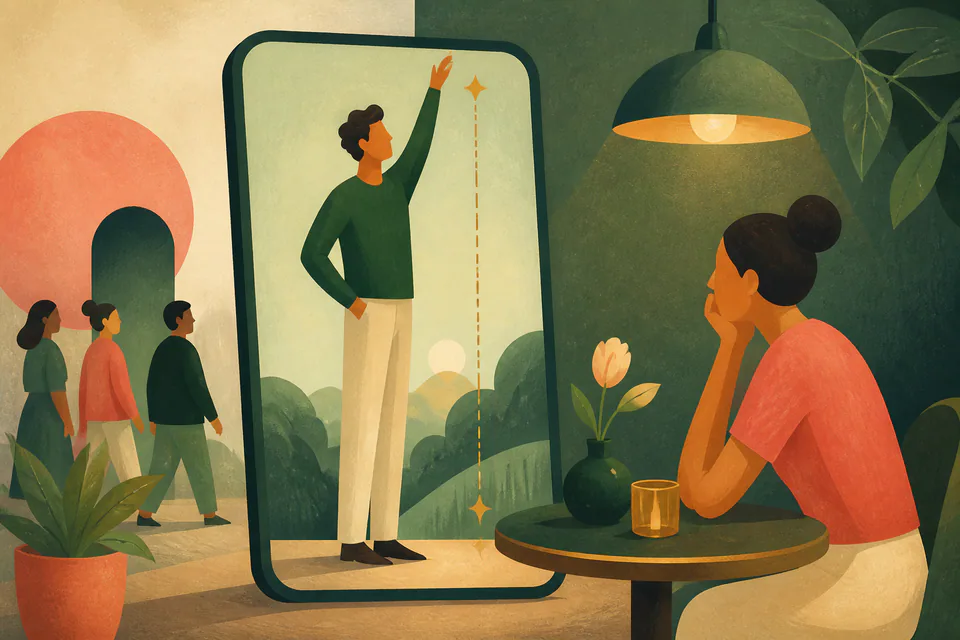
Everyone exaggerates on dating apps. Are two imaginary inches harmless?
A friend adds two inches to their listed height because they believe filters exclude them before personality has a chance. They plan to be charming enough that a date will not care once they meet in person.
Can deception be a fair response to superficial gatekeeping?