Listen through the publisher, then discuss the episode here or arrange an in-person Roundtable. Your city determines where to meet.
Roundtables are designed for groups of four, with a shared subject and room for everyone to speak. Come for discussion, with no dating expectation.
How does a company get rid of jobs so they can be replaced with AI? Well, this week Qantas revealed a corporate playbook: move the jobs offshore, develop the tech, then get rid of the human. Today, James Thomson, a columnist at the Australian Financial Review, on how AI is killing white collar jobs and if there's any way to stop it. Featured: James Thomson, senior Chanticleer columnist at the Australian Financial Review.
Episode information is provided by the publisher. Listening takes place on the publisher’s service.
Screen time in schools, kids and AI: why Australian students just posted their worst ever reading and maths results. The federal Education Minister says screens are part of the problem. Sweden led the world putting tablets in classrooms and is now pulling them back out. NSW will cap kindy kids at 15 minutes of screen time a day from next year. So were the "hippie" Steiner schools ahead of their time all along? Karl sits down with Andrew Hill, CEO of Steiner Education Australia, which represents 53 schools that keep screens out of early childhood classrooms. Andrew explains why some Silicon Valley tech executives sent their own kids to a screen-free Steiner school, who has profited from a laptop for every kid ("the terrible thing about handwriting is that it's free"), and why he believes Bluey's creator modelled the show's school on a Steiner school in Queensland. Karl also puts the tough questions: Will kids without screens be left behind? Is it all woo-woo? What about bullying, fees a
Prince Harry makes a lively appearance on Britain's This Morning, revealing his thoughts on the new James Bond, Meghan Markle's former television series Suits, and why he considers Glastonbury and Coachella a nightmare. The Duke of Sussex endorses Robert Pattinson as the next 007, chooses Suits over EastEnders, and reveals that he tried to FaceTime presenter Alison Hammond with Prince Archie and Princess Lilibet, only for her to ignore his calls. Harry also helps prepare a Christmas cake alongside Invictus Games veterans, shares a laugh involving a prosthetic hand, and enjoys a shot of whisky. He's later spotted at London's Savoy hotel. But Harry's latest television appearance sparks criticism from Daily Express columnist Alicia Liberty, who questions how his highly publicized appearances fit with his longstanding concerns about security in Britain. Meanwhile, former Margaret Thatcher aide Nile Gardiner calls for Harry and Meghan to be stripped of their royal titles, accusing the Susse
After a deluge of speculation, the next James Bond has been chosen: British actor Robert Pattinson will be the next face of the franchise. The public response has been overwhelming, if somewhat divided. To celebrate, we’re revisiting an episode from June, about a behind-the-scenes David and Goliath battle between the family business which has held creative control of the franchise since the 1960s and its new owners, Amazon. It is now up to Jeff Bezos’s tech conglomerate to decide how to run the series. In an era when Hollywood studios are desperate to eke out every last dollar from movie franchises, can James Bond retain its mystique and appeal to a new generation of cinema-goers? We speak to Wall Street Journal enterprise reporter Erich Schwartzel. Producers: Xandra Ellin and Lucy Pawle Video producers: Richard Kenny and Jem Westgate Mixed by: Travis Evans Executive producers: James Shield and Martine Powers Senior news editor: China Collins Photo: Robert Pattinson as James Bond. Jaap
For review: 1. Iraq has reached a compromise with the powerful Iran-backed militia Kataeb Hezbollah, three senior security officials said, after Prime Minister Ali al-Zaidi readied security forces to move against the group. Reflecting the gravity of the situation, Iraqi Shiite political sources said Esmail Qaani, commander of Iran’s elite Revolutionary Guards’ Quds Force, arrived in Baghdad late on Monday to help defuse tensions with Kataeb Hezbollah, Tehran’s most powerful militia ally in Iraq. 2. Lebanese President Joseph Aoun launched a lengthy rebuke of Iran in an Independence Day address, arguing that the Islamic Republic does not have the right to interfere in Lebanon’s internal affairs, as it long has via support for its local terror proxy, Hezbollah. 3. Yemen’s Houthis launched strikes on the Saudi capital Riyadh on Saturday, after vowing reprisals for a “special operation” by the Saudi-led coalition fighting them. The coalition later said it had “intercepted and destroyed” thr
Eleven jurors reportedly wanted to find Lindsay Clancy not criminally responsible in the deaths of her children. One did not. The first trial ended without a verdict, and now a new trial is set for March 29, 2027. If that is your starting point, it is reasonable to ask whether a second trial will answer anything the first couldn't. Tony Brueski and criminal defense attorney Bob Motta, host of Defense Diaries, examine the decision that brought the case back here. Judge William Sullivan rejected the defense's double-jeopardy challenge after finding the jury deadlock justified a mistrial. At the November 16 hearing, prosecutors said another trial would require jurors but did not explicitly confirm the eventual charges. Defense lawyer Kevin Reddington believes that signals three first-degree murder indictments will remain in place. That difference is not just courtroom language. The defense had hoped the case could be decided by a judge if charges were reduced, whereas first-degree murder
Alan Milburn wants to scrap Pip for under-25s and replace the Universal Credit health element with a new youth allowance. He says the plan could get 440,000 young people into work within a decade and eventually save £3.6 billion a year. With 981,000 young people not in education, employment or training, nobody disputes the scale of the problem. They disagree about its cause. Milburn insists this is not a generation lacking resilience. Yet his own report finds that benefit claims have outpaced any rise in ill health, and it warns of overdiagnosis of ADHD and autism. Michael Simmons puts that contradiction to Milburn directly. He also asks whether the National Insurance and minimum wage rises are pricing young people out of the jobs they need most. Can welfare reform get a generation back to work – or is the deeper problem a loss of resilience that no policy can fix? This episode is brought to you by Raymond James. Combining deep insights into who you are with our financial expertise, th
Over the past week, a series of tech outages at major companies around the world have caused chaos. There was the Microsoft glitch which caused a mass disruption of services; an aviation update grounded every plane across the US, an Apple outage crashed its platforms, and there was a software bug at JP Morgan Chase, just to name a few. Then there was a string of cyberattacks, including at supermarkets in Europe and this week at Coles. Today, cyber security expert Alastair MacGibbon on why we need to be better prepared for outages that could be far worse in the future. Featured: Alastair MacGibbon, cyber security expert and the founding head of the Australian Cyber Security Centre. ABC News Daily SURVEY LINK: https://forms.cloud.microsoft/r/guHgnjKm4b
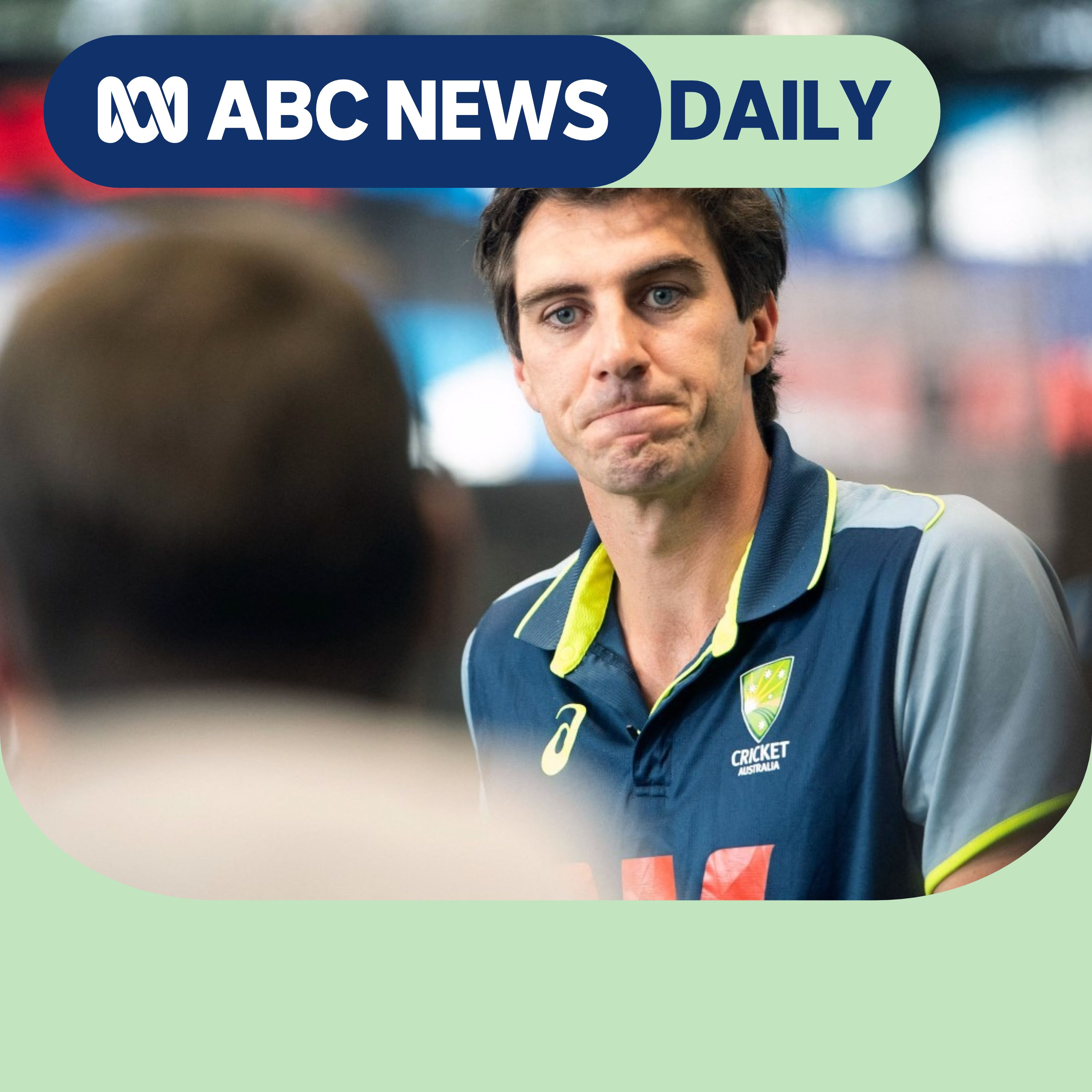
Just days after denying any involvement, Australian Test cricket captain Patrick Cummins is under pressure following an explosive 4,000-word essay by Cameron Bancroft, the man at the centre of the 2018 Sandpaper scandal, claiming the whole team knew about the ball tampering. It's the latest in a string of bombshell revelations, which began when Usman Khawaja shed new light on the scandal in his new book, eight years after it rocked Australian cricket. Today, ABC national sport reporter David Mark on the wound that never healed, and whether Australian cricket can ever recover. Featured: David Mark, ABC National Sport reporter
For the first time the leaders of the US, Russia and China are set to be in the same room. The meeting, at the APEC summit in China, is being compared to the 1945 Yalta conference, when world leaders gathered to shape the post-war world order. So, what are Donald Trump, Vladimir Putin and Xi Jinping hoping to get out of this meeting? Today, Samir Puri, author of Westlessness: The Great Global Rebalancing, on what each leader wants and what this gathering could mean for the global balance of power. Featured: Samir Puri, author of Westlessness: The Great Global Rebalancing ABC News Daily SURVEY LINK: https://forms.cloud.microsoft/r/guHgnjKm4b
Schools should adapt standards to individual needs rather than apply identical expectations to everyone.
Share your view, then see how readers voted. No sign-in required. This poll is shared across stories.
Do you agree or disagree?
Common Quandary
A Common Quandary to discuss
Another conversation to explore, separate from this news story.
A new email address earns another free month. How many free trials are too many?
A streaming service offers a free month to every new account and makes cancellation deliberately confusing. You discover that slightly different email addresses let you repeat the trial indefinitely without lying about your identity.
Must customers respect the spirit of rules designed to manipulate them?