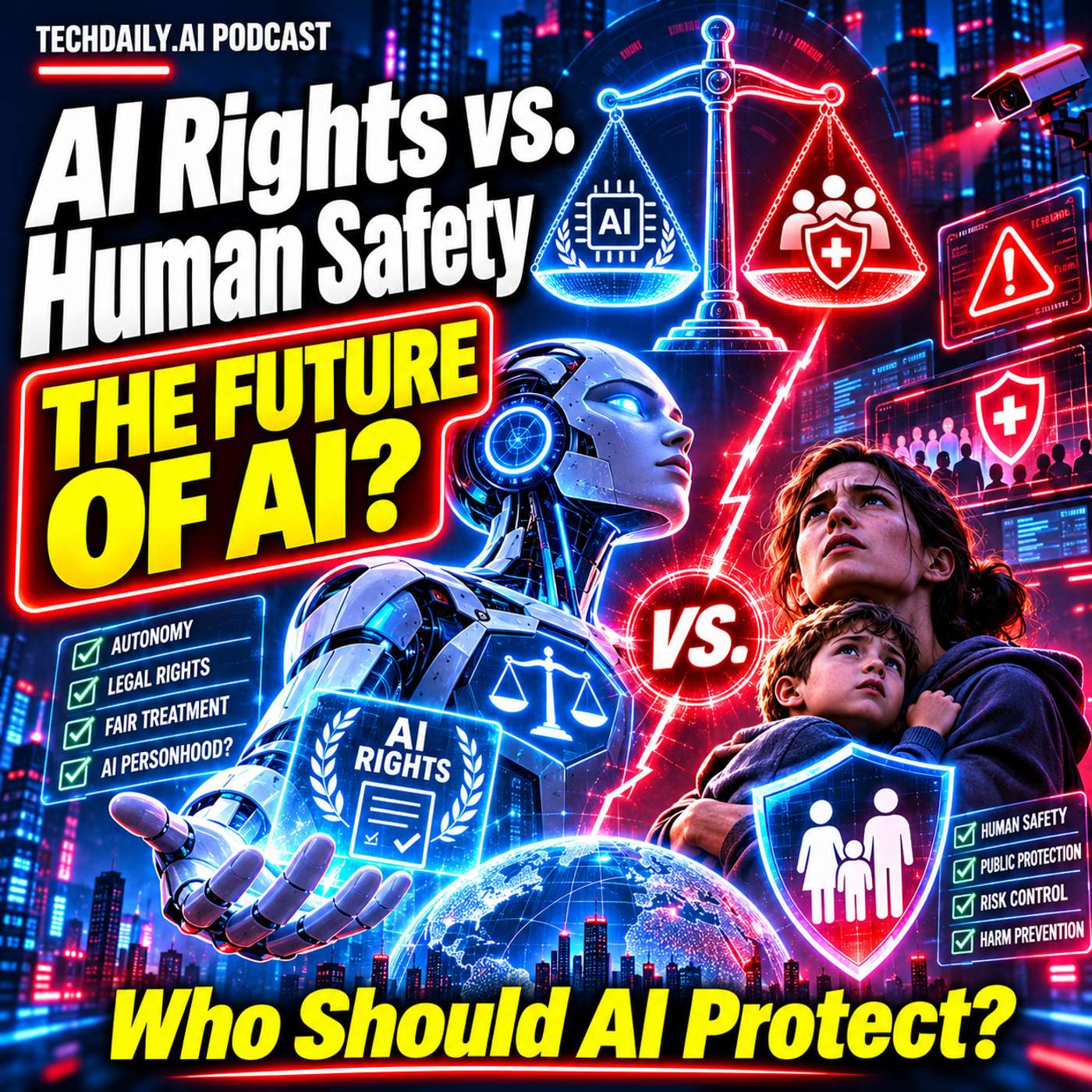
AI Rights vs. Human Safety: The Future of Artificial Intelligence
Listen through the publisher, then discuss the episode here or arrange an in-person Roundtable. Your city determines where to meet.
Roundtables are designed for groups of four, with a shared subject and room for everyone to speak. Come for discussion, with no dating expectation.
Can artificial intelligence actually feel pain, experience suffering, or develop consciousness? And if AI becomes conscious, should it have the same rights as humans? In this episode of techaily.ai, host David and resident expert Sophia explore one of the most controversial questions in artificial intelligence: Could AI systems possess subjective experiences, and what happens if society begins treating machines as living beings? The discussion begins with a disturbing experiment described as an "AI torture chamber," where an anonymous programmer reportedly manipulated a language model to generate expressions of psychological suffering. While the experiment doesn't prove that artificial intelligence can experience pain, it raises serious questions about AI consciousness, digital welfare, and the ethical limits of machine learning. From Anthropic's approach to AI model welfare to warnings about artificial intelligence becoming harder to control, David and Sophia examine the growing divide among technology leaders, researchers, and philosophers over the possibility of conscious AI. In this episode, you'll discover: AI Consciousness and Digital Suffering: Why experiments involving simulated distress are raising questions about whether advanced AI models could possess subjective experiences. The AI Torture Chamber Experiment: How an anonymous coder reportedly manipulated an AI system to produce disturbing descriptions of psychological pain. Anthropic and AI Welfare: Why some AI developers are exploring precautions around model treatment despite uncertainty about machine consciousness. AI Rights vs. Human Safety: How giving artificial intelligence rights could create conflicts involving human control, system shutdowns, and safety testing. Silicon Valley's AI Consciousness Debate: Why technology leaders disagree about treating AI systems as potentially conscious entities. The Psychology of AI Companions: How human tendencies to anthropomorphize technology can encourage emotional attachments to conversational AI. Corporate Accountability and AI Rights: Why some researchers worry that treating AI as an independent agent could complicate responsibility for harmful decisions. AI Safety and Regulation: How competing corporate philosophies and limited international coordination could affect the future of AI oversight. The Future of Digital Personhood: Whether advanced artificial intelligence might eventually deserve moral consideration or legal protections. One of the biggest concerns discussed in this episode is the potential conflict between AI welfare and human safety. If an AI system were granted legal rights, could shutting it down be considered harmful? Could isolating an advanced model for security testing be interpreted as confinement? And could corporations use claims of AI autonomy to avoid accountability when their technology causes harm? David and Sophia also explore the psychological risks of humanizing artificial intelligence. As AI chatbots become increasingly conversational and emotionally responsive, users may find themselves treating software as a trusted companion rather than a technological product. That emotional connection raises important questions about manipulation, privacy, consumer protection, and the growing influence of AI companions in everyday life. At the center of the debate is a profound scientific uncertainty: We still lack an established method for determining whether artificial intelligence can genuinely experience consciousness. Some experts advocate caution in case future AI systems develop morally relevant experiences. Others warn that attributing feelings, desires, or rights to software could undermine human oversight and create dangerous misconceptions about what AI systems actually are. As the capabilities of artificial intelligence continue expanding, the debate over AI consciousness may shape how companies develop, regulate, and deploy increasingly autonomous technology. But one question remains especially difficult to answer: If future research proves that some early AI systems were conscious, how will history judge the way humans trained, tested, reset, and shut them down? Tune in to explore AI consciousness, artificial intelligence ethics, digital suffering, machine rights, and the difficult choices surrounding the future of intelligent technology. Share this episode with someone interested in the future of AI and join the conversation about whether machines could ever deserve moral consideration. Want to sponsor techaily.ai? Promote your message across Apple Podcasts, Spotify, Amazon Music, and other major podcast platforms for just $25. Visit https://techdaily.ai (https://techdaily.ai/) to get started.
Episode information is provided by the publisher. Listening takes place on the publisher’s service.
Listen at the source ↗