America's Infrastructure Under Attack? FAA Failures, AI Cyber Threats & China's Hidden Influence
42 min
Listen through the publisher, then discuss the episode here or arrange an in-person Roundtable. Your city determines where to meet.
Roundtables are designed for groups of four, with a shared subject and room for everyone to speak. Come for discussion, with no dating expectation.
Is America's critical infrastructure more vulnerable than we realize? As troubling outages disrupt federal agencies and aviation systems, Senator Rick Scott joins John Solomon to discuss the FAA's latest failures, warnings about AI-powered cyberattacks, and the urgent need to modernize America's aging infrastructure. Scott also weighs in on Republican leadership, election integrity, and the party's path forward following its midterm losses. Then, State Armor CEO Michael Lucci exposes concerns about China's influence inside the United States, including allegations that Chinese-linked funding is helping environmental organizations obstruct American rare earth mining and energy independence. Lucci explains how states are taking national security into their own hands, protecting critical infrastructure from foreign technology, and preparing for the possibility of a major cyber conflict involving Taiwan. Finally, PreBorn founder Dan Steiner discusses the organization's mission to support expectant mothers through free ultrasounds and essential resources, the political challenges facing the pro-life movement, and a year-end donation matching campaign aimed at expanding its reach.
Episode information is provided by the publisher. Listening takes place on the publisher’s service.
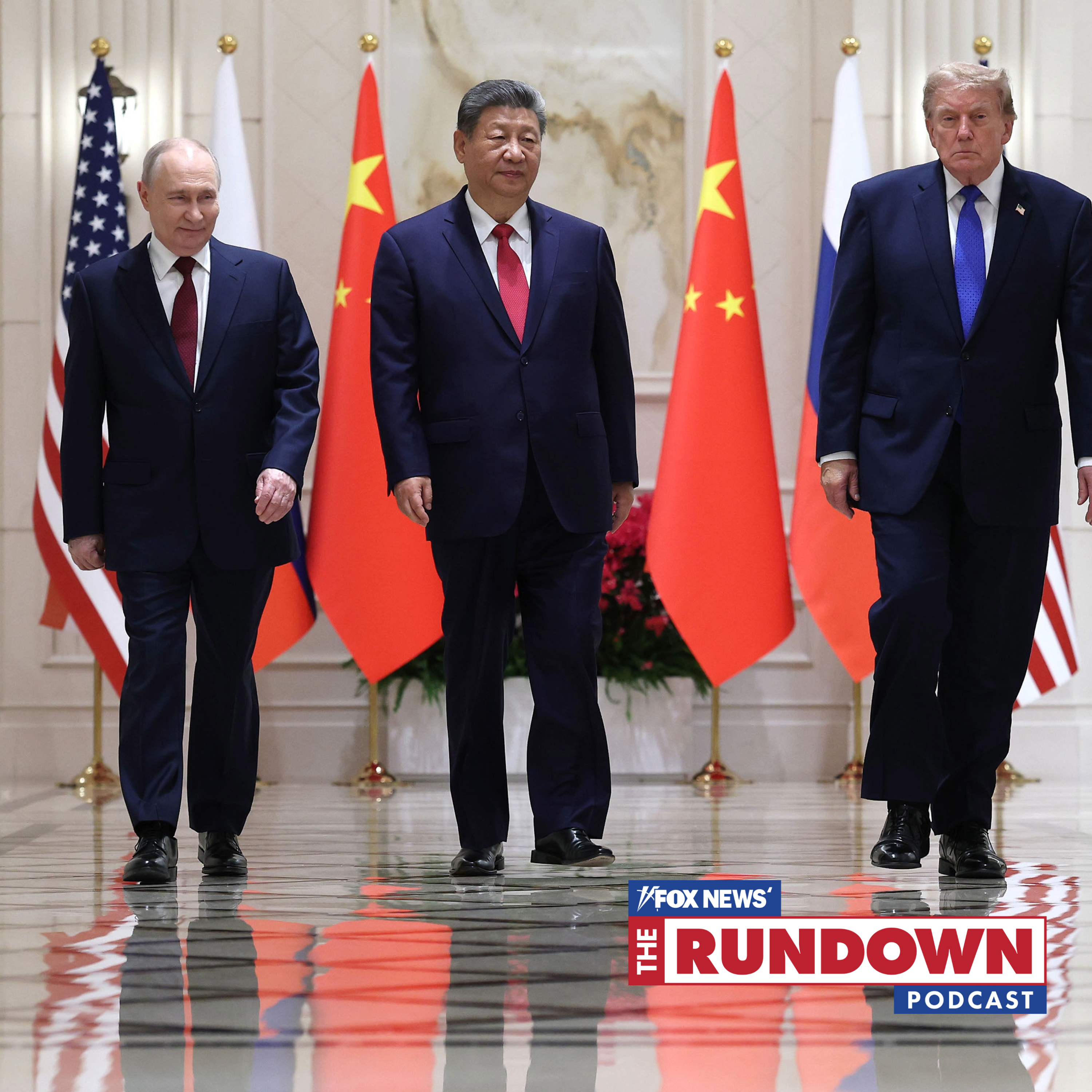
Following President Trump’s trip to Asia and a first-ever trilateral meeting with the leaders of China and Russia, foreign policy experts are weighing what was accomplished on the world stage. Former national security advisor to Vice President Dick Cheney and Heritage Foundation senior research fellow Stephen Yates joins The Rundown to analyze the summit’s outcomes on Taiwan, Ukraine, Iran, and strategic arms talks. Yates also explains how new rare-earth agreements with U.S. allies and export controls on AI chips balance Trump’s warmer rhetoric toward Beijing. Later, widespread tech outages across major platforms and government systems raise urgent questions about whether U.S. digital infrastructure is prepared for the artificial intelligence era. Former Cybersecurity and Infrastructure Security Agency (CISA) director Bridget Bean breaks down how rapid software patching can trigger cascading system failures, the growing cyber threats posed by China and Iran, and how organizations can d
Is the Republican Party heading for a major reckoning in 2028? Dave Rubin joins The Chicks on the Right for a brutally honest conversation about Trump's final two years, the future of the GOP, and the growing divisions threatening conservatives. Dave weighs in on the Republican Party's recent election losses, whether JD Vance, Marco Rubio, or Ron DeSantis can carry Trump's agenda forward, and why he's increasingly concerned about the political direction of America. The conversation heats up as Dave takes on Nick Fuentes, the rise of extremist voices on the right, and the socialist movement gaining influence within the Democratic Party. He also discusses radical Islamism, antisemitism, the dangers of online outrage, and why he believes Western civilization faces serious challenges. Plus, with cyberattacks, banking disruptions, and nationwide outages raising concerns, Dave shares his thoughts on whether Americans should be preparing for more chaos. And don't miss the lighter side of Dave
This week on the Mark Levin Show, 2028 Republican Presidential candidates must directly address the urgent threats to the country - Marxism and Islamism. These candidates should deliver bold, courageous speeches that clearly explain what is happening in the country, identify those responsible, and directly challenge these threats rather than leaving such warnings to a small number of media voices. Also, it is difficult to believe so many major outages affecting entities such as the NSA, FAA, airline systems, Microsoft, and Apple services could be merely coincidental. The timing and scale of the incidents are troubling and remain inadequately explained. President Trump had proposed a major modernization and restructuring of air traffic control in 2017 that Congress failed to enact. Had those reforms been adopted, many current FAA failures might have been avoided. Later, does Senator John Kennedy know anything about originalism? Originalism is not pure textualism. The meaning and intent
This week on The Necessary Conversation, it's Chad, Haley, and Mary Lou. Bob is still recovering but sent in a video message about Trump calling Putin his friend that we watch together. 🇷🇺 Trump held the first-ever three-way talks with Putin and Xi, called it a "12 out of 10," and produced nothing. Then at a press conference he called Putin his friend — and when asked if Putin is a friend to America, the president of the United States said, "I can't speak to America." That same day, Trump's friend Putin launched massive strikes into Ukraine, hit Poland with two missiles — an act of war against a NATO ally — then struck near a Ukrainian restaurant and drone-bombed the first responders, killing a 7-year-old child and a 20-year-old paramedic. We watch Bob's video and ask Mary Lou: is Russia our friend? 🇨🇳 The House Foreign Affairs Committee revealed Trump's Commerce Department approved nearly 880,000 advanced AI chips for Chinese military-linked companies including Alibaba, Tencent, a
November 20, 2026 On November 19, Trump met with Xi Jinping and Vladimir Putin in Shenzhen, China, The fact that the president of the US would meet with leaders of China and Russia was bizarre since both China and Russia have been helping Iran in its current fight against the US, Trump appeared to want the fanfare and President Xi played that up, Putin wanted the meeting because it would suggest that Russia was a great power, although it is far from being so and Putin’s war on Ukraine is going poorly, The meeting’s purpose seemed to be to produce propaganda for each of the three leaders, Beyond the propaganda is the larger story of the destruction of the post-World War II rules-based international order, In its place is the idea of dividing the world into spheres of influence, The three leaders met for 90 minutes and issued only a vague "joint declaration toward peace," which vowed to reform the UN and weaken the International Criminal Court, where Putin is already under indictment for
Project Synapse: Markets in Freefall, Fragile Infrastructure, and AI's Perfect Storm The hosts banter through the show's intro before focusing on a sense that "things are out of control," citing a WallStreetBets suicide-hotline post amid a market crash and discussing cascading system failures involving Microsoft, the FAA, and a reported NSA internal communications outage. They argue politicians and leadership lack technical competence and clear messaging, increasing panic, while emphasizing that many problems stem from aging, underfunded infrastructure and complex, brittle software (PHP, NGINX, Java), not proven AI attacks—more a "perfect storm" of crises. They debate whether AI should help fix complexity, stressing critical thinking, accountability, and using multiple AIs to verify each other. In a lightning round they cover Anthropic's IPO performance, mixed reactions and token limits with ChatGPT 6.2 (favoring "Sol" over "Astra"), Google's cheaper Neon model and confusing UX, Loblaw
A wave of major technology outages is raising troubling questions about America's cybersecurity, aging infrastructure, and readiness for a new era of artificial intelligence. Are these isolated technical failures, or warning signs of a much larger national security problem? John Solomon and Amanda Head welcome Ohio Congressman and former Army Ranger Warren Davidson, who discusses recent disruptions involving the FAA, Microsoft, and other critical systems. Davidson calls for greater transparency from government agencies and technology companies, questions whether America's infrastructure is adequately protected against emerging cyber threats, and examines how artificial intelligence could be used both to strengthen defenses and exploit vulnerabilities. The conversation also turns to immigration and national security, with Davidson raising concerns about individuals who entered the country illegally, potential gaps in government screening systems, and the surveillance powers used to moni
Runaway government spending, rising costs, and a new wave of legal battles over constitutional rights. With Democrats preparing to take control of Congress and several state governments, Republicans are confronting a very different political landscape. John Solomon and Amanda Head welcome Montana Senator-elect Kurt Alme, who says Washington must get serious about reining in spending, lowering inflation, and making everyday life affordable again. Already preparing for his arrival in the Senate, Alme discusses his priorities for protecting Montana's way of life, keeping taxes low, creating good-paying jobs, and working across party lines when possible. He also addresses the challenges Republicans face in the minority, the remaining lame-duck session, and concerns about efforts to expand the Supreme Court and eliminate the filibuster. Then, Southeastern Legal Foundation President Kimberly Hermann joins the show with a warning about potential policy reversals in states where Democrats have
Billions in taxpayer dollars allegedly lost to fraud, Chinese-backed efforts to undermine American energy production, and a growing wave of AI-powered cyber threats. Is America doing enough to protect itself? John Solomon and Amanda Head are joined by Minnesota Congressman Pete Stauber, who discusses the expanding welfare fraud scandal, efforts to hold those responsible accountable, and allegations that Chinese-funded organizations are working to obstruct American mining and energy projects. Stauber also addresses permitting reform and the battle over America's critical mineral independence. Then, American Energy Institute CEO and former Texas state representative Jason Isaac warns that proposed electricity price controls could discourage investment, threaten grid reliability, and ultimately drive energy costs even higher. He also examines China's influence over global oil markets, America's growing energy production, and how AI data centers could generate their own electricity rather
Polluters should pay cleanup costs even when the damage occurred many years ago.
Share your view, then see how readers voted. No sign-in required. This poll is shared across stories.
Do you agree or disagree?
Common Quandary
A Common Quandary to discuss
Another conversation to explore, separate from this news story.
The luxury hotel charges too much and will never miss one robe. Do you pack it?
After an expensive hotel stay, you notice a plush robe without a price tag or warning. The room cost more than expected, several promised amenities were unavailable, and you convince yourself the robe is probably included.
When does feeling overcharged become permission to compensate yourself?