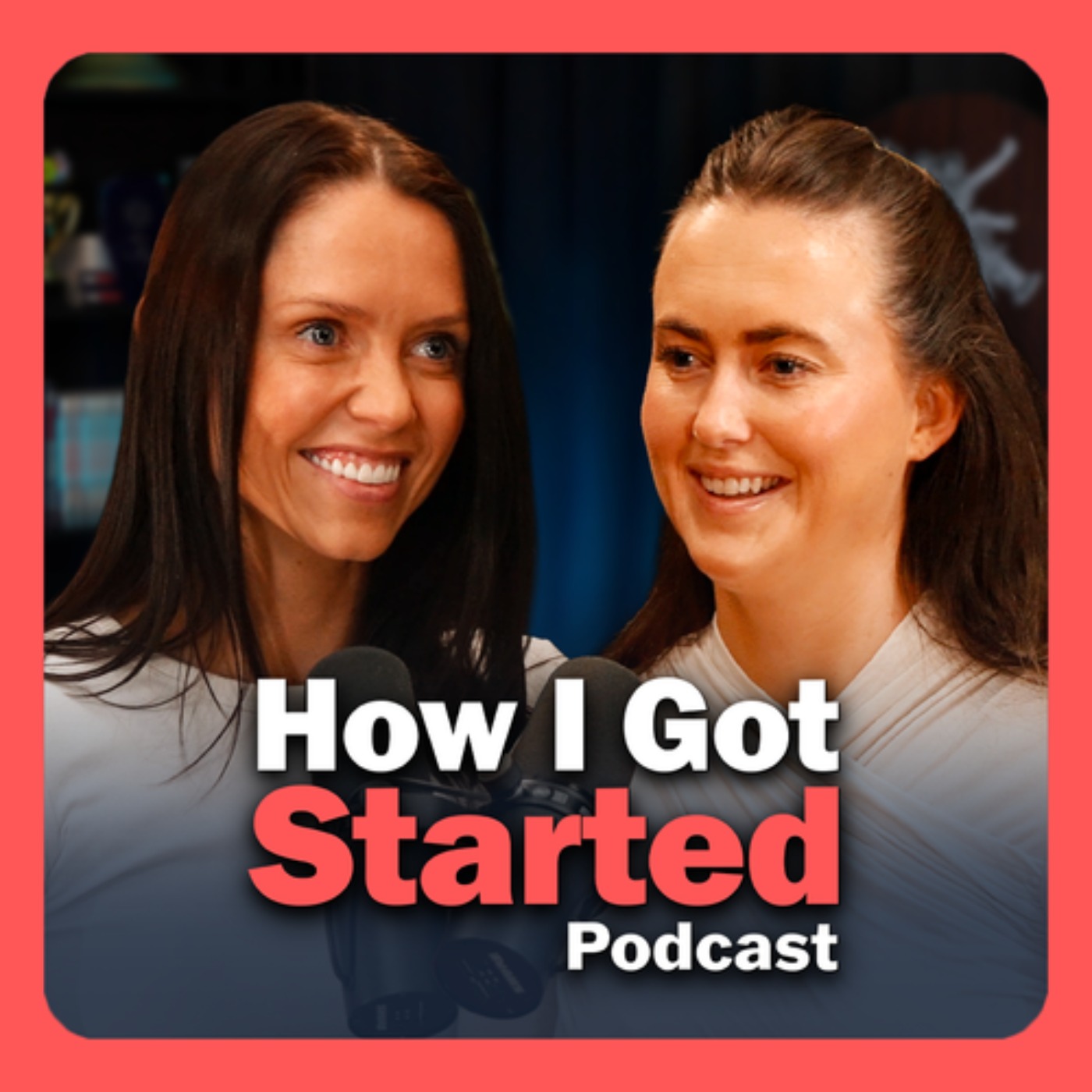
Anxious about the world right now? Here’s how I’m investing
35 min
Listen through the publisher, then discuss the episode here or arrange an in-person Roundtable. Your city determines where to meet.
Roundtables are designed for groups of four, with a shared subject and room for everyone to speak. Come for discussion, with no dating expectation.
It’s easy to feel like investing is not a good idea right now. With headlines calling stock markets a “bloodbath”, interest rate rises here in Australia and plenty of uncertainty overseas- it’s understandable to think it’s better to stop investing, or if you haven’t yet started- to put it off until things calm down. That’s how Jess used to feel. But, for the first time, all this noise has had no effect her investing plans. However, after chatting to the Get Started Community on Instagram- it’s clear that not many others feel that way. So she sat down with Jess Brady, money educator and former financial advisor, to revisit the all important facts. They cover; Why time in the market beats timing the market, how media uses fearmongering tactics around investing and the evidence that suggests staying the course is the best plan of action in turbulent times. Jess and Jess ( ) walk through research-backed examples to show why waiting for a “better time” to invest is doing yourself no favours. If you’ve been feeling (as Jess calls it) “the wobbles” or are unsure how you should react to all the headlines- this episode is an all important reminder to stay invested. Chapters: 00:00 Market Uncertainty 02:34 Why Emergency Funds Matter 06:31 Market Volatility and Fear 11:01 When to Review Your Strategy 15:23 Staying Invested 17:38 The Right Time to Invest 20:24 The Cost of Market Timing 24:30 Savings Account Traps 27:25 Offsets Versus Investing 30:53 Investing on a Budget 33:29 Final Thoughts Links mentioned in this episode: Sign up The Vanguard Index Chart here (https://equitymates.com/join-our-newsletters/) ——— ️ FinFest tickets - Buy early bird tickets here (https://www.finfest.live/) Want more Equity Mates? ——— General information only. ——— ——— Get Started Investing is a product of Equity Mates Media. If you are unsure, please speak to a financial professional. Hosted on Acast.
Episode information is provided by the publisher. Listening takes place on the publisher’s service.
Get the 200+ Page Optimal Living Daily Workbook (PDF) - Free. Want to turn today's episode into an actionable plan? Episode 3779: Joshua Fields Millburn and Ryan Nicodemus of The Minimalists explain the first steps they took to regain control of their money after years of six-figure debt. It starts with a written monthly budget that sorts every expense into essentials, nonessentials and junk, plus a small safety net for emergencies, and then reframes investing as simply paying your future self, automated so you never miss the money. Read along with the original article(s) here: https://www.theminimalists.com/freedom/ Quotes to ponder: "Most of us have no idea where our money is going. We think we know, but we don't really know." "The stricter you are, the sooner you'll be free." "Right now is the best time to start planning for your future." Airwallex is a financial technology company, not a bank. Services in the US are provided by Airwallex US, LLC, a licensed money transmitter (NMLS
You think you're hearing wisdom. You're hearing fear that spent a lifetime learning to sound like wisdom. Uploaded 11-05-26 When you were a kid afraid of the water, fear was honest about being fear. Somewhere along the way it got promoted — started speaking in complete sentences, making cases, passing for the smart move. This seminar breaks down the 4 disguises fear puts on so it can pass for common sense — and the practice that lets you catch each one in the act. CHAPTERS: 0:33 When You Were a Kid, Fear Was Honest 5:27 Disguise #1 — The Timing Argument 6:28 Disguise #2 — The Inadequacy Argument 7:40 Disguise #3 — The Consequence Argument 8:52 Disguise #4 — The Responsibility Argument 10:20 The Invisible Cost of Listening to Fear 14:39 The Slow Drift Into Spectator Life 16:27 How to Catch Fear in the Act (4 Tests) 21:54 The Practice of Deciding on Purpose 24:09 Name the Fear Before It Names the Decision THE 4 DISGUISES ▸ TIMING — "Not the right moment. Need a little more prep first." W
How will you know when you’ve reached true wealth? Is it when you have your dream home? Once you own an expensive car? Perhaps the signifier is when you’re wealthy enough to have your own private airplane? In Tony’s opinion, these are the wrong things to use when measuring your wealth. Uploaded 12-09-19 The people with mansion-sized homes, with three sports cars sitting in the garage, with a private plane that takes them to and from their vacation home – these people may not necessarily have access to true wealth. None of these are indicators of true wealth; they’re indicators of monetary wealth. True wealth is the ability to live life on your own terms. It’s freedom. Tony explains that money itself isn’t wealth, it’s a vehicle – a tool you can use to achieve financial freedom, to go after the dreams you didn’t think were possible, to design your life in a way that makes you feel alive and fulfilled. While Unshakeable is a financial freedom playbook, the process of becoming unshakeable
Why is the manosphere so appealing to young men? What does it actually mean to be a good man? To join our journaling club, with 10,600 + others, subscribe to my imperfect email - https://www.theimperfects.com.au/sign-up-to-our-newsletter/ Journalist Marc Fennell joins us in the studio to talk about the manosphere: what is it? what are its consequences? and how can we talk to our kids about it? Marc explores with Hugh, Ryan and Josh why the manosphere is so appealing to young men, especially those who think they have little value to offer, and Josh questions what his reaction would have been, if he had of been exposed to the manosphere at a vulnerable time. We look at ‘toxic masculinity,’ and the impact of being right versus making change, and in a moment of vulnerability, Marc discusses the importance of self reflection of your own behaviour. Chapters: Chapters 00:00:00 – Marc Fennell on the Manosphere [TRAILER] 00:01:01 – Ryan’s doppelganger (and media buff etc) 00:04:24 – The State o
Your free behavior course: https://nci.university/learn Uploaded 10-05-25 Exclusive NCI-4 (Grad School) Vault Release This is Behavioral Magnetics—the hidden force that draws you back to chaos, to patterns you swore you’d outgrow, to people who echo your oldest pain. It’s why peace feels boring. Why CALM makes you anxious. It’s not intuition—it’s your nervous system recycling what it knows. In this Grad School lecture, we uncover the 4 emotional magnets that shape who you trust, chase, or sabotage... even when it hurts. If you've ever said, “Why do I keep doing this?”—this is your answer. Why you're attracted to the wrong people The 4 types of emotional magnets How trauma rewires your compass Why peace can feel like withdrawal How to break free from recycled patterns Please note that the content provided in this broadcast is for informational and educational purposes only and should not be construed as legal, medical, financial, or professional advice. No material in this communication
The fight for the future of car racing has begun... If you want more optimistic stories about technology, subscribe to support our show! You already know about Formula 1. The car racing sport is famous around the world and is skyrocketing in popularity in the US in part because of the Netflix series Drive To Survive. But Formula 1 has a problem. More and more the cars that we drive are going fully electric, and the cars that they drive… aren’t. That matters, because the real reason F1 gets all this money and attention is that big companies are investing in and advertising their cutting edge tech. If that tech gets outdated, it loses the point - and the extra investment. What is the future of car racing? If it’s electric, does F1 change? Or is someone else going to get there first? Enter Formula E, the all-electric Formula 1. In this video, we explore the future of car racing, explain Formula E’s amazing tech and wild rules, and break down the drama within one of the world’s most popula
At 19, Dave Gow lost his factory job. With $20,000 saved, he spent the next three months doing whatever he wanted- going to the beach, exercising, catching up with friends. He loved it so much he decided he wanted to live like that forever. So he got serious about saving and investing. He built a property portfolio with his partner, but the ongoing costs made him question whether it was really the best path to financial freedom. So he turned to shares and dividends. By 28, he'd built enough wealth to quit his full-time job. Dave joins Jess to share how he did it on an ordinary salary, why he'd choose ETFs over property if he started again today, and how to figure out how much money you actually need to retire early. Chapters: 00:00 Dave's Investing Journey 00:03:12 Saving for His First Car 00:07:47 Discovering Financial Freedom 00:11:17 Building Wealth With Property 00:17:24 Moving From Property to Shares 00:22:09 Retiring at 28 00:26:27 How Much Do You Need to Retire 00:30:11 Life Aft
Feeling worried about investing after five rate rises in one year? Jess certainly is. She’s learnt the best way to combat that feeling- it’s with facts. So Jess sat down with Diana Mousina, Deputy Chief Economist at AMP and asked her to explain what is going on in the economy, just like she was having coffee with a friend. Why are these rate rises still happening? What does this mean for your finances? When are the rises likely to end? Should you pause your investments for a bit and wait for things to calm down? If you’ve has any of these questions swimming through your mind recently, if you’ve been feeling out of sorts or confused; Jess and Diana break down what you should actually pay attention to and what is just noise. Chapters: 0:00 Introduction 05:06 Why Rates Keep Rising 10:00 What Causes Inflation 14:18 Who Benefits From Rate Rises 17:49 Inflation vs Jobs 21:23 Investing in Uncertain Times 26:20 Mortgages and Property 33:04 Recession Fears 37:51 When Will Prices Ease 41:49 Unde
What if your first pay cheque came straight out of the ground? Growing up in Kalgoorlie, Western Australia, today's guest Tyler Mahoney was paid in gold. As a fourth-generation gold prospector, she learnt early that making money meant working hard, and some days it was baked beans, other days it was lobster. At 19, Tyler packed up her life and moved to Melbourne to start a jewellery business. After building multiple businesses, taking on $20,000 in credit card debt and eventually finding her way back to gold, she realised something was missing from her financial future. Despite growing up surrounded by gold, Tyler knew she wanted to diversify. So in 2023, she taught herself how to invest in the share market, bought her first ETF and started building a portfolio. But Tyler's biggest motivation goes beyond building wealth. After experiencing financial control in a past relationship, she made herself a promise: she'd never let someone else have power over her financial future again. From
Public institutions should accommodate religious practices when doing so does not unfairly burden others.
Share your view, then see how readers voted. No sign-in required. This poll is shared across stories.
Do you agree or disagree?
Common Quandary
A Common Quandary to discuss
Another conversation to explore, separate from this news story.
You inherit a fortune made in ways you despise. Can you keep it?
You inherit a substantial sum from a relative who accumulated it through practices you consider exploitative. Keeping it would improve your family's security; donating it could support people harmed by similar practices.
Can ownership be morally clean when its history is not?