Listen through the publisher, then discuss the episode here or arrange an in-person Roundtable. Your city determines where to meet.
Roundtables are designed for groups of four, with a shared subject and room for everyone to speak. Come for discussion, with no dating expectation.
How do we keep the feeling of powerlessness from turning into acquiescence? In this episode of The Gray Area, guest host Jonquilyn Hill sits down with Nobel Peace Prize-winning journalist and Rappler co-founder Maria Ressa. They discuss her new book, The Fight Back: A Citizen’s Guide to Standing Up to Dictators, which explores the striking parallels between political dictators like Rodrigo Duterte and modern tech oligarchs like Meta CEO Mark Zuckerberg. Ressa breaks down how social media algorithms weaponize human attention and biology, the rise of narrative warfare, the decline of independent journalism, and how everyday citizens can reclaim their agency and fight back against authoritarian control. Host: Jonquilyn Hill, host of Explain It To Me Guests: Maria Ressa, author The Fight Back: A Citizen’s Guide to Standing Up to Dictators (https://www.porchlightbooks.com/products/fight-back-maria-ressa-9780063584617)
Episode information is provided by the publisher. Listening takes place on the publisher’s service.
Trump palled around with dictators while we sweated out the tech crisis. Put some more Jim and JAMM in your search results. (https://www.google.com/preferences/source?cs=0&hl=en&q=nytimes.com) Add JimAcosta.com as a preferred source on Google› (https://www.google.com/preferences/source?cs=0&hl=en&q=JimAcosta.com) And don’t forget: The Jim Acosta Show is a reader-supported publication. To receive new posts and support my work, consider becoming a free or paid subscriber. Things moved fast this week, so don’t feel bad if you missed something — the Daily Update Digest has you covered! Monday: Trump Hid as Airports Froze Tuesday: America’s Systems Keep Crashing. Trump’s Overseas Wednesday: Democrats Hit 56 Senate Seats as Probes Loom Thursday: Trump Gets Giddy With Putin as the World Watches Friday: Trump Aides Seized Reporters’ Phones on China Trip Catch the Daily Update every morning. The Jim Acosta Show is a reader-supported publication. To receive new posts and support my work, conside
Catch up on the latest headlines with The Daily Show News Team. Jon Stewart recaps the major tech outages from the past weekend (including a nationwide FAA ground stop) and calls out Trump for "cherishing" AI and the tech oligarchs behind it despite the dystopian future they're designing for us all. Michael Kosta weighs in on the ongoing outages, the reported threat of an Iranian dirty bomb in D.C., Democrat Mary Peltola winning Alaska's Senate race, and the president's visit to Asia, where he caught some Z's during an APEC summit meeting. Plus, Kosta breaks down Trump's trilateral sitdown with besties Xi Jinping and Vladimir Putin. -- The Daily Show airs weeknights at 11/10c on Comedy Central.
A summit like no other. In a political first, President Trump sat down with President Putin and President Xi for an unprecedented trilateral meeting. He insists they’re all friends, but what does this mean for their conflicting agendas in Iran and Ukraine? Former Biden adviser Rush Doshi joins Christiane Amanpour to assess what was, or wasn’t, achieved. Then, in a landmark case, the International Court of Justice has found Myanmar guilty of committing genocide against the minority Rohingya population. The U.N. High Commissioner for Human Rights, Volker Türk, joins the show to discuss why this moment is so important. Plus, CNN’s Clare Sebastian takes us underground to look at how Ukraine’s innovative operation is helping the country make substantial gains. And best-selling author Elizabeth Strout discusses her new book ‘The Things We Never Say’, exploring the political and personal tensions of America that emerged during the 2024 presidential election. From the archive, my report from U
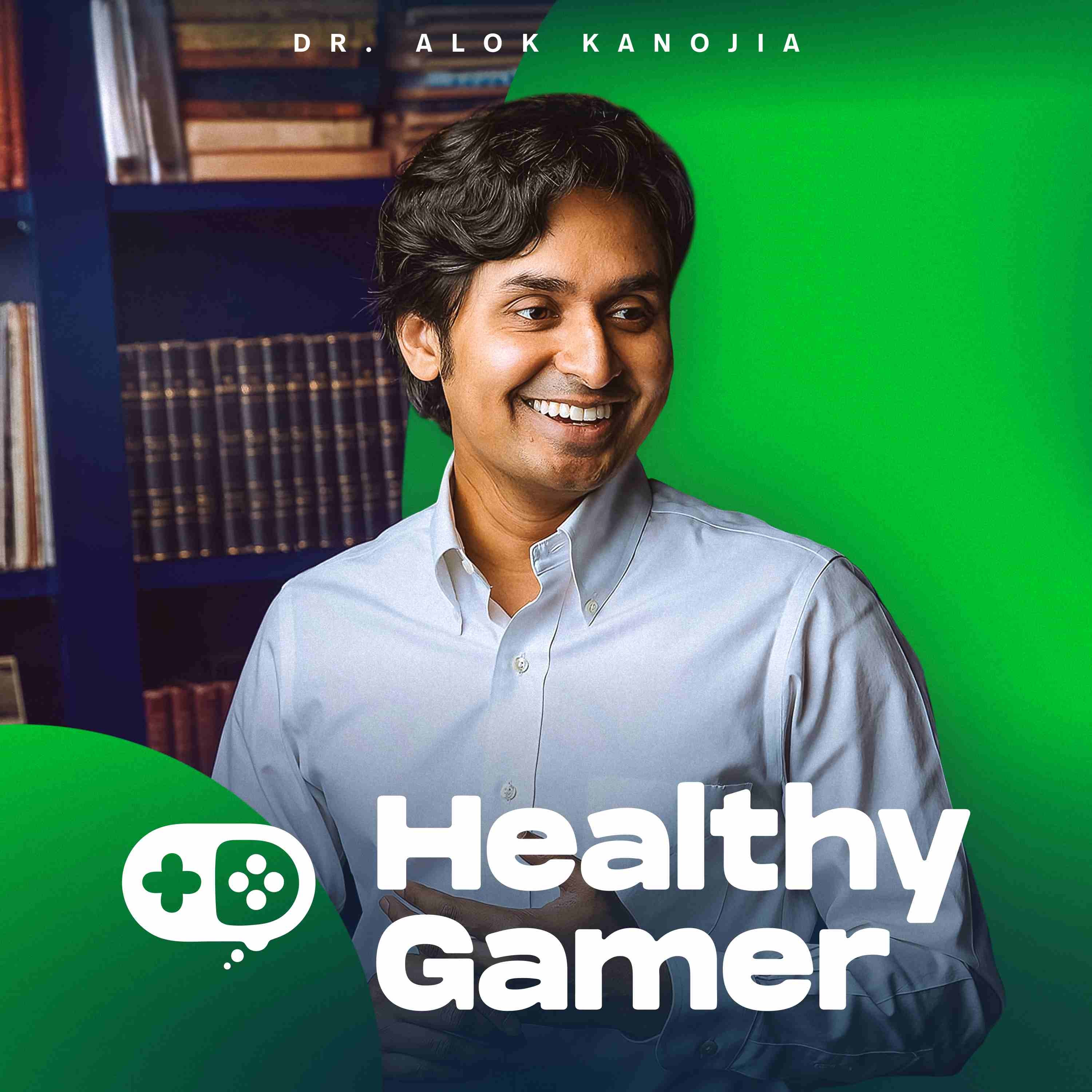
In this episode, Dr. K analyzes candid feedback from over a hundred software engineers facing burnout, loss of joy in coding, and existential dread in an AI-driven tech landscape. He breaks down the friction between developer reality and executive expectations, where corporate pressure to rapidly increase output with AI tools often results in code instability, production incidents, and tedious code-review assembly lines. Drawing on engineering benchmarks like the DORA report, Dr. K outlines tactical communication strategies for developers to manage upward by matching leadership enthusiasm while proactively documenting technical risks. Ultimately, he emphasizes that cultivating emotional resilience, social proficiency, and clear communication provides engineers with their strongest competitive edge during periods of industry disruption. Mental health resources designed by Dr. K and made with love: https://bit.ly/3ZOopgQ Talk to a HG Coach 1-on-1: https://bit.ly/46bIkdo Dr. Dr. K's Guide
DISCOVER GRAD SCHOOL: https://nci.university/home-v2?utm_source=chase_youtube&utm_medium=social_video&utm_campaign=nci4_promo (https://nci.university/home-v2) Uploaded 02-05-26 LEARN ABOUT NCI LEVEL 2: https://nci.university/nci-2?utm_source=chase_youtube&utm_medium=social_video&utm_campaign=nci2_promo (https://nci.university/nci-2) There’s a moment in every conversation where everything gets decided. It happens before logic. Before persuasion. Before anyone thinks they’re “in control.” And most people miss it completely. That’s why conversations feel unpredictable… Why people react in ways that don’t make sense… Why you can say the right thing — and still lose the room. Because the outcome was already set. This video breaks down the hidden structure behind human interaction: * how conversations organize themselves before words matter * how frames control behavior without force * how categories decide what’s allowed (and what isn’t) * how identity and metaphor quietly shape every respo
Europe's Little Anarchy: The Rise and Fall of Neutral Moresnet (https://bookshop.org/a/12343/9781501788147)(Cornell UP, 2026) uncovers the history of Neutral Moresnet: a once-forgotten space without borders, nationalism, or a recognized government. Between 1815 and 1919, this square mile of land wedged between Belgium, the Netherlands, and Germany was home to thousands of people living off the grid, free of taxation and oversight. But they also had no political status, police, legal currency, proper law courts, or government presence in sectors like public health, infrastructure maintenance, or education. Meanwhile, practical control over Neutral Moresnet lay in the hands of the local industry: a for-profit, multinational mining company that, because it owned rights to the land, also held a near monopoly on the supply of high-quality zinc to the rest of the world. Dr. Steven Press explores how the residents of Neutral Moresnet sought to improve their quality of life, appealing to Germa
When your aging parents can’t put down their phones, where does care end and control begin? In this episode, Vox reporter and producer Miles Bryan talks with internet culture reporter Jessica Lucas about the older adults who are getting hooked on AI-generated videos, and their grown children who are trying to intervene. Her reporting follows families navigating sleepless nights, health misinformation, subscription traps, and an uncomfortable reversal: the parents who may have once warned their kids about screen time as children, now need help managing their own. They explore how grief and loneliness can draw people into endless scrolling, who profits from keeping them there, and what researchers can (and can’t) tell us about the effects on the aging brain. They also consider the ethical questions facing families who secretly change passwords, curate feeds, or install restrictions. How do you protect someone without taking away their independence, or the online connections that still br
If even chocolate is getting worse, what does that tell us about our economy and the state of life’s small pleasures? In today’s episode, Vox host Jonquilyn Hill talks to New York Magazine writer Rachel Handler, who spent seven months investigating that question and uncovered a story that goes well beyond candy. Handler explains how manufacturing has changed, what chocolate reveals about corporate profits and inequality, and why even life’s smallest pleasures increasingly feel like luxuries. They explore the hidden costs of convenience, whether we’ve learned to like inferior products, and the indignity of being told nothing has changed, even when we can taste the difference. What do we lose when we stop expecting everyday things to be good? And what would it take to make a decent chocolate bar an ordinary pleasure everyone can afford? Host: Jonquilyn Hill, host of Explain It To Me Guest: Rachel Handler, features writer for New York Magazine (https://www.grubstreet.com/article/chocolate
Today we’re bringing you an episode of the Vox daily news podcast Today, Explained. It’s a show that’s about the biggest stories of the day, and – like The Gray Area – it tries to make sense of what those stories tell us about our culture and our world. This episode starts with a simple question: Was populism worth it?This week, voters delivered a sweeping rebuke to Trump and the Republican party, handing Democrats control of the House and Senate. So this is a good moment to take stock: How did Trump’s brand of politics change America? What has populism actually achieved, who are its new proponents, and are we ever going back? Host: Noel King, co-host and editorial director, Today, Explained Guests: Jonathan Chait, staff writer, The Atlantic (https://www.theatlantic.com/author/jonathan-chait/) and Eric Levitz, senior correspondent, Vox (https://www.vox.com/authors/eric-levitz) We would love to hear from you. Your comments and questions help us make a better show. New episodes drop ever
Publicly supported activities should offer reduced prices to people who cannot afford admission.
Share your view, then see how readers voted. No sign-in required. This poll is shared across stories.
Do you agree or disagree?
Common Quandary
A Common Quandary to discuss
Another conversation to explore, separate from this news story.
Your host demands shoes off, but their floor is filthy. Must you obey?
A host has a strict shoes-off rule and points to a neat row by the door. Inside, the floor is visibly sticky and covered with pet hair. You are wearing clean shoes, no socks, and would rather not spend the evening barefoot.
When does respect for a host's home yield to a guest's comfort?