Listen through the publisher, then discuss the episode here or arrange an in-person Roundtable. Your city determines where to meet.
Roundtables are designed for groups of four, with a shared subject and room for everyone to speak. Come for discussion, with no dating expectation.
If even chocolate is getting worse, what does that tell us about our economy and the state of life’s small pleasures? In today’s episode, Vox host Jonquilyn Hill talks to New York Magazine writer Rachel Handler, who spent seven months investigating that question and uncovered a story that goes well beyond candy. Handler explains how manufacturing has changed, what chocolate reveals about corporate profits and inequality, and why even life’s smallest pleasures increasingly feel like luxuries. They explore the hidden costs of convenience, whether we’ve learned to like inferior products, and the indignity of being told nothing has changed, even when we can taste the difference. What do we lose when we stop expecting everyday things to be good? And what would it take to make a decent chocolate bar an ordinary pleasure everyone can afford? Host: Jonquilyn Hill, host of Explain It To Me Guest: Rachel Handler, features writer for New York Magazine (https://www.grubstreet.com/article/chocolate-hersheys-reeses-conspiracy.html?_gl=1*1ab0iu5*FPAU*MTM1NjM5ODYyMS4xNzkyNTAzOTQ2*_ga*NDA1MzIyMTE1LjE3OTI0MjY5ODg.*_ga_DNE38RK1HX*czE3OTM3MjQzMjckbzckZzAkdDE3OTM3MjQzMjckajYwJGwwJGgxNDUxMjgyOTMx*_fplc*JTJCTnZvYU9YRVBuV1pXRVJEcnNWRmpKd0p4clF4a2UlMkZTaWo0TUVxemFJbmxHSVIzb21PZ3VHZjJseWFGcmRNeTQ2VWlVNldJJTJCNXhIVkM1TEUyRmxYSUxaaHd1SFN2ZjlVUVRubkJsMGk4eXhqRmFDdHB6QzZUbnU0OEV4T2hBJTNEJTNE) Chapters 00:00 Intro 01:24 Why does chocolate taste worse now? 11:15 What’s actually in your chocolate? 17:34 Who pays the price for cheap chocolate? 20:01 Is good chocolate becoming a luxury? 25:37 What’s the hidden cost of convenience? 31:21 Have we learned to like worse chocolate? 33:23 Why this is about more than chocolate We would love to hear from you. Your comments and questions help us make a better show. New episodes drop every Monday and Friday.
Episode information is provided by the publisher. Listening takes place on the publisher’s service.
Today, Mel is doing something she's never done before on The Mel Robbins Podcast. She's bringing members of her team into the studio for live coaching with world-renowned communications expert Vinh Giang. Vinh is known for teaching millions of people online how to stop sounding insecure, speak more clearly, and get people to listen when you talk. And when you hear him coaching today, it will be like he’s coaching you. One person freezes when they're put on the spot. Another can't stop interrupting people. Someone else has great ideas but stays quiet because they're afraid of being judged. Does any of that sound familiar? And Vinh isn't just giving advice. He's coaching real people through practical exercises, right there in the studio, so you can hear the difference and start making those same changes in your own life. As Mel says, put yourself in their shoes. As Vinh works with each person, you'll recognize things you struggle with, too. You'll learn: -What to do when your mind goes b
Instant Access to your FREE training course: https://nci.university (https://nci.university/) Uploaded 27-07-25 This is the simulation you already live inside of—and you’ve been breathing it like oxygen since the day you were born. In this video, we expose the invisible machinery beneath modern life—how symbols have replaced truth, how marketing has replaced meaning, and how our desires are manufactured by the very system that feeds on them. Drawing from the work of Jean Baudrillard and the hidden mechanisms of simulacra, we walk you through 10 real-life “glitches” that reveal the truth: • Why your food is rendered, not real • How social media replaced memory • Why you take photos of things you never actually see • And why even your “rebellion” is likely pre-approved This isn’t a conspiracy. It’s a mirror. And once you see it, you can’t unsee it. simulation theory, simulated reality, Baudrillard simulation, are we in a simulation, hyperreality explained, social media illusion, digital
Read: Matthew 28:19-20; Hebrews 4:12 (https://www.biblegateway.com/passage/?search=Matthew+28%3A19-20%3B+Hebrews+4%3A12) Sheri clutched her new book to her chest as she held the phone to her ear. “Yes, you totally need to read it! The last few chapters are great!” “You always find such fun books! I’ll look for it at the library the next time I go,” her friend Megan said. “Oh, my dad is calling. I’ve got to go.” Sheri hung up, then went into the family room and plopped on the couch beside Mom. “You really enjoyed that book, didn’t you?” Mom said as she folded some towels. “Yes!” Sheri flipped through it. “It’s the best I’ve read in ages! There’s romance, heroes and villains, battles of good versus evil, and so much more!” “That does sound exciting.” Mom smiled. “I know of another book like that, filled with good versus evil, heroes battling villains, and even romance. It’s my favorite.” Sheri furrowed her brow. “What book is that?” Mom held up the book beside her. “The Bible. Have you t
When you’re feeling a little blue, eating to feel better can be an appealing proposition. But the reality is we often turn to junk food or sugary treats that are high in calories and packed with salt or saturated fats. Of course, our mood can be impacted by a number of factors and there’s no magic fix that will instantly make us feel better. But there are actually types of food out there that have been proven to improve brain health and thereby beat mood disorders. Which foods are proven to improve brain health? Avocados are rich in Omega 3, aren’t they? Don’t bananas also contain tryptophan? In under 3 minutes, we answer your questions! To listen to the last episodes, you can click here: Do tongue scrapers actually help with bad breath? (https://originals.bababam.com/do-you-really-know/202406140300-do-tongue-scrapers-actually-help-bad-breath) Do our brains really tell the whole story about us? (https://originals.bababam.com/do-you-really-know/202406130300-do-our-brains-really-tell-who
Runaway government spending, rising costs, and a new wave of legal battles over constitutional rights. With Democrats preparing to take control of Congress and several state governments, Republicans are confronting a very different political landscape. John Solomon and Amanda Head welcome Montana Senator-elect Kurt Alme, who says Washington must get serious about reining in spending, lowering inflation, and making everyday life affordable again. Already preparing for his arrival in the Senate, Alme discusses his priorities for protecting Montana's way of life, keeping taxes low, creating good-paying jobs, and working across party lines when possible. He also addresses the challenges Republicans face in the minority, the remaining lame-duck session, and concerns about efforts to expand the Supreme Court and eliminate the filibuster. Then, Southeastern Legal Foundation President Kimberly Hermann joins the show with a warning about potential policy reversals in states where Democrats have
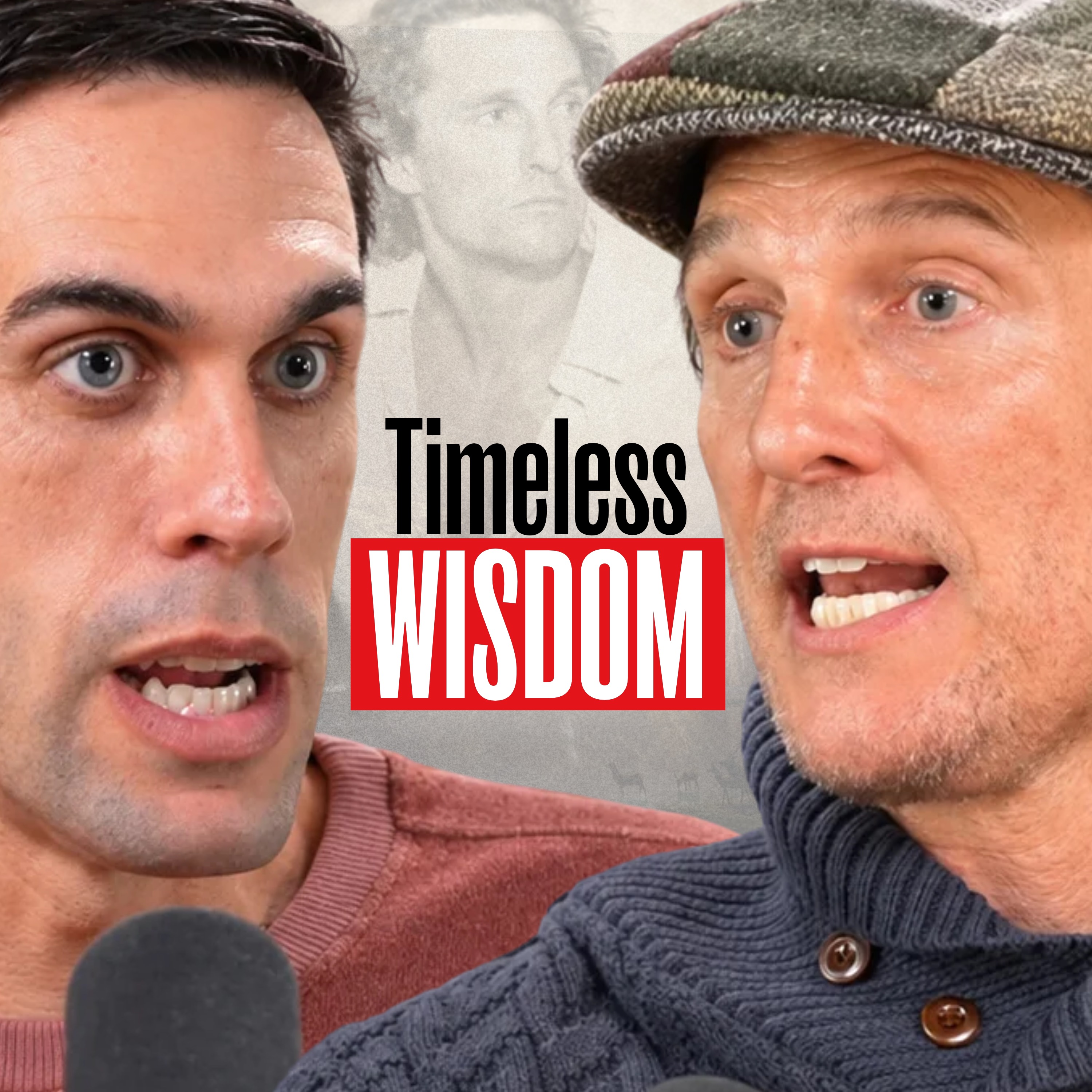
Today, Ryan sits down with Academy Award-winning actor and bestselling author Matthew McConaughey to talk about the power of poetry and how it can help us make sense of life. They talk about the difference between being good and being nice, the courage to stand by your principles, knowing when to say no, how poetry can help us navigate life’s challenges, and more. Grab the NEW Poems & Prayers: Deluxe Edition by Matthew McConaughy (https://www.thepaintedporch.com/products/poems-prayers-deluxe-edition-unsigned?_pos=2&_sid=f59711761&_ss=r): https://www.thepaintedporch.com/products/poems-prayers-deluxe-edition-unsigned?_pos=2&_sid=f59711761&_ss=r Greenlights by Matthew McConaughy (https://www.thepaintedporch.com/products/bio2?_pos=1&_sid=0b6db1b34&_ss=r): https://www.thepaintedporch.com/products/bio2?_pos=1&_sid=0b6db1b34&_ss=r Greenlights: Your Journal, Your Journey by Matthew McConaughy (https://www.thepaintedporch.com/products/greenlights-your-journal-your-journey?_pos=2&_sid=0b6db1b34&
How do we keep the feeling of powerlessness from turning into acquiescence? In this episode of The Gray Area, guest host Jonquilyn Hill sits down with Nobel Peace Prize-winning journalist and Rappler co-founder Maria Ressa. They discuss her new book, The Fight Back: A Citizen’s Guide to Standing Up to Dictators, which explores the striking parallels between political dictators like Rodrigo Duterte and modern tech oligarchs like Meta CEO Mark Zuckerberg. Ressa breaks down how social media algorithms weaponize human attention and biology, the rise of narrative warfare, the decline of independent journalism, and how everyday citizens can reclaim their agency and fight back against authoritarian control. Host: Jonquilyn Hill, host of Explain It To Me Guests: Maria Ressa, author The Fight Back: A Citizen’s Guide to Standing Up to Dictators (https://www.porchlightbooks.com/products/fight-back-maria-ressa-9780063584617)
When your aging parents can’t put down their phones, where does care end and control begin? In this episode, Vox reporter and producer Miles Bryan talks with internet culture reporter Jessica Lucas about the older adults who are getting hooked on AI-generated videos, and their grown children who are trying to intervene. Her reporting follows families navigating sleepless nights, health misinformation, subscription traps, and an uncomfortable reversal: the parents who may have once warned their kids about screen time as children, now need help managing their own. They explore how grief and loneliness can draw people into endless scrolling, who profits from keeping them there, and what researchers can (and can’t) tell us about the effects on the aging brain. They also consider the ethical questions facing families who secretly change passwords, curate feeds, or install restrictions. How do you protect someone without taking away their independence, or the online connections that still br
Today we’re bringing you an episode of the Vox daily news podcast Today, Explained. It’s a show that’s about the biggest stories of the day, and – like The Gray Area – it tries to make sense of what those stories tell us about our culture and our world. This episode starts with a simple question: Was populism worth it?This week, voters delivered a sweeping rebuke to Trump and the Republican party, handing Democrats control of the House and Senate. So this is a good moment to take stock: How did Trump’s brand of politics change America? What has populism actually achieved, who are its new proponents, and are we ever going back? Host: Noel King, co-host and editorial director, Today, Explained Guests: Jonathan Chait, staff writer, The Atlantic (https://www.theatlantic.com/author/jonathan-chait/) and Eric Levitz, senior correspondent, Vox (https://www.vox.com/authors/eric-levitz) We would love to hear from you. Your comments and questions help us make a better show. New episodes drop ever
Scarce treatments should be allocated by medical need rather than ability to pay.
Share your view, then see how readers voted. No sign-in required. This poll is shared across stories.
Do you agree or disagree?
Common Quandary
A Common Quandary to discuss
Another conversation to explore, separate from this news story.
You both hate the invitation. Which partner has to become the excuse?
A couple receives an invitation neither wants to accept. One suggests claiming the other is ill, reasoning that friends will question a vague excuse but respect sickness. The proposed patient dislikes lying but also wants to stay home.
Is a shared lie fair when only one person's reputation carries it?