Astronauts reflect on living aboard the International Space Station
25 min
Listen through the publisher, then discuss the episode here or arrange an in-person Roundtable. Your city determines where to meet.
Roundtables are designed for groups of four, with a shared subject and room for everyone to speak. Come for discussion, with no dating expectation.
The International Space Station is 250 miles above Earth and travels at roughly 17,500 mph as it orbits our planet. Since 2000, scientists have conducted experiments on everything from cancer to botany to fundamental questions about our universe. Horizons moderator William Brangham explores life aboard the ISS with two astronauts who worked there, Karen Nyberg and Don Pettit. Hosted on Acast. See acast.com/privacy
Episode information is provided by the publisher. Listening takes place on the publisher’s service.
Europe's Little Anarchy: The Rise and Fall of Neutral Moresnet (https://bookshop.org/a/12343/9781501788147)(Cornell UP, 2026) uncovers the history of Neutral Moresnet: a once-forgotten space without borders, nationalism, or a recognized government. Between 1815 and 1919, this square mile of land wedged between Belgium, the Netherlands, and Germany was home to thousands of people living off the grid, free of taxation and oversight. But they also had no political status, police, legal currency, proper law courts, or government presence in sectors like public health, infrastructure maintenance, or education. Meanwhile, practical control over Neutral Moresnet lay in the hands of the local industry: a for-profit, multinational mining company that, because it owned rights to the land, also held a near monopoly on the supply of high-quality zinc to the rest of the world. Dr. Steven Press explores how the residents of Neutral Moresnet sought to improve their quality of life, appealing to Germa
Some strange things are happening out in space and down here on Earth. Earlier this week, astrophysicist Neil deGrasse Tyson joined Aishah Hasnie (https://www.youtube.com/watch?v=yor7TRWw67k) to unpack a fast-moving object known as 1998 KY26 orbiting the Sun, UAP discussions, and the physics behind what a first alien encounter might actually look like. Tyson broke down why its trajectory doesn't follow standard gravity alone, weighed theories ranging from space junk to the Yarkovsky effect, and shared insights from his book Take Me to Your Leader: Perspectives on Your First Alien Encounter. They also dove into growing concerns around artificial intelligence, tech vulnerabilities, and why Tyson says global guardrails are essential—plus why he’d choose the future if he had a time machine. The conversation was full of laughs and interesting perspectives on space and the potential for extraterrestrial life, but it was too long for our regular midweek Rundown. So, on today's FOX News Rundow
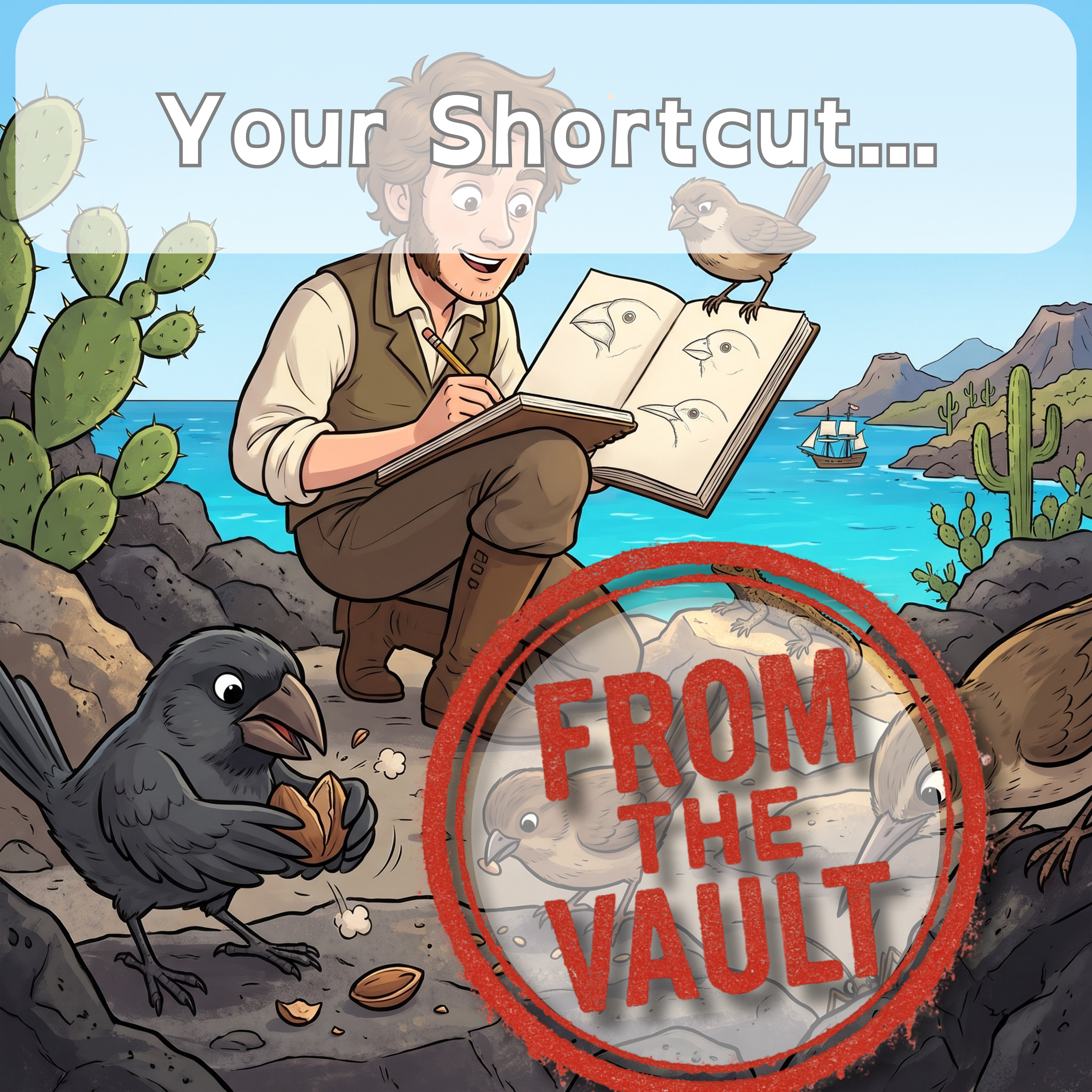
Tuesday 24 November marks the anniversary of the publication of Charles Darwin’s On the Origin of Species in 1859. So this week, we’re dusting off our Shortcut to Evolution to find out how living things change over generations and how all life on Earth is connected. Join Christie and Bryce as they travel back in time in the Squiz Kids Time Machine, dig into the clues fossils leave behind and meet two scientists who came up with the idea of natural selection independently, Charles Darwin and Alfred Russel Wallace. Along the way, find out what bird beaks can tell us about survival and how tiny changes in DNA can help shape life over generations. Listen carefully … there’s a S’Quiz at the end!
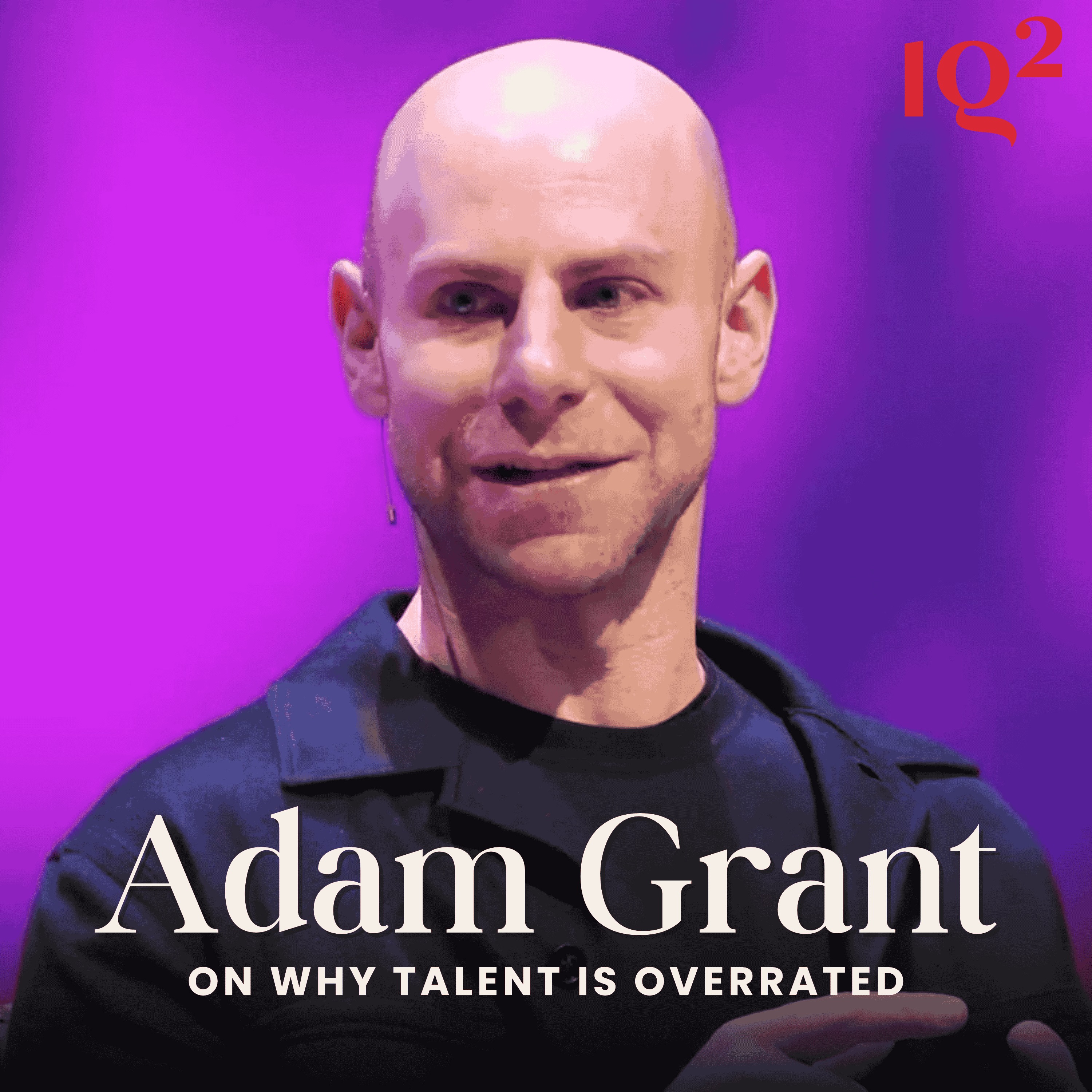
Adam Grant is one of the most sought after organisational psychologists in the world. He has provided expert advice to many of the world’s greatest business leaders, including Bill Gates and Sheryl Sandberg, equipping them with the mental tools to find motivation and meaning, rethink assumptions, and achieve greatness in their business and personal lives. In January 2024 Grant came to the Intelligence Squared stage for a rare, exclusive London event where he shared his revolutionary framework for how we can all exceed the expectations and aspirations we have set for ourselves. Drawing on his new book Hidden Potential he explained that despite living in a world that tends to admire people who start out with innate talent, there is clear scientific evidence that we can all bridge the biology gap and improve ourselves dramatically. In conversation with economist and FT columnist Tim Harford, Grant wove together groundbreaking evidence, surprising insights, and vivid story telling to take
On 4th March 2023, UN member states agreed a historic treaty that had been over fifteen years in the making. The High Seas Treaty is the first ever treaty to protect the world’s oceans outside national boundaries. The aim is to meet the 30 by 30 biodiversity target, protecting 30% of the world’s oceans by the year 2030. Also known as the open sea or international waters, the high seas begin at the limit of countries’ exclusive economic zones. That means up to 370km, or 200 nautical miles, from the coastline. They account for 64% of the world’s oceans, and have been referred to as the last true wilderness, given how much mystery still lies within. Why is protecting the oceans so important? What measures are expected to come from the treaty? In under 3 minutes, we answer your questions! To listen to the last episodes, you can click here: How to make the most out of a rental property? (https://originals.bababam.com/do-you-really-know/202303090400-how-make-most-out-rental-property) What is
Angelina Kelly is joined by former England international Jay Bothroyd to assess Manchester United’s squad under new manager Mauricio Pochettino ahead of a daunting trip to Anfield. The pair discuss whether Pochettino has the personnel to implement his high-energy system and how Bruno Fernandes fits into his plans. They then size up Andoni Iraola’s Liverpool. They examine the Reds’ patchy home form, defensive vulnerabilities, and whether Alexander Isak will punish a struggling United side. Plus we find out which manager Jay would like to play under! VoiceNotes & Email: [email protected] YouTube: @talkSPORT X: @talkSPORT & @talkSPORT2 Instagram: @talkSPORT Photo Credit: Getty Images Hosted on Acast.
Friday on the News Hour, President Trump touts his meeting with Putin and Xi and lays out some of his immediate priorities. The Trump administration replaces its cybersecurity chief while the public continues to seek answers about recent nationwide tech outages. Plus, from the measles outbreak to his vision for the Democratic Party, a wide-ranging interview with Pennsylvania Gov. Josh Shapiro. Hosted on Acast. See acast.com/privacy
President Trump meets with Xi Jinping and Vladimir Putin in an unprecedented show of three leaders who understand the power of grand diplomatic gestures. On a special edition of Compass Points, Nick Schifrin is in Shenzhen, China, and has details on the historic meeting and the message it's sending. Plus, Stephanie Sy analyzes the summit with Heather Conley, Patricia Kim and Charles Kupchan. Hosted on Acast. See acast.com/privacy
In a year scarred by deadly floods and heat waves, the planet's global temperature is on the verge of surpassing a critical threshold. Horizons moderator William Brangham explores the dangerous nature of climate change and the seeming inability to address the crisis with Kate Marvel and Michael Mann, two research scientists who have long wrestled with this issue. Hosted on Acast. See acast.com/privacy
Environmental commitments should be judged by measured outcomes rather than announced targets.
Share your view, then see how readers voted. No sign-in required. This poll is shared across stories.
Do you agree or disagree?
Common Quandary
A Common Quandary to discuss
Another conversation to explore, separate from this news story.
One friend is rich, one is broke, and everyone ordered differently. How do you split dinner?
A group of longtime friends traditionally divides restaurant bills equally. Their incomes have grown increasingly unequal, and one friend now declines gatherings because even their share is difficult to afford while others order without thinking about price.
When should friendship adjust for differences in wealth?