Listen through the publisher, then discuss the episode here or arrange an in-person Roundtable. Your city determines where to meet.
Roundtables are designed for groups of four, with a shared subject and room for everyone to speak. Come for discussion, with no dating expectation.
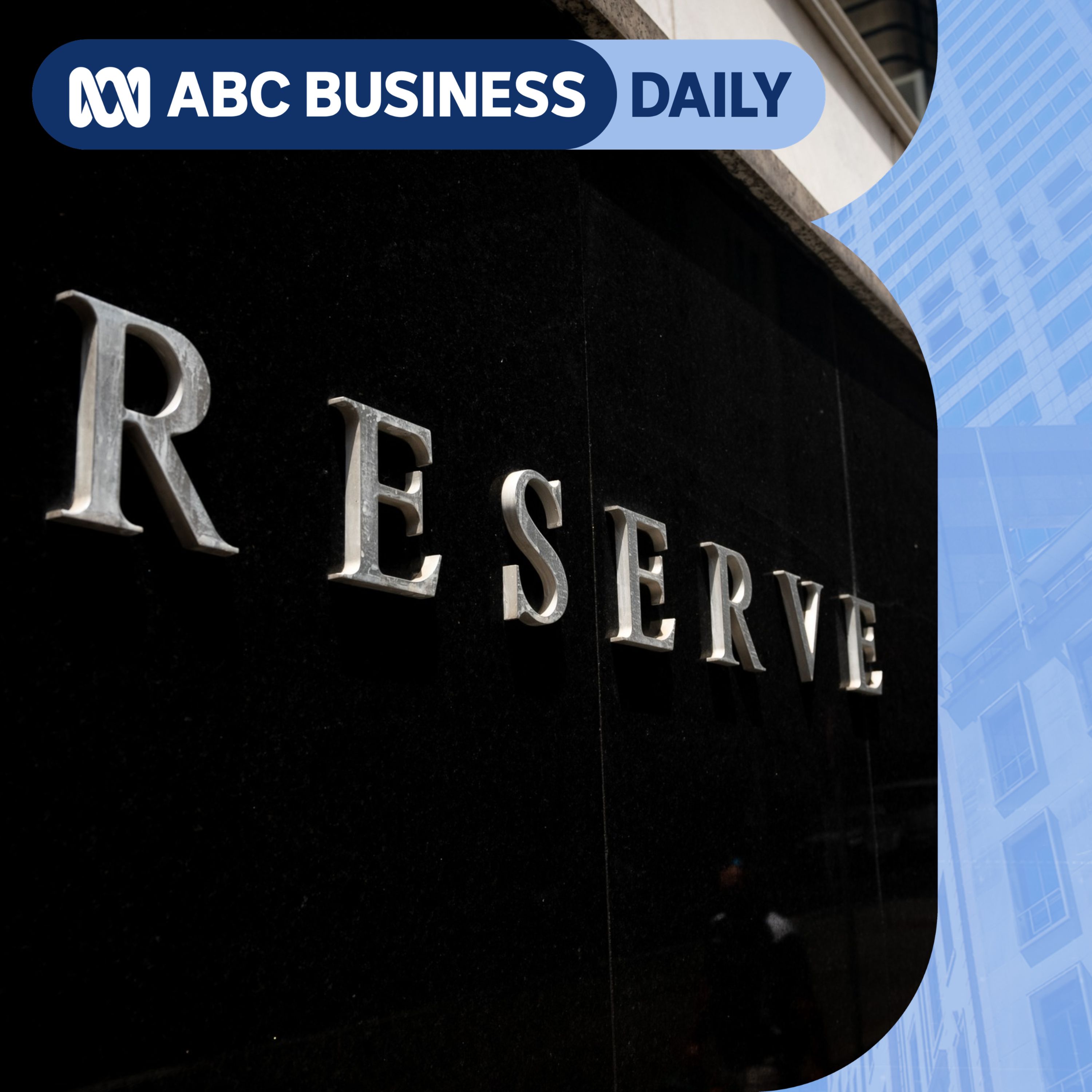
The numbers are in, and it's not good. Inflation rose to 4.9 per cent in October, up from 4.3 per cent in September. The fresh ABS figures give us another look under the bonnet of an economy still grappling with stubbornly high inflation, following five interest rate hikes this year. So what's the detail behind the numbers? Where are the price pressures, where are we seeing signs of relief, and how might these latest figures shape the Reserve Bank’s decisions in the coming months? Lin Lin and Besa Deda, Chief Economist at William Buck Australia break it all down on ABC Business Daily. Got a burning business question? We'd love to hear your questions!
Episode information is provided by the publisher. Listening takes place on the publisher’s service.
Home prices are falling, but Australia's housing affordability problem could take a generation to fix. Why is the gap between house prices and incomes so hard to close? NAB Group Chief Economist Sally Auld joins Ally to explain why productivity is central to the solution. She unpacks what is holding back housing supply and where NAB predicts property prices might bottom. Plus, the RBA's next move, the potential impact of AI and how advisers can position portfolios for 2027. Chapters: 00:00 Introduction 01:27 Australia's Housing Affordability Crisis 04:33 Why Housing Supply Falls Short 09:15 Have Millennials Been Left Behind? 13:17 When Will Property Prices Bottom? 15:22 Rate Cuts and Recession Risks 20:29 Australia's Productivity and Inflation Problem 22:09 Can AI Solve Productivity? 24:24 Australia's Future Economic Opportunities 27:10 The Fixed Income Outlook 30:00 Equity Opportunities and Portfolio Diversification 33:04 Key Takeaways for Financial Advisers Complete the quiz here (ht
US tech stocks tumbled overnight as Nvidia gave back some of its recent gains, with renewed concerns over AI investment weighing on investor sentiment. Here at home, the ASX is poised for a subdued open as attention turns to today's crucial inflation figures and what they could mean for the RBA's next interest rate decision. Plus, why housing affordability remains near record lows despite falling home prices. **This episode was recorded with two hours of trading to go on Wall Street** Join James Gruber, Equity Market Strategist and James Tao, Equity Market Commentator at CommSec, as they take you through all the key numbers. Instagram (https://www.instagram.com/commsec/) YouTube (https://www.youtube.com/@CommSecTV/featured) TikTok (https://www.tiktok.com/tag/commsec)
Wednesday 25th November 2026 Phil and NAB’s Rodrigo Catril discuss another volatile whipsaw on Wall Street, where yesterday’s massive tech rally went into reverse—sending Nvidia down nearly 9% and Anthropic 12% lower, back below its list price. Uncertainty emanating from a senate committee scrutinising Chinese shipments has rattled AI sentiment. A softer US dollar helped lift the Australian dollar to 66.4 US cents despite reports that Donald Trump is preparing fresh Section 301 tariffs on China, the EU, and 14 other nations. Meanwhile, a surprise jump in US consumer confidence, which can be taken alongside today’s US PCE inflation and Q3 GDP prints. Locally the focus today is on Australia’s October CPI release, expected to hit a cyclical peak of 4.7% headline and 0.4% monthly trimmed mean—as a key test for whether the RBA stays comfortably on hold. Hosted on Acast.
When stocks fall, investors often turn to government bonds. Our Global Head of Macro Strategy Matthew Hornbach looks at whether the market's favorite hedge has lost its appeal. ----- Transcript ----- Matthew Hornbach: Welcome to Thoughts on the Market. I'm Matthew Hornbach, Global Head of Macro Strategy at Morgan Stanley. Today, can Treasuries once again protect a portfolio when stocks fall? It's Tuesday, November 24th at 10am in New York. Last week, the S&P 500 fell every day and closed in correction territory. Doubts about the AI trade drove most of the selling, and Treasuries rallied even as Fed officials argued for more rate hikes. Ten-year yields fell about a fifth of a percentage point on the week back below 5 percent. That's what a hedge is supposed to do. For much of the past few years, however, Treasuries fell alongside stocks instead. In our view, Treasuries can work as a hedge again when the worry is about slower growth. When the worry is about inflation, however, bonds and
ADDING REAL ESTATE FUNDS TO FIGHT INFLATION? HERE'S WHICH ACCOUNT THEY BELONG IN Worried inflation could hit 9%? If you won't touch the money for a decade, the best hedge may be owning the very companies raising prices on you. Former financial planner Joe Saul-Sehy joins Paula to answer three listener questions: how to hedge against high inflation, whether a 40-year-old veteran with $52,000 a year in tax-free disability income is saving too much, and whether a newly retired couple with $1.8 million and a pension that won't rise with inflation is holding too much in stocks. In this episode, we discuss: Why physical assets tend to hold value when cash loses it How mixing three risky investments can make a portfolio calmer Why rebalancing feels backward, and why to do it anyway What you're really betting on with a rental vs. a real estate fund How to plan around a government benefit that could change How to decide how many years of spending to keep out of stocks Why inflation-protected Tr
Paul Colborne, President and CEO, of Surge Energy Inc. (TSX: SGY) (OTCQX: SGYEF), joins us to for a comprehensive review of the financial and operating results for the third quarter, ended September 30, 2026, and the Company's board of directors approved 2027 capital and operating budget guidance. Surge Energy is a leading intermediate Canadian public oil company that produces ~24,000 boepd (89% light and medium gravity conventional crude oil), from a dominant operational position in two core areas in some of the most economic oil plays in in Alberta and Saskatchewan. Its Sparky and SE Saskatchewan premium, low risk, conventional oil assets possess large reservoirs, low recovery factors, high netbacks, quick well payouts, and a significant 12+ year development drilling inventory. As a Canadian oil producer, Surge benefits from oil revenues that are based on crude oil prices in US dollars, while incurring operating and capital costs in Canadian dollars. In Q3/26, after applying Canadian
Jensen Huang is back at the helm of Nvidia - just 11 days after his dramatic exit. His return has sent Wall Street roaring, and US President Donald Trump says he played a key role in the decision, claiming he intervened to make the return happen. There are serious questions about corporate governance that, for now, remain unanswered - but with Huang is still scheduled to testify before lawmakers next week and a congressional committee confirmed, will more be revealed? And with an AI boom already showing signs of strain, is this comeback really the good news investors seem to think it is? Lin Lin and ABC's Chief Business Correspondent Ian Verrender break it all down on ABC Business Daily. Read Ian's analysis here (https://www.abc.net.au/news/2026-11-24/ai-bubble-has-not-burst-but-it-has-significantly-deflated/107416578). Listen to our conversation on the risks of a celebrity CEO here (https://www.abc.net.au/listen/programs/abc-business-daily/the-risk-of-a-celebrity-ceo/107382406). Got a
After five interest rate hikes this year, Australia's economy is starting to show some worrying signs. Unemployment has hit a five-year high, and recession fears are growing. Has the Reserve Bank gone too far in its cutting? And what is a closely watched recession indicator telling us? Plus, it's been a brutal week on Wall Street - even the biggest IPO in history couldn't rescue the AI trade. Is this a correction we had to have, or the start of something much worse? Lin Lin and ABC Business Reporter Steph Chalmers break it all down on ABC Business Daily. Read Lin's latest analysis here (https://www.abc.net.au/news/2026-11-23/sahm-rule-recession-indicator-australia-november-2026/107408750). Got a burning business question? We'd love to hear your questions!
Between rising inflation, a weakening labour market, and ongoing war in the Middle East keeping energy costs high, it's a difficult time for the Australian economy. The Reserve Bank's answer to these economic woes has been to hike interest rates fives times in 2026. It's a blunt tool — and an unpopular one among mortgage holders. But are interest rate rises our best bet to fix the economy? Warwick McKibbin sat on the RBA board from 2001 to 2011, and he worked at the bank for decades. He knows what it's like to be in the room making the call on interest rates — and he's also dealt with the fallout of leaked information about those decisions. He sat down with Carrington Clarke on ABC Business Daily to talk inflation, rate rises, and how much the public should know about RBA members' opinions. Got a burning business question? We'd love to hear your questions!
Schools should adapt standards to individual needs rather than apply identical expectations to everyone.
Share your view, then see how readers voted. No sign-in required. This poll is shared across stories.
Do you agree or disagree?
Common Quandary
A Common Quandary to discuss
Another conversation to explore, separate from this news story.
Someone holds a grocery line spot while their partner fills the cart. Is that cutting?
A shopper with one item stands ahead of you in a long checkout line. Just before reaching the register, their partner arrives with a cart packed to the top and joins them. They insist they were shopping together all along.
Can one person reserve a place in line for an unknown amount of work?