Bed Rotting vs. Brain Stacking: Why a Day in Bed Leaves You Still Tired
62 min
Listen through the publisher, then discuss the episode here or arrange an in-person Roundtable. Your city determines where to meet.
Roundtables are designed for groups of four, with a shared subject and room for everyone to speak. Come for discussion, with no dating expectation.
Bed rotting promises a guilt-free reset, so why do so many of us spend a whole day in bed and still wake up tired? My daughter Dominique and I put two TikTok trends side by side: bed rotting, where you stay in bed for hours to recharge, and brain stacking, where you line up journaling, puzzles, and reading to fight brain rot. Both are reactions to the same exhaustion. We talk about why your mindset matters more than the activity, where the guilt after a day in bed comes from, and how to plan a rest day that leaves you feeling restored. What you'll learn: Why a whole day in bed on your phone can leave you more tired, and what to do differently How to use the guilt you feel after resting as information instead of pushing it down Why your brain isn't rotting, and what's going on when life pulls you in a thousand directions How brain stacking can turn something fun into one more performance The two-minute morning habit that starts preparing you for sleep My Neurocycle Prescription for a reset day that combines real rest with joy My new private community is open! Become a founding member of Neurocycle Insiders for weekly Prescriptions and live Q&As with me: https://neurocycle-insiders.circle.so/neurocycle-insiders Hear more from Dominique on Substack: https://dominiqueleaf.substack.com/ Resources mentioned: This week's Neurocycle Prescription and the diary feature in the Neurocycle app: https://drleaf.com/neurocycle-app Research cited: American Academy of Sleep Medicine 2024 Sleep Prioritization Survey: https://aasm.org/bed-rotting-tops-tiktok-trends-americans-embrace-viral-sleep-habits Amerisleep bed rotting survey: https://amerisleep.com/blog/bed-rotting-survey/ This episode is brought to you by: Visit WaldenU.edu. Shopify: https://shopify.com/leaf Granola: https://granola.ai/drleaf Mint Mobile: So, what are you waiting for? 1:1 Coaching with Dr. Leaf: https://drleaf.com/coaching-1-1 New episodes every Monday and Thursday. If this conversation helped you, follow the show so each new episode comes straight to you, and leave a rating. It helps more people find it. Share this with someone who wants to build a stronger, more adaptable mind. Connect with me: Instagram: https://instagram.com/drcarolineleaf TikTok: https://tiktok.com/@drcarolineleaf Facebook: https://facebook.com/drleaf X: https://twitter.com/DrCarolineLeaf Website: https://drleaf.com (https://drleaf.com/)
Episode information is provided by the publisher. Listening takes place on the publisher’s service.
Professor Clare Collins speaks with Melbourne dietitian and gut-health researcher Sarah Melton about diet stacking, which is the phenomena of combining multiple dietary strategies at the same time, often without a clear plan. Diet stacking can severely limit food choice,, increase stress and reduce the number of foods a person feels confident to eat. They discuss how 'stacked diets' risk not being nutritional adequate, how restrictions can affect nutrition, health and wellbeing, and why diagnosis and professional guidance are important - before removing foods from your usual intake. Key Topics Diet stacking is an increasing phenomenon that clinicians are seeing Gut conditions can include identifiable diseases, like coeliac disease and inflammatory bowel disease, and disorders of gut-brain interaction, like irritable bowel syndrome. The more diets that are stacked, the more food groups excluded and the greater the risk for poor nutrition, health and wellbeing Some diet combinations may
What if you could eat the stuffing, go back for seconds, and still wake up on Friday morning without feeling gross and like you overdid it? Not puffy, not foggy, and not counting the days until you start over in January.. I want you to think differently about holiday food in your 40s, so inside this episode I'm walking you through simple anti-inflammatory swaps that let you eat the same food as everyone else at the table, without the “special plate” and without feeling deprived. After listening you'll understand why the special plate left you feeling left out, why eating whatever is on the table leaves you feeling awful for days, and why neither one has to be your only option. If you're constantly asking yourself, "Why can't I enjoy the holidays without paying for it all week?", this episode is for you. You'll discover how to keep your family's favorite dishes on the table, make them anti-inflammatory without anyone noticing, and start new traditions everyone will love. Inside This Epi
Trent and Peaches are tired of watching people celebrate minimum standards like they are excellence. The episode starts with Trent declaring Rudy the worst sports movie ever and immediately turns into a broader conversation about how organizations, teams, and candidates spend enormous amounts of energy supporting the bottom performers while sometimes failing to recognize the people who are actually crushing it. Their argument is not that struggling people deserve no support — it is that finishing last, barely passing, or simply meeting the minimum should not automatically be treated like an exceptional performance. They use athletes like Michael Jordan, Kobe Bryant, and other elite performers to make the point that talent does not eliminate work. Then the conversation comes back to Air Force Special Warfare preparation. Candidates claim they do not have time to train while sometimes putting in only a few hours each week for a pipeline they say is their biggest goal. Trent and Peaches e
Bloating by dinner, constipation that's become routine, and brain fog by mid-afternoon get blamed on perimenopause all the time, but for many women, the trouble started in the gut long before their hormones began to shift. Stress, years on acid blockers, antibiotics, and even a missing gallbladder can change how you digest food, absorb nutrients, activate thyroid hormone, and clear estrogen, so by midlife, perimenopause lands on a system that was already struggling. In this episode of Hello Hormones, Dr. Cassie Smith and I break down how chronic stress can lead to leaky gut, why long-term acid blockers and gallbladder removal can make perimenopause harder, and how your estrobolome (the gut bacteria that help process estrogen) decides whether used estrogen leaves your body or gets recirculated. We also chat about the gut-thyroid connection, the thyroid lab ranges she likes to see, why some women feel worse when they start hormone therapy, and the simple basics that make the biggest diff
Told your blood sugar is normal, but you still can't lose weight? Could insulin resistance be hiding behind "normal" labs for years before your blood sugar ever shows it? What is a good fasting insulin level for midlife women, and why does almost no one test it? Friend, your doctor says your labs look normal. But your brain feels foggy, your midlife middle keeps growing, and your hormones feel all over the place. In this episode, I'm sharing why a normal blood sugar can hide insulin resistance for years, and the one lab test most midlife women never get. I start with the story of a young boy with type 1 diabetes, his diabetic alert dog, and what his yearly "blood sugar scorecard" teaches us about trusting just one number. Then we look under the surface at what insulin is doing, so you can catch the early warning sign while you still have plenty of room to turn things around. What You'll Learn: Why A1c is just an average, and how a normal number can hide big highs and lows The "duck on
AI anxiety is now one of the biggest stressors at work. If the layoff headlines and a new AI tool every week have you asking “what if I’m replaceable?”, this episode is for you. My daughter Dominique and I talk about the fear of being replaced by AI, why it hits your identity and your sense of worth so hard, and how to make that fear move you to act instead of keeping you stuck. I explain why AI doesn’t think and why your mind can’t be copied, and I walk you through my Neurocycle Prescription for the fear of being replaceable. Want to go deeper? I’m teaching a full masterclass on AI anxiety inside my new private community, Neurocycle Insiders. We’ll map the unique way you think so you can stay adaptable as work changes, learn how to use AI without letting it do your thinking for you, and work through the fear of being replaceable step by step, together. Join as a founding member for the masterclass, weekly Prescriptions, and live Q&As with me: https://neurocycle-insiders.circle.so/neur
Therapy speak is everywhere. Gaslighting, narcissist, toxic, trauma: words built for the therapist’s office now show up in arguments, group texts and AI chats. So when is it really gaslighting, and when is it just a disagreement? In this episode, my daughter Dominique and I talk about how therapy speak turns an ordinary fight into a diagnosis, why calling someone who hurt you a narcissist feels so satisfying, and what to do instead. I explain what happens in your mind when you reach for a label, how to handle it when someone labels you, and why describing works so much better than diagnosing. My new private community is open! Join Neurocycle Insiders as a founding member and come to my live Q&A this week, where I’ll answer your questions about therapy speak, gaslighting and labels. Members also get a new Neurocycle Prescription every week: https://neurocycle-insiders.circle.so/neurocycle-insiders Hear more from Dominique on Substack: https://dominiqueleaf.substack.com/ What you’ll lear
A new 600-page UK review found there’s no blood test, scan or biological marker for ADHD. So what does an ADHD diagnosis actually tell you? In part 2 of our ADHD series, my daughter Dominique and I unpack the new Fonagy review, why using an ADHD diagnosis to explain the struggle becomes circular reasoning, and what brain scans, gene research and medication studies show. The struggle is real, and I’ll give you two simple exercises to turn a label into a description you can work from. Want to go deeper? I’m hosting a live Q&A on ADHD for members of Neurocycle Insiders, my new private community. Join as a founding member for the Q&A and weekly Prescriptions: https://neurocycle-insiders.circle.so/neurocycle-insiders On ADHD medication? Please don’t stop suddenly. Talk to your doctor first. In this episode: - Why the UK’s Fonagy review found no biological test for ADHD - Is ADHD overdiagnosed? Why August-born kids were about 30% more likely to be diagnosed - What the ENIGMA brain scan study
Profitable companies should give workers extra support when reducing their workforce.
Share your view, then see how readers voted. No sign-in required. This poll is shared across stories.
Do you agree or disagree?
Common Quandary
A Common Quandary to discuss
Another conversation to explore, separate from this news story.
You love the free sample but will never buy it. How many times may you circle back?
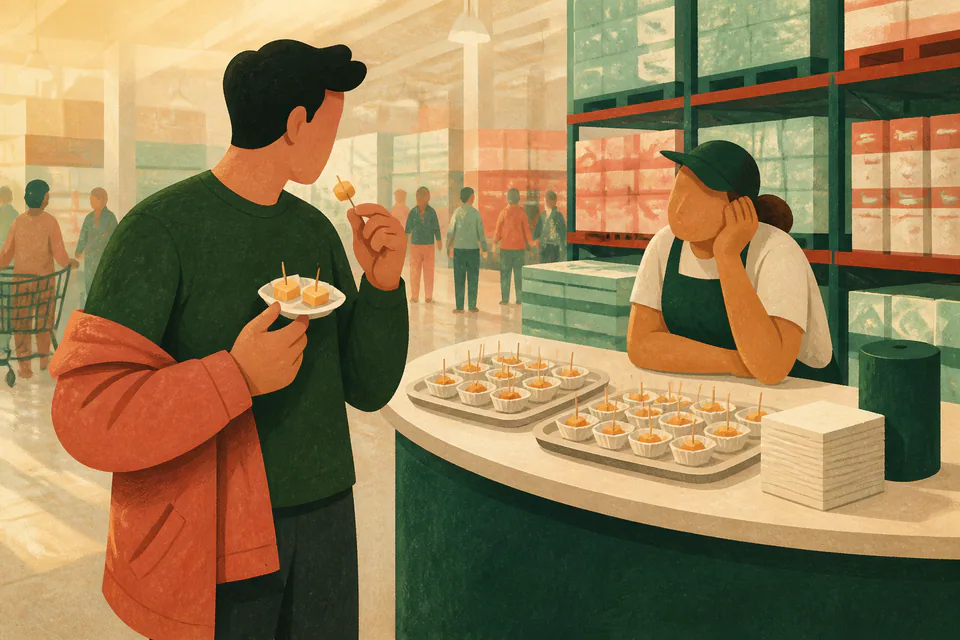
A warehouse store is offering delicious samples. You have no intention of purchasing the product, but the employee seems bored and has trays to spare. After taking two, you consider removing your jacket and returning for a third.
Is exploiting generosity wrong when the giver appears not to care?