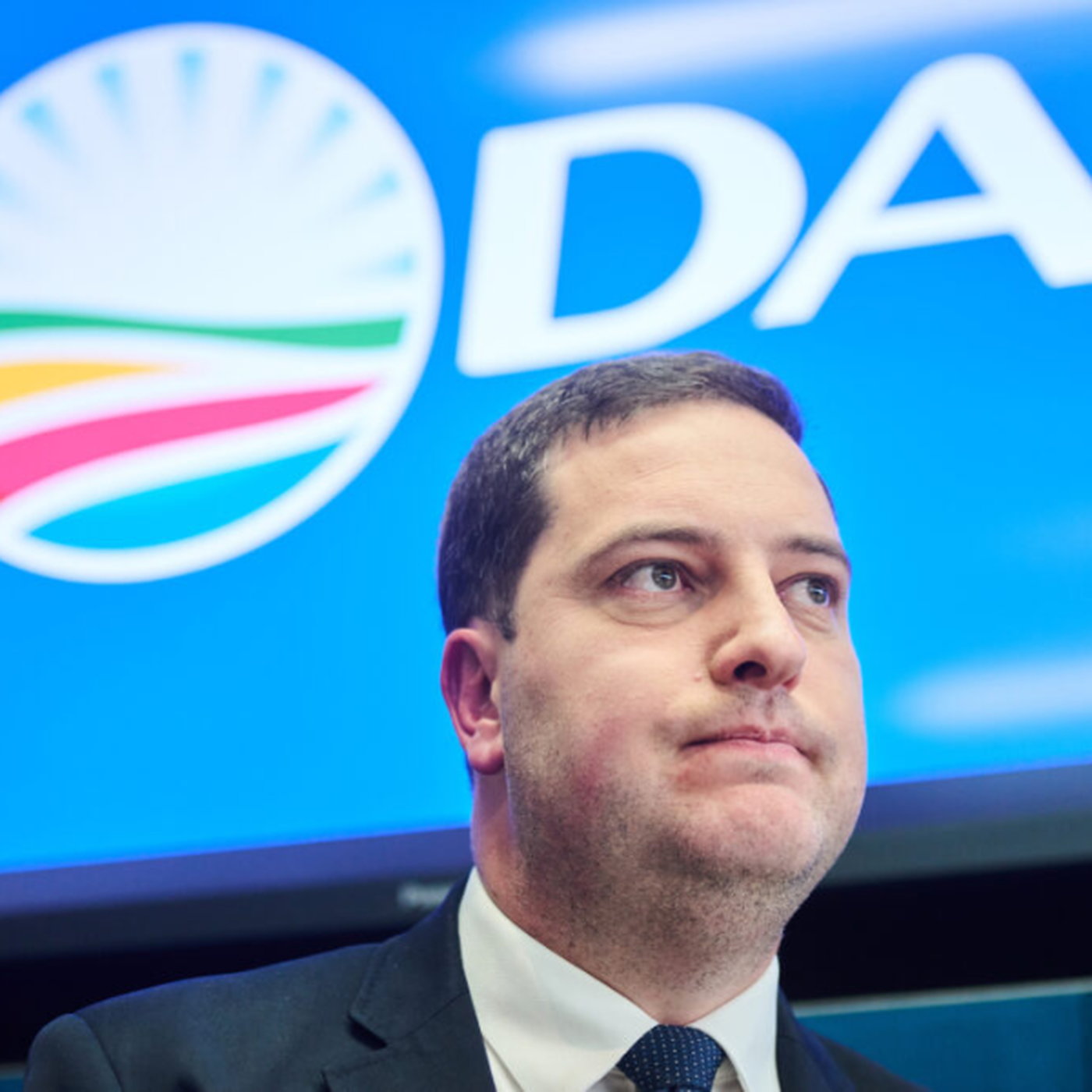
BN Edge | GHL: coalitions, Cape Town and the DA's road to 2029 — or earlier
33 min
Listen through the publisher, then discuss the episode here or arrange an in-person Roundtable. Your city determines where to meet.
Roundtables are designed for groups of four, with a shared subject and room for everyone to speak. Come for discussion, with no dating expectation.
A week after his first election as DA leader, Geordin Hill-Lewis had a queue of rivals telling him what to do. Herman Mashaba wanted Helen Zille out of the picture, Corné Mulder warned against any deal with the ANC, and Julius Malema's lawyers were threatening Zille with court. Speaking to Alec Hogg on the day the 14-day coalition clock started, Hill-Lewis refused to negotiate through the media, but he set out the range of deals on the table, said what the DA's donors want in return, and explained why he believes the party has broken through its glass ceiling with black voters. He also said an early national election was possible from next May, promised to back Zille "to the hilt" in any court fight with the EFF, and named the tests any new metro government would have to pass.
Episode information is provided by the publisher. Listening takes place on the publisher’s service.
November 21, 2026 On November 22, 1963, President John F. Kennedy and First Lady Jacqueline Kennedy were visiting Texas, They hoped to heal a rift in the Democratic Party, as the white supremacists who made up the base of the party’s southern wing loathed the Kennedy administration for its support for Black rights, That base was furious about the administration’s backing of James Meredith, the first Black American to enroll at the University of Mississippi, By going to Dallas, Kennedy hoped to mend some fences in the state Democratic Party, The President's motorcade began with high spirits, Lady Bird Johnson thought, when she heard three shots, that it “must be firecrackers or some sort of celebration,” The Secret Service, knowing what had happened, rushed the motorcade to a hospital, When Vice President Johnson and Lady Bird were told that the President was dead, officials rushed LBJ away, In the confusion - in addition to the murder, it wasn't clear how extensive the plot was against
You think you're hearing wisdom. You're hearing fear that spent a lifetime learning to sound like wisdom. Uploaded 11-05-26 When you were a kid afraid of the water, fear was honest about being fear. Somewhere along the way it got promoted — started speaking in complete sentences, making cases, passing for the smart move. This seminar breaks down the 4 disguises fear puts on so it can pass for common sense — and the practice that lets you catch each one in the act. CHAPTERS: 0:33 When You Were a Kid, Fear Was Honest 5:27 Disguise #1 — The Timing Argument 6:28 Disguise #2 — The Inadequacy Argument 7:40 Disguise #3 — The Consequence Argument 8:52 Disguise #4 — The Responsibility Argument 10:20 The Invisible Cost of Listening to Fear 14:39 The Slow Drift Into Spectator Life 16:27 How to Catch Fear in the Act (4 Tests) 21:54 The Practice of Deciding on Purpose 24:09 Name the Fear Before It Names the Decision THE 4 DISGUISES ▸ TIMING — "Not the right moment. Need a little more prep first." W
Screen time in schools, kids and AI: why Australian students just posted their worst ever reading and maths results. The federal Education Minister says screens are part of the problem. Sweden led the world putting tablets in classrooms and is now pulling them back out. NSW will cap kindy kids at 15 minutes of screen time a day from next year. So were the "hippie" Steiner schools ahead of their time all along? Karl sits down with Andrew Hill, CEO of Steiner Education Australia, which represents 53 schools that keep screens out of early childhood classrooms. Andrew explains why some Silicon Valley tech executives sent their own kids to a screen-free Steiner school, who has profited from a laptop for every kid ("the terrible thing about handwriting is that it's free"), and why he believes Bluey's creator modelled the show's school on a Steiner school in Queensland. Karl also puts the tough questions: Will kids without screens be left behind? Is it all woo-woo? What about bullying, fees a
A wave of major technology outages is raising troubling questions about America's cybersecurity, aging infrastructure, and readiness for a new era of artificial intelligence. Are these isolated technical failures, or warning signs of a much larger national security problem? John Solomon and Amanda Head welcome Ohio Congressman and former Army Ranger Warren Davidson, who discusses recent disruptions involving the FAA, Microsoft, and other critical systems. Davidson calls for greater transparency from government agencies and technology companies, questions whether America's infrastructure is adequately protected against emerging cyber threats, and examines how artificial intelligence could be used both to strengthen defenses and exploit vulnerabilities. The conversation also turns to immigration and national security, with Davidson raising concerns about individuals who entered the country illegally, potential gaps in government screening systems, and the surveillance powers used to moni
Countries are leaving the UN's annual climate summit without reaching an agreement after the European Union and others rejected the final deal. As Candice Cole reports, the biggest sticking points were around fossil fuels. Washington's governor has called the video of two people being arrested by ICE at an airport in Seattle "chilling." Heidi Petracek reports on the cancellation of a federal government program that helped community groups sponsor and support refugees coming to Canada. David Murdock on the election of the new Liberal leader in Nova Scotia. Melissa Ridgen reports on warnings from the trucking industry that bridge and overpass strikes in Western Canada are only going to get worse. Heather Yourex-West takes us through the new Airbnb rules and what they mean for hosts and guests. Plus, Felicia Parrillo introduces us to three Montreal students who won an international NASA competition.
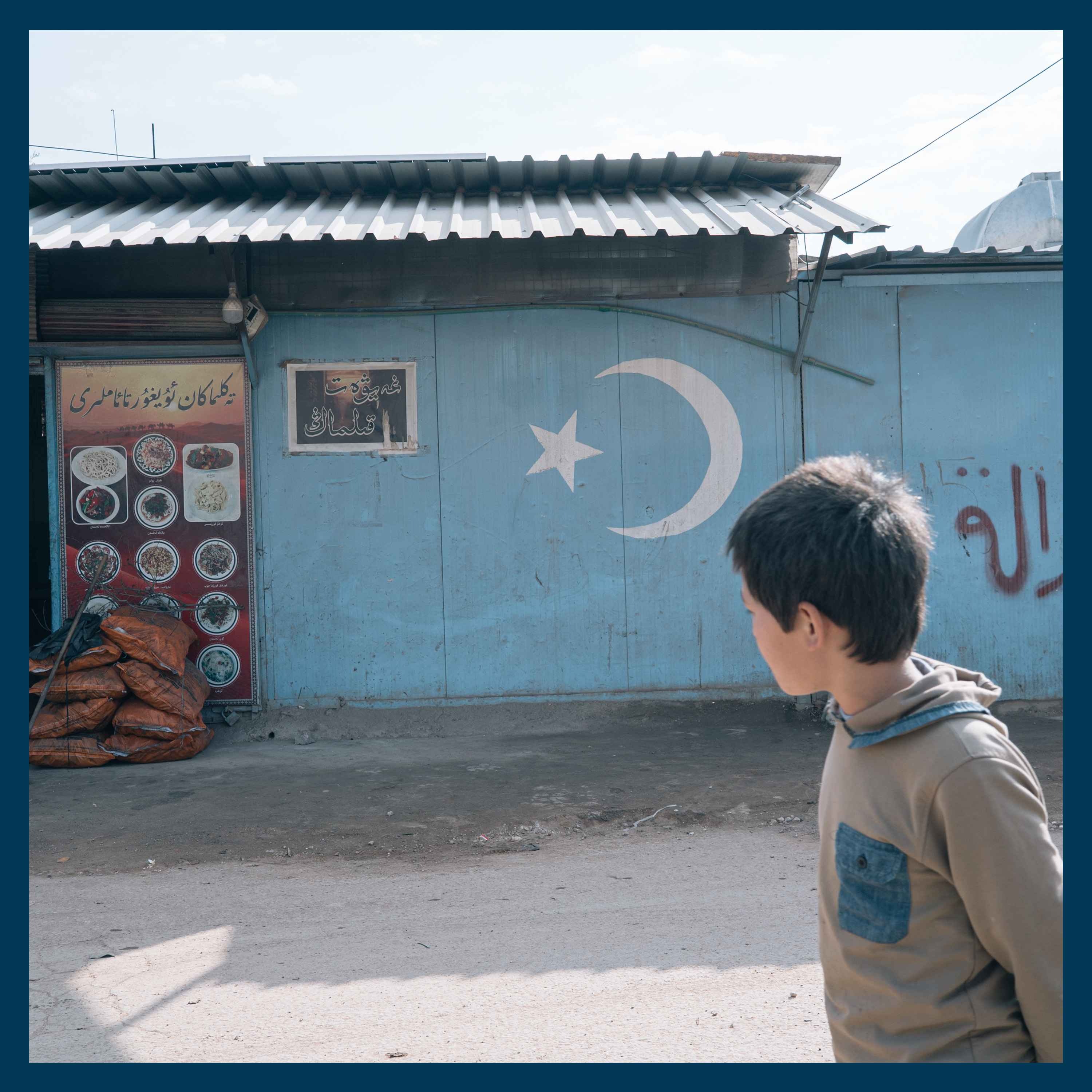
Over 20,000 Uighur refugees escaped repression in China by fleeing to Syria at the height of its brutal civil war. Originally from north western China, the Muslim minority fought fiercely against the Assad regime. But now that the war is over, they live in limbo, unable to return home or even contact loved ones while the Chinese state continues its campaign against their community. So will the new Syrian government honour their sacrifice? Or try to stay on good terms with the Chinese state? Our reporter has been to northern Syria to meet them. Guest: Anthony Loyd, special correspondent, The Times Host: Luke Jones Producer: Robyn Simon and Harry Stott We want to hear from you - email: [email protected] Read more: They fought for Syria’s freedom. Will they fight for their own? (https://www.thetimes.com/world/middle-east/article/uighur-fighters-syria-xinjiang-china-cfv5733d8) Further listening: SAS in Syria: the untold murder probe (https://pod.fo/e/6c8ea9) Clips: The New York Times,
A JSE share trading for less than the cash in its bank account. That was Alec Hogg's case for Reinet in this week's Ricardo portfolio update, after interim results showed more than 80% of its assets in cash and liquid funds and the Rupert-controlled group buying back shares every week. He read past Lewis's tidy headline numbers to the credit data underneath, untangled three earnings figures at Prosus pointing in different directions, and explained why directors' dealings at WBHO and Lesaka were less alarming than they looked. On the watchlist, he set the fight for control of Spar's board against Shoprite's move, seven years in the making, to one share, one vote. And as Wall Street sold tech to make room for Anthropic's listing, he explained why the Ricardo dollar portfolio wasn't heading for the exit, and why the IPO put a price tag on something Alphabet and Amazon already own.
More than one in 10 university graduates in South Africa cannot find a job. With an economy that creates far too few jobs for the people entering it, and AI starting to eat into white-collar work, many school leavers and their parents are asking whether a degree is still the safest route. When Ashley Duggan finished school, she was torn, and her father offered her a choice. He could pay for her studies, or she could use that money to start a business. She chose the business and launched Bubbadue, a baby gift company, in January 2020, just before the Covid lockdown. She told BizNews how the lockdown gave her an unexpected boost, and how the company has grown since, with her dad and husband now part of the business and a first store open in Durban. Duggan also explained why she believes the right path depends on the person, what she would tell a teenager facing the same decision, and what is next for Bubbadue. – Linda van Tilburg
Michele Dougherty went to a Durban high school that didn't teach physics or chemistry. Years later, jet-lagged and nervous, she persuaded a room of about a hundred Cassini mission scientists to send the spacecraft just 173km above a tiny moon of Saturn. They found water vapour pouring from its south pole, and the search for life in the solar system changed course. Now the first woman to be Astronomer Royal in the post's 350-year history, she told Alec Hogg why she'd be very surprised if life didn't exist elsewhere, what the Juice mission will look for when it reaches Jupiter's icy moons in 2031, and why more South Africans should know about the giant telescopes in the Karoo. She was also frank about the harder side of her day job: telling Britain's main physics and astronomy funder that it can't be world class at everything.
Employees should usually have a say in whether their work requires office attendance.
Share your view, then see how readers voted. No sign-in required. This poll is shared across stories.
Do you agree or disagree?
Common Quandary
A Common Quandary to discuss
Another conversation to explore, separate from this news story.
A pill can erase your most painful memory without changing anything else. Do you take it?
A safe new treatment can remove the emotional pain attached to one chosen memory while leaving the factual memory intact. Losing the pain might bring enormous relief, but the experience shaped your relationships, choices, and sense of who you are.
Are painful memories injuries to heal or parts of ourselves to keep?