A JSE share trading for less than the cash in its bank account. That was Alec Hogg's case for Reinet in this week's Ricardo portfolio update, after interim results showed more than 80% of its assets in cash and liquid funds and the Rupert-controlled group buying back shares every week. He read past Lewis's tidy headline numbers to the credit data underneath, untangled three earnings figures at Prosus pointing in different directions, and explained why directors' dealings at WBHO and Lesaka were less alarming than they looked. On the watchlist, he set the fight for control of Spar's board against Shoprite's move, seven years in the making, to one share, one vote. And as Wall Street sold tech to make room for Anthropic's listing, he explained why the Ricardo dollar portfolio wasn't heading for the exit, and why the IPO put a price tag on something Alphabet and Amazon already own.
More than one in 10 university graduates in South Africa cannot find a job. With an economy that creates far too few jobs for the people entering it, and AI starting to eat into white-collar work, many school leavers and their parents are asking whether a degree is still the safest route. When Ashley Duggan finished school, she was torn, and her father offered her a choice. He could pay for her studies, or she could use that money to start a business. She chose the business and launched Bubbadue, a baby gift company, in January 2020, just before the Covid lockdown. She told BizNews how the lockdown gave her an unexpected boost, and how the company has grown since, with her dad and husband now part of the business and a first store open in Durban. Duggan also explained why she believes the right path depends on the person, what she would tell a teenager facing the same decision, and what is next for Bubbadue. – Linda van Tilburg
Michele Dougherty went to a Durban high school that didn't teach physics or chemistry. Years later, jet-lagged and nervous, she persuaded a room of about a hundred Cassini mission scientists to send the spacecraft just 173km above a tiny moon of Saturn. They found water vapour pouring from its south pole, and the search for life in the solar system changed course. Now the first woman to be Astronomer Royal in the post's 350-year history, she told Alec Hogg why she'd be very surprised if life didn't exist elsewhere, what the Juice mission will look for when it reaches Jupiter's icy moons in 2031, and why more South Africans should know about the giant telescopes in the Karoo. She was also frank about the harder side of her day job: telling Britain's main physics and astronomy funder that it can't be world class at everything.
Former DA leader Tony Leon tells Alec Hogg that ActionSA risks the fate of the New National Party, which disappeared within years of walking its voters into the ANC's arms. ActionSA's Michael Beaumont counters that the DA had not sat down with his party once before Thursday afternoon's first negotiation, and that the obstacle is Helen Zille and Cilliers Brink rather than the DA itself. Political commentator Solly Moeng tells Chris Steyn voters want water, potholes and stable governance, not deals for politicians. Plus Hogg's five investor lessons from Elon Musk, and Wall Street.
Michael Beaumont has been called the power behind ActionSA's throne, and he's the man running its coalition talks across Gauteng. Speaking to Alec Hogg hours before ActionSA's first sit-down with the DA, he said the DA had never once come to the table until then, and that his party had no DA problem, only a Brink and a Zille problem. He explained why ActionSA found the ANC easier to deal with, why he believes investors' nerves over the metros will pass, and why the polling industry needs regulating. He also addressed the claim that his feud with the DA is personal, the jibe that he is Iago to Mashaba's Othello, and how a party can work with Julius Malema after his insults.
Forty-three years after The Star's editor famously told readers to abstain, Tony Leon saw the same habit in the ANC. Two weeks after the local elections, with seven of eight metros hung, the former DA leader told Alec Hogg that the ANC had simply blanked the DA, that its centre was too weak to command its own provinces, and that its president was 10 hours away in Silicon Valley. He explained why he believed the ANC's leadership feared a DA-run Joburg more than a failing one, and why the parties propping up the ANC could suffer the fate the New National Party met in 2004. He also set out the hard choice he believed the DA now faced, and made a prediction for Joburg that he said he hoped would prove wrong.
Elon Musk told the New York Times he felt "pretty foolish" about the near half a billion dollars he spent on America's midterms. Alec Hogg argued that was the least interesting thing he said. Speaking from China, Musk compared Nvidia's board parting ways with Jensen Huang to the Chicago Bulls dropping Michael Jordan mid-winning streak. He said Volodymyr Zelensky was "not always truthful" about Starlink, and said he should not get his Tesla pay awards simply for merging the carmaker with SpaceX. In this Rational Perspective, Alec tested the claims one by one: where Musk was right about boards and money in politics, where his own company's filings told a different story, and why a promise made on stage belonged in the deal documents. He ended with five lessons for South African investors, from key-man risk on the JSE to the danger of relying on one supplier, however brilliant.
In their latest weekly chat, Chris Steyn and political commentator Solly Moeng covered the cliffhanger coalition talks; Moeng's case that both ActionSA and the Democratic Alliance (DA) have thrown the African National Congress (ANC) lifelines to power; ActionSA leader Herman Mashaba's claim that he turned down millions of rands from business groups to go into a coalition with the DA in Johannesburg; and affidavits from Mashaba and ActionSA national chairperson Michael Beaumont stating that it was not Economic Freedom Fighters (EFF) CIC Julius Malema who dictated the appointment of disgraced former Deputy National Commissioner Shadrack Sibiya to head Joburg's anti-corruption unit, but that Advocate Glynnis Breytenbach had recommended him for the job. Breytenbach was recently accused by some of "pussyfooting" around Sibiya during his appearance before Parliament's Ad Hoc Committee into police and political capture by crime cartels.
Frans Cronje told Alec Hogg he believed parts of the ANC had joined the GNU to break the DA apart, not to reform the country, and that the plan had backfired: it was the ANC that splintered. William Saunderson-Meyer floated a devious reading of the rand's slide, a leak from the party's own reformists to frighten the radicals, then asked the harder question of where Cyril Ramaphosa really stood. And Sport Minister Gayton McKenzie stopped mid-briefing to apologise to Tatjana Smith, called Swimming South Africa a federation in ICU, and explained why he couldn't fire its leaders even though he wanted to. Plus Reuters on Wall Street, where Nvidia's results, Anthropic's IPO pricing and hawkish Fed minutes pulled the market in different directions.
Voters had sent a clear message, Frans Cronje told Alec Hogg, and the people who most needed to hear it were looking the other way. Two weeks after the ANC fell below 31%, the SRF chairman explained why he believed the party's executive had never truly backed the GNU, how a plan to splinter the DA from inside government had backfired on the ANC instead, and why a deal with ActionSA, the EFF and MK made sense to many in the ANC even if it hurt the country. He warned that investors had been complacent, gave his reasons why South Africa would absorb the shock better than it would have in 2024, and made an unexpected case for the DA's long-term interest in keeping the ANC alive. He also named the one partnership he believed could still hold the union together, and the price ANC leaders would have to pay to make it happen.
With Gauteng's coalition clock running down and the rand slipping towards R17, Cyril Ramaphosa was in California with a 300-strong delegation. William Saunderson-Meyer told Alec Hogg the clash of dates was avoidable, and said it fitted a president with an almost pathological need to dodge conflict in his own party. He argued that the ANC's flirtation with MK, the EFF and ActionSA made no electoral sense, and floated a more devious reading: that the leaks were a warning shot from the party's reformists. He questioned courting Silicon Valley while the Starlink dispute festered, put Ramaphosa's chances of lasting until 2029 at below even, and warned that if the DA let Herman Mashaba choose its mayors, the concessions would not stop there.
BizNews editor Alec Hogg says the most underappreciated part of the coalition talks is KwaZulu-Natal, and maps the arithmetic that could give the ANC a majority without the DA: Durban first, then Pietermaritzburg, then Pretoria, where ANC and MK seats add to 217 against the 201 needed. Ranmore founder Sean Peche tells Hogg why he sees a storm rather than a bargain in Nvidia after Jensen Huang's resignation. Security analyst Willem Els tells Chris Steyn the cartels' protection is drying up and the Hawks are moving past the foot soldiers. Plus Wall Street.
Plenty of investors looked at Nvidia's slump after Jensen Huang's resignation and saw a bargain. Ranmore founder Sean Peche told Alec Hogg he saw a storm. On the day the chipmaker was due to report, he explained why ten times earnings only looked cheap if Nvidia could more than double its profits next year, with new export curbs, an interim CEO and possible lawsuits in the way. He was just as sceptical about Anthropic's listing: an amazing product, he said, but not a business that generated free cash flow, and nowhere near worth the valuation bankers were floating. His alternative was the slow lane, with half his fund in Asia and money in food retailers nobody wanted, which he said had kept it rising in a falling market. Closer to home, he warned what the rand would face if coalition talks pushed South Africa's metros away from market-friendly policy, and he ended with a story from a Joburg steakhouse about why he believes South Africa will get through.
In his latest interview with Chris Steyn, Willem Els of the Security Initiative for Africa (SIA) says there is a lot of pressure on President Cyril Ramaphosa to act against Special Leave Minister Senzo Mchunu amid suspicions that he and former Deputy National Commissioner General Shadrack Sibiya handed over "replacement" devices when they were raided last year. "It indicates to us that maybe he's (Mchunu) got much more to hide than what we know at the moment." Els supports calls for the mandate of the Madlanga Commission to be extended until all the rot has been exposed. "I believe that the final report is going to be very, very heartbreaking for South Africa just to see how deep South Africa has fallen into the slump of lawlessness and the capture not only of the State but also of our security institutions." Meanwhile, Els hails the series of successes in the fight against the drug cartels since the Press Conference by whistleblowing General Nhlanhla Mkhwanazi. "The protection on the
Nigeria's new High Commissioner, Chief Femi Fani-Kayode, told Chris Steyn he had little doubt that outside forces were sponsoring some of South Africa's anti-migrant marches, and linked it to the country's stands on Gaza, BRICS and the G20. Governance expert Richard Chelin said anyone promising to turn around a broken municipality in 100 days was selling fairy tales, then set out what new councils could actually fix in their first weeks. Jasmine Opperman described what she would do first if she were put in charge of civilian intelligence, and why she would only accept three priorities. Rachel Kolisi told Linda van Tilburg why she believed women who shared their struggles were judged more harshly than men. And Reuters had Monday's AI sell-off on Wall Street, after Jensen Huang's resignation from Nvidia.
In this interview with Chris Steyn, Independent Governance Expert Richard Chelin advises ratepayers which Red Flags look out for once municipal coalitions have been formed. "Business owners, investors, and everyday taxpayers need to look past the political spin and watch for very practical indicators; look out for the red flags….look out for hidden coalition agreements that the party refuses to make public; micro parties taking control of high value technical departments like infrastructure…as a reward for loyalty; and also a complete absence of any realistic hundred-day delivery plan…" As for the 100 Days "Myth", he points out the distinction between what is plausible and what is just political fantasy. "Those new leaders that are coming in are literally walking into a crime scene of procurement non-compliance…Anyone who tells you that they are going to completely turn around a bankrupt municipality's finances or fix a decade of infrastructure neglect or eliminate irregular expenditur
The DA won the most votes in all three Gauteng metros, yet the ANC's NEC put it last on its list of partners, and by Monday morning the ANC and MK had reportedly agreed in principle to work together in KwaZulu-Natal. In this Rational Alternative, Alec Hogg laid out the seat arithmetic both sides were avoiding and checked ActionSA's claims against Gareth van Onselen's voting-district analysis. He argued that a personal feud, not reason, was steering the Gauteng talks, and traced a path from a Durban council chamber to a possible ANC-MK majority in Parliament. Then he followed the thread into the bond market, where the post-election gains had already begun to reverse. He closed with his odds on who would run Gauteng, and a direct message to Helen Zille, Herman Mashaba, the ANC's NEC and Cyril Ramaphosa.
In this wide-ranging interview with Chris Steyn, Nigeria’s new Ambassador to South Africa, His Excellency Chief Femi Fani-Kayode, warns that there are sinister forces at work that are trying to destabilise South Africa. “My view is that there are subterranean forces at work trying to divide South Africa and destroy South Africa..I believe that many of…these anti-immigration marches - where people are targeted and brutalised by mobs - are actually being sponsored by forces outside.” He adds that it is not only South Africa that is being subjected to this: “We have similar problems in Nigeria where foreign-funded forces are trying to break up our country. We have five terrorist armies fighting us right now on five separate fronts on our own soil…” Meanwhile, Chief Fani-Kayode gives the backstory to the diplomatic war of words that broke out last week when his speech was cut from the livestream of the diplomatic ceremony. He also refutes the stereotyping of Nigerians as druglords - a slur
Intelligence analyst Jasmine Opperman tells Chris Steyn that a minister who recuses herself from briefing the President because cabinet colleagues may be implicated has put party above national security: stand up and do your job, or leave. Sakeliga CEO Piet le Roux tells Alec Hogg why he has taken ICASA to court over the 30% race-based ownership rule, what it means for Starlink and local ISPs, and why he sees chinks in BEE's armour. Plus Rachel Kolisi on building her own identity and refusing to be a two-for-one special, and Wall Street's AI jitters.
In this edition of the NdB Sunday Show, Chris Steyn and independent intelligence analyst Jasmine Opperman talk about testimony at the Madlanga Commission of Inquiry that - six days before whistleblowing General Nhlanhla Mkhwanazi called his bombshell press conference - President Cyril Ramaphosa had a verbal intelligence briefing in which he was warned of the criminal infiltration, a briefing from which the Intelligence Minister in his office recused herself because of Cabinet ministers being implicated. However, Opperman reveals that there had already been a warning years earlier that was not dealt with. “Was nothing then done because of the party loyalty within the State Security Agency?...It has imploded and it started under Zuma. And this is what I can't understand. It was captured under (President Jacob) Zuma and under President (Cyril) Ramaphosa. Mr. President, I'm saying this with all respect, it has just continued because you were not assertive enough in terms of getting to a so
Yesterday was Friday the 13th. The Ricardo portfolios don’t do superstition. We do cash flow. And this week, a lot of that cash went into buying back shares. Greg Abel spent $9.6bn on Berkshire’s own stock, the clearest signal yet that Buffett’s successor thinks the shares are cheap. Vistra grew core profit by 50%, yet the market prices it as if its signed AI contracts are worth nothing. Reinet and Prosus are both buying their own shares at deep discounts. Plus: what Charles Savage told me about Purple Group’s record year, how HCI is tidying up before the Venus decision, and whether WBHO’s executives earned their R82m share bonus. And a South African surprise: the new Berkshire chairman’s deep relationship with Limpopo.
To sell internet access in South Africa, you first have to show ICASA the race of your shareholders. Sakeliga has now taken the regulator to the Pretoria High Court, but, oddly, not to scrap the 30% black-ownership rule. Chief executive Piet le Roux told Alec Hogg why he chose the narrower fight, why he is no fan of the "equity equivalent" escape route he is asking the court to open, and why he believes local ISPs and radio stations are next in line once Starlink's case is settled. He also answered the question critics keep asking about Elon Musk, explained why voters who tell pollsters they dislike BEE keep backing parties that defend it, and weighed whether a regulator defying its own minister could be the last straw for the GNU.
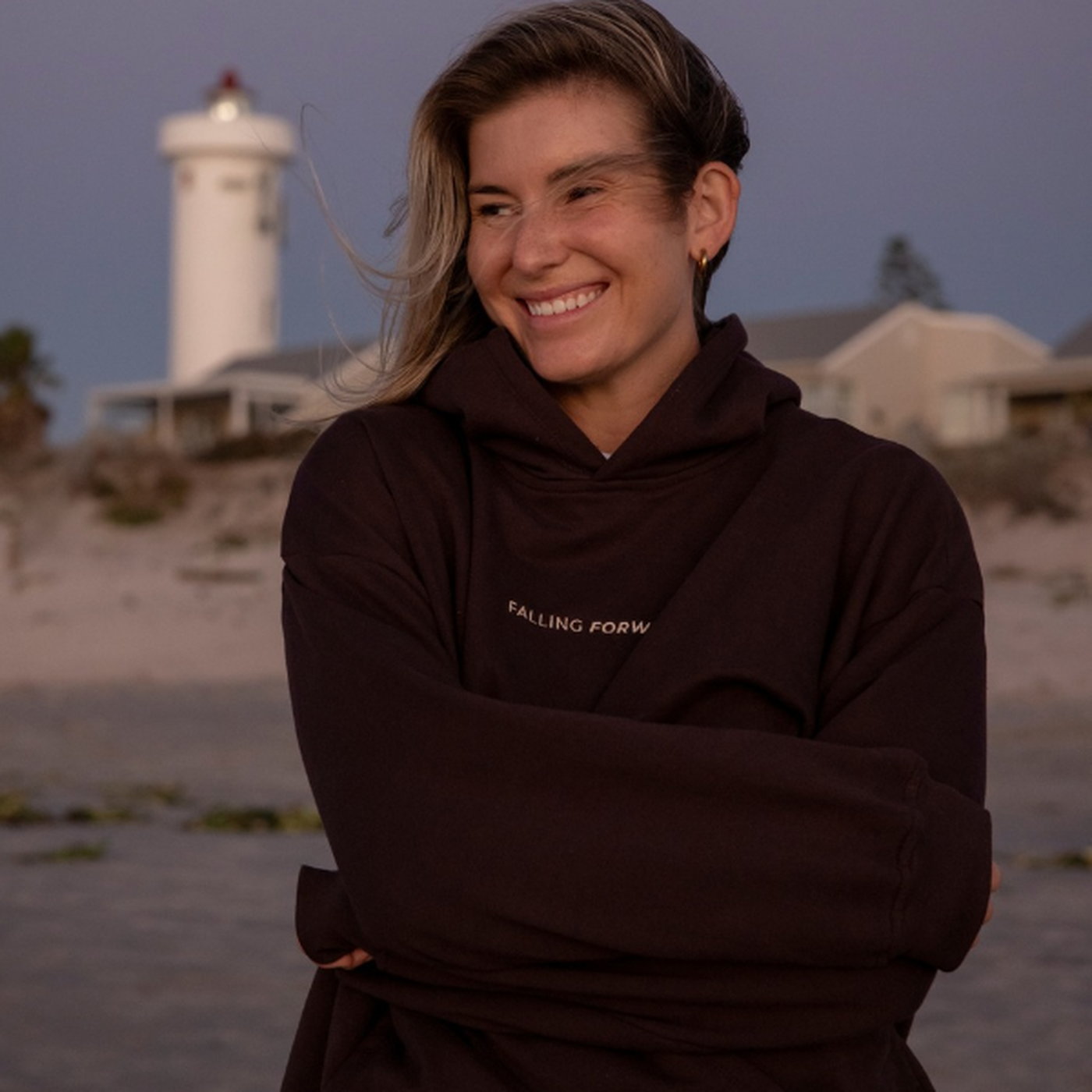
Rachel Kolisi has spent the past few months on the road in South Africa with Falling Forward, her book and the documentary that followed. Fourteen events and more than 10,000 people later, she is taking the project to London, a move prompted by women who travelled from Europe to attend the South African shows. In an interview with BizNews, she speaks carving out her own identity when brands wanted her at the table as a "two-for-one special," why vulnerability is still judged differently in women and why she will keep preaching financial independence for women until the end of her days. She also names the international women she most admires, with Melinda French Gates at the top of the list. – Linda van Tilburg
Political commentator Solly Moeng tells Chris Steyn that voters who shut the ANC out expect ActionSA and the DA not to cushion it over personal grudges: the ANC belongs on the opposition benches. Sports Minister Gayton McKenzie calls Swimming South Africa one of the country's worst federations, says the Act gives him no power to disband it, and calls Tatjana Smith's switch to the Netherlands a big loss with a big lesson. Plus Dean Macpherson on MK's KZN slide, Haniff Hoosen's 50/50 Durban, Charles Savage on AI writing all Purple Group's code, and Wall Street after Jensen Huang quits.