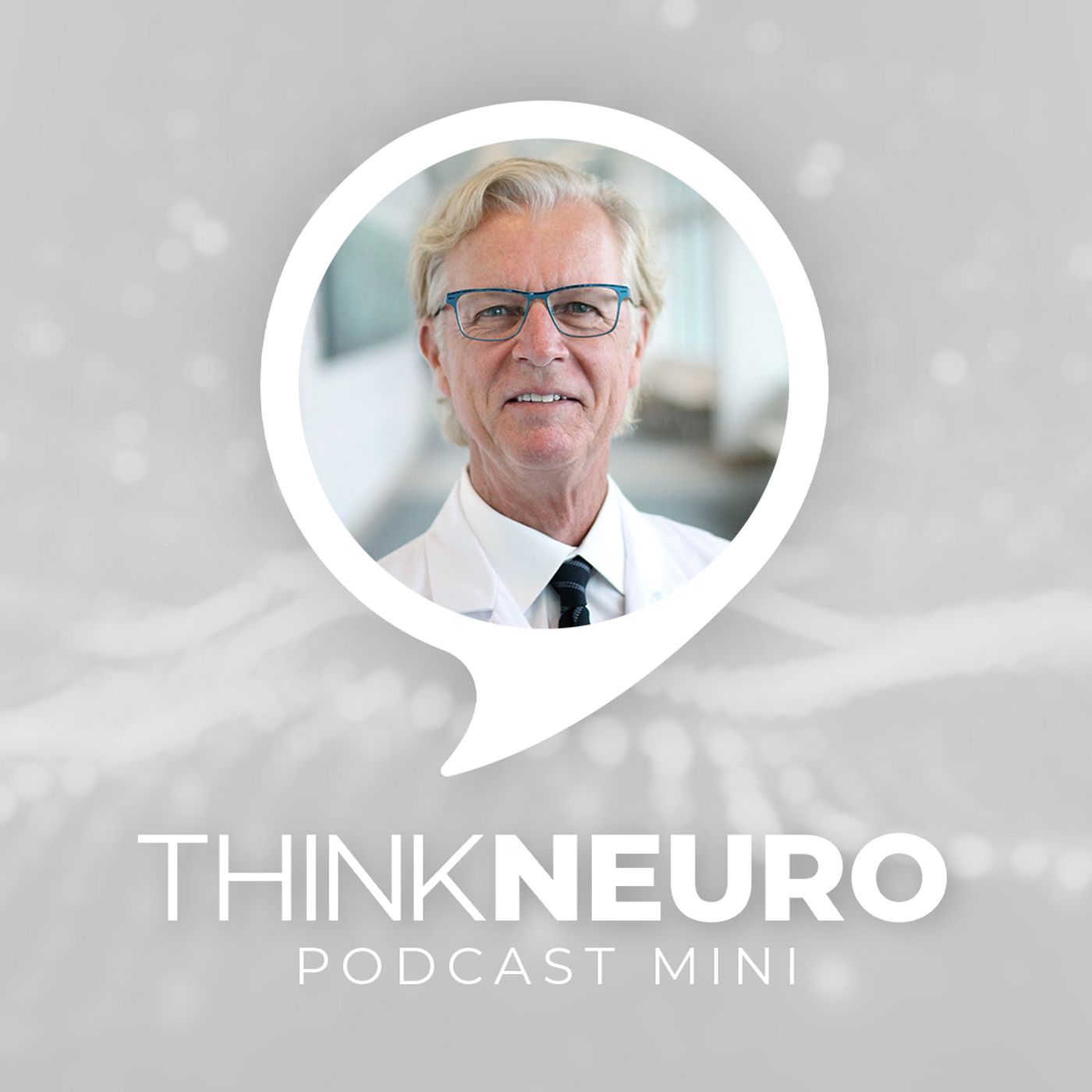
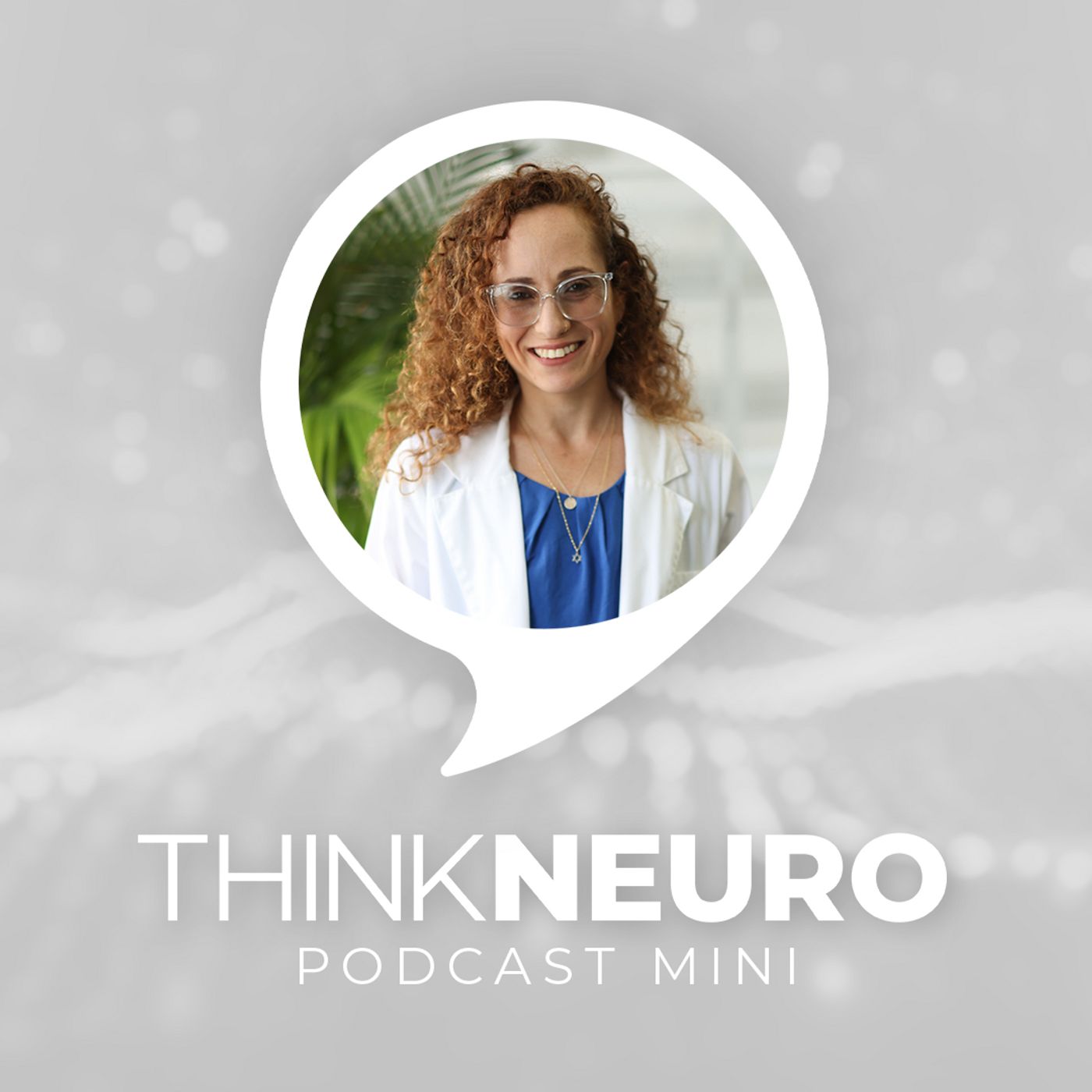
Brain Health Outreach & Education | Dr. David Merrill & Ed Chambliss American Memory Loss Foundation
6 min
Listen through the publisher, then discuss the episode here or arrange an in-person Roundtable. Your city determines where to meet.
Roundtables are designed for groups of four, with a shared subject and room for everyone to speak. Come for discussion, with no dating expectation.
Through a partnership between the American Memory Loss Foundation (AMLF) and Pacific Neuroscience Institute Foundation (PNIF), we are expanding community education on memory loss, dementia, and brain health by providing free educational talks in local communities, including AMLF’s Memory Loss Roadmap to help individuals and families better understand and navigate memory concerns. Pacific Brain Health Center: 310-582-7640 https://www.pacificneuroscienceinstitute.org/centers-programs/brain-health/#contact-us (https://www.pacificneuroscienceinstitute.org/centers-programs/brain-health/) Call: 310-582-7640 Enjoying the show? It helps other listeners find us.
Episode information is provided by the publisher. Listening takes place on the publisher’s service.
Can you rewire your brain to turn down chronic pain? Your pain is real, but your brain decides how loud that pain feels and new science shows that self-hypnosis may offer a new route to pain relief. One that goes beyond relying on pills alone. In today’s episode, Stanford psychiatrist Dr. David Spiegel, who has spent decades researching pain, explains how the brain controls pain. You’ll learn why chronic pain can be worsened by fear, anxiety and poor sleep. David explains how pain signals travel from your body to your brain, and why the brain can turn them up or down. He also shares how tools like hypnosis can help with pain management. By the end of the episode, you’ll have a simple 7-step self-hypnosis exercise for drug-free pain relief you can try at home. Build healthy habits. Download the ZOE app today Join ZOE (https://zoe.com/buymembership) Follow ZOE onInstagram (https://www.instagram.com/zoe/). Timecodes 00:00 Intro 01:49 Is your pain really in your brain? 09:07 Can't sleep? H
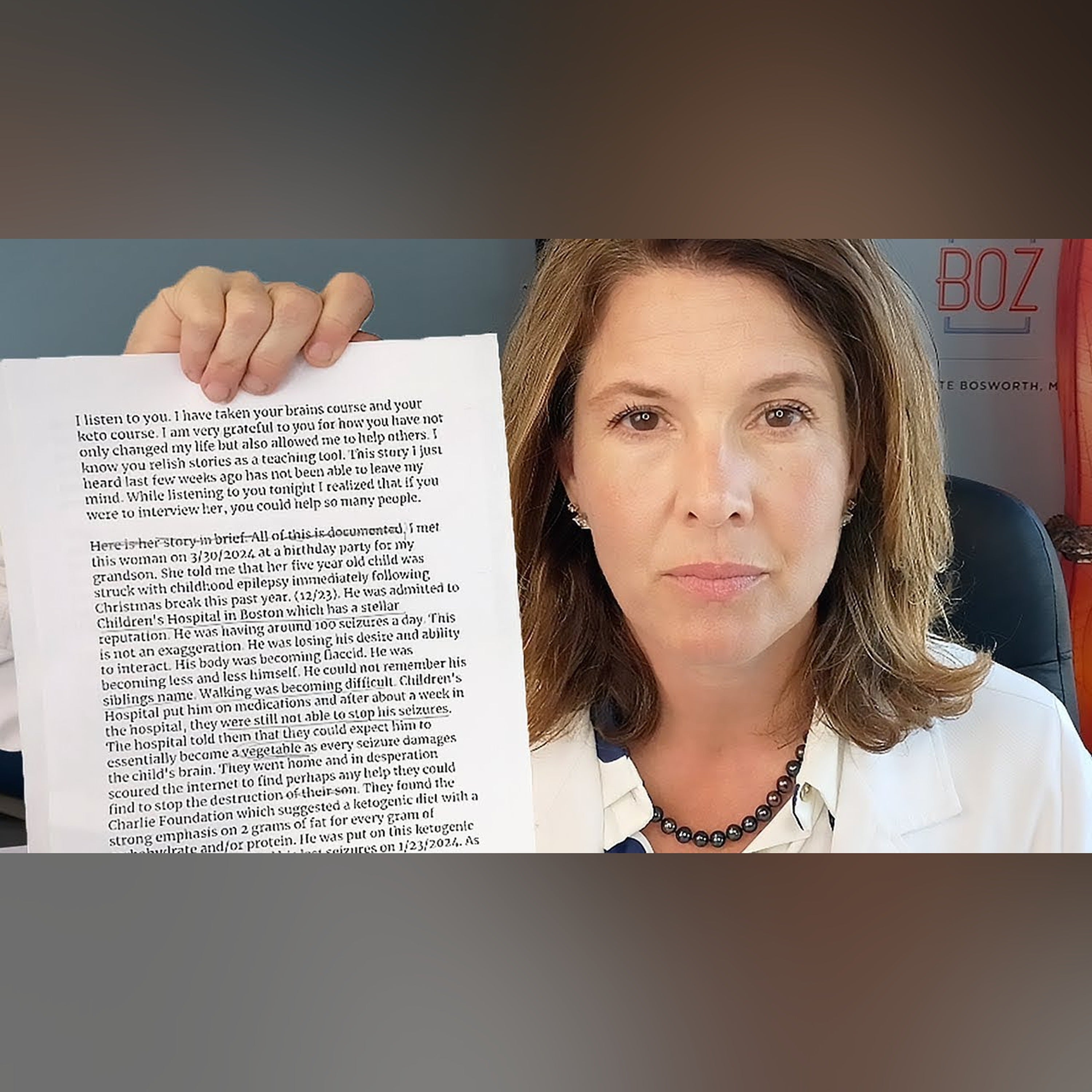
This boy's brain damage was supposed to rob him of his childhood. His prognosis was to be a vegetable. Thankfully, his parents found the Charlie Foundation... --------------------- The Workbook: https://bozmd.com/product/ketocontinuum-consistently-keto-diet-for-life-paperback-edition/ --------------------- Thanks for checking out the Dr. Boz Channel. See links below resources and recommendations. Tune in Tuesday nights, 4PM Eastern/3PM Central to watch me Live! We improve health - One ketone at a time. --------------------- FREE STUFF 50 Keto Fat-Facts: http://on.bozmd.com/50fat Dr. Boz Ratio Spreadsheet: http://on.bozmd.com/DBR Documentary Playlist: https://on.bozmd.com/AT --------------------- Dr. Boz’s Online Courses: Consistently Keto: http://on.bozmd.com/CK BRAINS: https://bozmd.com/Brains_t2r/ --------------------- WAYS TO SUPPORT THIS CHANNEL: Share Dr. Boz content with people you love. Everyone wins when you share. Buy Dr. Boz Products Dr. Boz Food Guide: http://on.bozmd.com/Fo
In this calm and sleepy facts episode, we slip quietly into the world of dreams, the extraordinary theater the mind builds every single night from nothing but fragments of memory, emotion, and imagination. We begin with the basics of what a dream actually is, a vivid mental experience that occurs during sleep, most intensely during rapid eye movement sleep, and we trace the architecture of a full night, learning how the brain cycles through stages roughly every 90 minutes, with each REM period growing longer and more dream rich as the night goes on. We visit the moment in 1953 when Eugene Aserinsky and Nathaniel Kleitman first discovered REM sleep in a Chicago laboratory, and we explore the curious state of muscle atonia, the temporary paralysis that keeps the body still while the dreaming mind races. From there we wade into the deep question of why we dream at all, from Freud's wish fulfillment theory to the activation synthesis model to the idea that dreams help consolidate memories
Brown Noise + Rain Sounds for Deep Sleep | Powerful Stress & Insomnia Relief creates the perfect calming environment to help your mind relax and your body fall into deep, restorative sleep. The combination of deep brown noise and gentle rainfall masks background distractions, slows racing thoughts, and encourages natural relaxation. This soothing soundscape is ideal for insomnia, anxiety relief, studying, meditation, or simply creating a peaceful atmosphere at night. Brown noise provides a deeper, richer tone than white noise, while rain sounds add a natural rhythm that helps your brain unwind. Play this relaxing audio tonight, close your eyes, and allow the calming sound of rain and brown noise to guide you into deep, uninterrupted sleep. #BrownNoise #RainSounds #DeepSleep #SleepSounds #WhiteNoiseForSleep #InsomniaRelief #RelaxingSounds #SleepBetter #CalmingSounds #SleepAid brown noise rain sounds for deep sleep, brown noise for sleep, rain sounds sleep aid, deep sleep relaxing sounds
PBS Member Stations rely on viewers like you. To support your local station, go to: http://to.pbs.org/DonateSPACE ↓ More info below ↓ Uploaded 10-04-19 We live in a universe with 3 dimensions of space and one of time. Up, down, left, right, forward, back, past, future. 3+1 dimensions. Or so our primitive Pleistocene-evolved brains find it useful to believe. And we cling to this intuition, even as physics shows us that this view of reality may be only a very narrow perception. One of the most startling possibilities is that our 3+1 dimensional universe may better described as resulting from a spacetime one dimension lower – like a hologram projected from a surface infinitely far away. Check out the new Space Time Merch Store! Support Space Time on Patreon Need a Refresher to Fully Understand the Holographic Principle? #holographicuniverse #holographicprinciple #spacetime Hosted by Matt O'Dowd Written by Matt O'Dowd Graphics by Aaron Halevy Directing by Andrew Kornhaber The holographic p
My most dangerous ideaSpreading awareness about the works of some of the leading educators in the AI revolution."Helping humanity shepherd through this transition as we embrace the final invention of mankind: advanced artificial intelligence." David Shapiro aims to provide a pragmatic and optimistic view of the future.Core Ideas:Metamodernism: Narratives and emergence view of realityPostnihilism: The demand for meaning is false, there is only the Great MysteryHeuristic Imperatives: An ethical, moral, and decision framework.- Reduce suffering- Increase prosperity- Increase understandingPost-Labor Economics: Replace humans with machines (better, faster, cheaper, safer)mantra:EXPLORE: Delve into the unknown, driven by curiosity and a quest for discovery. Seek knowledge.ELUCIDATE: Make complex ideas clear, communicating them in an accessible and comprehensible manner.ENUMERATE: Ground insights in concrete data, providing measurable and quantitative evidence.ELABORATE: Add depth and detail
Dr Michael Yong, a rhinologist and surgeon at Pacfic Neuroscience Institute has long known that the senses of smell and taste have a deep relationship with brain function and healthy aging. Smell dysfunction came into the spotlight during the COVID-19 pandemic when many people experienced this problematic issue. In today’s podcast, Dr. Yong tells us how problems with one’s sense of smell can profoundly impact other parts of people’s lives, including their psychological health, emotional health, the ability to form and recall memories, and can even lead to an elevated risk of mortality. Dr. Yong has many tools at his disposal to help restore people’s sense of smell—and he explains why Ear, Nose and Throat, or ENT, doctors are an important specialty at a neuroscience institute like PNI. Call: 310-582-7640 Enjoying the show? It helps other listeners find us.
Modern plastic surgery traces back to World War I, when trench warfare left many soldiers with severe facial injuries. An ear, nose, and throat (ENT) surgeon and a dentist pioneered ways to restore the form and function of those soldiers' faces, work that led to the Queen Victoria Hospital in England. David M. Butler, MD, facial plastic surgeon at Pacific Neuroscience Institute, trained in both ENT, head and neck surgery and facial plastic surgery, which is now the core of his practice. 310-829-7792 pacificheadandneck.com Call: 310-582-7640 Enjoying the show? It helps other listeners find us.
Hypogonadism is a defect of the reproductive system resulting in lack of function of the gonads (ovaries or testes). The gonads have two major functions: to produce hormones (testosterone, estradiol), and to produce gametes (eggs or sperm). Sex hormones deficiency can result in defective primary or secondary sexual development, infertility and loss of libido. Defective egg or sperm development results in infertility. pituitary adenomas and other tumors that impinge upon the pituitary gland can cause hypogonadism (a subset of hypopituitarism) by causing either decreased production of LH and FSH or by causing hyperprolactinemia which inhibits LH and FSH production. Call: 310-582-7640 Enjoying the show? It helps other listeners find us.
Customers should receive clear explanations when a company cannot provide its promised service.
Share your view, then see how readers voted. No sign-in required. This poll is shared across stories.
Do you agree or disagree?
Common Quandary
A Common Quandary to discuss
Another conversation to explore, separate from this news story.
Everyone exaggerates on dating apps. Are two imaginary inches harmless?
A friend adds two inches to their listed height because they believe filters exclude them before personality has a chance. They plan to be charming enough that a date will not care once they meet in person.
Can deception be a fair response to superficial gatekeeping?