Instant Access to your FREE training course: https://nci.university (https://nci.university/) Uploaded 27-07-25 This is the simulation you already live inside of—and you’ve been breathing it like oxygen since the day you were born. In this video, we expose the invisible machinery beneath modern life—how symbols have replaced truth, how marketing has replaced meaning, and how our desires are manufactured by the very system that feeds on them. Drawing from the work of Jean Baudrillard and the hidden mechanisms of simulacra, we walk you through 10 real-life “glitches” that reveal the truth: • Why your food is rendered, not real • How social media replaced memory • Why you take photos of things you never actually see • And why even your “rebellion” is likely pre-approved This isn’t a conspiracy. It’s a mirror. And once you see it, you can’t unsee it. simulation theory, simulated reality, Baudrillard simulation, are we in a simulation, hyperreality explained, social media illusion, digital
On this week’s edition of “Happy Hour,” Emily Jashinsky examines America’s affordability crisis, the growing divide between generations, and whether the constant barrage of bad news is discouraging young Americans from having children. She weighs in on the Wes Huff plagiarism controversy, the media’s responsibility when reporting damaging allegations, and where people can turn to reclaim their reputations. Emily also addresses a listener’s question about her own potential conflicts of interest, President Trump’s investments in Nvidia, the debate over American sovereignty and Israel, and Hakeem Jeffries’ leadership. Plus, why Hugh Hewitt’s proposal for partial amnesty alarms her, concerns surrounding the lead detonation in Iowa, and her response to criticism of her “Grand Theft Auto VI” commentary. Emily discusses Breaking Points’ skepticism of artificial intelligence insiders, the challenges facing workers in the tech age, the possibility of journalists being debanked, and whose electi
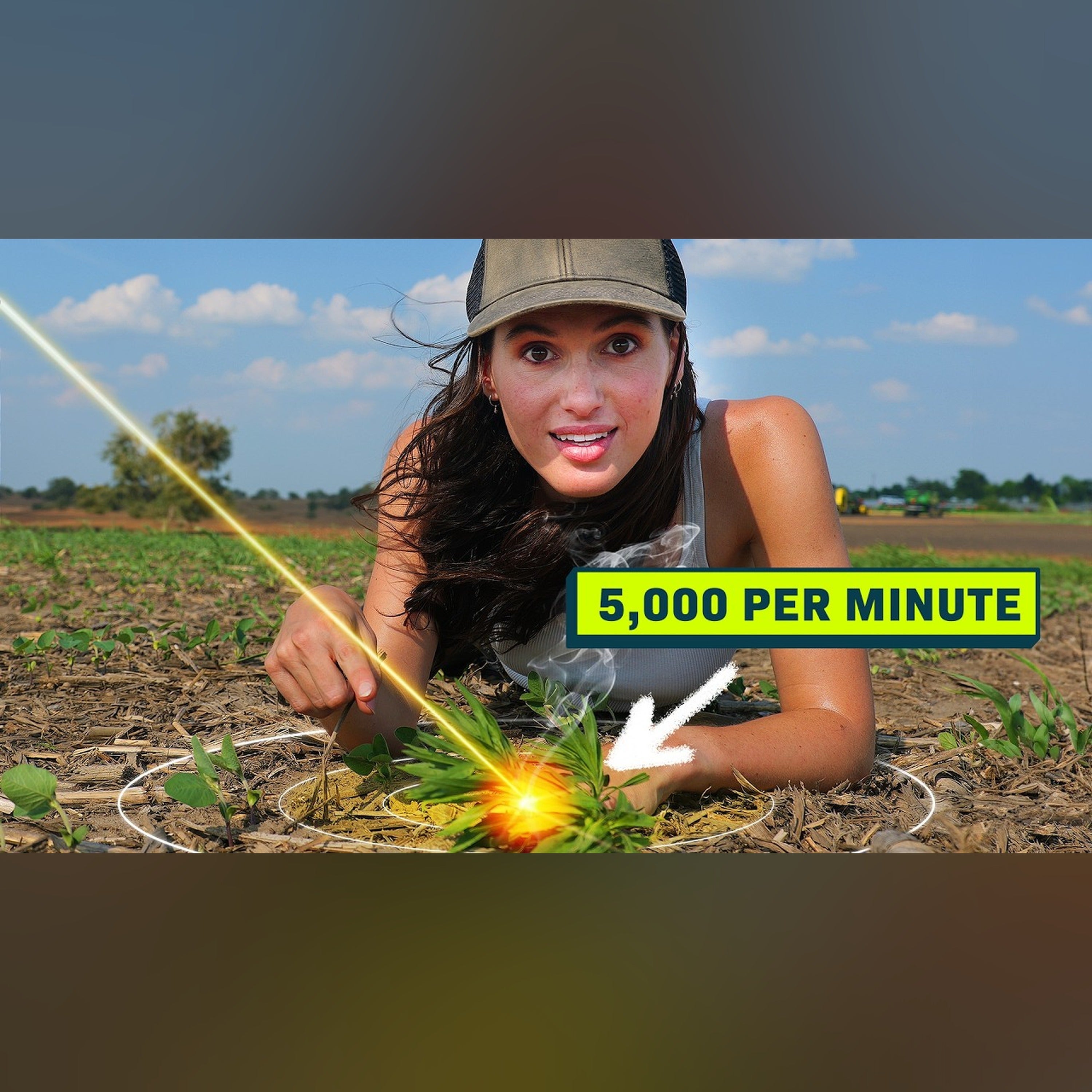
Growing food doesn’t look like I thought… Learn more about Dropbox for teams: https://www.dropbox.com/cleo Thanks Dropbox for sponsoring this video! Right now, we’re living through one of the most pivotal moments in food history… and most people have no idea it’s happening. Experts are calling the “Fourth Agricultural Revolution” and it’s here because we’re facing a big problem: The world’s population is rising, so experts say we’ll need to increase food output to catch up with our current population and feed those new people. But we’ve got to do it in ways that actually protect the Earth long term. Right now, farmers are in a fight to feed the world. So let me show you some of the coolest machines they’re using to do it… Chapters: 0:00 What’s the fourth agricultural revolution? 01:15 Why do we need more food? 1:54 Where does farming tech get tested? 3:00 What were the first 3 agricultural revolutions? 3:58 How do we feed billions more people… better? 4:31 How do farmers grow more food
Three raw, high-heat confessions that linger long after the holidays. After Thanksgiving and Black Friday you’re on your knees worshipping a thick BBC while your husband sits a few feet away, jacking off to every wet sound and every inch that disappears into your mouth. You’ve been denied for thirteen months—the second he pushes inside you now you get close so fast he has to stop pounding you over and over, leaving you dripping, shaking, and still not allowed to come. A stranger gave you the best blowjob of your life in a bar bathroom, swallowed every drop, then walked out without a name, sparking a months-long search that ended with her on her knees for you again, this time knowing exactly who you are. Explicit, consensual, shame-free audio erotica full of oral worship, long-term denial, anonymous heat, and sensory detail. Join us over on Discord: https://discord.gg/MfsyKuPxMK Stories depict enthusiastic consent. Listener discretion advised; 18+ only.
Spanish party leaders make final pitch for votes before Sunday parliamentary election, which could see the far-right Vox party get a share of power. Is the country on the brink of political change? Also in our programme: Turkey continues its crack down on independent media; and we speak to a family member of the twin sisters who face prison and a death sentence in Iran. (Photo: Vox candidate Santiago Abascal waves during the party's end-of-campaign rally in Valencia, Spain, 27 November 2026. Credit: EPA/Shutterstock)
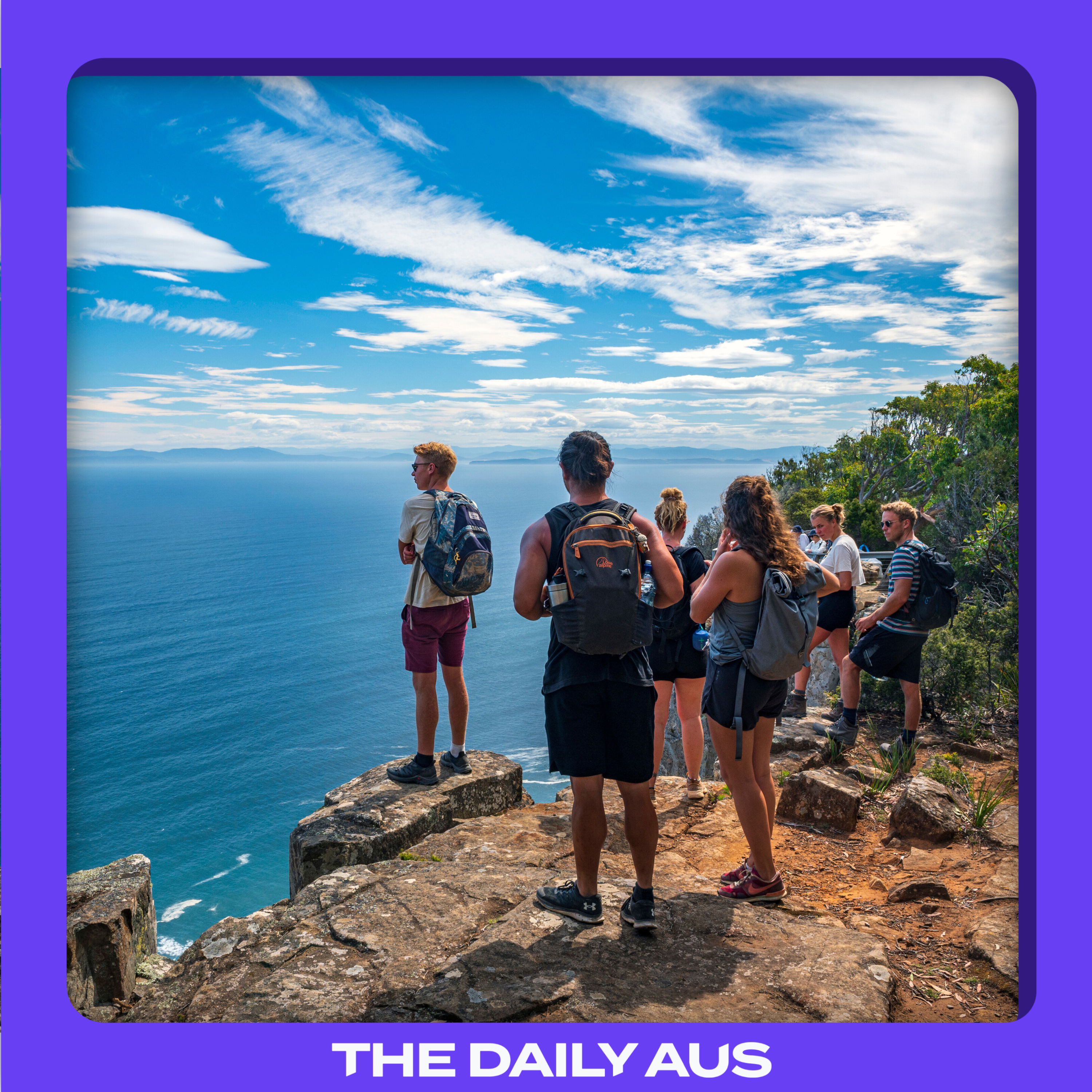
Copy-paste itineraries, packed must-see lists and a growing hunger for something real. More of us are choosing holidays off the beaten track, and the numbers are starting to show it. Today, Zara and Billi sit down with travel journalist and author Nina Karnikowski, who has written about more than 60 countries. They unpack why young travellers are rethinking where they go, how to find authentic experiences when every feed looks the same, and Nina's one tip for your next trip. This episode is produced in partnership with Tourism Tasmania. Everything we discuss was researched and written by us, and the content remains independent. New research has found 75% of Australians would rather be described as a traveller than a tourist. That's where Tasmania's De-Tourist Trails come in: five routes designed to take you beyond the usual tourist hotspots, so you can slow down and follow your curiosity. Explore Tasmania’s De-Tourist Trails: https://www.discovertasmania.com.au/not-really-for-tourists/
In case you missed it - on the day the COP31 draft lost its fossil fuel language, Donald Trump, Xi Jinping and Vladimir Putin met in Shenzhen and agreed to boost supplies of refined oil. Days earlier, 18 House Democrats told the COP the US would be back. They take control of Congress in January. Can they deliver? If you missed Sunday's bonus episode,https://shows.acast.com/outrage-optimism/episodes/breaking-cop31-collapses-were-countries-right-to-walk-awaystart there (https://shows.acast.com/outrage-optimism/episodes/breaking-cop31-collapses-were-countries-right-to-walk-away): listen to Christiana and Tom's reaction as COP31 fell apart. This week they look at what it all means - from the Shenzhen summit to a UN Secretary-General race where Christiana has heard a rumour about who's holding out on Rebeca Grynspan. Then they're joined by Congresswoman Yassamin Ansari, the Phoenix Democrat who worked with Christiana and Tom in the run-up to Paris and was part of the Antalya delegation. New
A new draft of the COP31 deal landed in Antalya on Thursday afternoon, minutes before we hit record. It was half the length of Monday's, and the words "fossil fuels" were gone. Reading it alongside Tom Rivett-Carnac, Christiana Figueres and Paul Dickinson was Jennifer Morgan, who has been to every COP. She co-led Greenpeace International, then ran Germany's climate diplomacy as State Secretary and Special Envoy until last year, and has spent recent weeks in Türkiye getting ready for this COP. So what does the draft tell us? Jennifer thinks the mood in Antalya has been improving, and that the new text "is getting there". But the money is another matter. As a diplomat, she says, she'd call the finance talks difficult. Out of government, she calls them a bloodbath. Does the 35% electrification pledge matter as much as the fight over the word "clean" in front of it? And why are Saudi Arabia, India and China trying to push back the next big IPCC report? The Pacific islands came to Antalya a
It's the end of COP31's first week, and from a distance the biggest story looks like the buses. More than 92,000 people registered for Antalya, and not all of them seem to have reached the venue. We wonder whether that's where the real deals get done. Ed King, author of the Climate Diplomacy Brief, joins Tom Rivett-Carnac, Christiana Figueres and Paul Dickinson from Antalya with the gossip and the announcements (and some reassurance for those of us who stayed home). Türkiye holds the gavel and Australia runs the negotiations, so who's actually in charge? The flagship pledge to get electricity to 35% of global energy use by 2035 doesn't say the power has to be clean. Campaigners call that a flaw. Christiana calls it creative ambiguity. Countries still can't agree whether there should be a cover decision at all. And with the UK's Andy Burnham the only G7 leader to make the trip, the clearest leadership so far has come from the Solomon Islands, with $400,000 for the Green Climate Fund. Af
Environmental monitoring data should be accessible to affected communities.
Share your view, then see how readers voted. No sign-in required. This poll is shared across stories.
Do you agree or disagree?
Common Quandary
A Common Quandary to discuss
Another conversation to explore, separate from this news story.
The night before the wedding, your friend admits serious doubts. Do you tell their partner?
On the night before a wedding, your closest friend says they are unsure they should marry but insists it is ordinary panic. They make you promise secrecy and plan to proceed. Their partner asks you directly whether everything is okay.
When does loyalty require breaking a confidence before an irreversible choice?