Caleb Flynn’s Parents Asked Mercy but Omitted WHAT?!
51 min
Listen through the publisher, then discuss the episode here or arrange an in-person Roundtable. Your city determines where to meet.
Roundtables are designed for groups of four, with a shared subject and room for everyone to speak. Come for discussion, with no dating expectation.
Caleb Flynn’s parents sent two letters to Judge Jeannine Pratt before he was sentenced for murdering Ashley Flynn. They asked for mercy and described the son they believed they knew. But neither parent used Ashley’s name, and neither mentioned the granddaughters left without their mother. That absence becomes the starting point for Tony Brueski and psychotherapist Shavaun Scott. The letters were dated October 2, 2026, after the jury returned guilty verdicts on all nine counts. Mike Flynn described Caleb’s good character, lack of prior criminal history, and a favorable account from a jail guard. Kim Flynn asked the judge to consider her son’s earlier years and wrote that he had repented to the Lord. Their case for leniency centered on Caleb’s history and their belief in him. But there was another set of statements before the court. Ashley’s daughters wrote about living with their mother’s absence, and their letters were read aloud at sentencing. One daughter called for Caleb to admit responsibility. Another asked what their mother could possibly have done to deserve being killed. Their words placed Ashley at the center of the hearing, where she belonged. Prosecutors also alleged in a sentencing filing that Flynn had spoken to each daughter before forensic interviews and tried to influence what they said. His defense objected, noting that the jury had not heard those allegations. Judge Pratt permitted consideration of the filing, then criticized Caleb’s manipulation and lack of remorse as she imposed life without parole. Shavaun Scott joins Tony to discuss the difference between a parent defending a child and a statement that acknowledges the people affected. The letters reveal how the family chose to make its case; the judge’s response shows why those choices mattered. Listen Anywhere You Get Podcasts: https://pod.link/1655749292 Want to comment and watch this podcast as a video? Instagram https://www.instagram.com/hiddenkillerspod/ Facebook https://www.facebook.com/hiddenkillerspod/ Tik-Tok https://www.tiktok.com/@hiddenkillerspod X Twitter https://x.com/tonybpod #CalebFlynn #AshleyFlynn #HiddenKillers #ShavaunScott #CalebFlynnParents #MikeFlynn #KimFlynn #OhioCourt #TrueCrimePodcast #JusticeForAshley
Episode information is provided by the publisher. Listening takes place on the publisher’s service.
In This Episode: Annu Kapoor joins Shekhar Natarajan to share the life experiences, struggles and values that shaped his journey across Indian cinema, theatre, television and radio. 1. Annu Kapoor's early life and upbringing in a financially struggling family in Bhopal. 2. Growing up around his father's travelling folk theatre company and the challenges faced by performing artists. 3. Why his parents wanted their children to pursue more socially accepted professions. 4. His early struggles, including working at a tea stall, selling lottery tickets and running a firecracker shop. 5. The powerful lessons his parents taught him about honesty, passion and accepting life's uncertainties. 6. His family's history, cultural roots and the contrasting paths taken by different generations. 7. The influence of his mother in providing education and stability to the family. 8. Why he never resented his father's absence during his childhood and the respect he continues to have for his parents. 9. The
The Game That Knew His Real Name Imagine an arcade game that speaks your birth name, not your username, through hidden speakers before you've even touched the controls. This is the chilling reality for a man who bought a piece of his childhood, only to find something else entirely had been waiting for him. How did an inert machine know his deepest identity? In this episode, we delve into the unsettling story of Robbie Lavey, a methodical game developer who purchased a vintage arcade cabinet called Demi's Adventure. From its unexpected early delivery to its unnerving ability to read his intentions and even his online alias, the game quickly proves to be far more than a simple nostalgic purchase. What secrets did this machine hold, and what did it truly want from Robbie? Person: Robbie Lavey (online alias: Switch) Occupation: Developer of small role-playing games Product: Demi's Adventure arcade game Company: Rubicon Enterprises Game Mode: Text-based, keyboard-controlled - Robbie Lavey w
A former Canadian defence official suing Mark Carney’s government for $2 million challenges CBC’s narrative surrounding Donald Trump, Canada’s sovereignty and American military dependence. Jasmin Laine breaks down Raquel Garbers’ remarkable interview, Canada’s F-35 controversy, China’s growing influence, threats to North American security and the petition to expel U.S. Ambassador Pete Hoekstra. Is Canada alienating its greatest ally while overlooking a much bigger threat? #MarkCarney #DonaldTrump #Canada #CBC #China #CanadianPolitics Help me stay 100% independent! Send a one-time contribution - Let’s Be Friends! (https://www.instagram.com/jasminlaine/)
In This Episode of the 2 Worlds Collide Podcast, I sit down with the Emma, James and Matteo from the Ringers Western team for a wide-ranging conversation about building an Australian clothing business, family, freedom of speech and the pressures facing Australian business owners. Ringers Western is a sponsor of the 2 Worlds Collide Podcast. In this conversation, the team explains why they chose to support the show, including their response to concerns about the risks of backing an outspoken independent voice. We discuss taxes, government spending, cost-of-living pressures and why the team believes business experience matters in political leadership. They also share the Ringers Western origin story: growing up on a Kimberley cattle station, sketching an idea around a campfire and growing from a family garage into a business they say now employs around 350 people. The conversation also covers family life, online regulation, military culture and the importance of being able to disagree wi
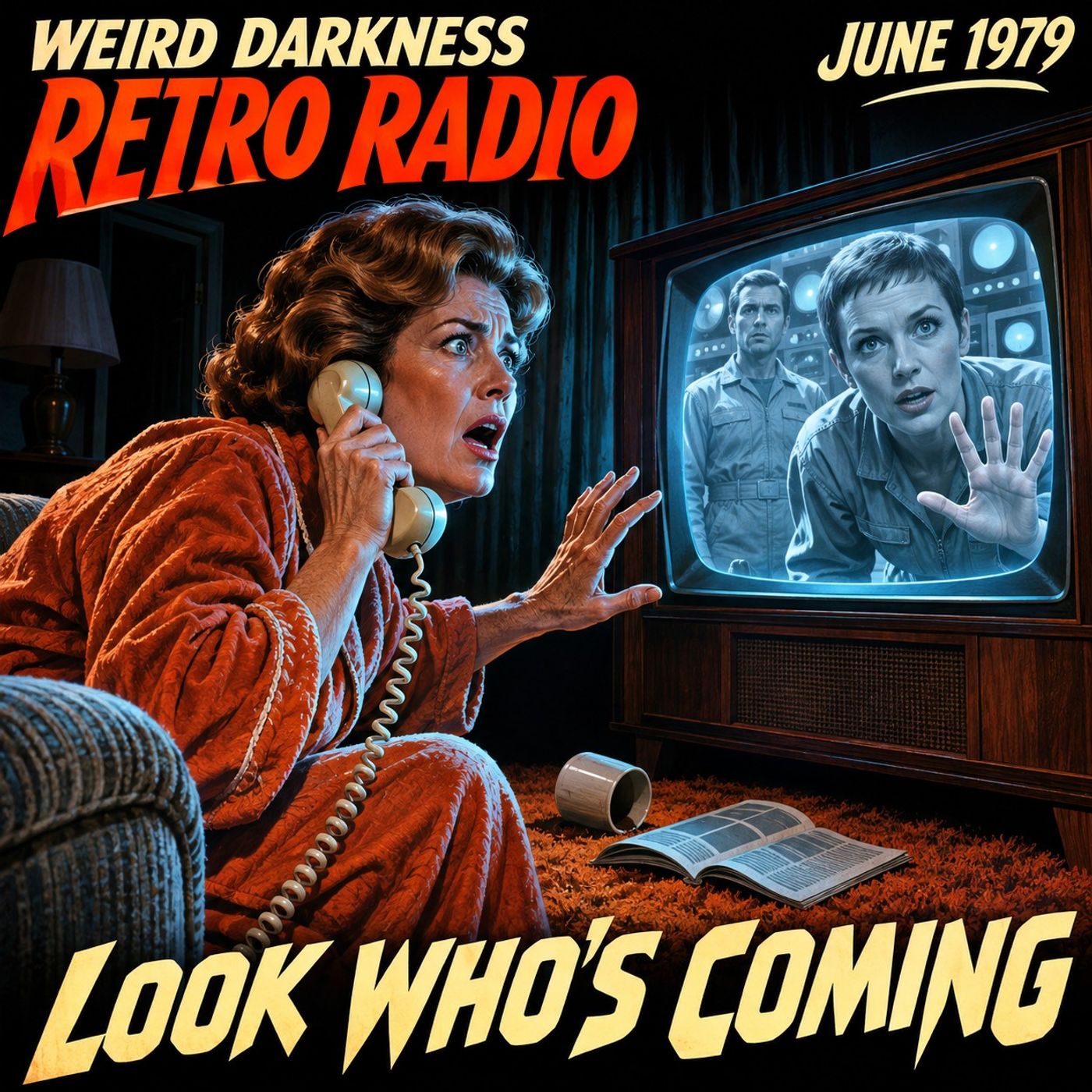
Harry and Flo Betts have been married twenty-three years and have argued for most of them, lately over television: he can't get enough science fiction, she can't get enough of her soap operas, and each is sure the other has started to believe what's on the screen. Then one Friday afternoon, with her friend Grace called away to a crisis at the school, Flo sits down alone for the big episode of Five In The Family and gets, instead, two figures in gray in a room full of instruments, one of them saying into the camera that Earth must be warned before it's too late. The station says nothing went wrong, Grace never sees it, her husband's psychiatrist friend starts asking about her marriage, and the two strangers return again and again, only ever when Flo is watching by herself. CHAPTERS & TIME STAMPS (All Times Approximate)… 00:00:00.000 = Show Open 00:01:30.028 = CBS Radio Mystery Theater, “Look Who’s Coming” (June 11, 1979) ***WD 00:48:21.405 = Lights Out, “The Signalman” (August 24, 1946)
This week’s Headline: on November 9th, 2026, a judge sentenced actor and comedian Russell Brand to 10 and a half years in prison, telling him, “You haven’t got away with it.” Six women testified against the former Hollywood star, and the jury convicted him of r*ping a fan and sexually assaulting three others. But how did the man who openly joked about his treatment of women stay untouchable for so long? Want all three parts of every case all at once? Need More to Binge? Follow me on Social Instagram: @Crimehouse (https://www.instagram.com/crimehouse/) TikTok: @Crimehouse (https://www.tiktok.com/@crimehouse) X: @crimehousemedia (https://x.com/crimehousemedia) America’s Most Infamous Crimes is hosted by Katie Ring Episode Sponsor: We’re all out of the ordinary.
Suzanne Morphew’s final known message and Barry Morphew’s later bond violation allegations sit six years apart. Together they frame a case in which the smallest documented actions have become central to enormous legal questions. Suzanne was communicating with Jeff Libler on May 9, 2020. Her last known electronic message was sent at 2:11 p.m.; investigators place Barry back at their Colorado home approximately thirty-two minutes later. Suzanne had confided that her marriage was failing and discussed leaving it. She also used a recording pen at home, later recovered by investigators. Those records became part of the reconstruction of her disappearance, while Barry has denied responsibility for her death. Suzanne’s remains were located in 2023, and prosecutors now allege Barry murdered her. They point in part to traces of animal tranquilizers found in the remains. Barry has pleaded not guilty. The ultimate meaning of that forensic evidence remains for the court to determine. In August 202
One piece of paper tells you how complicated the Delphi murders investigation became. Richard Allen reported being on the trail where Abby Williams and Libby German vanished in February 2017. A conservation officer documented the encounter. Yet the lead was filed under a confused name, marked “cleared,” and left out of investigators' focus until volunteer Kathy Shank came across it in 2022. Nobody has publicly established who made the clearance notation or why. Shank found the old lead sheet while sorting boxes and connected it with witnesses who described seeing a man near the Monon High Bridge. Allen had come forward voluntarily. Investigators subsequently searched his home, and prosecutors eventually took the case to a jury. But the five-year gap is only one part of this combined episode. Police released an initial suspect sketch, then another in 2019. Some early interview recordings were lost when they were overwritten. Detectives also pursued the “anthony_shots” account used by Ke
A prison relationship became a public romance. A murder case became a documentary franchise. And when Ken Urker died in Louisiana, the reporting quickly turned a collection of objects found by deputies into competing explanations about his final hours. There is a difference between what a record says and what people want it to mean. That difference sits at the center of this combined Hidden Killers episode. First, Tony Brueski revisits the planning behind Clauddine 'Dee Dee' Blanchard's murder in June 2015. Gypsy Rose Blanchard testified that she considered a number of possibilities with Nicholas Godejohn before they settled on a knife. Accounts of her attempt to get pregnant belonged to a separate plan to escape her mother's control. The killing went forward. Godejohn was convicted of first-degree murder and sentenced to life; Gypsy pleaded guilty to second-degree murder and received ten years, serving most of that sentence before her 2023 release. During incarceration, letters connec
Developers should cover the infrastructure costs created by their projects.
Share your view, then see how readers voted. No sign-in required. This poll is shared across stories.
Do you agree or disagree?
Common Quandary
A Common Quandary to discuss
Another conversation to explore, separate from this news story.
Your partner checks your location whenever you reply slowly. Is that caring or creepy?
A couple shares live phone locations for convenience and safety. One partner begins checking the map whenever a message goes unanswered, even though they have never agreed on when checking is appropriate.
Does granting access also grant permission to monitor?