Can AI Learn to Improve Itself? | Recursive Self-Improvement
18 min
Listen through the publisher, then discuss the episode here or arrange an in-person Roundtable. Your city determines where to meet.
Roundtables are designed for groups of four, with a shared subject and room for everyone to speak. Come for discussion, with no dating expectation.
For decades, the idea of AI improving itself was just a thought experiment. Today, AI is already helping researchers at frontier labs run experiments, write code and test ideas faster. Mark Chen says OpenAI has built “AI research interns.” So how far are we from AI that can do the research on its own? In our first episode of Working Theory, a16z general partner Sarah Wang explores recursive self-improvement with two leading AI researchers: Mark Chen, Chief Research Officer at OpenAI, and John Schulman, co-founder and Chief Scientist of Thinking Machines Lab, and co-founder of OpenAI. They cover what RSI actually means, why research taste is so hard to teach, and why AI may be one of our best tools for solving alignment. Resources: Follow Mark Chen: https://x.com/markchen90 Follow John Schulman: https://x.com/johnschulman2 Follow Sarah Wang on X:https://x.com/sarahdingwang Chart Sources Stay Updated: Find a16z on YouTube: YouTube (https://www.youtube.com/@a16z) Find a16z on X (https://x.com/a16z) Find a16z onLinkedIn (https://www.linkedin.com/company/a16z) Follow our host: https://twitter.com/eriktorenberg For more details please see a16z.com/disclosures. Hosted by Simplecast, an AdsWizz company.
Episode information is provided by the publisher. Listening takes place on the publisher’s service.
What if everything you've been chasing was already inside you? It took me 40 years to understand that happiness isn't somewhere in the future, it's here, in this moment. As a younger woman, I avoided pain, resisted it, distracted myself from it. What I know now is that pain doesn't break us. It rearranges us. And on the other side of it is something I wouldn't trade for anything, lived wisdom, inner comfort, and a clarity that simply cannot be rushed. Uploaded 04-03-26 In this conversation with @lewishowes, I share what I wish I had known decades sooner: about fulfillment, presence, the gift hidden inside our most difficult moments, and why it might just be the simplest things that wake us up the most. Watch more videos like this How To End Self Sabotage with 1 Simple Choice: https://youtu.be/-0Ln4-h4LQQ Do This When You Feel Triggered and Your Life Will Transform: https://youtu.be/h7YylJ3nuok Creating Moments of Stillness in the Chaos: https://youtu.be/eR6e50AmeRY Turning Towards Fear
I know it sounds like an exaggeration. It sounds like the kind of thing a man says to sound wise. But I have tested it against the lives of people who succeeded and people who struggled, and the pattern is so consistent it stopped surprising me a long time ago. Uploaded 23-08-26 The ones who built something lasting almost all had a grip on their mornings. They owned the first hour. They did not let the day happen to them. They happened to the day. And the ones who felt forever behind had lost their mornings without ever noticing they had lost them. A morning does not announce its importance. It slips by so quietly that most people never stop to ask what happened to it. And what slips away with it is the one stretch of the day when you had the clearest access to yourself. Here is the truth: whatever you give your freshest attention to, you have declared to be most important. Most people, without ever deciding to, have crowned their interruptions. This seminar unpacks the single mechanic
A.I. for Building Self-esteem: Seeing Yourself More Clearly and Kindly, a practical, beginner-friendly look at how artificial intelligence can help you see yourself a little more clearly and kindly. Building Self-esteem? Press play on Episode 427 of A.I. for Beginners and learn exactly how artificial intelligence, especially ChatGPT, alongside a journaling app, can help you see yourself a little more clearly and kindly. WHAT YOU WILL LEARN IN THIS EPISODE - Why building self-esteem is so hard to handle alone, and what is actually going on underneath it - A specific way to use a journaling app to work through it, step by step - An example prompt you can copy word for word: "Help me notice when I'm judging myself far harsher than I'd judge a friend" - A second practical technique, with another ready-to-use prompt: "Help me write down three qualities I actually like about myself, beyond achievements" WHO THIS EPISODE IS FOR - Anyone currently working on building self-esteem - Anyone curio
How to kill your current self My private network for entrepreneurs ⚜ - http://newelite.pro/search-for-freedomJoin the Icon Blueprint personal brand academy waitlist - https://t.me/+AwtcD_v7V4xiNGE1My instagram - https://www.instagram.com/jackhopfitness?igsh=aGhqMm1iNHg2eXg5&utm_source=qre Episodes created by entrepreneur and masculinity ace Jack Hopkins for his youtube channel, this podcast is dedicated to helping men rediscover their inner strength and confidence in a society that often promotes feminine values over masculine ones.Follow the podcast for valuable insights, inspiring stories, and practical advice on how to embrace your masculinity, build your confidence, and achieve your goals. Whether you're looking to improve your relationships, advance your entrepreneurial career, or simply feel more confident and capable, Jack has valuable insights that can help you achieve your goals.So, if you're ready to reclaim your masculinity and awaken the beast that lives inside you, follow
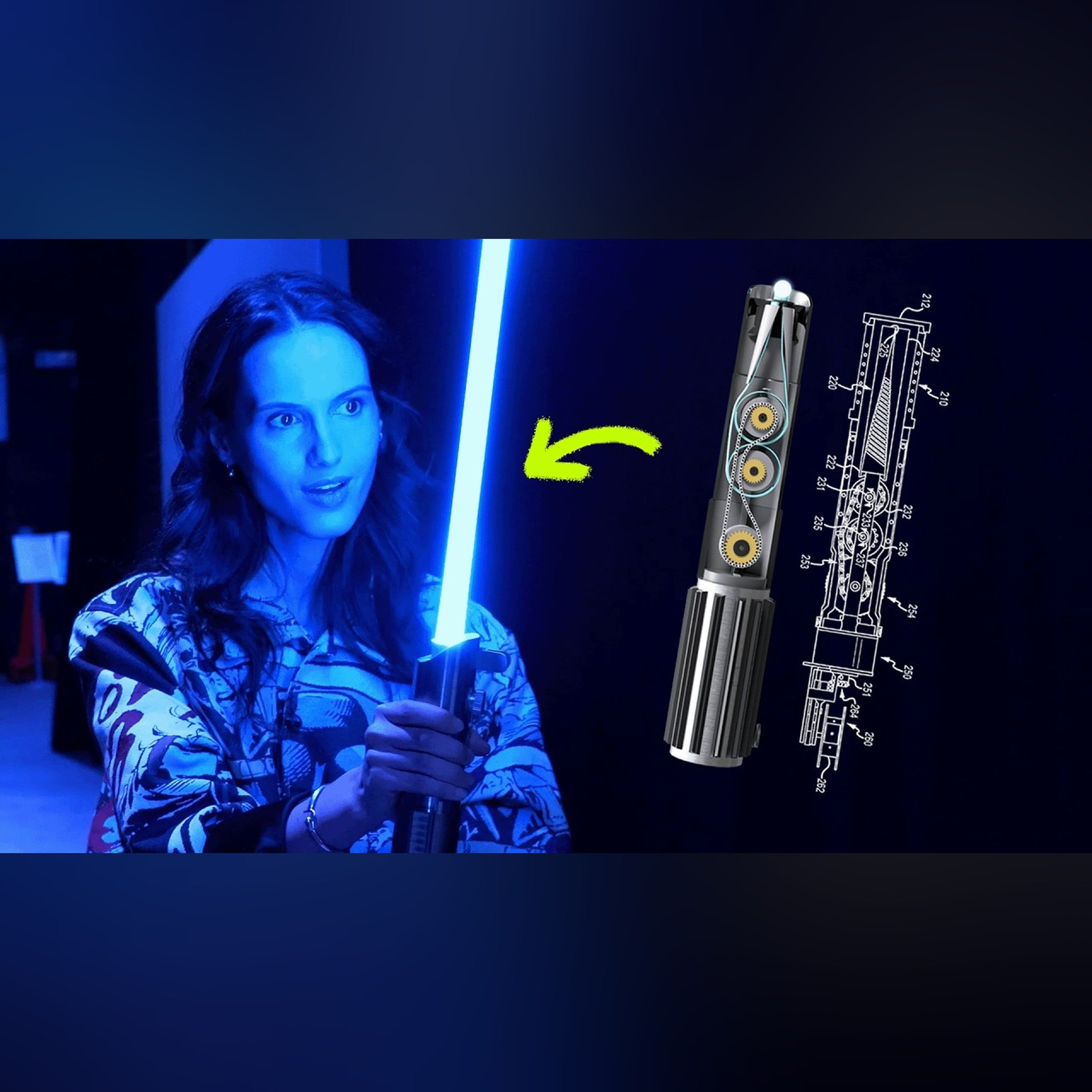
I tested Disney’s coolest new tech… Go to https://surfshark.com/cleo for 4 extra months of Surfshark Today I’ve been invited behind the scenes at Walt Disney Imagineering, the place where Disney brings their craziest ideas to life - from STUNT ROBOTS to a real life version of The Force, to adorable little droids! On this show Huge If True, we explore how tech can improve people’s lives - by living longer, going farther, doing more. But the reason I’ve loved Disney since I was a kid is they use tech to improve lives another way… by making people happy. And that means they end up pushing forward tech in some crazy, unexpected ways. So let me take you inside the magic, to show you the cutting edge tech they’re building… how it works… and what happens when we put it to the test! Chapters: 0:00 What is Disney building next? 1:11 What does Walt Disney Imagineering do? 1:52 What are Disney’s new droids really like? 2:47 How do Disney’s new droids work? 5:08 What’s the world’s most realistic l
Crypto News: Bitcoin, altcoins, and the crypto market crash along with stocks, gold, and silver. Will we see a recovery soon? ️ Learn Crypto with Expert Commentary - http://MyCryptoCourse.com (http://mycryptocourse.com/) iTrustCapital Representative: [email protected] ⭐️ Trade crypto perps with a free $25 bonus on Kalshi. ♂️Merlin - http://tinyurl.com/MerlinTCYouTube “I am a Merlin partner and get compensated for purchases made through links in this content"this content"Follow on social media: ️ X(Twitter) - https://x.com/thinkingcrypto ️ Facebook - https://www.facebook.com/thinkingcrypto/ ️ LinkedIn - http://linkedin.com/company/thinking-crypto ️ Instagram - https://www.instagram.com/thinkingcrypto/ ️ TikTok - https://www.tiktok.com/@thinkingcrypto5 ️ Threads - https://www.threads.net/@thinkingcrypto ️ Website - https://www.ThinkingCrypto.com/ (https://www.thinkingcrypto.com/) Business Inquiries [email protected]⏰ Time Stamps ⏰ 00:00 (https://rumble.com/v7inwo8-da
David Heinemeier Hansson thinks the agent era is reopening a window in computing that has been closed for decades: the chance to build a new operating system people actually want to use. DHH joins a16z General Partners Martin Casado and Anish Acharya to explain why he’s building Omarchy, an agent-first Linux distribution designed around a computer that users can modify simply by asking. They discuss why the command lines, config files, and detailed error messages that once made Linux intimidating now make it unusually well suited to agents, and why DHH believes software development has become cheap enough to challenge decades-old platform lock-in. But if code is becoming abundant, what still matters? DHH argues that taste, craft, and the willingness to obsess over the final 2% become more important, not less. The conversation moves from tiny teams wielding the productive capacity of thousands of people to open models, competition at the frontier, and the return of hacker, demo, and pse
The question isn’t simply whether humanity should race toward superintelligence or stop. Nick Bostrom argues the harder challenge is preserving the ability to slow down when safety falls behind, without turning a temporary pause into permanent technological stagnation. a16z’s Eddy Lazzarin and Elena Burger sit down with Bostrom to revisit the ideas he helped bring into the mainstream, now that increasingly capable AI systems actually exist. They discuss why alignment may become harder as models grow more situationally aware, which capability improvements may carry more risk than others, and why Bostrom favors “pacing the frontier” rather than committing to a broad or indefinite pause. They also examine the cost of waiting. Bostrom argues that safely developed superintelligence could radically extend human lifespans and address problems from disease to poverty, meaning delay carries risks of its own. From there, the conversation turns to Deep Utopia, governance, the possibility of post-
AI agents are getting smarter, but every new agent still has to learn who you are. What if your preferences, priorities, relationships, and digital context could move with you instead? First Person Labs co-founder Ken Liu joins a16z’s Martin Casado and Joel de la Garza to introduce Second, a personal context layer designed to understand what you’re doing across your digital life and make that context available to the agents you choose. They discuss how Second can proactively connect information across conversations and applications, why protecting such personal data requires a different security architecture, and the longer-term vision of AI that doesn’t just respond to prompts, but understands enough context to know when and how to help. Resources: Try Second:https://2.computer (https://2.computer/) Learn more about First Person Labs: https://fpl.company/ Follow Ken Liu: https://www.linkedin.com/in/kenziyuliu/ Follow Martin Casado on X: https://x.com/martin_casadoa16z.com (https://a16
Reports of research should distinguish clearly between association and proven causation.
Share your view, then see how readers voted. No sign-in required. This poll is shared across stories.
Do you agree or disagree?
Common Quandary
A Common Quandary to discuss
Another conversation to explore, separate from this news story.
Your coworker bends a dumb rule to help people. Do you report it?
An underpaid coworker quietly bends a company rule to help colleagues receive benefits they were technically denied. No customer is harmed, but the records are inaccurate and you are asked to certify them.
Where should loyalty end when a rule seems unjust?