Listen through the publisher, then discuss the episode here or arrange an in-person Roundtable. Your city determines where to meet.
Roundtables are designed for groups of four, with a shared subject and room for everyone to speak. Come for discussion, with no dating expectation.
Language is central to nearly every moment of our lives, yet researchers know surprisingly little about how it works. Using AI models as a new kind of lab for studying how humans learn language, computational cognitive scientist Jennifer Hu shows where machines succeed, where they stumble — and what those results reveal about our own minds. Hosted on Acast.
Episode information is provided by the publisher. Listening takes place on the publisher’s service.
Instant Download - The Masterclass: https://nci.university/opt-in-page-page Uploaded 25-10-25 Your reactions aren’t random — they’re coded responses running in ancient parts of your brain. Once someone knows how to map those triggers, they can bypass logic and access behavior directly. Understanding this “Trigger Hack” means you’ll finally see how influence really works. A single phrase, delivered at the right moment, can slip past defenses that have been there for decades. Recognize the emotional scripts that control you — or use them to build instant trust. Every connection, sale, and conversation runs on these hidden triggers. Gain the edge: learn how the Safe Haven Trigger disarms resistance and rewires rapport. Operate with precision — use it ethically, or prepare to see how others are using it on you. Don’t just watch. Decode the backdoor to the human brain. KEYWORDS: psychology, neuroscience, persuasion, influence, behavioral science, emotional triggers, subconscious mind, mind
A report published today in the Lancet shows that British adults are having half as much sex as they were in the 1990s. It's research from the fourth National Survey of Sexual Attitudes and Lifestyles, one of the world's biggest studies of sexual behaviour completed roughly every ten years. Data was collected from 19,000 people aged 16 - 59 between 2022 to 2024 by a team of researchers from various universities. One of the authors, Dr Neha Pathak from University College London, joins Nuala McGovern to discuss what they have found. Back in June, we introduced you to our academic-in-residence Frances Hand, who joins us as part of Radio 4's New Generation Thinkers scheme. This brings early-career academics into programmes across the network, including Woman's Hour. Frances's research examines the language used to describe harmful experiences in maternity care, particularly the term "obstetric violence". Today we examine what this phrase means, the debate around using it in the UK, and how
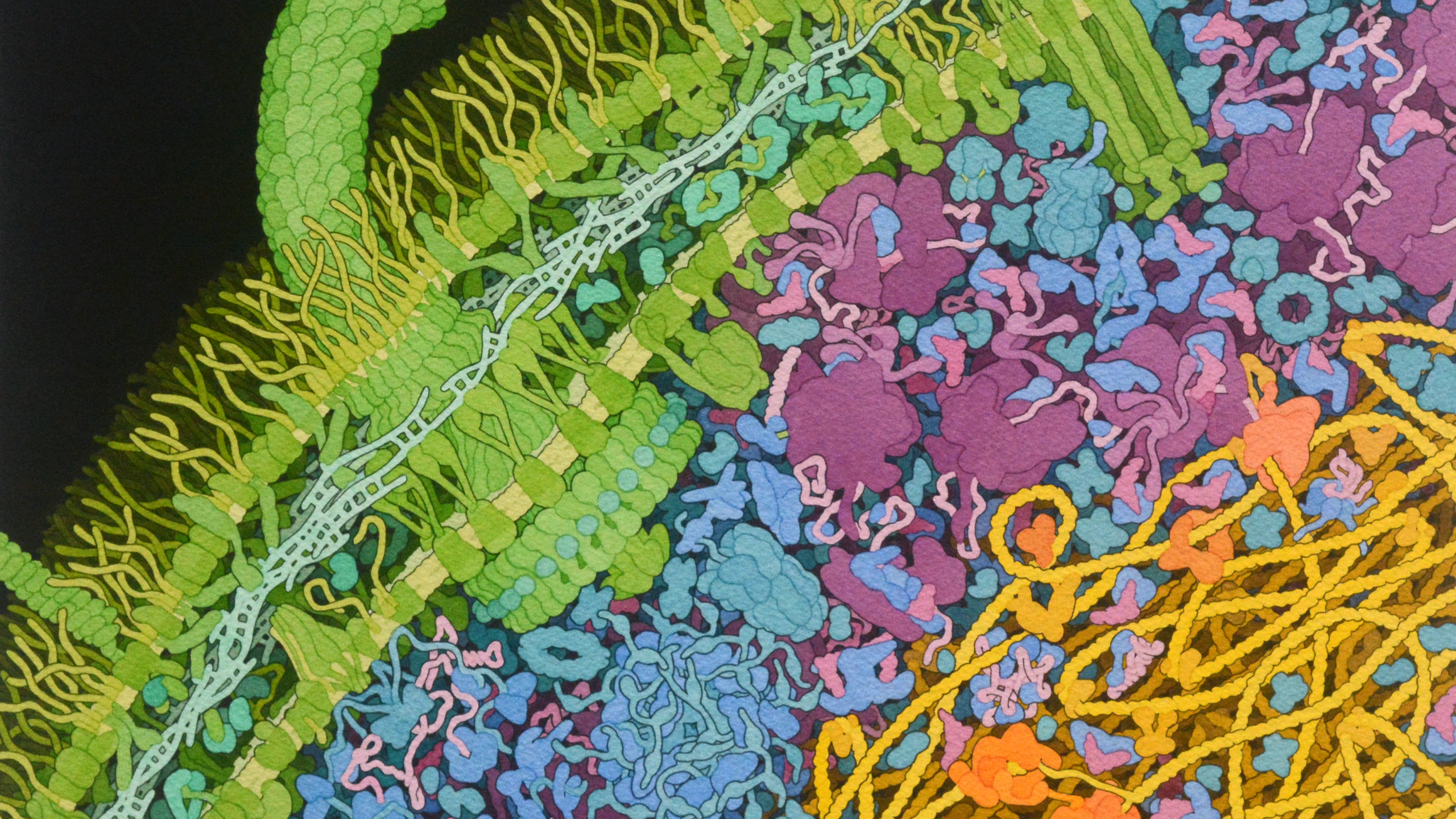
Humans have accomplished some amazing feats of engineering! There’s the Great Wall, the Great Pyramids, the Empire State Building. These are all wonders, to be sure. But it’s easy to forget the wonders that are much smaller than all that: wonders inside us, wonders that are keeping us alive! On today's ID The Future, Andrew McDiarmid is excited to read to you from The Robots Inside You, a new book designed for young people from biochemist Dr. Michael Behe. If you’ve watched the video series Secrets of the Cell, you know Dr. Behe has the ability to make complex scientific concepts easier to understand. In The Robots Inside You, Behe unpacks three amazing systems: the blood-clotting system that coordinates our body’s emergency response to bleeding, the molecular machines that maintain and repair our cells, and the superhero bugs at the heart of life that harness sophisticated machinery and extraordinary capabilities. Source (https://idthefuture.com/2295/)
There are problems, there are first world problems, and then there are 21st century problems. We have too many to count, but here's a few: Army postpones plan to detonate nearly 10,000 pounds of lead azide until Monday - ABC News (https://abcnews.com/amp/US/iowa-army-plant-lead-azide-detonation/story?id=138261613) U.N. to debate rules for ‘killer robots’ - The Japan Times (https://www.japantimes.co.jp/news/2026/11/16/world/politics/un-rules-killer-robots/) Gas geyser spews trash and noxious odor into air above L.A. area landfill, prompting public health emergency (https://www.nbcnews.com/news/us-news/gas-geyser-spews-trash-noxious-odor-air-l-area-landfill-prompting-publ-rcna609892) Hosted on Acast.
Get $50 off your first purchase of $100 or more. To claim, visit https://www.article.com/discount/dwkt & the discount will be automatically applied at checkout. #ad Feel closer this Christmas with Aura Frames & get an additional $5 off at https://auraframes.com/pdp/DWKT using promo code DWKT! #ad Give the gift of quality this holiday season. Download the Quince app for app-exclusive offers, or go to https://Quince.com (https://quince.com/) & get free shipping on your order and 365-day returns. #ad Get your City Scape set over at https://cozyearth.com (https://cozyearth.com/) and let them know you heard about them on Do We Know Them in the post-purchase survey. #ad In today’s episode, we discuss Clavicular for the first time after he had posted his girlfriend taking clippers and shaving off all of her hair. And while she claims it was her decision, people suspect that it was Clavicular behind the sudden makeover. Then for our second topic, we have another situation involving a food infl
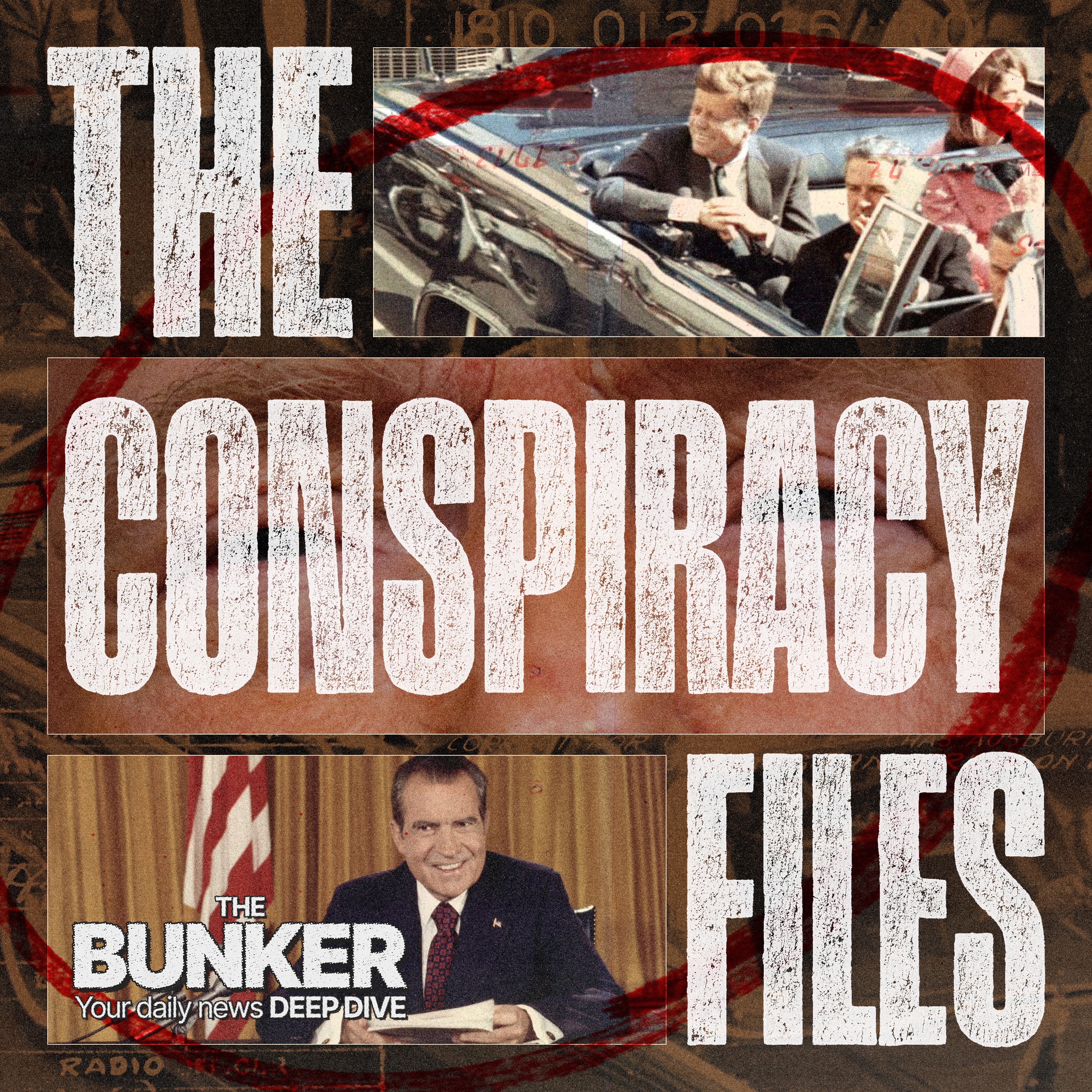
• Black Friday! Must end Tue Dec 15! Episode Two of a three-part Bunker miniseries... If JFK’s assassination planted the seeds of the modern conspiracy mindset, Watergate took it mainstream. Over the following decades, a string of scandals, cover-ups and government deceptions would convince millions that those holding power couldn’t be trusted. From Nixon and Watergate to the Vietnam War, 9/11 and the racist conspiracy theories targeting Barack Obama, Alex Von Tunzelmann and author and journalist Phil Tinline look at how legitimate suspicion of authority turns into a culture of paranoia – and eventually paved the way for Donald Trump. • Buy Phil’s book Ghosts of Iron Mountain: The Hoax that Duped America and its Sinister Legacy (https://uk.bookshop.org/a/13277/9781035903856) from our affiliate bookshop and you’ll help fund the podcast by earning us a small commission for every sale. Bookshop.org’s fees help support independent bookshops too. Back The Bunker on Patreon (https://www.patr
Union electrician Tonya Hicks is one of very few women in her trade, and for years she had to fight people’s assumptions just to do her job. Then one day at a steel mill, her crew put their own work on the line for her. Drawing on more than two decades running her own contracting company, she shows how today’s skilled-labor shortage opens a crucial window to decide who gets trained and hired to build the future of the economy. Hosted on Acast.
Government is slow at solving problems — and technologist Li Hongyi wants to fix that. In a quick talk, he introduces his experimental team in the Singaporean government, which visits schools, hospitals, fire stations and communities with one goal: to find problems and prototype solutions. Check out some real-world examples that prove government can be faster, cheaper and more effective. Hosted on Acast.
The proliferation of dating apps have people thinking romance is dead. But is that what romance really is? In today’s Sunday Pick, we bring you another episode of the TED podcast, Corner Piece, where host Melissa sets out to discover the true definition of romance, and if it’s even achievable in modern life. She interviews Professor Carrie Jenkins to understand the biological and social foundations of romantic love, the core cultural narratives we construct about romance, and whether romance itself is exclusive to relationships. Find more episodes of Corner Piece here: https://link.mgln.ai/u4mZ9C Hosted on Acast.
Public sports funding should prioritize everyday participation over elite competition.
Share your view, then see how readers voted. No sign-in required. This poll is shared across stories.
Do you agree or disagree?
Common Quandary
A Common Quandary to discuss
Another conversation to explore, separate from this news story.
Your coworker's religious holiday means you work the unpopular shift again. Is that fair?
A workplace accommodates religious observances by asking other employees to cover unpopular shifts. One coworker objects that nonreligious commitments can be equally meaningful but receive less formal protection.
Does equal respect require treating every kind of commitment identically?