The Robots Inside You: A Reading from Michael Behe’s New Book
21 min
Listen through the publisher, then discuss the episode here or arrange an in-person Roundtable. Your city determines where to meet.
Roundtables are designed for groups of four, with a shared subject and room for everyone to speak. Come for discussion, with no dating expectation.
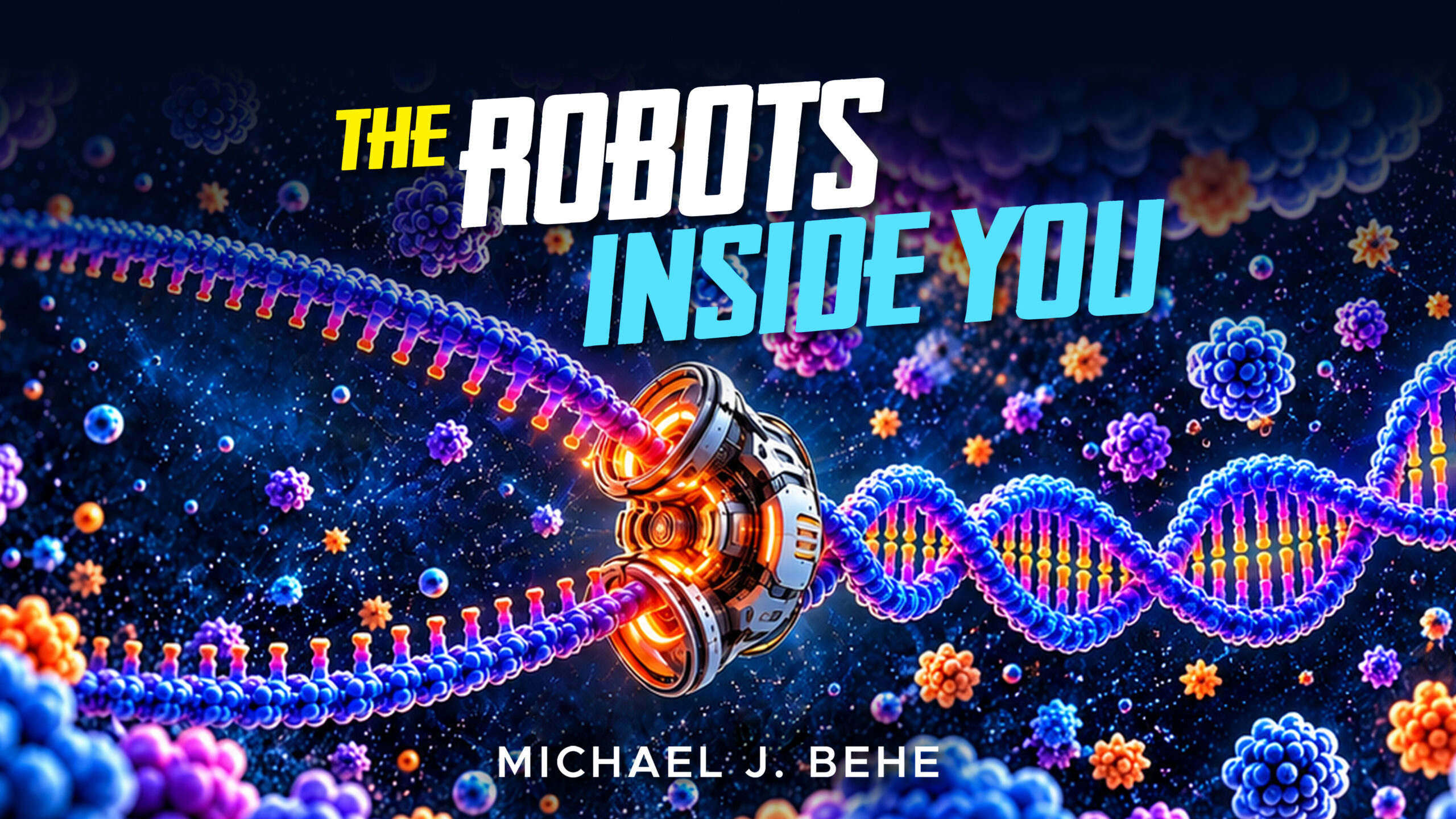
Humans have accomplished some amazing feats of engineering! There’s the Great Wall, the Great Pyramids, the Empire State Building. These are all wonders, to be sure. But it’s easy to forget the wonders that are much smaller than all that: wonders inside us, wonders that are keeping us alive! On today's ID The Future, Andrew McDiarmid is excited to read to you from The Robots Inside You, a new book designed for young people from biochemist Dr. Michael Behe. If you’ve watched the video series Secrets of the Cell, you know Dr. Behe has the ability to make complex scientific concepts easier to understand. In The Robots Inside You, Behe unpacks three amazing systems: the blood-clotting system that coordinates our body’s emergency response to bleeding, the molecular machines that maintain and repair our cells, and the superhero bugs at the heart of life that harness sophisticated machinery and extraordinary capabilities. Source (https://idthefuture.com/2295/)
Episode information is provided by the publisher. Listening takes place on the publisher’s service.
Brain chips don't read your mind. They do something weirder... This is Neuralink’s Next Gen R1 surgical robot. It’s one of several new ways scientists are now trying to combine the human brain with a computer, which sounds like science fiction because… it is! But not anymore. And you need to know about this right now, because human clinical trials are happening and this tech is moving fast. Some people want to use it to make you superhuman. But I think most people aren’t seeing what’s really huge if true here. This story isn’t about how to make us more like machines Instead, this might be one of the most cutting edge ways to keep us human. Visit http://mercury.com (http://mercury.com/) to join over 300 thousand entrepreneurs who love Mercury. Mercury is a financial technology company, not an FDIC-insured bank. Banking services provided through Choice Financial Group and Column N.A., Members FDIC. Chapters: 00:00 What if you put a chip in your brain? 01:02 What does a human brain feel l
Uploaded 09-11-17 View full lesson: https://ed.ted.com/lessons/why-incompetent-people-think-they-re-amazing-david-dunning How good are you with money? What about reading people’s emotions? How healthy are you, compared to other people you know? Knowing how our skills stack up against others is useful in many ways. But psychological research suggests that we’re not very good at evaluating ourselves accurately. In fact, we frequently overestimate our own abilities. David Dunning describes the Dunning-Kruger effect. Lesson by David Dunning, directed by Wednesday Studio, music and sound by Tom Drew. Thank you so much to our patrons for your support! Without you this video would not be possible! Juan, Jordan Tang, Kent Logan, Alexandra Panzer, Jen, Ellen Spertus, Ryan Mehendale, Mary Sawyer, Scott Gass, Ruth Fang, Mayank Kaul, Hazel Lam, Tan YH, Be Owusu, Samuel Doerle, David Rosario, Katie Winchester, Michel Reyes, Dominik Kugelmann, Siamak H, Stephen A. Wilson, Manav Parmar, Jhiya Brooks,
Mary Katherine Ham, Outkick Columnist, co-author of the book "End of Discussion," and best friend of the program, joined us on the Guy Benson Show today for a conversation on Minnesota fraud and waste— specifically in the state’s Paid Family Medical Leave, which has become a poster child for Government fraud. Ham and Benson argued that the program, which currently has 41% of emergency commutation staff out, lacks proper verification to confirm a legitimate need for leave, and can quit upon their return without consequences. Later, Ham and Benson discussed a viral moment at a Georgia Tech game involving a male and female student, an inspiring exchange between comedian Jimmy Carr and a young audience member, and more. Listen to the full interview with Mary Katherine and Benson here!
Kelly-Dawn Hellmrich's dad taught her the power of music as cataracts stole his vision. This advice prepared her well for life in a punk band, which she was drawn into by a sad girl with a broken nose, playing an electric guitar. CW: This episode discusses miscarriage. You can get help at the Pink Elephants Support Network (https://www.pinkelephants.org.au/). Kelly, a Mineng-Noongar woman, played bass in the Australian punk band Camp Cope. Growing up in Western Sydney, Kelly's dad played her Cat Stevens, Tom Petty and Neil Young in his ute. At hardcore gigs, older men on the merch desk would take Kelly under their wing and she found a place where she belonged. After moving to a musical Melbourne sharehouse, Kelly met a sad girl with a broken nose playing an electric guitar, and fell under her spell immediately. Next thing, they were playing and recording music together, despite men telling them they didn't know how to do their jobs. Further information It's Not For You: Inside he Artis
What has your old self cost you? Your unhealthy attachment patterns, your limiting beliefs, your past relational trauma, your people pleasing. How much of yourself have you been willing to disappoint so that nobody else is disappointed in you? In this tough love episode, I’m sharing one of the biggest regrets of my life: the day I showed up to my twin sister’s wedding as her maid of honor, and I was there, but I wasn’t actually there. It was one of the defining moments of “this is not who I am.” You are the common denominator in your relationships, your career, and your health, and that is hard and so empowering. Inside the Episode: The moment I couldn’t even show up for my twin sister, and why I numbed it instead of feeling it “Just because you can does not mean that you should”: the belief hiding underneath overfunctioning The lie “I’ll be happy when...” and why joy is not a reward Ready to draw your line in the sand? We only have a few spots left inside the Empowered. Secure. Loved.
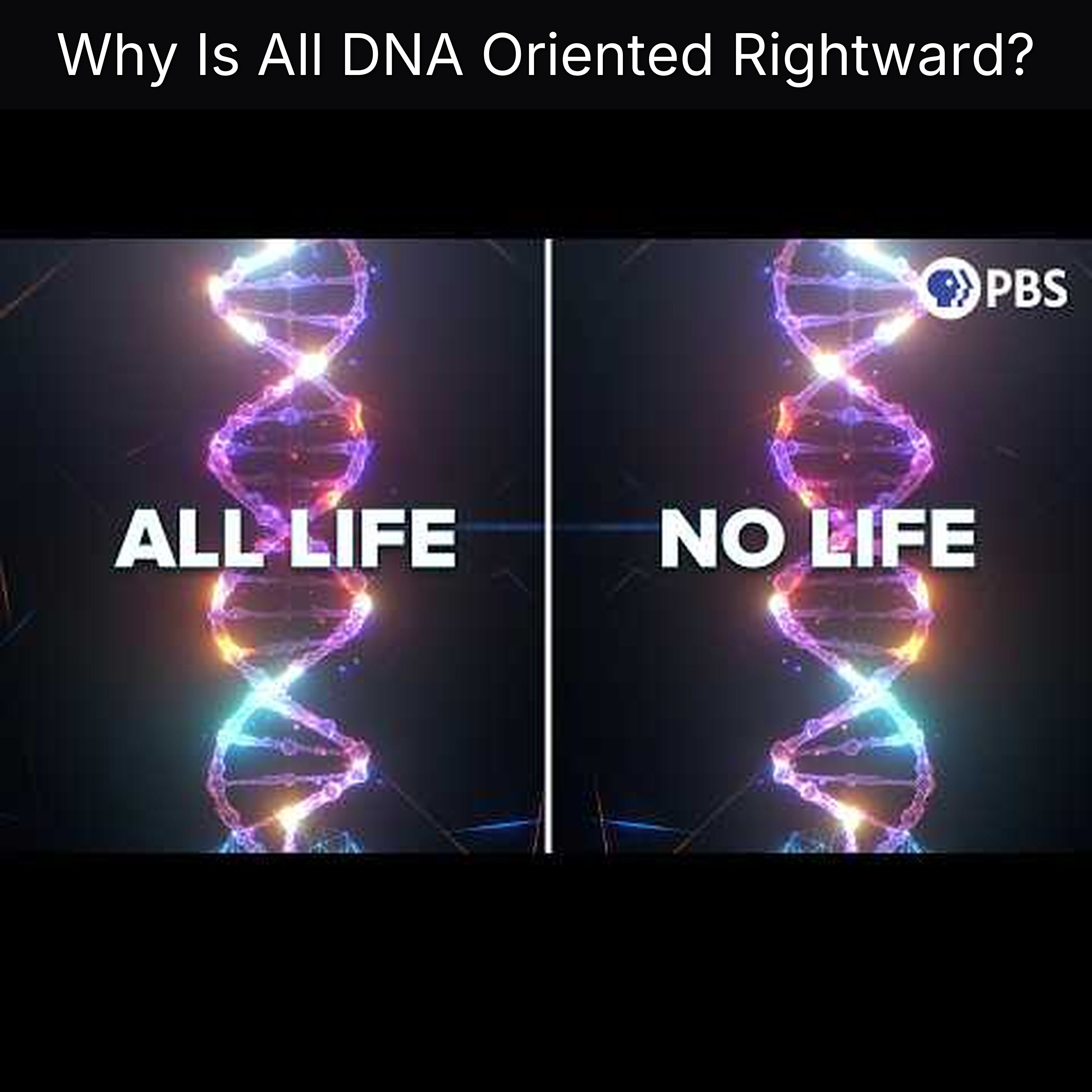
PBS Member Stations rely on viewers like you. To support your local station, go to:http://to.pbs.org/DonateSPACE The molecular basis of all life is mysteriously asymmetric, only using molecules on one side of what should be the equivalent mirrored pairs. The universe has a similar mirror asymmetry, and it may be that our very DNA inherited its twist from the underlying handedness of reality. Sign Up on Patreon to get access to the Space Time Discord! Check out the Space Time Merch Store Sign up for the mailing list to get episode notifications and hear special announcements! Search the Entire Space Time Library Here: https://search.pbsspacetime.com/ Hosted by Matt O'Dowd Written by Matt Caplan & Matt O'Dowd Post Production by Leonardo Scholzer, Yago Ballarini & Stephanie Faria Directed by Andrew Kornhaber Associate Producer: Bahar Gholipour Executive Producer: Andrew Kornhaber Executive in Charge for PBS: Maribel Lopez Director of Programming for PBS: Gabrielle Ewing Assistant Director
Did you know that right now, inside your body, tiny robots are hard at work keeping you alive? What are these miniature machines, and what can they teach us about the wonders of life? On this ID The Future, host Andrew McDiarmid speaks with biochemist Dr. Michael Behe about his new children’s book The Robots Inside You, now available from Discovery Institute Press. Source (https://idthefuture.com/2294/)
For too long now, Catholic scholars and many of the faithful have felt compelled to align themselves with a Darwinian account of life's origins. But as modern evolutionary theory faces a rising wave of disconfirming evidence, the evidence for both intelligent design and a first human couple, Adam and Eve, is stronger than ever. So it's a good time for Catholics to reevaluate their relationship with Darwin. On this classic ID The Future from the archive, physicist Dr. Brian Miller welcomes Father Martin Hilbert to the podcast to discuss his book A Catholic Case for Intelligent Design. Source (https://idthefuture.com/2293/)
On YouTube, it's easy to dismiss an argument with a clever insult or a confident declaration. But in science, the real test is whether your claims stand up to the evidence. Dave Farina, better known online as “Professor Dave,” has made a name for himself challenging intelligent design proponents, including biochemist Michael Behe. But has he really answered their scientific arguments? On today's ID The Future, host Andrew McDiarmid welcomes biologist Dr. Jonathan McLatchie to examine Farina's criticisms, correct some serious misunderstandings, and explore what the evidence actually tells us about the creative power—and limits—of Darwinian evolution. Source (https://idthefuture.com/2292/)
Corrections should be given prominence comparable to the original reporting error.
Share your view, then see how readers voted. No sign-in required. This poll is shared across stories.
Do you agree or disagree?
Common Quandary
A Common Quandary to discuss
Another conversation to explore, separate from this news story.
A stray cat adopts you—and starts killing birds. Do you keep feeding it?
A stray cat visits your yard daily and appears to depend on the food you leave out. Neighbors complain that outdoor cats kill birds and say feeding it encourages the problem without taking responsibility for the animal.
Does caring for one visible animal excuse harm to less visible ones?