Listen through the publisher, then discuss the episode here or arrange an in-person Roundtable. Your city determines where to meet.
Roundtables are designed for groups of four, with a shared subject and room for everyone to speak. Come for discussion, with no dating expectation.
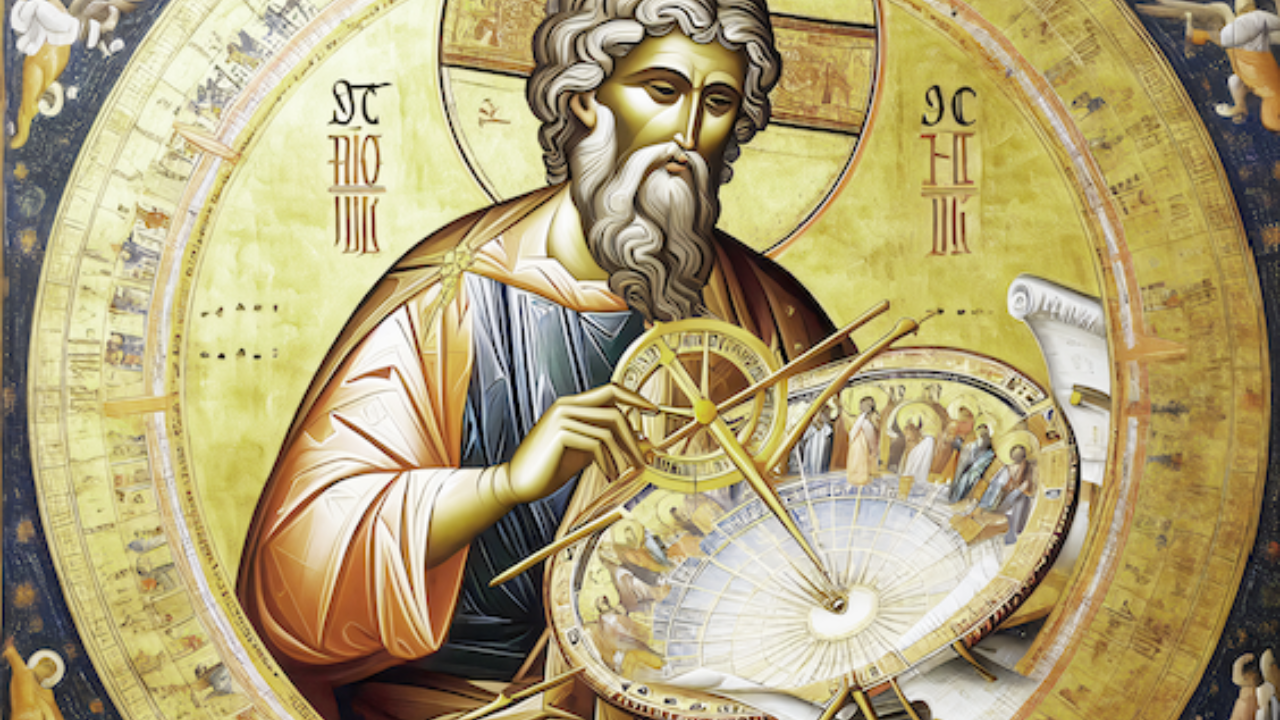
For too long now, Catholic scholars and many of the faithful have felt compelled to align themselves with a Darwinian account of life's origins. But as modern evolutionary theory faces a rising wave of disconfirming evidence, the evidence for both intelligent design and a first human couple, Adam and Eve, is stronger than ever. So it's a good time for Catholics to reevaluate their relationship with Darwin. On this classic ID The Future from the archive, physicist Dr. Brian Miller welcomes Father Martin Hilbert to the podcast to discuss his book A Catholic Case for Intelligent Design. Source (https://idthefuture.com/2293/)
Episode information is provided by the publisher. Listening takes place on the publisher’s service.
This is a Grave Talks CLASSIC EPISODE! PART TWO On the eastern shores of Lake Winnebago sits the quiet town of Jericho, Wisconsin—a place that appears peaceful at first glance. But rising above it is the abandoned Holy Trinity Catholic Church, a towering reminder of a past that refuses to stay silent. Closed decades ago, the church, its neighboring convent, and former school have become collectively known as Jericho Haunted Trinity—one of Wisconsin’s most talked-about paranormal locations. Investigators report heavy footsteps echoing through the sanctuary, disembodied voices in empty hallways, and unexplained lights flickering through darkened windows long after the property was vacated. What happened within these walls? Why do so many who enter describe an overwhelming presence that feels anything but holy? Today on The Grave Talks, Cayla and Steve Gregory take us inside Jericho Haunted Trinity, sharing the history, the experiences, and the chilling phenomena that continue to draw inv
To learn to think like a scientist check out http://Brilliant.org/SpaceTime (http://brilliant.org/SpaceTime) Uploaded 20-12-18 PBS Member Stations rely on viewers like you. To support your local station, go to: http://to.pbs.org/DonateSPACE Check out the new Space Time Merch Store! Support Space Time on Patreon There’s this idea that beauty is a powerful guide to truth in the mathematics of physical theory. String theory is certainly beautiful in the eyes of many physicists. Beautiful enough to pursue even if it’s wrong? Tweet at us! @pbsspacetime Facebook: facebook.com/pbsspacetime Email us! pbsspacetime [at] gmail [dot] com Comment on Reddit: http://www.reddit.com/r/pbsspacetime Help translate our videos! Previous Episode: Quantum Physics in a Mirror Universe https://www.youtube.com/watch?v=UyTqgnKD3sw&t=5s (https://www.youtube.com/watch?t=5s&v=UyTqgnKD3sw) Hosted by Matt O'Dowd Written by Matt O'Dowd Graphics by Luke Maroldi Assistant Editing and Sound Design by Mike Petrow Made by
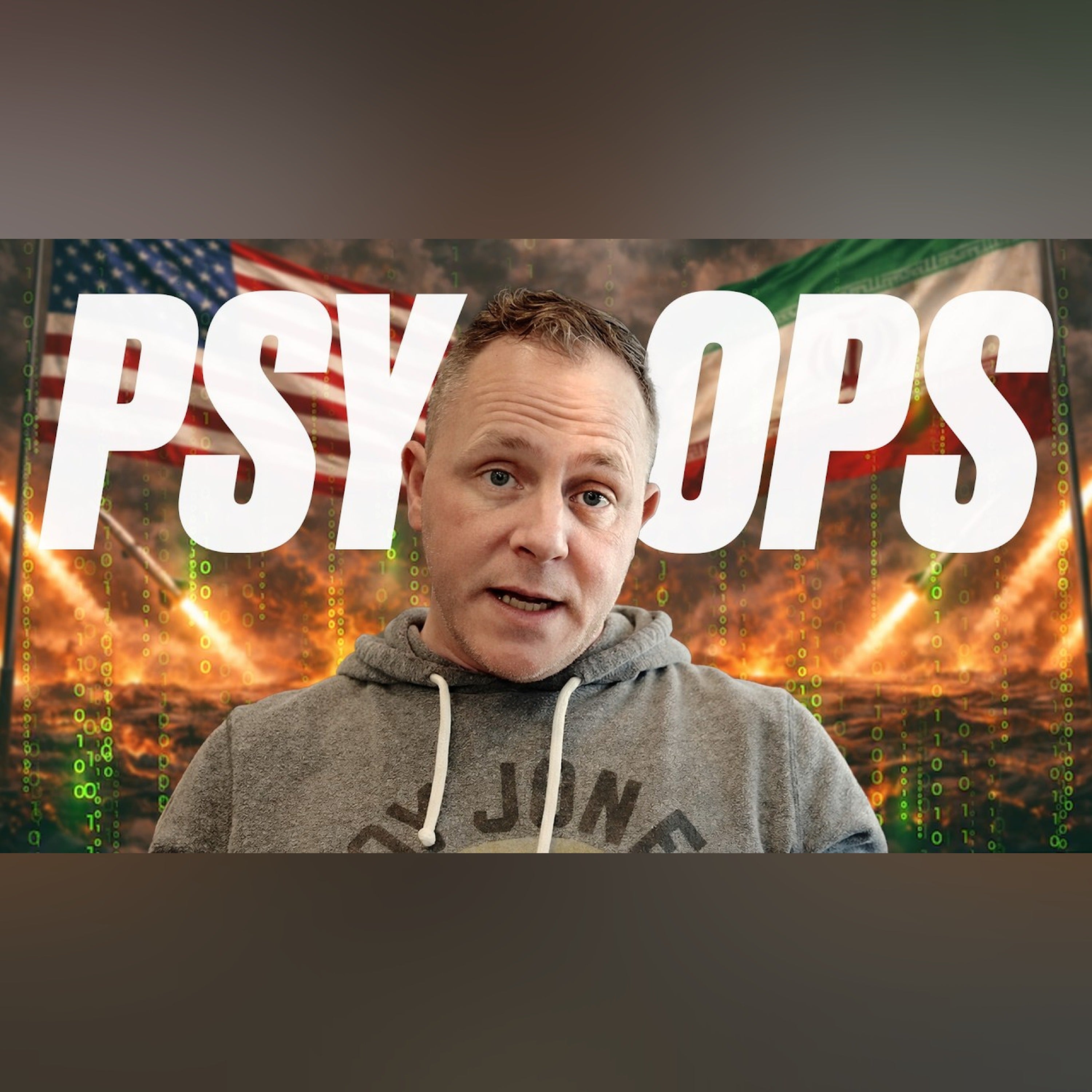
Master the skills that change lives — enroll in your free human behavior course today: https://nci.university/learn Uploaded 01-03-26 Iran didn’t slowly become what you see on the news — it was psychologically taken. In this episode, I break down the real mechanism behind Iran’s transformation: the difference between a people and the system that cages them, how revolutions don’t shift power but shift who gets to use violence, and why fear — not religion — became the enforcement tool. From a modern, secular Iran in the 60s and 70s to a regime sustained by narrative control, surveillance, and compliance rituals, this is a case study in how educated civilizations get hijacked without realizing it. We’ll dissect the psychological trap that started in 1979, why today’s protests are memory colliding with fear, and the three paths Iran is likely to take next. This isn’t just about Iran — it’s a preview of what happens anywhere belief becomes mandatory and truth becomes a liability. Please not
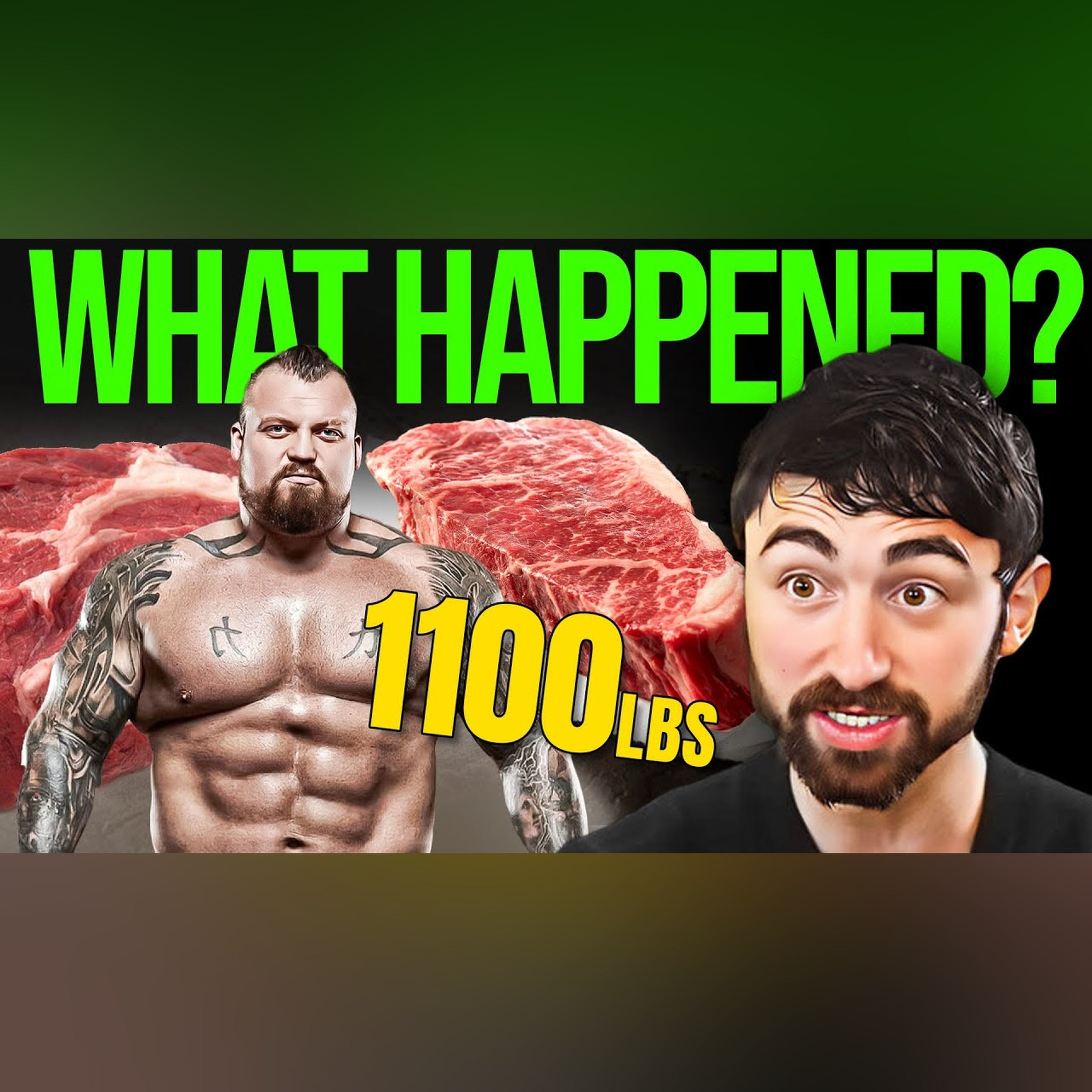
Eddie Hall, who won the World’s Strongest Man in 2017 and who set the world Deadlift at 1102 lbs (500kg) has started a carnivore diet! In this video, I’ll breakdown what Eddie eats, explain how he’s losing weight on 10,000 Calories per day, discuss loose stools on carnivore, and more. Amendments (i) On the solid vs liquid butter mini-experiment, people have noted butter will melt at body temperature. Of course, this is true. However, it's also true of all common fat sources, including tallow, lard and coconut oil. The idea is to control for fatty acids; thus, a comparison of olive oil versus ribeye steak would not be a good way to test the solid/liquid effect. There are alternatives, e.g. ribeye steak vs lean filet plus melted tallow; although even this is complicated by the fact the variable of distinction is the food matrix, more than the solid/liquid state. It's possible - maybe probable - that I misunderstood Shawn in our conversation and he meant that fatty meat, which is solid, w
When a family moved into an apartment in New York, they had no idea just how much history the building held. Over the years, it had reportedly served several purposes, including a city hall and a jail. But they wouldn't learn those details until after some frightening experiences had already begun. On their very first night, the mother came running into her son's room, terrified by a man who had appeared in her bedroom. He hadn't simply frightened her. According to her account, he'd made it very clear that the family wasn't welcome. And things only became stranger from there. As the family settled in, they experienced unexplained sounds, unsettling physical encounters, and incidents that made them question what was actually moving around their home. Had something remained behind from the building's long history? And was it determined to make the new occupants leave? #RealGhostStoriesOnline #TrueGhostStories #HauntedApartments #HauntedJail #HistoricHauntings #NewYorkGhostStories #Parano
"As useful as a GOOD grad student" ― Surpasses Human Capability on Many Tasks (but not all!) Episode release date: 15 Sep 2024 Core Ideas: Metamodernism: Narratives and emergence view of reality - Reduce suffering - Increase prosperity - Increase understanding mantra: Seek knowledge. DISCLAIMER: This is a community-driven show. ----------------------------
On YouTube, it's easy to dismiss an argument with a clever insult or a confident declaration. But in science, the real test is whether your claims stand up to the evidence. Dave Farina, better known online as “Professor Dave,” has made a name for himself challenging intelligent design proponents, including biochemist Michael Behe. But has he really answered their scientific arguments? On today's ID The Future, host Andrew McDiarmid welcomes biologist Dr. Jonathan McLatchie to examine Farina's criticisms, correct some serious misunderstandings, and explore what the evidence actually tells us about the creative power—and limits—of Darwinian evolution. Source (https://idthefuture.com/2292/)
What makes a human life valuable? Is it our intelligence, our consciousness, or our ability to reason? Or does it go beyond our abilities and circumstances to something deeper? Today on ID The Future, host Andrew McDiarmid welcomes author and podcaster Jacob Vasquez to the show to discuss his new book Sacred or Secular: The Pro-Life Case for Grounding Human Value in the Image of God. Here, Vazquez illuminates the central question in the debate over abortion. It's not merely when human life begins, but why a human life should be counted as valuable at all. Source (https://idthefuture.com/2291/)
Are we any closer to Strong AI and the Singularity than we were in 2019? Don't bet on it. On this classic episode of ID the Future from the archive, Andrew McDiarmid catches up with philosopher Jay Richards at the 2019 COSM conference in Seattle. The two discuss the history of George Gilder’s Telecosm conferences and how the first one gave birth to a book Richards edited and contributed to 18 years ago, Are We Spiritual Machines? Ray Kurzweil vs. the Critics of Strong A.I. Source (https://idthefuture.com/2290/)
Telling another person's difficult story carries responsibilities beyond getting the facts right.
Share your view, then see how readers voted. No sign-in required. This poll is shared across stories.
Do you agree or disagree?
Common Quandary
A Common Quandary to discuss
Another conversation to explore, separate from this news story.
Your ex's streaming password still works. When does borrowing become stealing?
Months after a friendly breakup, your television remains logged into your ex's streaming account. They have never mentioned it, the service allows several screens, and your viewing does not increase their monthly bill.
Can silence count as permission when asking might end the benefit?