Listen through the publisher, then discuss the episode here or arrange an in-person Roundtable. Your city determines where to meet.
Roundtables are designed for groups of four, with a shared subject and room for everyone to speak. Come for discussion, with no dating expectation.
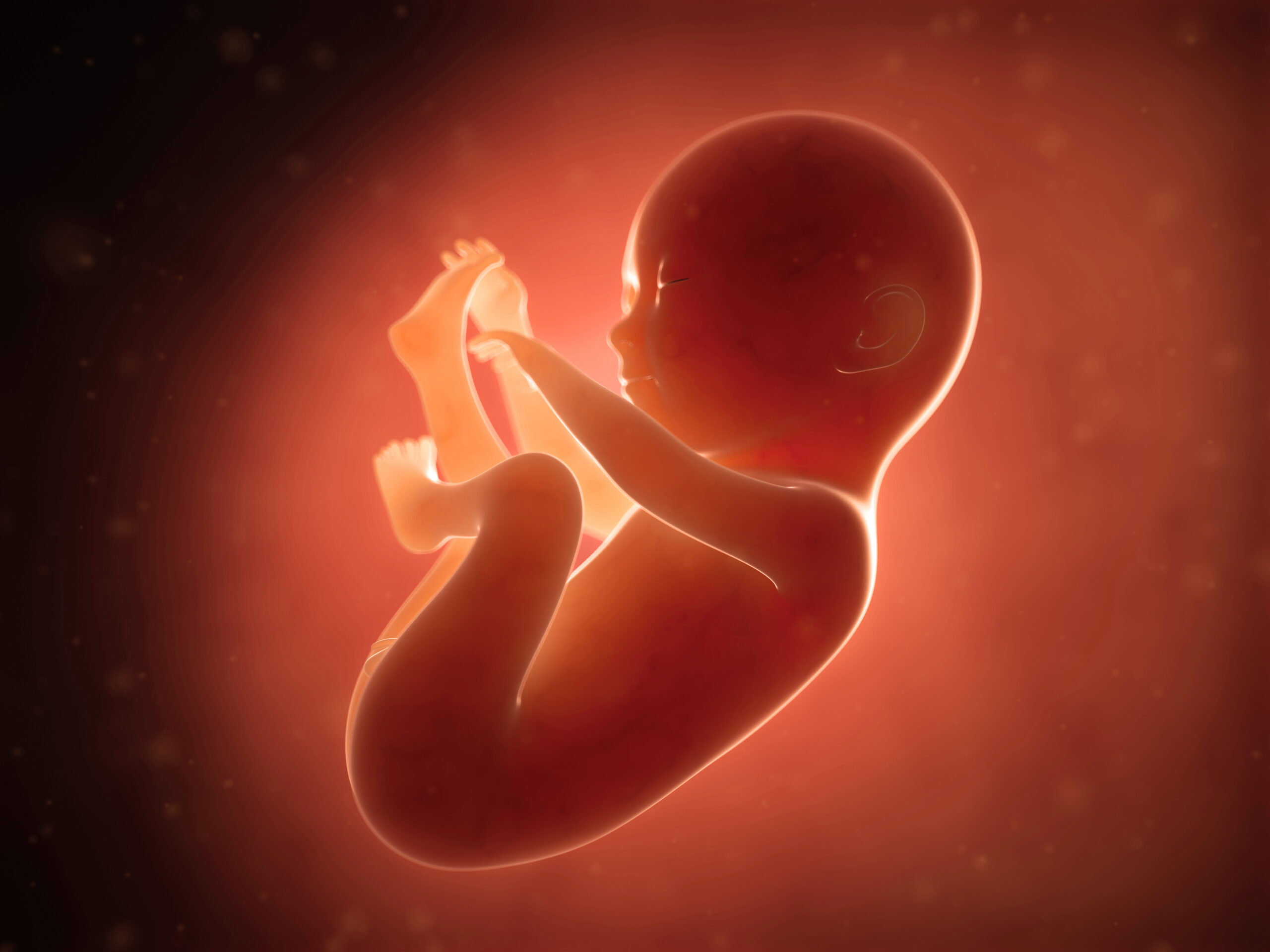
What makes a human life valuable? Is it our intelligence, our consciousness, or our ability to reason? Or does it go beyond our abilities and circumstances to something deeper? Today on ID The Future, host Andrew McDiarmid welcomes author and podcaster Jacob Vasquez to the show to discuss his new book Sacred or Secular: The Pro-Life Case for Grounding Human Value in the Image of God. Here, Vazquez illuminates the central question in the debate over abortion. It's not merely when human life begins, but why a human life should be counted as valuable at all. Source (https://idthefuture.com/2291/)
Episode information is provided by the publisher. Listening takes place on the publisher’s service.
PBS Member Stations rely on viewers like you. To support your local station, go to: http://to.pbs.org/DonateSPACE ↓ More info below ↓ Uploaded 04-11-19 Sign Up on Patreon to get access to the Space Time Discord! Check out the Space Time Merch Store Why does it appear, that humanity is the lone intelligence in the universe? The answer might be that planet Earth is more unique than we've previously assumed. The rare earth hypothesis posits exactly this - that a range of factors made Earth exceptionally unusual and uniquely able to produce intelligent life. In upcoming episodes we’ll be exploring the anthropic principle and its two main versions - the strong and the weak anthropic principles. The strong anthropic principle tells us that the observed universe must be able to produce observers - including the contentious idea that this predicts the existence of universes beyond our own. But in today's episode we’re going to focus on the weak anthropic principle. It says that we must find ou
View full lesson: http://ed.ted.com/lessons/how-to-build-a-fictional-world-kate-messner Uploaded 09-01-14 Why is J.R.R. Tolkien's Lord of the Rings trilogy so compelling? How about The Matrix or Harry Potter? What makes these disparate worlds come alive are clear, consistent rules for how people, societies -- and even the laws of physics -- function in these fictional universes. Author Kate Messner offers a few tricks for you, too, to create a world worth exploring in your own words. Lesson by Kate Messner, animation by Avi Ofer.
On this week’s edition of “Happy Hour,” Emily Jashinsky tackles whether America’s political system is irreparably broken, the growing distrust of political institutions, and why voters are increasingly fed up with corruption and self-serving politicians. She discusses Thomas Massie’s political future, the possibility of breaking up the two-party system, why she generally distrusts ProPublica’s reporting, and the ethics of the Supreme Court. She also weighs in on the dangers of authoritarian communism, foreign influence in Washington, and why maintaining faith in elections is so important. Emily addresses the political risks of embracing artificial intelligence, which careers might survive the technological revolution, and why she struggles to unplug from work. Finally, she shares her favorite time to visit Washington, D.C., her thoughts on Robert Pattinson as the next James Bond, and more… Hosted by Simplecast, an AdsWizz company.
A kiss can be wonderful. It can create an instant connection, spark romance, or make you feel closer to someone. But a kiss can also have the opposite effect — and sometimes ruin everything. So what makes kissing so powerful, and why can one kiss make such a difference? There's some fascinating science behind it. https://www.scientificamerican.com/article/why-we-kiss/ We spend an enormous amount of time worrying about what's going to change. What's next? What's coming? How do we prepare? But what if we're paying attention to the wrong things? Some of the most important forces shaping our lives never change, and understanding them may be far more valuable than trying to predict the future — something humans are notoriously bad at. Morgan Housel, partner at The Collaborative Fund and author of Same as Ever: A Guide to What Never Changes (https://amzn.to/3SwWn6u) (https://amzn.to/3SwWn6u)), joins me to explain why the things that stay the same may be the most important things to understan
Instant Access to the NCI Masterclass: https://nci.university/opt-in-page-808244 Uploaded 26-11-25 IN TIME FOR THE HOLIDAYS: Grab your copy of Chase’s new book, Tongue: A Cognitive Hazard https://a.co/d/5J14Grw You’ve carried more than just your own experiences into this life. Our behaviors, fears, and impulses often come from people we never met. Understanding this crazy inheritance changes how we see “US” forever. Ancient memories, childhood patterns, and generational instincts all shape us. Recognizing these influences helps us break cycles and reclaim our lives. Every one of us is shaped by stories older than our own. Genetic memory is a protective mechanim. Once you see the invisible forces that guide you, you start choosing/acting differently. Deep down, you’re more powerful than the ghosts that run your show. Snatch your copy of Chase’s new book, Tongue: A Cognitive Hazard https://a.co/d/5J14Grw
Read: Matthew 28:19-20; Hebrews 4:12 (https://www.biblegateway.com/passage/?search=Matthew+28%3A19-20%3B+Hebrews+4%3A12) Sheri clutched her new book to her chest as she held the phone to her ear. “Yes, you totally need to read it! The last few chapters are great!” “You always find such fun books! I’ll look for it at the library the next time I go,” her friend Megan said. “Oh, my dad is calling. I’ve got to go.” Sheri hung up, then went into the family room and plopped on the couch beside Mom. “You really enjoyed that book, didn’t you?” Mom said as she folded some towels. “Yes!” Sheri flipped through it. “It’s the best I’ve read in ages! There’s romance, heroes and villains, battles of good versus evil, and so much more!” “That does sound exciting.” Mom smiled. “I know of another book like that, filled with good versus evil, heroes battling villains, and even romance. It’s my favorite.” Sheri furrowed her brow. “What book is that?” Mom held up the book beside her. “The Bible. Have you t
For too long now, Catholic scholars and many of the faithful have felt compelled to align themselves with a Darwinian account of life's origins. But as modern evolutionary theory faces a rising wave of disconfirming evidence, the evidence for both intelligent design and a first human couple, Adam and Eve, is stronger than ever. So it's a good time for Catholics to reevaluate their relationship with Darwin. On this classic ID The Future from the archive, physicist Dr. Brian Miller welcomes Father Martin Hilbert to the podcast to discuss his book A Catholic Case for Intelligent Design. Source (https://idthefuture.com/2293/)
On YouTube, it's easy to dismiss an argument with a clever insult or a confident declaration. But in science, the real test is whether your claims stand up to the evidence. Dave Farina, better known online as “Professor Dave,” has made a name for himself challenging intelligent design proponents, including biochemist Michael Behe. But has he really answered their scientific arguments? On today's ID The Future, host Andrew McDiarmid welcomes biologist Dr. Jonathan McLatchie to examine Farina's criticisms, correct some serious misunderstandings, and explore what the evidence actually tells us about the creative power—and limits—of Darwinian evolution. Source (https://idthefuture.com/2292/)
Are we any closer to Strong AI and the Singularity than we were in 2019? Don't bet on it. On this classic episode of ID the Future from the archive, Andrew McDiarmid catches up with philosopher Jay Richards at the 2019 COSM conference in Seattle. The two discuss the history of George Gilder’s Telecosm conferences and how the first one gave birth to a book Richards edited and contributed to 18 years ago, Are We Spiritual Machines? Ray Kurzweil vs. the Critics of Strong A.I. Source (https://idthefuture.com/2290/)
An artist's serious misconduct should affect decisions about publicly honoring their work.
Share your view, then see how readers voted. No sign-in required. This poll is shared across stories.
Do you agree or disagree?
Common Quandary
A Common Quandary to discuss
Another conversation to explore, separate from this news story.
A parent clearly built the winning science project. Who should lose the prize?
An elementary student submits an elaborate science project far beyond their apparent ability. The parent proudly describes working together all weekend, and the child clearly learned something, but other students completed simpler projects themselves.
What is a fair response when help improves learning but distorts achievement?