Seven Years On, the Mind vs. Machine Debate Hasn’t Aged
19 min
Listen through the publisher, then discuss the episode here or arrange an in-person Roundtable. Your city determines where to meet.
Roundtables are designed for groups of four, with a shared subject and room for everyone to speak. Come for discussion, with no dating expectation.
Are we any closer to Strong AI and the Singularity than we were in 2019? Don't bet on it. On this classic episode of ID the Future from the archive, Andrew McDiarmid catches up with philosopher Jay Richards at the 2019 COSM conference in Seattle. The two discuss the history of George Gilder’s Telecosm conferences and how the first one gave birth to a book Richards edited and contributed to 18 years ago, Are We Spiritual Machines? Ray Kurzweil vs. the Critics of Strong A.I. Source (https://idthefuture.com/2290/)
Episode information is provided by the publisher. Listening takes place on the publisher’s service.
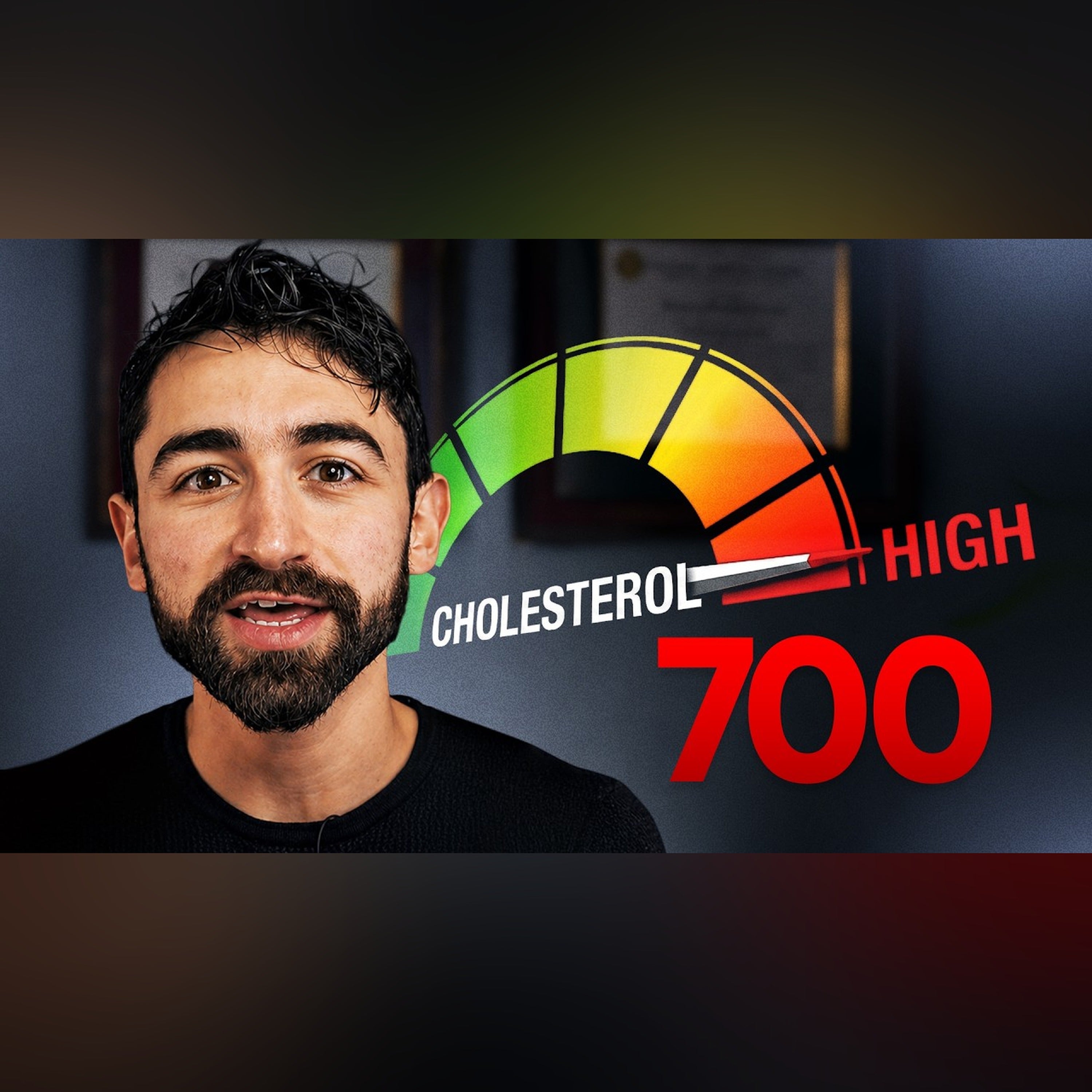
For a written breakdown, more nuances and early access to content, see the associated newsletter: https://open.substack.com/pub/staycuriousmetabolism/p/im-finally-lowering-my-cholesterol?r=40ekz2&utm_campaign=post&utm_medium=web&showWelcomeOnShare=true (https://open.substack.com/pub/staycuriousmetabolism/p/im-finally-lowering-my-cholesterol?r=40ekz2&showWelcomeOnShare=true) Statin RCT Video: https://youtu.be/d9LeDSoYOVc Ezetimibe Video: https://youtu.be/5idzP5ghT7A Bempedoic Acid Letter: https://staycuriousmetabolism.substack.com/p/beyond-cholesterol-the-unfolding?r=40ekz2 Description For the last seven years, despite extremely high cholesterol, I refused cholesterol-lowering medications. But I’ve just changed my mind…sort of. In this video, I walk through the full decision-making process: the risks, the uncertainty, the medical context, and the nuances that made this case unusually complicated. There are three plot twists. This is not medical advice. It’s a detailed look at an unusual
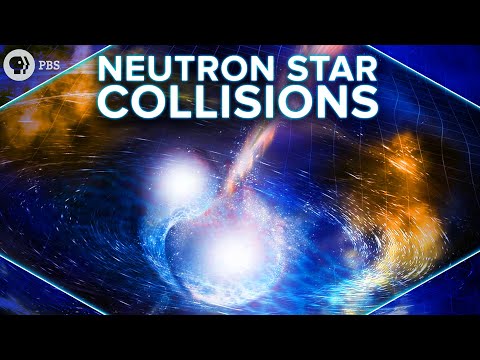
PBS Member Stations rely on viewers like you. To support your local station, go to: http://to.pbs.org/DonateSPACE ↓ More info below ↓ Uploaded 06-06-19 Carl Sagan’s famous words: “We are star stuff” refers to a mind-blowing idea – that most atomic nuclei in our bodies were created in the nuclear furnace and the explosive deaths of stars that lived in the ancient universe. In recent years it’s become clear that the truth is even more mind-blowing. Many heavy elements - includes most precious metals - were produced in an even more spectacular event: the collision of neutron stars. In fact, according to a recent study most of the Earth’s supply of these elements was created in a single neutron star merger that took place near our Sun’s birth nebula 80 million years ago before Earth formed. Check out the new Space Time Merch Store! Support Space Time on Patreon #theuniverse #astrophyics #spacetime Hosted by Matt O'Dowd Written by Matt O'Dowd Graphics by Leonardo Scholzer Directed by Andrew
When a family moved into an apartment in New York, they had no idea just how much history the building held. Over the years, it had reportedly served several purposes, including a city hall and a jail. But they wouldn't learn those details until after some frightening experiences had already begun. On their very first night, the mother came running into her son's room, terrified by a man who had appeared in her bedroom. He hadn't simply frightened her. According to her account, he'd made it very clear that the family wasn't welcome. And things only became stranger from there. As the family settled in, they experienced unexplained sounds, unsettling physical encounters, and incidents that made them question what was actually moving around their home. Had something remained behind from the building's long history? And was it determined to make the new occupants leave? #RealGhostStoriesOnline #TrueGhostStories #HauntedApartments #HauntedJail #HistoricHauntings #NewYorkGhostStories #Parano
Access the masterclass instantly for free: https://nci.university/learn Uploaded 10-01-26 Your goals don’t fail because you lack discipline — they fail because they were aimed at the wrong system. Optimizing behavior without fixing brain chemistry is like issuing commands to a damaged machine. Until the chemical environment is right, effort just increases friction and burnout. All goals live in the conscious mind — but control does not. Real behavior is governed by the mammalian brain, the ancient systems that decide safety, threat, and energy allocation. Every resolution collapses when those lower systems detect risk, even if you consciously “want” the outcome. Goal-setting ignores this hierarchy — and that’s why it keeps failing. Once you target the parts of the brain actually in charge, change stops feeling like force. Discipline becomes unnecessary when the system itself is aligned. Please note that the content provided in this broadcast is for informational and educational purpose
This is a Grave Talks CLASSIC EPISODE! PART TWO On the eastern shores of Lake Winnebago sits the quiet town of Jericho, Wisconsin—a place that appears peaceful at first glance. But rising above it is the abandoned Holy Trinity Catholic Church, a towering reminder of a past that refuses to stay silent. Closed decades ago, the church, its neighboring convent, and former school have become collectively known as Jericho Haunted Trinity—one of Wisconsin’s most talked-about paranormal locations. Investigators report heavy footsteps echoing through the sanctuary, disembodied voices in empty hallways, and unexplained lights flickering through darkened windows long after the property was vacated. What happened within these walls? Why do so many who enter describe an overwhelming presence that feels anything but holy? Today on The Grave Talks, Cayla and Steve Gregory take us inside Jericho Haunted Trinity, sharing the history, the experiences, and the chilling phenomena that continue to draw inv
For too long now, Catholic scholars and many of the faithful have felt compelled to align themselves with a Darwinian account of life's origins. But as modern evolutionary theory faces a rising wave of disconfirming evidence, the evidence for both intelligent design and a first human couple, Adam and Eve, is stronger than ever. So it's a good time for Catholics to reevaluate their relationship with Darwin. On this classic ID The Future from the archive, physicist Dr. Brian Miller welcomes Father Martin Hilbert to the podcast to discuss his book A Catholic Case for Intelligent Design. Source (https://idthefuture.com/2293/)
On YouTube, it's easy to dismiss an argument with a clever insult or a confident declaration. But in science, the real test is whether your claims stand up to the evidence. Dave Farina, better known online as “Professor Dave,” has made a name for himself challenging intelligent design proponents, including biochemist Michael Behe. But has he really answered their scientific arguments? On today's ID The Future, host Andrew McDiarmid welcomes biologist Dr. Jonathan McLatchie to examine Farina's criticisms, correct some serious misunderstandings, and explore what the evidence actually tells us about the creative power—and limits—of Darwinian evolution. Source (https://idthefuture.com/2292/)
What makes a human life valuable? Is it our intelligence, our consciousness, or our ability to reason? Or does it go beyond our abilities and circumstances to something deeper? Today on ID The Future, host Andrew McDiarmid welcomes author and podcaster Jacob Vasquez to the show to discuss his new book Sacred or Secular: The Pro-Life Case for Grounding Human Value in the Image of God. Here, Vazquez illuminates the central question in the debate over abortion. It's not merely when human life begins, but why a human life should be counted as valuable at all. Source (https://idthefuture.com/2291/)
Health advice should account for people's income, time, and practical circumstances.
Share your view, then see how readers voted. No sign-in required. This poll is shared across stories.
Do you agree or disagree?
Common Quandary
A Common Quandary to discuss
Another conversation to explore, separate from this news story.
Someone you love asks, “Do you think I’ll be okay?” What if you do not?
A relative with a poor prognosis asks whether you think they will recover. They seem to need reassurance, but you believe the odds are very low and do not want to spend the remaining time pretending.
Can preserving hope justify saying more than you believe?