Can King Charles apologise for Britain’s role in slavery?
27 min
Listen through the publisher, then discuss the episode here or arrange an in-person Roundtable. Your city determines where to meet.
Roundtables are designed for groups of four, with a shared subject and room for everyone to speak. Come for discussion, with no dating expectation.
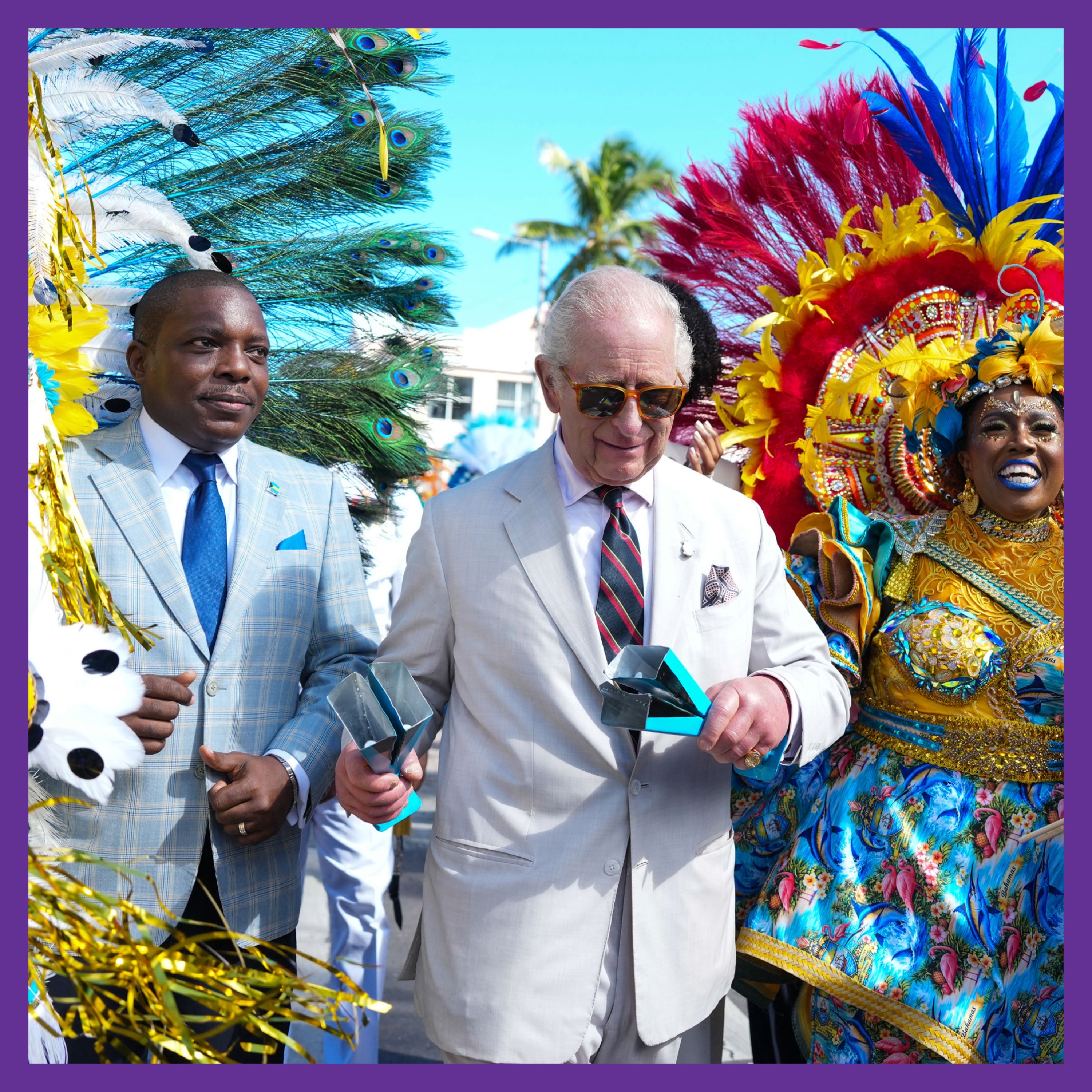
King Charles’s Caribbean tour has reached its most politically sensitive moment, as Commonwealth leaders gather in Antigua and Barbuda amid growing calls for Britain to apologise for its historic role in slavery. The British government is now open to discussing a state apology, while continuing to rule out financial reparations. But Charles cannot simply decide to say sorry. He must navigate competing expectations while acting on government advice. So what does the changing political position mean for his speech – and can royal diplomacy help move the conversation forward? Reporting from the Caribbean, Roya Nikkhah and Kate Mansey take listeners inside the tour, from the Junkanoo parade in Nassau to the King’s visit to a site in Georgetown where enslaved people were executed. They examine how the shifting political debate has complicated the palace’s carefully planned diplomacy, what Charles can realistically achieve as Head of the Commonwealth, and whether expressions of sorrow are still enough. If you enjoyed this episode, make sure to press follow at the top of your podcast app. Got a question? Get in touch. Send your questions and thoughts to [email protected]. Watch us on YouTube. (https://www.youtube.com/@timesroyals/featured) Read more: King Charles to address slavery 'with honesty and sincere sorrow' (https://www.thetimes.com/uk/royal-family/article/king-charles-to-address-slavery-with-honesty-and-sincere-sorrow-q8jgc2ssb) Further listening: What are the royals for? (https://podcasts.apple.com/gb/podcast/the-royals/id1745117658?i=1000737702742) Producer: Robert Wallace Video Producer: Eve Chadbourn Executive Producer: Priyanka Deladia Image: Getty Hosted on Acast. See acast.com/privacy (https://acast.com/privacy) for more information.
Episode information is provided by the publisher. Listening takes place on the publisher’s service.
Prince Harry makes a lively appearance on Britain's This Morning, revealing his thoughts on the new James Bond, Meghan Markle's former television series Suits, and why he considers Glastonbury and Coachella a nightmare. The Duke of Sussex endorses Robert Pattinson as the next 007, chooses Suits over EastEnders, and reveals that he tried to FaceTime presenter Alison Hammond with Prince Archie and Princess Lilibet, only for her to ignore his calls. Harry also helps prepare a Christmas cake alongside Invictus Games veterans, shares a laugh involving a prosthetic hand, and enjoys a shot of whisky. He's later spotted at London's Savoy hotel. But Harry's latest television appearance sparks criticism from Daily Express columnist Alicia Liberty, who questions how his highly publicized appearances fit with his longstanding concerns about security in Britain. Meanwhile, former Margaret Thatcher aide Nile Gardiner calls for Harry and Meghan to be stripped of their royal titles, accusing the Susse
This week, Voyager 1 reached one light day away from earth - the farthest any man-made object has ever been. For fifty years, it as well as its sister probe Voyager 2, have been sending information back to earth. Now, they’re off to interstellar space, carrying two golden records designed to introduce humanity to whatever life form may be out there. So what’s on those discs? And what does the project tell us about what it means to be human? Guests: Rhys Blakely, science editor, The Times Tim Ferris, author and producer of the Voyager Golden Record Host: Manveen Rana Producer: Olivia Case We want to hear from you - email: [email protected] Read more: Voyager - humanity’s most distant message (https://www.thetimes.com/uk/science/article/nasa-golden-record-sounds-voyager-humanity-bksl2n0ck?eafs_enabled=false) Further listening: Has space become the final frontier for war? (https://pod.link/1501716010/episode/NmFhYzMzNzM4ZGUzYjQzYjZhOTk4ZGJj) Clips: NASA Voyager Golden Record / Carl Sa
For review: 1. Iraq has reached a compromise with the powerful Iran-backed militia Kataeb Hezbollah, three senior security officials said, after Prime Minister Ali al-Zaidi readied security forces to move against the group. Reflecting the gravity of the situation, Iraqi Shiite political sources said Esmail Qaani, commander of Iran’s elite Revolutionary Guards’ Quds Force, arrived in Baghdad late on Monday to help defuse tensions with Kataeb Hezbollah, Tehran’s most powerful militia ally in Iraq. 2. Lebanese President Joseph Aoun launched a lengthy rebuke of Iran in an Independence Day address, arguing that the Islamic Republic does not have the right to interfere in Lebanon’s internal affairs, as it long has via support for its local terror proxy, Hezbollah. 3. Yemen’s Houthis launched strikes on the Saudi capital Riyadh on Saturday, after vowing reprisals for a “special operation” by the Saudi-led coalition fighting them. The coalition later said it had “intercepted and destroyed” thr
A secret relationship can create leverage even before anyone makes a threat. That is the question Tony Brueski puts to Robin Dreeke, retired FBI Special Agent and former chief of the FBI’s Counterintelligence Behavioral Analysis Program, as they unpack the reporting around former Nvidia CEO Jensen Huang. Huang admitted infidelity and resigned in November 2026. Reports linked his affair to Alice Huang, a former Megaspeed executive whom U.S. intelligence reportedly suspected of acting for China. Those suspicions remain unproven publicly. Reuters says it could not independently confirm the alleged intelligence connection; Beijing denies it. Nvidia’s board has said it has no reason to believe company secrets or national security were compromised. That leaves plenty to investigate, but it does not establish blackmail, recruitment or disclosure of protected information. Robin explains why counterintelligence investigators focus on incentives and access, not just intercepted orders or dramati
Alan Milburn wants to scrap Pip for under-25s and replace the Universal Credit health element with a new youth allowance. He says the plan could get 440,000 young people into work within a decade and eventually save £3.6 billion a year. With 981,000 young people not in education, employment or training, nobody disputes the scale of the problem. They disagree about its cause. Milburn insists this is not a generation lacking resilience. Yet his own report finds that benefit claims have outpaced any rise in ill health, and it warns of overdiagnosis of ADHD and autism. Michael Simmons puts that contradiction to Milburn directly. He also asks whether the National Insurance and minimum wage rises are pricing young people out of the jobs they need most. Can welfare reform get a generation back to work – or is the deeper problem a loss of resilience that no policy can fix? This episode is brought to you by Raymond James. Combining deep insights into who you are with our financial expertise, th
Today, former prime ministers including Brexit negotiations veteran Theresa May have been giving their verdicts on Andy Burnham’s UK-EU reset deal. Theresa May told Laura she was “slightly aghast” at some of Burnham’s language about moving closer to the EU. She said her advice to the new PM was “people voted for Brexit. Brexit is done. Just accept Brexit and move on.” Plus, Tony Blair told the Sunday Times "I was painted as saying Britain should just go back and rejoin - I'm not saying that - it's heavily conditioned". Laura, Paddy and Henry at home discuss whether their interventions will weigh on Andy Burnham’s mind. You can now listen to Newscast on a smart speaker. It works on most smart speakers. New episodes released every day. The presenters were Laura Kuenssberg and Paddy O’Connell. It was made by Anna Harris with Jesse Fox. The social producer was Sophie Millward. The technical producer was Mike Regaard. The assistant editor is Chris Gray. The senior news editor is Sam Bonham.
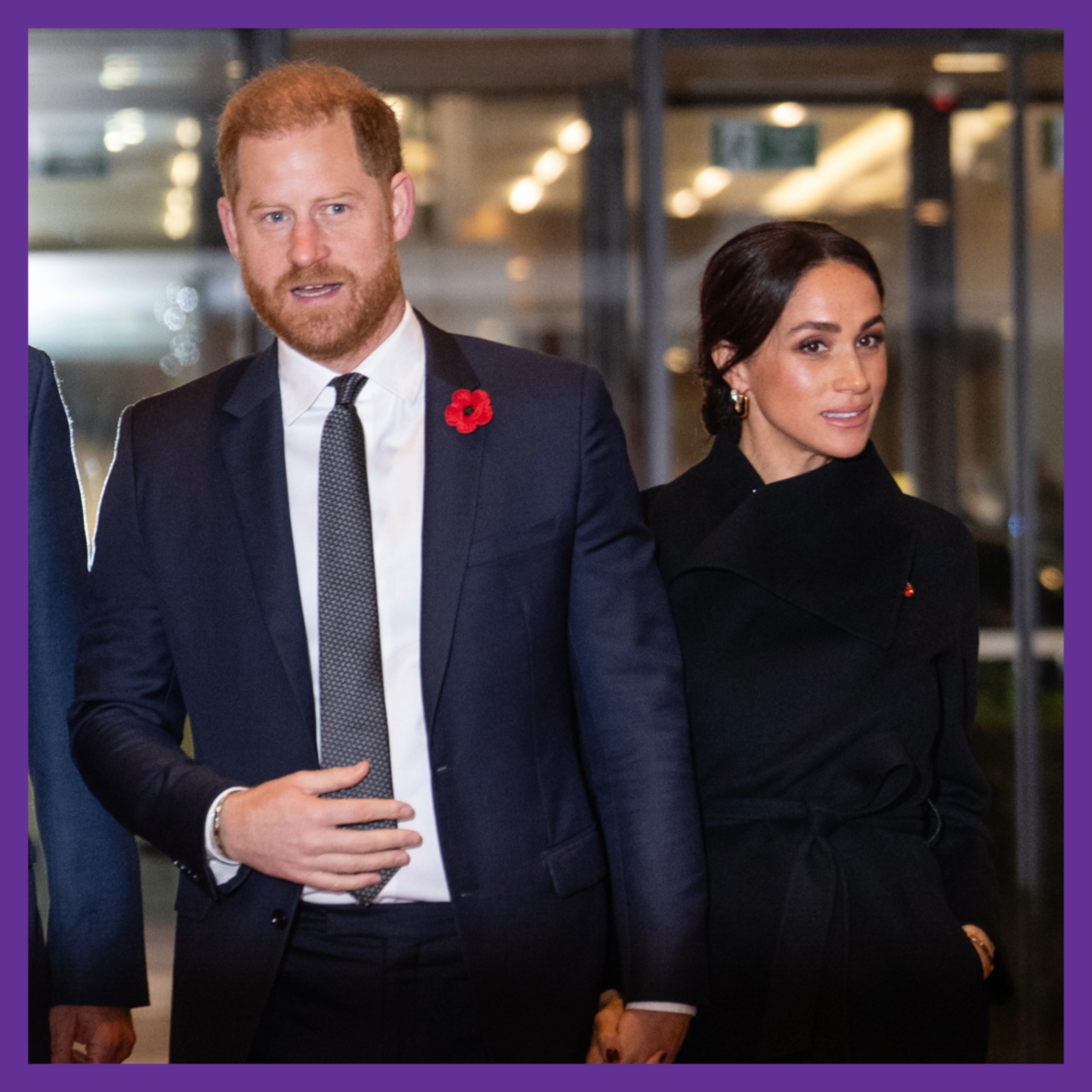
Meghan accompanied Prince Harry to Brussels to campaign on online child safety, days after her father, Thomas Markle, was arrested and charged in the United States with possessing child sexual abuse material. The couple had planned to speak together, but Meghan withdrew from the joint address; a source saying she was not “emotionally strong enough” to speak publicly. But behind that appearance is a story stretching back years. Meghan reportedly wants to help the FBI, while questions remain about allegations passed to the Metropolitan Police in 2019. What was she told would happen – and how far do those reported police assurances explain her decision not to speak out? Drawing on their original reporting, Roya Nikkhah and Kate Mansey take listeners inside the couple’s response, explain Meghan’s mother's assistance to investigators, and examine the Met’s handling of the earlier allegations. They also ask how the palace is responding to the ongoing scandal. Thomas Markle denies wrongdoing.
Admissions should consider applicants' circumstances alongside grades and test results.
Share your view, then see how readers voted. No sign-in required. This poll is shared across stories.
Do you agree or disagree?
Common Quandary
A Common Quandary to discuss
Another conversation to explore, separate from this news story.
You both hate the invitation. Which partner has to become the excuse?
A couple receives an invitation neither wants to accept. One suggests claiming the other is ill, reasoning that friends will question a vague excuse but respect sickness. The proposed patient dislikes lying but also wants to stay home.
Is a shared lie fair when only one person's reputation carries it?