The COP31 summit has gone into a second day of overtime after talks were suspended for the night. There is no agreement in sight with the European Union and Pacific Island nations threatening to walk away without agreeing to a deal because the draft text makes no mention of reducing global demand for fossil fuels. Also: Croatians take to the streets over the death in hospital of a psychiatric patient who was beaten and smothered. We hear from British endurance athlete Lewis Pugh who swam through the Strait of Hormuz to highlight the environmental cost of the war between the US and Iran. Nepal's Prime Minister Balendra Shah visits India to try to secure much needed financial aid following devastating floods in the Himalayan nation. And has a maths problem that has puzzled humans for 167 years finally been solved? Follow or subscribe now and never miss a moment. Get in touch: [email protected] Photo: Members of the public visit the free-entry 'Green Zone' during the 31st United Nat
Hey everybody, Tom Bilyeu here. On today’s episode of Impact Theory, we’re taking on a topic that’s got the whole world holding its breath: the escalating crisis between the United States and Iran. As tensions ratchet up, we’re asking the tough questions—how did we get stuck in this “escalation trap,” and what does it mean for America’s global leverage, our economy, and our very sense of security? The conversation focused on why the traditional idea of “strategy” might be failing policymakers, using powerful analogies—like chess versus roulette—to show how doubling down in conflict can spiral out of control. We’ll break down the risks of tactical “wins” that create even bigger crises, the real leverage Iran holds with control of the Strait of Hormuz, and the mounting pressure on President Trump as political support erodes and legacy hangs in the balance. A key theme that emerged is what happens when military might runs into decentralized opposition, and why high-stakes gambles—like the
Billions in taxpayer dollars allegedly lost to fraud, Chinese-backed efforts to undermine American energy production, and a growing wave of AI-powered cyber threats. Is America doing enough to protect itself? John Solomon and Amanda Head are joined by Minnesota Congressman Pete Stauber, who discusses the expanding welfare fraud scandal, efforts to hold those responsible accountable, and allegations that Chinese-funded organizations are working to obstruct American mining and energy projects. Stauber also addresses permitting reform and the battle over America's critical mineral independence. Then, American Energy Institute CEO and former Texas state representative Jason Isaac warns that proposed electricity price controls could discourage investment, threaten grid reliability, and ultimately drive energy costs even higher. He also examines China's influence over global oil markets, America's growing energy production, and how AI data centers could generate their own electricity rather
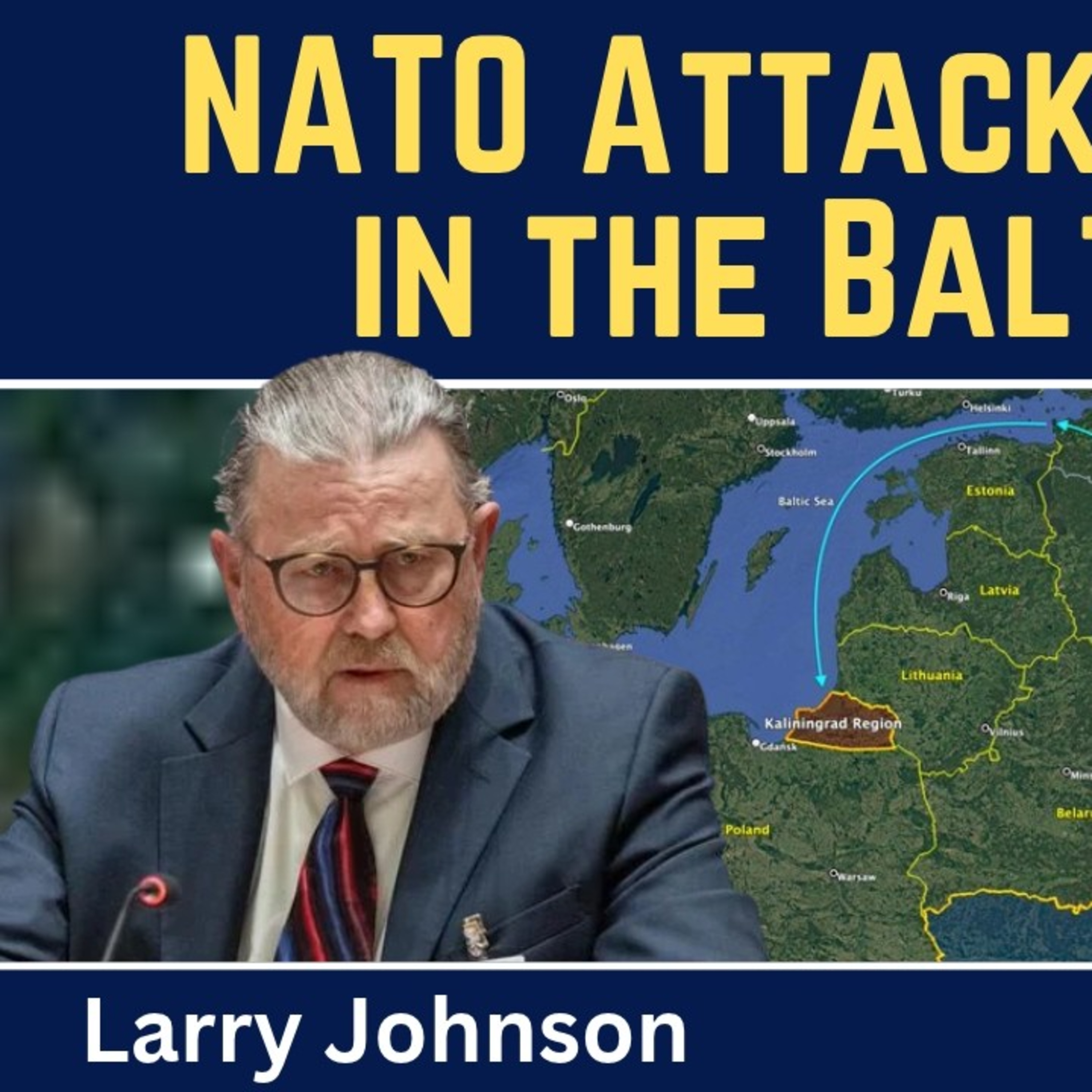
Larry Johnson is a former CIA intelligence analyst who also worked at the U.S. State Department's Office of Counterterrorism. Johnson discusses the attack on a Russian cargo ship in the Baltic Sea, and the air alarms going off in Kaliningrad. Read Larry Johnson's Sonar21: https://sonar21.com/Follow Prof. Glenn Diesen: PayPal: https://www.paypal.com/paypalme/glenndiesenBuy me a Coffee: buymeacoffee.com/gdiesengGo Fund Me: https://gofund.me/09ea012fBuy Diesen merchandise: https://diesen-shop.fourthwall.com/en-nokBooks by Prof. Glenn Diesen: https://www.amazon.com/stores/author/B09FPQ4MDL 00:00 Escalating Tensions in the Baltic Sea02:45 NATO's Role and Russia's Response05:52 The Shift in European Attitudes Towards Russia09:11 Cultural Influences on Perceptions of Russia11:44 The Consequences of Military Escalation15:06 The Irrelevance of Europe in Global Politics25:49 Reassessing Global Power Dynamics32:44 The Role of Europe in a Changing World39:19 The Impact of Economic Interests on Pol
In a year scarred by deadly floods and heat waves, the planet's global temperature is on the verge of surpassing a critical threshold. Horizons moderator William Brangham explores the dangerous nature of climate change and the seeming inability to address the crisis with Kate Marvel and Michael Mann, two research scientists who have long wrestled with this issue. Hosted on Acast. See acast.com/privacy
Donald Trump has a blunt message for Canada following his meeting with Prime Minister Mark Carney, warning that Canadian leaders are feeling increasingly emboldened as Canada-U.S. trade negotiations remain unresolved. White House trade advisor Peter Navarro is also taking aim at Canada's negotiating team, accusing Canadian officials of misreading their leverage with Washington. Meanwhile, Trump's surprising comments about Chinese espionage are sparking controversy as Carney deepens Canada's economic relationship with Beijing. Visithttp://keet.io/jasminlaine - Download it free, invite one person you trust, and start a conversation that belongs to you. Help me stay 100% independent! Send a one-time contribution - Let’s Be Friends! (https://www.instagram.com/jasminlaine/)
This week’s EU-UK reset has been long in the making. After the final squeeze by negotiators, will the summit pave the way for a closer relationship and maybe even lead to Britain rejoining the bloc – or are the strains of the Brexit divorce still too raw to overcome? As British Prime Minister Andy Burnham arrives in Brussels to sign off on a deal covering agri-food, energy and youth mobility, Anne McElvoy asks how Europe sees Britain’s desire to move closer to the fold and what might come next. She's joined by Sandro Gozi MEP, who chairs the EU delegation to the EU-UK Parliamentary Partnership Assembly and is a member of the centrist Renew Europe Group. Gozi previously sat in Italy’s parliament and was Secretary of State for European Affairs in the Renzi and Gentiloni governments from 2014 to 2018. Later in the podcast, she'll talk to Nick Thomas-Symonds, who until a few months ago led the UK’s negotiations on the reset deal. He made way for the current EU Relations Minister Hamish Fal
European leaders gather in Berlin for a high-stakes meeting on Ukraine, just as Donald Trump, Vladimir Putin and Xi Jinping hold talks in China. With Washington and Moscow sending conflicting signals about Europe's role in peace negotiations, can the Coalition of the Willing secure a seat at the table — and find the money to keep Ukraine fighting? Also on the podcast: Host Zoya Sheftalovich and Kathryn Carlson discuss the upcoming EU–UK summit in Brussels, where British Prime Minister Andy Burnham is promising a fresh start after Brexit. And mysterious cyber incidents disrupt the European Commission's internal systems. Questions? Comments? Message us on WhatsApp here (https://api.whatsapp.com/send/?app_absent=0&phone=32491050629&text=Hey+Zoya+and+crew%21+&type=phone_number) or at +32 491 05 06 29.
Kaja Kallas may be the EU’s top diplomat, but her role in key diplomatic discussions —whether on Ukraine or Israel — remains murky. Today on the show, Zoya Sheftalovich and Ian Wishart examine the increasingly overlapping job descriptions of Kaja Kallas and the EU’s Commissioner for the Mediterranean, Dubravka Šuica, and unpack what that says about EU diplomacy. Also on the podcast: Is Russian President Vladimir Putin serious about peace? Lithuania’s Foreign Minister Kęstutis Budrys doesn’t think so. And finally, nobody seems to want to live in Luxembourg — which is problematic for the institutions based there looking to recruit more people. How would you feel about moving to Luxembourg? Let us know by messaging us on WhatsApp here (https://api.whatsapp.com/send/?app_absent=0&phone=32491050629&text=Hey+Zoya+and+crew%21+&type=phone_number) or at +32 491 05 06 29. Articles mentioned in this episode: Faking it: Europe thinks Putin isn’t serious about peace. (https://www.politico.eu/articl
Colleges should publish clear information about costs and likely graduate outcomes.
Share your view, then see how readers voted. No sign-in required. This poll is shared across stories.
Do you agree or disagree?
Common Quandary
A Common Quandary to discuss
Another conversation to explore, separate from this news story.
You are not sick—you just cannot face work today. Do you call in sick?
Your employer offers sick leave but no personal days. You are not physically ill, yet you feel exhausted and know a day away would help. Saying you are sick is the only way to take paid time off without explanation.
Do unjust workplace rules change the duty to be truthful?