Can the Global South Turn Climate Pledges Into Action? | Yasin Kasirga
39 min
Listen through the publisher, then discuss the episode here or arrange an in-person Roundtable. Your city determines where to meet.
Roundtables are designed for groups of four, with a shared subject and room for everyone to speak. Come for discussion, with no dating expectation.
Global climate negotiations have led to major commitments, but turning them into action remains a challenge, especially for the Global South, where energy security, economic growth and climate finance are closely linked. In this episode of Global Southing, Yasin Kasirga, Former Senior Energy Advisor, COP28 Presidency, shares what happens behind closed doors at COP negotiations and what to expect from COP31. From the breakthroughs at COP27 and COP28 to climate finance, renewable energy and AI, the conversation explores what it takes to turn global climate pledges into real action. Tune in to learn: → What happens behind closed doors at COP negotiations and why reaching consensus is difficult → How hosting COP in the Global South influences climate priorities and international agreements → Why renewable energy projects cost more to finance in developing countries → How AI can improve energy infrastructure and support the energy transition → What COP27 and COP28 achieved on loss and damage, fossil fuels and renewable energy → Why climate finance commitments struggle to translate into actual investments → How local communities and Indigenous peoples can benefit from climate initiatives → What makes COP31's shared leadership between Türkiye and Australia different → Why COP31 could be a turning point for implementing global climate commitments Key Moments 1:09 What Happens Behind Closed Doors at COP Negotiations 5:11 How Global Climate Agreements Are Reached 9:25 Why Renewable Energy Financing Costs More in the Global South 11:24 How AI Could Transform Energy Infrastructure 14:34 Key Breakthroughs from COP27 and COP28 20:23 Climate Finance and the Road to $1.3 Trillion 28:44 What Makes COP31 Different? 30:50 Four Major Priorities for COP31 Follow Global Southing LinkedIn: https://www.linkedin.com/company/global-southing/ Instagram: https://www.instagram.com/globalsouthing/ TikTok: https://www.tiktok.com/@globalsouthing Listen to the podcast Spotify: https://open.spotify.com/show/0R17ovyZOxFjSrIGM5TjcZ?si=580a700875544cb1 Apple Podcasts: https://podcasts.apple.com/us/podcast/global-southing/id1874600009
Episode information is provided by the publisher. Listening takes place on the publisher’s service.
Dr. Sarah Kapnick, Global Head of Climate Advisory at J.P. Morgan, joins Navin Girishankar on Betting on America to discuss how the next economic order will depend on the next energy order. She explains that resilient energy systems more than ever will be a source of national power as countries seek to keep energy flowing amid increasingly frequent disruptions such as climate shocks like El Niño, war in the Middle East and Ukraine, and surging power demand from AI. Dr. Kapnick explores the global landscape for resilient energy systems, the strategies countries are deploying, and the role of energy diplomacy as a source of geopolitical advantage.
As we watch tyrants flex at APEC, it has become increasingly vital for PM Mark Carney to turn the Middle Powers strategy into a bold, proactive initiative. We cannot afford to be merely reactive in the face of the dangerous far-right movements surging across the globe. In Canada, this urgency is underscored by the Conservative Party's alarming shift too far to the right. With rumours swirling that Pierre Poilievre's tenure as leader may be coming to an end, it’s time to ask ourselves: who can step in and steer the party—and the country—toward a more inclusive, democratic vision? We need leaders who are committed to protecting global democracy, and we cannot wait until it’s too late. Join us for an insightful strategy session with former Winnipeg Mayor and Ontario Cabinet Minister Glen Murray, hosted by Laura Babcock. Together, we will explore effective strategies to counteract far-right extremism and ensure that global threats, like Putin’s aggression in Europe, are met with steadfast
Eight decisions from four appellate courts in the Court of Appeal edition of Thursday 19 November 2026, with the New South Wales, Victoria, Western Australia and ACT editions of the same day folded in. Commercial Law Desk (opening story). R and N Hunter Pty Ltd ATF The Hunter Family Superannuation Fund v Count Financial Limited [2026] FCAFC 143 - financial adviser and client is not an accepted fiduciary category; any duty is tethered to an occasion of advice; silence implies a recommendation to retain only on an obligation, representation or expectation; fiduciary questions unsuited to Pt IVA common questions; s 1041H claims fail. Appeal dismissed (Derrington, Anderson and Feutrill JJ). JADE (https://jade.io/article/1305143) A word from JADE (house spot). Practice and Procedure Desk. AGL Retail Energy Limited v Australian Energy Regulator (No 2) [2026] FCAFC 146 - costs follow the overall event, no issue-by-issue apportionment; the r 39.04(2) Federal Court Rules variation power is exce
The Second Circuit hears Richards versus Mount Sinai South Nassau. Richards, representing himself, is challenging the dismissal of an employment lawsuit against the hospital. He lost his job after workplace disputes that the hospital describes as performance problems. Richards disputes that account and says he faced discrimination and retaliation for complaining to management. Before this appeal, the district judge gave him an opportunity to explain how his allegations supported federal discrimination claims. She ultimately dismissed those claims, finding no adequate factual connection to a protected characteristic or protected activity. She declined to decide the remaining state-law claims. That procedural setting matters. The appellate court is reviewing the dismissal of a lawsuit, not conducting a trial about who was right in every workplace disagreement. Listen for whether the alleged facts support a plausible inference of discrimination, rather than treating the hospital’s explana
November 19, 2026; 6pm: MS NOW's Ari Melber examines President Barack Obama’s private advice to newly elected Democrats after a sweeping blue wave, Elon Musk’s attempt to distance himself from MAGA, and the historic Anthropic IPO. The key takeaway: voters, regulation, affordability, and AI disruption are shaping the next political and economic fights. Hosted by Simplecast, an AdsWizz company.
Europe's Little Anarchy: The Rise and Fall of Neutral Moresnet (https://bookshop.org/a/12343/9781501788147)(Cornell UP, 2026) uncovers the history of Neutral Moresnet: a once-forgotten space without borders, nationalism, or a recognized government. Between 1815 and 1919, this square mile of land wedged between Belgium, the Netherlands, and Germany was home to thousands of people living off the grid, free of taxation and oversight. But they also had no political status, police, legal currency, proper law courts, or government presence in sectors like public health, infrastructure maintenance, or education. Meanwhile, practical control over Neutral Moresnet lay in the hands of the local industry: a for-profit, multinational mining company that, because it owned rights to the land, also held a near monopoly on the supply of high-quality zinc to the rest of the world. Dr. Steven Press explores how the residents of Neutral Moresnet sought to improve their quality of life, appealing to Germa
Arts organizations should take creative risks even when familiar work would sell better.
Share your view, then see how readers voted. No sign-in required. This poll is shared across stories.
Do you agree or disagree?
Common Quandary
A Common Quandary to discuss
Another conversation to explore, separate from this news story.
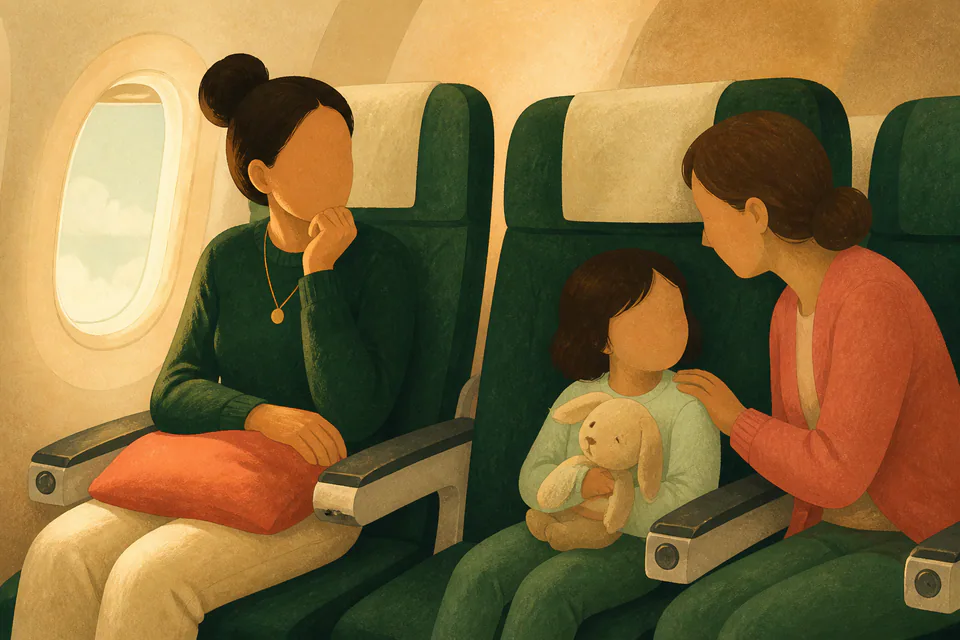
You paid extra for the aisle seat. Must you trade with a parent?
You reserved and paid extra for an aisle seat on a long flight. A parent asks you to trade for a middle seat so they can sit beside their young child after the airline separated them.
When does another person's predicament become your responsibility?