Listen through the publisher, then discuss the episode here or arrange an in-person Roundtable. Your city determines where to meet.
Roundtables are designed for groups of four, with a shared subject and room for everyone to speak. Come for discussion, with no dating expectation.
Nearly one in three adults in the UK is obese, and governments have introduced a growing range of policies aimed at improving our diets. From taxes on sugary drinks to restrictions on junk food advertising, the government is increasingly trying to influence what we eat. But are these policies actually working? In this episode, Helen Miller is joined by Henry Dimbleby, author of the National Food Strategy, and IFS researcher Gautam Vyas to examine the economics of healthy eating. They discuss why governments intervene in our diets, whether the UK's sugar tax has been successful, and the unintended consequences of restricting unhealthy food. They also explore whether weight-loss drugs could fundamentally change how we think about obesity, nutrition and the government's role in shaping our diets. Become a member: https://ifs.org.uk/individual-membership Find out more: https://ifs.org.uk/podcasts-explainers-and-calculators/podcasts Hosted on Acast. See acast.com/privacy (https://acast.com/privacy) for more information.
Episode information is provided by the publisher. Listening takes place on the publisher’s service.
What actually works when it comes to detecting lies, and why are so many popular ideas about reading people and nonverbal behavior at odds with the scientific research? I talk with Aldert Vrij, one of the world's leading deception-detection researchers, who has spent almost four decades studying these topics. We discuss why what people say is far more revealing than their body language; why the perceived “sexiness” of reading nonverbal behavior has contributed to widespread myths and misconceptions; whether vocal behaviors like pitch, volume, and hesitation contain meaningful clues; and whether there's value in analyzing minor word choices and turns of phrase, as is done in so-called “statement analysis.” We discuss Paul Ekman's legacy as a source of faulty ideas about deception, micro-expression-based deception detection training, and the strategies that popular “body language experts” use to appear scientifically credible while simultaneously promoting ideas that conflict with the sc
This week on The Necessary Conversation, it's Chad, Haley, and Mary Lou. Bob is still recovering but sent in a video message about Trump calling Putin his friend that we watch together. 🇷🇺 Trump held the first-ever three-way talks with Putin and Xi, called it a "12 out of 10," and produced nothing. Then at a press conference he called Putin his friend — and when asked if Putin is a friend to America, the president of the United States said, "I can't speak to America." That same day, Trump's friend Putin launched massive strikes into Ukraine, hit Poland with two missiles — an act of war against a NATO ally — then struck near a Ukrainian restaurant and drone-bombed the first responders, killing a 7-year-old child and a 20-year-old paramedic. We watch Bob's video and ask Mary Lou: is Russia our friend? 🇨🇳 The House Foreign Affairs Committee revealed Trump's Commerce Department approved nearly 880,000 advanced AI chips for Chinese military-linked companies including Alibaba, Tencent, a
Jensen Huang stepped down as Nvidia CEO on November 12, 2026, after reports about an extramarital relationship with Alice Huang, a former senior executive at Megaspeed. U.S. intelligence reportedly viewed her as an asset working for Beijing. That allegation is not a conviction, and it is not the same thing as proof Nvidia secrets changed hands. Tony Brueski brings in retired FBI Special Agent Robin Dreeke, former leader of the bureau’s Counterintelligence Behavioral Analysis Program, for the question behind the headlines: how does somebody who helped build one of the world’s most important technology companies fail to recognize a possible intelligence threat in his personal life? Huang apologized to his family and Nvidia employees for infidelity. The board announced an outside investigation, while saying it knew of no reason to believe national security or proprietary information was compromised. Reuters subsequently reported that Huang had previously told Nvidia leaders his encounters
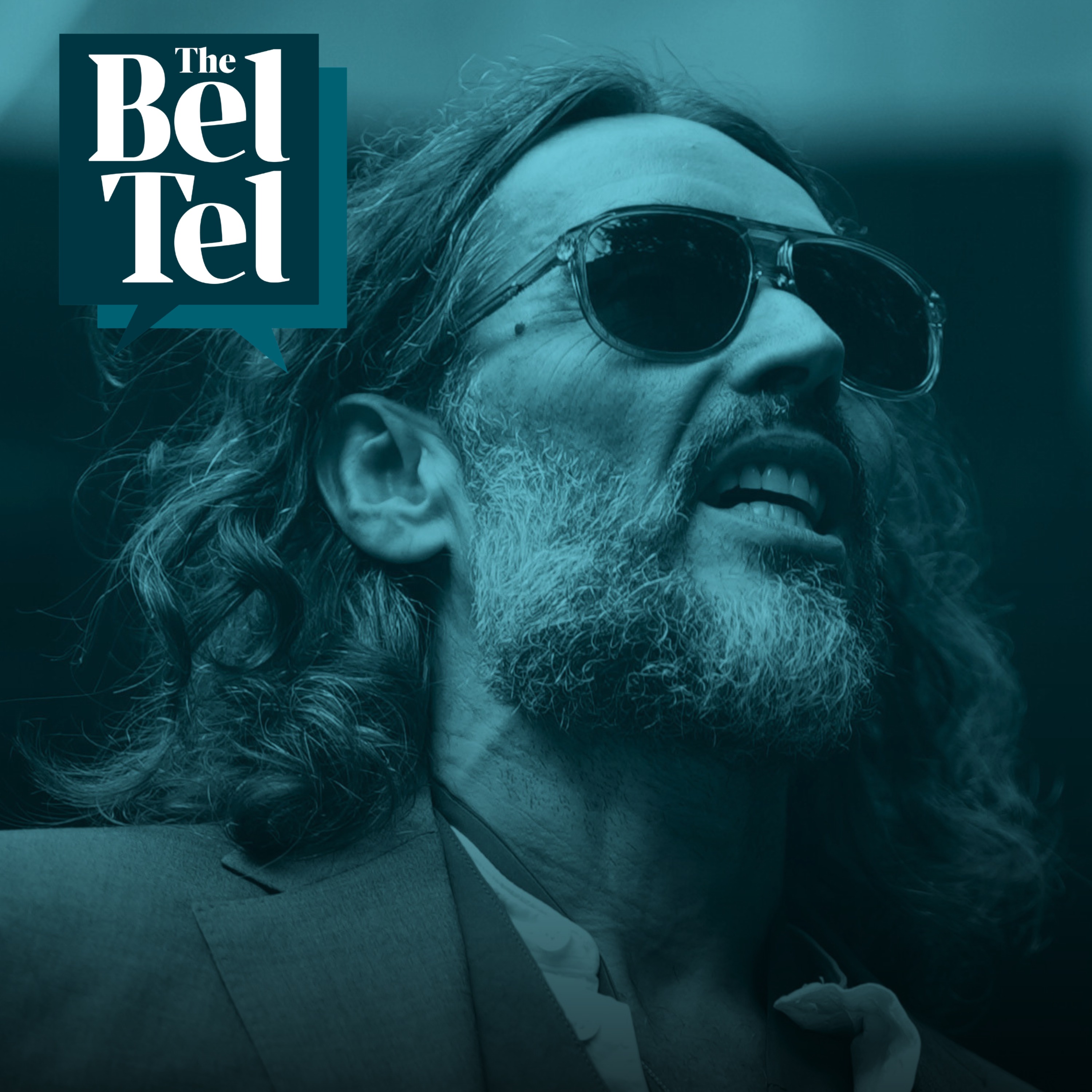
Having been jailed for 10 years and six months, disgraced entertainer Russell Brand remains very much in the headlines. Since his conviction, six more women have come forward with allegations of misconduct. Meanwhile, Brand's voice and image continue to be broadcast around the world, and not just in the form of news stories and documentaries. Brand's X account remains open, and his popular YouTube channel recently uploaded a pre-recorded episode of his Sunday Service programme that also featured a post-sentencing letter penned by Brand and read aloud by his wife, Laura Gallacher. In addition, the UK government is under pressure to change laws related to the age of sexual consent in the wake of Brand’s imprisonment. Fionnán Sheahan is joined by Daily Mail feature writer Fred Kelly and Irish Independent features journalist Kirsty Blake Knox to look at the impact that the jailing of Russell Brand has had on the disgraced comedian’s brand. Hosted on Acast.
On 4th March 2023, UN member states agreed a historic treaty that had been over fifteen years in the making. The High Seas Treaty is the first ever treaty to protect the world’s oceans outside national boundaries. The aim is to meet the 30 by 30 biodiversity target, protecting 30% of the world’s oceans by the year 2030. Also known as the open sea or international waters, the high seas begin at the limit of countries’ exclusive economic zones. That means up to 370km, or 200 nautical miles, from the coastline. They account for 64% of the world’s oceans, and have been referred to as the last true wilderness, given how much mystery still lies within. Why is protecting the oceans so important? What measures are expected to come from the treaty? In under 3 minutes, we answer your questions! To listen to the last episodes, you can click here: How to make the most out of a rental property? (https://originals.bababam.com/do-you-really-know/202303090400-how-make-most-out-rental-property) What is
This week, Voyager 1 reached one light day away from earth - the farthest any man-made object has ever been. For fifty years, it as well as its sister probe Voyager 2, have been sending information back to earth. Now, they’re off to interstellar space, carrying two golden records designed to introduce humanity to whatever life form may be out there. So what’s on those discs? And what does the project tell us about what it means to be human? Guests: Rhys Blakely, science editor, The Times Tim Ferris, author and producer of the Voyager Golden Record Host: Manveen Rana Producer: Olivia Case We want to hear from you - email: [email protected] Read more: Voyager - humanity’s most distant message (https://www.thetimes.com/uk/science/article/nasa-golden-record-sounds-voyager-humanity-bksl2n0ck?eafs_enabled=false) Further listening: Has space become the final frontier for war? (https://pod.link/1501716010/episode/NmFhYzMzNzM4ZGUzYjQzYjZhOTk4ZGJj) Clips: NASA Voyager Golden Record / Carl Sa
The UK economy has grown faster than expected, but many households are still feeling the strain. Why has productivity growth slowed, and what might it take for living standards to improve? Helen Miller is joined by Jonathan Haskel, Chair of the Office for Budget Responsibility, and Jack Meaning, UK Chief Economist at Barclays. They discuss inflation, wages, unemployment, household finances and investment, as well as the outlook for UK growth and the uncertainties around AI. The episode explores how stronger headline growth can sit alongside continued pressure on household incomes, and what the evidence suggests about the years ahead. Become a member: https://ifs.org.uk/individual-membership Find out more: https://ifs.org.uk/podcasts-explainers-and-calculators/podcasts Hosted on Acast. See acast.com/privacy (https://acast.com/privacy) for more information.
Street design should prioritize pedestrians and public transport over private cars.
Share your view, then see how readers voted. No sign-in required. This poll is shared across stories.
Do you agree or disagree?
Common Quandary
A Common Quandary to discuss
Another conversation to explore, separate from this news story.
Your coworker bends a dumb rule to help people. Do you report it?
An underpaid coworker quietly bends a company rule to help colleagues receive benefits they were technically denied. No customer is harmed, but the records are inaccurate and you are asked to certify them.
Where should loyalty end when a rule seems unjust?