Listen through the publisher, then discuss the episode here or arrange an in-person Roundtable. Your city determines where to meet.
Roundtables are designed for groups of four, with a shared subject and room for everyone to speak. Come for discussion, with no dating expectation.
The UK economy has grown faster than expected, but many households are still feeling the strain. Why has productivity growth slowed, and what might it take for living standards to improve? Helen Miller is joined by Jonathan Haskel, Chair of the Office for Budget Responsibility, and Jack Meaning, UK Chief Economist at Barclays. They discuss inflation, wages, unemployment, household finances and investment, as well as the outlook for UK growth and the uncertainties around AI. The episode explores how stronger headline growth can sit alongside continued pressure on household incomes, and what the evidence suggests about the years ahead. Become a member: https://ifs.org.uk/individual-membership Find out more: https://ifs.org.uk/podcasts-explainers-and-calculators/podcasts Hosted on Acast. See acast.com/privacy (https://acast.com/privacy) for more information.
Episode information is provided by the publisher. Listening takes place on the publisher’s service.
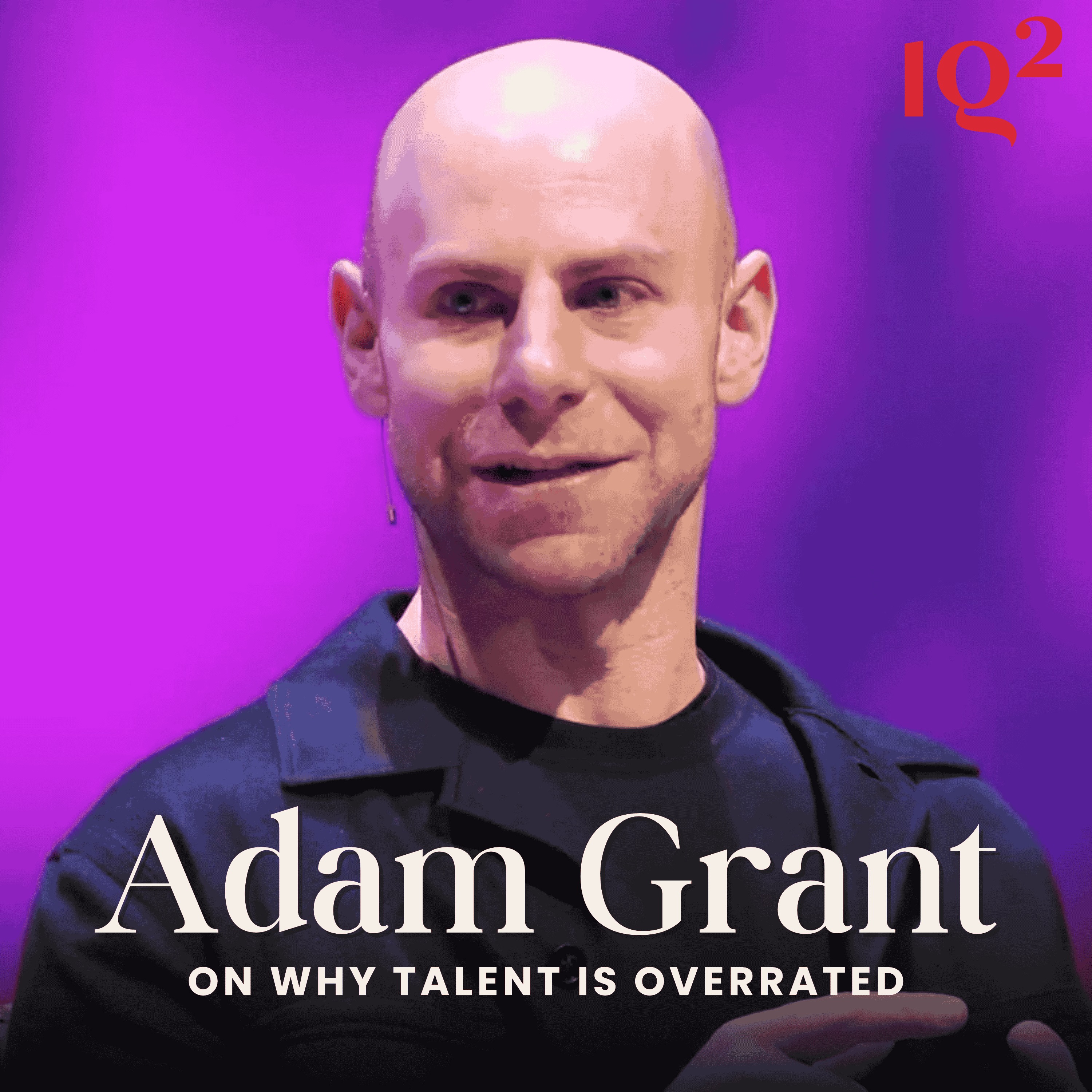
Adam Grant is one of the most sought after organisational psychologists in the world. He has provided expert advice to many of the world’s greatest business leaders, including Bill Gates and Sheryl Sandberg, equipping them with the mental tools to find motivation and meaning, rethink assumptions, and achieve greatness in their business and personal lives. In January 2024 Grant came to the Intelligence Squared stage for a rare, exclusive London event where he shared his revolutionary framework for how we can all exceed the expectations and aspirations we have set for ourselves. Drawing on his new book Hidden Potential he explained that despite living in a world that tends to admire people who start out with innate talent, there is clear scientific evidence that we can all bridge the biology gap and improve ourselves dramatically. In conversation with economist and FT columnist Tim Harford, Grant wove together groundbreaking evidence, surprising insights, and vivid story telling to take
Enjoy this special feed drop of our sister show 'In This Economy?!' The U.S. experienced its fair share of technological outages, disruptions and stoppages over the past week or so, starting off with Microsoft 365 going black last Thursday heading into Friday, followed by the FAA ground stoppage across America, and other online systems throughout this week. Host Mike Eppel speaks to Sheldon Jacobson, professor of computer science at the University of Illinois at Urbana-Champaign to discuss whether or not people are justified in their worry-shopping, and how much of a disruption to productivity took place. We love feedback at The Big Story, as well as suggestions for future episodes. You can find us: Through email at [email protected] Or @thebigstory.bsky.social on Bluesky Hosted by Simplecast, an AdsWizz company. See pcm.adswizz.com (https://pcm.adswizz.com/) for information about our collection and use of personal data for advertising.
Pennsylvania Gov. Josh Shapiro is fresh off a reelection campaign that gave him another four years in office and Democrats majorities in the state House. Now Shapiro is turning his attention to foreign policy, laying out his prescriptions to solve pressing global crises. Amna Nawaz sat down with the governor to discuss his vision for how the United States should engage on the world stage. Hosted on Acast. See acast.com/privacy
Hey everybody, Tom Bilyeu here. On today’s episode of Impact Theory, we’re taking on a topic that’s got the whole world holding its breath: the escalating crisis between the United States and Iran. As tensions ratchet up, we’re asking the tough questions—how did we get stuck in this “escalation trap,” and what does it mean for America’s global leverage, our economy, and our very sense of security? The conversation focused on why the traditional idea of “strategy” might be failing policymakers, using powerful analogies—like chess versus roulette—to show how doubling down in conflict can spiral out of control. We’ll break down the risks of tactical “wins” that create even bigger crises, the real leverage Iran holds with control of the Strait of Hormuz, and the mounting pressure on President Trump as political support erodes and legacy hangs in the balance. A key theme that emerged is what happens when military might runs into decentralized opposition, and why high-stakes gambles—like the
AI is making it easier to write, prepare, and polish what we say, but it may also be changing the way we communicate. Stanford communication expert Matt Abrahams explains why sounding human could become even more important in the age of AI, how to use these tools without outsourcing your own thinking, and why being a little less polished may actually be a good thing. Plus, with Thanksgiving around the corner, how to handle those real-life, in-the-moment conversations when AI can't step in for you. Learn more about our guest(s): https://www.theNewsWorthy.com/shownotes (https://www.thenewsworthy.com/shownotes) Join us again for our 15-minute daily news roundups every Mon-Fri! Become an INSIDER and get ad-free episodes here: https://www.theNewsWorthy.com/insider (https://www.thenewsworthy.com/insider) Get The NewsWorthy MERCH here: https://www.theNewsWorthy.com/merch (https://www.thenewsworthy.com/merch) Upgrade your sleep now with Boll & Branch during their best sale of the year. Stop pi
Matthew Farwell’s conviction settled the federal case against him. It did not settle what may have happened to evidence, what other officers knew, or how many cases depended on his work as a Stoughton police detective. Tony Brueski is joined by retired FBI agents Jennifer Coffindaffer and Robin Dreeke to connect two questions that belong together: could there be more arrests in the Sandra Birchmore case, and should prosecutors review the cases Farwell once investigated? These are not the same question, and neither has an automatic answer. William Farwell, Matthew’s twin, testified under federal immunity. Former Stoughton deputy chief Robert Devine has contested an oversight board’s findings concerning the “Marty Riggs” Facebook account, saying he was hacked. Neither has been charged in Sandra’s death. Coffindaffer lays out what investigators would need: corroborated communications, authenticated account access, consistent timelines and proof of each person’s conduct. Knowing somebody i
Nearly one in three adults in the UK is obese, and governments have introduced a growing range of policies aimed at improving our diets. From taxes on sugary drinks to restrictions on junk food advertising, the government is increasingly trying to influence what we eat. But are these policies actually working? In this episode, Helen Miller is joined by Henry Dimbleby, author of the National Food Strategy, and IFS researcher Gautam Vyas to examine the economics of healthy eating. They discuss why governments intervene in our diets, whether the UK's sugar tax has been successful, and the unintended consequences of restricting unhealthy food. They also explore whether weight-loss drugs could fundamentally change how we think about obesity, nutrition and the government's role in shaping our diets. Become a member: https://ifs.org.uk/individual-membership Find out more: https://ifs.org.uk/podcasts-explainers-and-calculators/podcasts Hosted on Acast. See acast.com/privacy (https://acast.com/
Wider communities should help fund hazard protection even when only some properties directly benefit.
Share your view, then see how readers voted. No sign-in required. This poll is shared across stories.
Do you agree or disagree?
Common Quandary
A Common Quandary to discuss
Another conversation to explore, separate from this news story.
Your anonymous gift could inspire millions more if you reveal your name. Do you?
A donor wants to make a transformative gift without recognition. The charity believes announcing the gift and the donor's identity would encourage matching contributions and help far more people.
Can the opportunity to create more good outweigh a preference for privacy?