Listen through the publisher, then discuss the episode here or arrange an in-person Roundtable. Your city determines where to meet.
Roundtables are designed for groups of four, with a shared subject and room for everyone to speak. Come for discussion, with no dating expectation.
About the Episode In honour of our delayed summer break, we have reposted one of our favourite conversations. Prediabetes can sound like a small warning, but Dr. Brendan Byrne explains that it is the first sign your body can no longer keep blood sugar in check, and that it can be reversed. In this episode, Dr. Byrne covers why some people go on to develop type 2 diabetes, how extra fat in the liver and pancreas drives insulin resistance, and why food, movement, sleep, and stress all matter. You will also hear the first steps to take after a diagnosis, and why one in three Canadians has prediabetes while most do not know it. About The Path Podcast The Path is about simple strategies for better metabolic health. We break down metabolic disease, prediabetes, and type 2 diabetes through patient FAQs, better health decisions, and honest interviews with patients and the physicians who treat them. Learn More About LifestyleRx: https://lifestylerx.io/ Ask us a video question! https://ask-a-question.lifestylerx.ca Episode 125 | The Path Podcast
Episode information is provided by the publisher. Listening takes place on the publisher’s service.
Is it too late to reverse Insulin resistance? Follow the steps to stay Consistently Keto: http://on.bozmd.com/CK Dr. Boz At Home A1C Test Kit: https://on.bozmd.com/A1CTest Get a CGM: https://meaningfulmedicine.org/landing-page/ My favorite blood sugar meter: https://shop.keto-mojo.com/?rfsn=6717371.1353e7&utm_source=refersion&utm_medium=affiliate&utm_campaign=6717371.1353e7 (https://shop.keto-mojo.com/?rfsn=6717371.1353e7) -------------- The Workbook: https://on.bozmd.com/BozWorkbook --------------------- Thanks for checking out the Dr. Boz Channel. See links below resources and recommendations. Tune in Tuesday nights, 4PM Eastern/3PM Central to watch me Live! We improve health - One ketone at a time. --------------------- FREE STUFF 50 Keto Fat-Facts: http://on.bozmd.com/50fat Dr. Boz Ratio Spreadsheet: http://on.bozmd.com/DBR Documentary Playlist: https://on.bozmd.com/AT --------------------- Dr. Boz’s Online Courses: Consistently Keto: http://on.bozmd.com/CK BRAINS: https://on.bozmd
For all the references, links, and a written breakdown, see the associated StayCurious Metabolism Newsletter: https://staycuriousmetabolism.substack.com/p/how-a-mothers-diet-rewrites-her-childrens?r=40ekz2 What your mother ate during pregnancy may shape your cardiovascular health today. New research published in Nature Cardiovascular Research reveals that a maternal Western diet—high in sugar and saturated fat—can epigenetically program her offspring to develop atherosclerosis and heart disease. In this video, I’ll break down how maternal nutrition impacts epigenetic bookmarks activate inflammatory genes, and why this matters for obesity, diabetes, and cardiovascular disease. We’ll also explore how ketogenic diets, healthier nutrition choices, and lifestyle interventions may help reverse this metabolic programming and support lifelong heart health. Most importantly, you’ll see why epigenetic legacy is not destiny. While we may inherit predispositions, lifestyle, nutrition, metabolic he
Episode 2882: Vinnie Tortorich and Dr. George Korede discuss supplements, peptides, hormones, and having healthy habits first. https://vinnietortorich.com/2026/11/healthy-habits-first-dr-george-korede-episode-2882 PLEASE SUPPORT OUR SPONSORS Pure Vitamin Club VILLA CAPPELLI EAT HAPPY KITCHEN YOU CAN WATCH THIS EPISODE ON YOUTUBE: @FitnessConfidential Podcast Vinnie's workout videos are available to purchase! TO PURCHASE VINNIE'S WORKOUT VIDEOS, CLICK THIS LINK: https://vinnietortorich.com/workout Healthy Habits First Dr. Korede is a medical doctor and rheumatologist. (4:00) He explains the different forms of inflammation in detail, particularly chronic inflammation. (6:30) They discuss a recent incident involving a young woman who died while running in the New York Marathon. (13:00) It was determined she died from rhabdomyolysis, which is a rapid breakdown of muscles that releases toxins into the blood and kidneys. (17:00) They discuss inflammation and things like seed oils. There aren
After 45, many narcissists develop a darker personality: reverse maturity, the collapsed victim, hermit paranoia, body-based panic about ageing and a joy-eating phase that drains everyone around them. Chapters 00:00 Introduction 01:48 Welcome and Overview 02:21 Cognitive Regression: The Reverse Maturity 04:32 The Collapsed Victim: Shifting Identities 07:35 Hermit Paranoia: Control Through Isolation 10:09 Body-Based Panic: Fighting Mortality 11:59 Joy Eater Phase: Resentment of Others' Happiness 13:32 Conclusion: Finding Your Way Out Is this narcissistic abuse? Watch this episode on YouTube: youtu.be/2zkikzcT2E4 (https://youtu.be/2zkikzcT2E4)
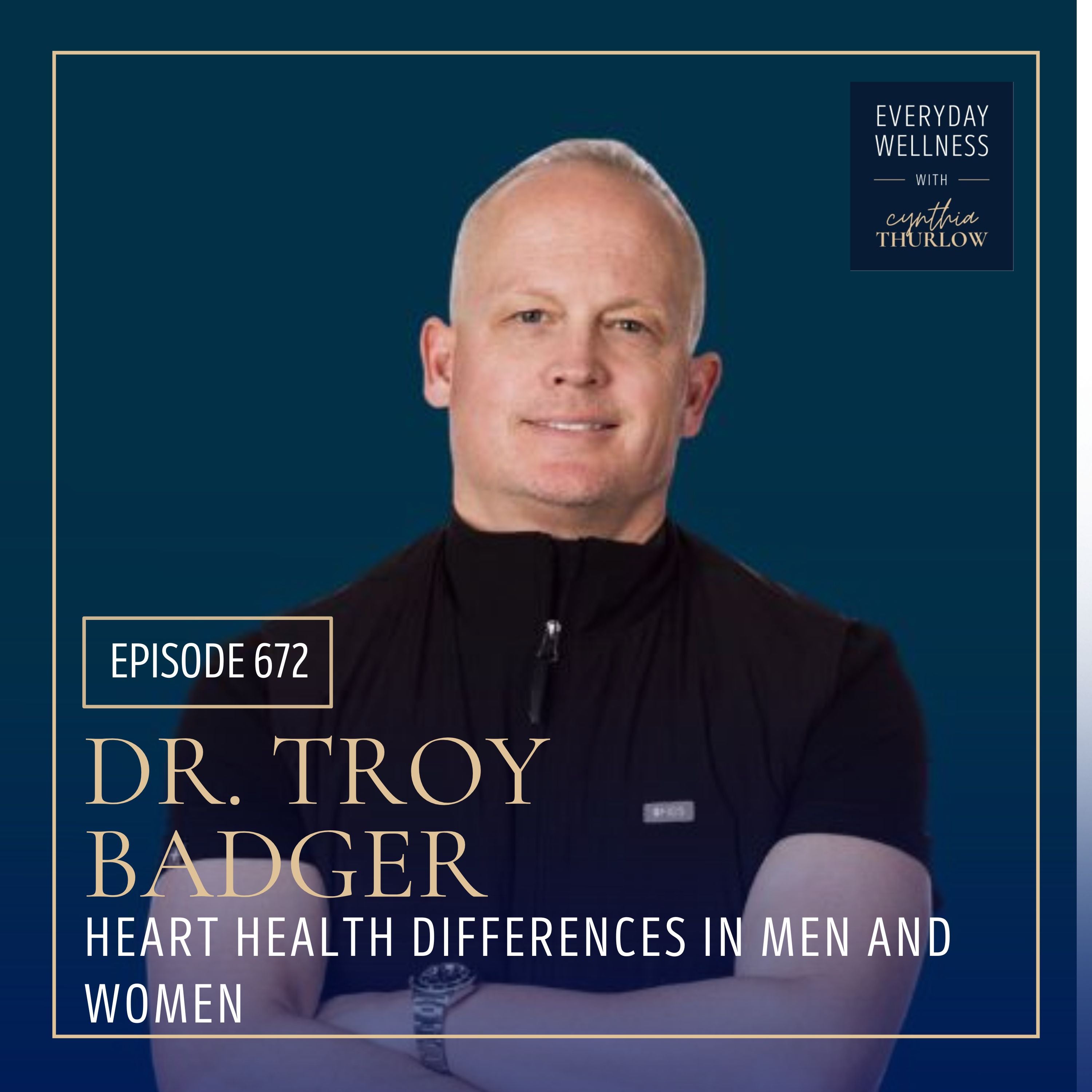
Today, I’m honored to connect with Dr. Troy Badger. He is a board-certified cardiologist and interventionalist and the founder of Cardiostrong, a concierge preventive cardiology clinic in Provo, Utah, focused on reducing cardiovascular risk, optimizing metabolic health, and improving strength and cardiorespiratory fitness for executives and athletes. In today’s conversation, we discuss Dr. Badger’s gender- and age-specific approach to heart health, including treatment differences for men and women, and diagnoses such as INOCA, SCAD, vasospastic disease, and Takotsubo. We examine emotions and their influence on heart health, coronary ischemia and cardiomyopathies, labs and diagnostics, how Dr. Badger assesses risk in his patients, and the differences between a CAC and a CCTA. Dr. Badger also shares the labs he finds essential for all patients and discusses the role of VO2 Max, cardiovascular training, and lifestyle—specifically nutrition, the use of GLP-1 drugs, and a multidisciplinary
For the days you got through and nobody saw what it took. A quiet place this evening where it counts. About 12 minutes with Steven Webb's calm voice and music underneath. Perfect for the evening. We let the body soften, from the jaw and the eyes down to the belly, because it's been on alert all day. Then we look at what today really cost. Getting up when your body said no. Being kind to someone while you were falling apart inside. Saying "yeah, fine" because where would you even start? There's an old Zen idea I keep coming back to: a thing doesn't need to be seen to be real. The rain falls on an empty field, nobody watches, and it still soaks in. We put the day down for a minute, not away, just down, and finish with three gentle wishes. May the hard days I got through be counted. I've been paralysed a long time, and I know what it can take just to get through the day. You're not doing this on your own. Treat me to a coffee, keep the podcast free, and get my Weekly Calm every Sunday. It
About the Episode In honour of our delayed summer break, we have reposted one of our favourite conversations. Low carb and keto can lower blood sugar, but they also cut out foods your body benefits from. Dietitian Jess Pirnak explains green, yellow, and red light carbs, why chickpeas and lentils still work, and how a glucose monitor can show what your own body handles. You will also hear how to ease into beans without the gas and why LDL cholesterol needs a personal look. About the Guest Jess Pirnak, RD, is the lead dietitian at LifestyleRx and a Clinical Instructor at the University of British Columbia. Jess is also the in-house dietitian advisor for Celiac BC and runs a private practice focused on gut health, celiac disease, and plant-based diets. About The Path Podcast The Path is about simple strategies for better metabolic health. We break down metabolic disease, prediabetes, and type 2 diabetes through patient FAQs, better health decisions, and honest interviews with patients and
Public spending should prioritize people with the greatest unmet needs.
Share your view, then see how readers voted. No sign-in required. This poll is shared across stories.
Do you agree or disagree?
Common Quandary
A Common Quandary to discuss
Another conversation to explore, separate from this news story.
Software says a student cheated with AI. Is that enough to fail the paper?
A teacher suspects several essays were written with AI. Detection software marks one student's work as highly likely to be generated, but the software is known to make mistakes and the student denies using it.
How should responsibility be assigned when evidence is powerful but unreliable?