Listen through the publisher, then discuss the episode here or arrange an in-person Roundtable. Your city determines where to meet.
Roundtables are designed for groups of four, with a shared subject and room for everyone to speak. Come for discussion, with no dating expectation.
In this episode Magda Keaney, Head Curator of International Art, speaks with the American photographer Catherine Opie (born 1961, Sandusky, Ohio) about her work 105 Freeway, 1994 1994/2024, recently acquired by the National Gallery. Los Angeles has been Opie’s home and subject for more than four decades, as she’s focussed her lens on the people, communities, and places around her. In 1994, she expanded her portrait of the city with a series of work devoted to its iconic network of freeways. In this conversation, recorded between Kamberri/Canberra and Opie’s studio in Los Angeles, Opie explains how she sought to capture these freeways – both part of her lived experience, and modern-day monuments – as sites of connectivity as well as division, nostalgia, history and beauty. 105 Freeway, 1994 1994/2024 appears in the upcoming exhibition Full Throttle (https://nga.gov.au/exhibitions/full-throttle/), on display at the National Gallery from 5 Dec 2026 – 11 Apr 2027. Hosted on Acast.
Episode information is provided by the publisher. Listening takes place on the publisher’s service.
In this episode Jimmy interviews investment banker and former HUD official Catherine Austin Fitts about central bank digital currencies and the possibility that digital financial systems could eliminate privacy and give authorities greater control over individual transactions. Austin-Fitts describes an "automatic third lock," in which surveillance infrastructure and algorithms could freeze accounts, block payments, or impose financial penalties without the human review and appeal processes available in current banking systems. She urges people to preserve access to cash and supports state-level legislation to resist financial centralization, while warning that a transition to an all-digital system could cause serious harm. The conversation also examines alleged efforts to centralize AI through regulation, the Federal Reserve's origins and private-bank influence, and the argument that government debt and reliance on private credit give bankers substantial power over national economic po
One of the finest actors of his generation - Michael Sheen -breathes new life into one of Wales’s most defining stories. He stars as Owain Glyndŵrin in Owain & Henry, an epic new play by Gary Owen about a lord of a small northern land in the 15th century who rises in rebellion against King Henry IV. The production, at the Welsh Millennium Centre in Cardiff, is the second production by the new Welsh National Theatre, and Sheen co-directs as well as appears on stage. He talks to us about bringing one of Wales's most defining stories to the stage. From tombstones and altar pieces to rusty nails, battle masks, the remains of a horse and leather shoes worn by children, a new exhibition at the National Museum of Scotland in Edinburgh explores repeated attempts by the Romans to conquer Scotland. Writer and presenter Alistair Heather and writer, comedian and history fanatic Susan Morrison discuss what the artefacts they left behind reveal about that story. How can musicians collaborate with AI
Thanksgiving is often presented as a simple story of Pilgrims and Native people sharing a meal. But what gets left out—and who benefits from that version? Lakota Chicano journalist Simon Moya-Smith and Ojibwe educator Julie Francella discuss how we should to challenge the familiar holiday narrative and share the histories, traditions, and lived experiences it obscures. They discuss the Wampanoag people’s diplomacy and the realities surrounding the 1621 gathering, the origins of the National Day of Mourning, and how Manifest Destiny helped turn a complicated history into a comforting national myth. Julie describes Indigenous gratitude as an everyday practice rooted in reciprocity with the land, water, animals, and community. Simon speaks about resilience, cultural survival, stereotypes, and why Indigenous nations should never be treated as a monolith. The conversation also explores what it means to gather with family while acknowledging painful history, why Indigenous communities contin
What is it really like growing up inside the Estée Lauder dynasty? Aerin Lauder joins Sarah Jossel to share life inside beauty royalty. Aerin reflects on carrying forward a historic family legacy - not only as the granddaughter of the legendary pioneer and Director of Style, Luxury & Legacy for the iconic house, but as a global founder in her own right with her lifestyle brand, AERIN. In this conversation, she shares her childhood memories with Estée, the timeless skincare philosophy and beauty secrets passed down through generations, and how she built a modern brand rooted in effortless elegance and interiors. Aerin also gives her insider guide to the best spots for dinner and martinis in New York and reveals which Sex and the City character she would be. "You only have one face, take care of it." "I think if Estée was alive, she would be obsessed with Pinterest and Instagram. She would love it." "I'm probably more like Sarah Jessica Parker [Carrie]... Because I do love fashion, I lov
Today on the GWA podcast is the extraordinary artist Florentina Holzinger. For those who went to the Venice Biennale this year, you will recognise Holzinger's name as the artist who made headlines with her takeover of the Austrian Pavilion with her team of all-female nude dancers, for SEAWORLD VENICE. Here, she staged something like a modern-day Hieronymus Bosch painting – one dancer hanging upside down from and ringing a huge church bell, another encased in a tank, performing for up to eight hours, and another attempting to control a sewage treatment plant. Every day saw hours-long queues. But Holzinger, born in 1986, has been making her name in performance for over two decades. Her work combines theatre, dance, opera, and the visual arts, and she often uses cinematic effects and tools such as helicopters and industrial hose pipes. She is known for pushing her physicality to the limits, testing her psychological strength, and always bringing her performances back to the body. As spect
James and Karla Murray have spent almost thirty years photographing the New York City that's disappearing — storefronts, bars, record stores, and now, in their new book Counter Culture (https://www.penguinrandomhouse.com/books/826863/counter-culture-by-photographs-by-james-t-and-karla-l-murray-text-by-emma-orlow/), thirty of Manhattan's diners and luncheonettes. Matt talks to the husband-and-wife duo about how a graffiti project turned into a preservation career, what actually separates a diner from a luncheonette, and the strange, sad timing of finishing a book about places hanging on — only to watch several of them close before it hit shelves. Also on the show it’s the return of Three Things where Aliza and Matt talk about visits to Cello’s Pizza (https://www.cellosnyc.com/), JinXi Dessert (https://www.jinxidessert.com/), and LaRina (https://larinabrooklyn.com/) in New York. Also, Matt is mahjong pilled and recommends the book Mastering American Mahjong (https://www.penguinrandomhous
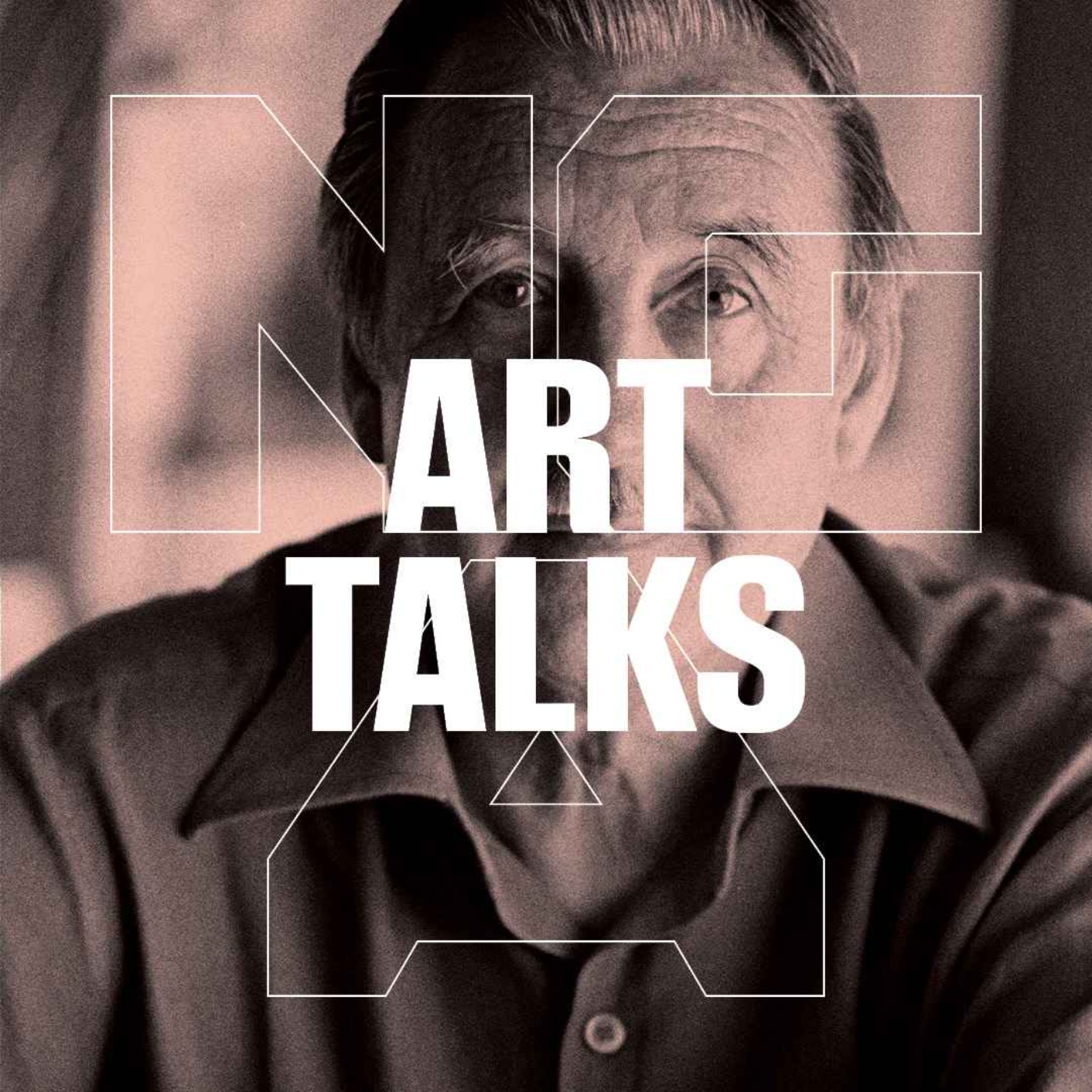
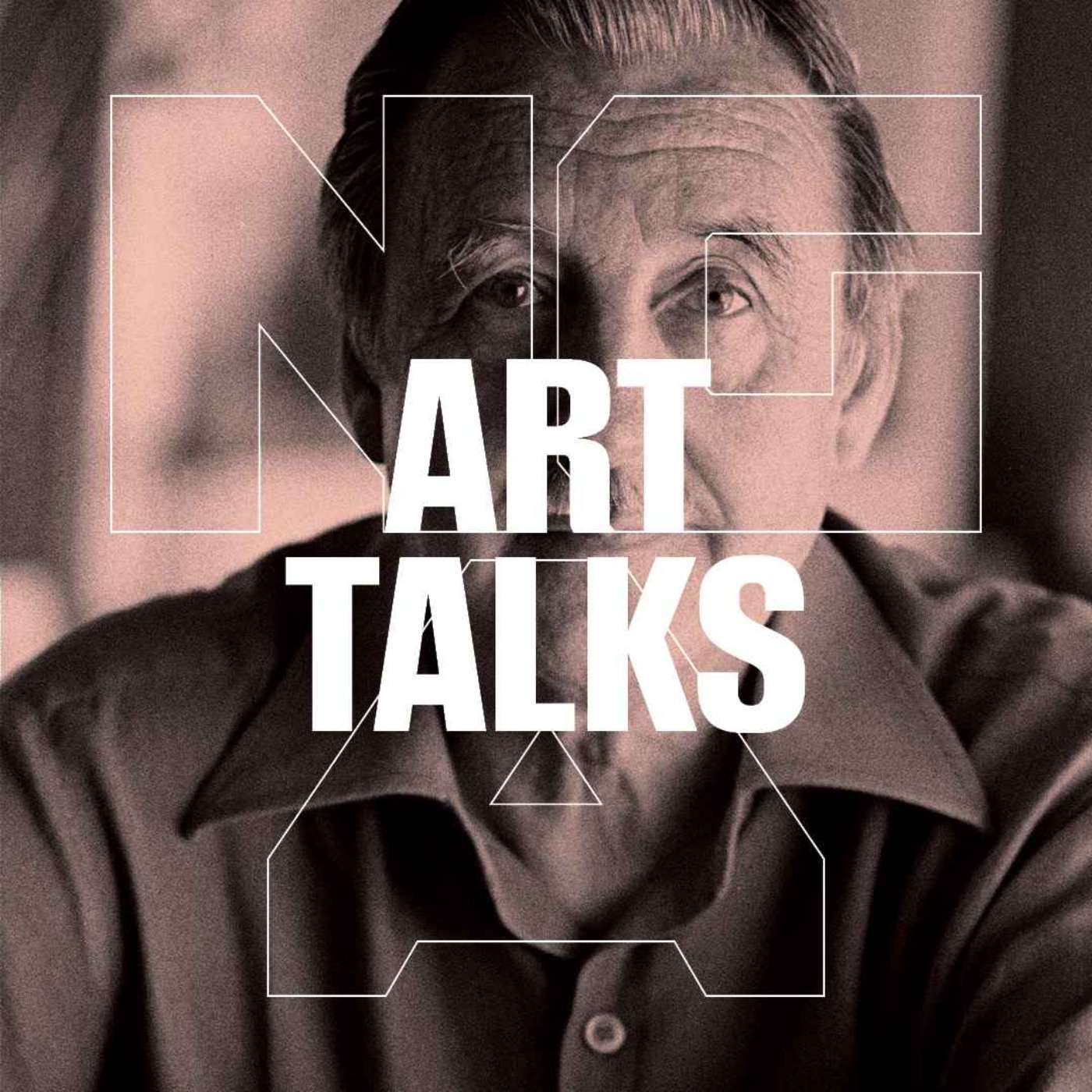
NGA Art Talks: The Gleeson Tapes (https://nga.gov.au/stories-ideas/the-gleeson-tapes/) is a new series revisiting key conversations from the James Gleeson Oral History Collection. In the late 1970s, before the National Gallery of Australia opened its doors, the surrealist artist and writer James Gleeson set out across Australia with a microphone and a mission: to build an oral history archive that captured the stories behind key works of art in the national collection, told by the artists themselves. In this episode, Gleeson visits the Trieste-born artist Stanislaus Rapotec. With his distinctively droll wit, Rapotec takes Gleeson back to his earliest brushes with art as a university student, before his studies were interrupted by war, occupation, and a stint in the underground resistance that drew him from Europe to the Middle East, and eventually, Australia. You can view Stanislaus Rapotec’s work in the exhibition Migration and Modernism: Émigré artists in post- war Australia (https:/
NGA Art Talks: The Gleeson Tapes (https://nga.gov.au/stories-ideas/the-gleeson-tapes/) is a new series revisiting key conversations from the James Gleeson Oral History Collection. In the late 1970s, before the National Gallery of Australia opened its doors, the surrealist artist and writer James Gleeson set out across Australia with a microphone and a mission: to build an oral history archive that captured the stories behind key works of art in the national collection, told by the artists themselves. In this episode Gleeson speaks with the Melbourne-born painter John Brack, who created some of the most iconic images in 20th century Australian art. Recorded across two sittings, Brack reflects on his early portraits of Melbourne life, which often depicted shop windows and domestic scenes, to later works like The battle 1981-83 which used coloured pencils to evoke themes of conflict and war. Hosted on Acast.
Public cultural institutions should present contested works with context instead of simply removing them.
Share your view, then see how readers voted. No sign-in required. This poll is shared across stories.
Do you agree or disagree?
Common Quandary
A Common Quandary to discuss
Another conversation to explore, separate from this news story.
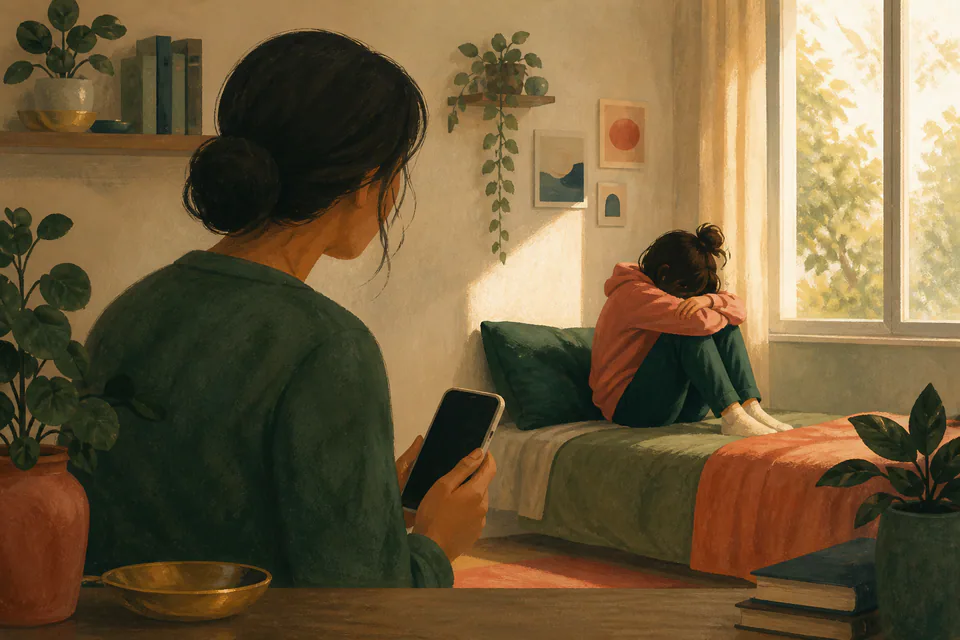
Your teenager locks you out of their phone. When is it okay to look?
Your usually outgoing sixteen-year-old has withdrawn and stopped seeing friends. They insist they are fine and refuse to talk. You know their phone passcode and could read their messages without being discovered.
How serious must a fear be before protection outranks privacy?