Listen through the publisher, then discuss the episode here or arrange an in-person Roundtable. Your city determines where to meet.
Roundtables are designed for groups of four, with a shared subject and room for everyone to speak. Come for discussion, with no dating expectation.
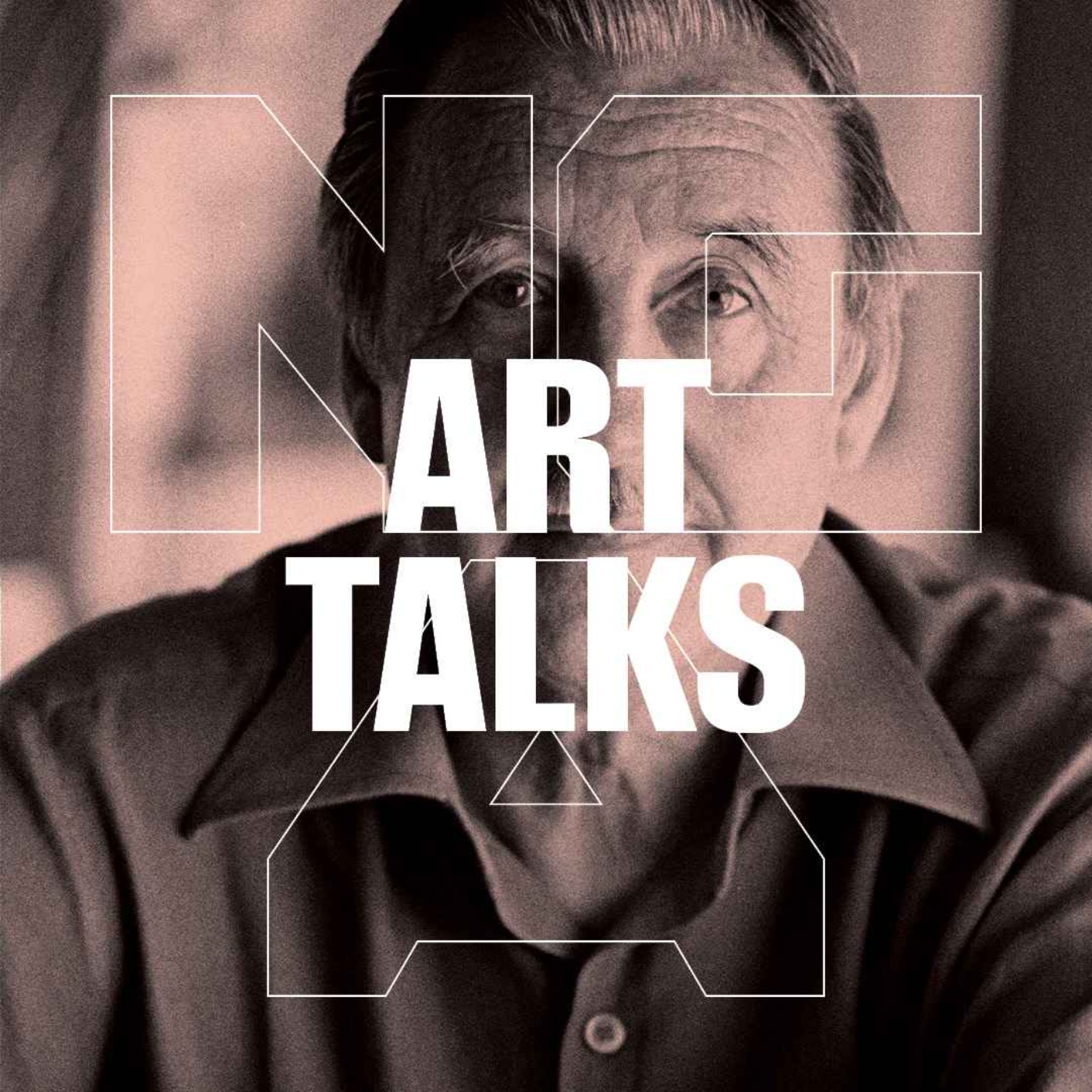
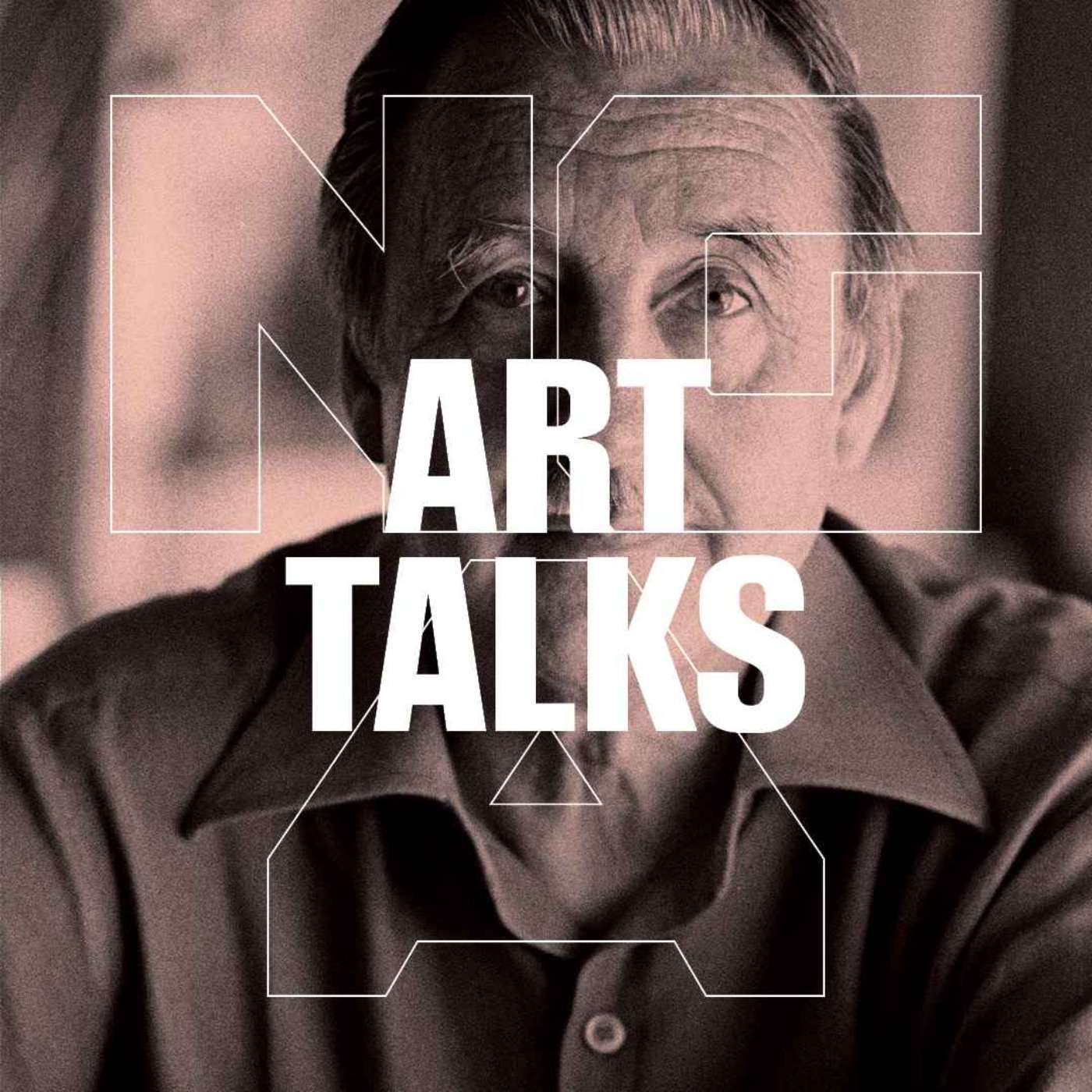
NGA Art Talks: The Gleeson Tapes (https://nga.gov.au/stories-ideas/the-gleeson-tapes/) is a new series revisiting key conversations from the James Gleeson Oral History Collection. In the late 1970s, before the National Gallery of Australia opened its doors, the surrealist artist and writer James Gleeson set out across Australia with a microphone and a mission: to build an oral history archive that captured the stories behind key works of art in the national collection, told by the artists themselves. In this episode, Gleeson visits the Trieste-born artist Stanislaus Rapotec. With his distinctively droll wit, Rapotec takes Gleeson back to his earliest brushes with art as a university student, before his studies were interrupted by war, occupation, and a stint in the underground resistance that drew him from Europe to the Middle East, and eventually, Australia. You can view Stanislaus Rapotec’s work in the exhibition Migration and Modernism: Émigré artists in post- war Australia (https://nga.gov.au/exhibitions/migration-and-modernism/), on display at the National Gallery until March 2027 Hosted on Acast.
Episode information is provided by the publisher. Listening takes place on the publisher’s service.
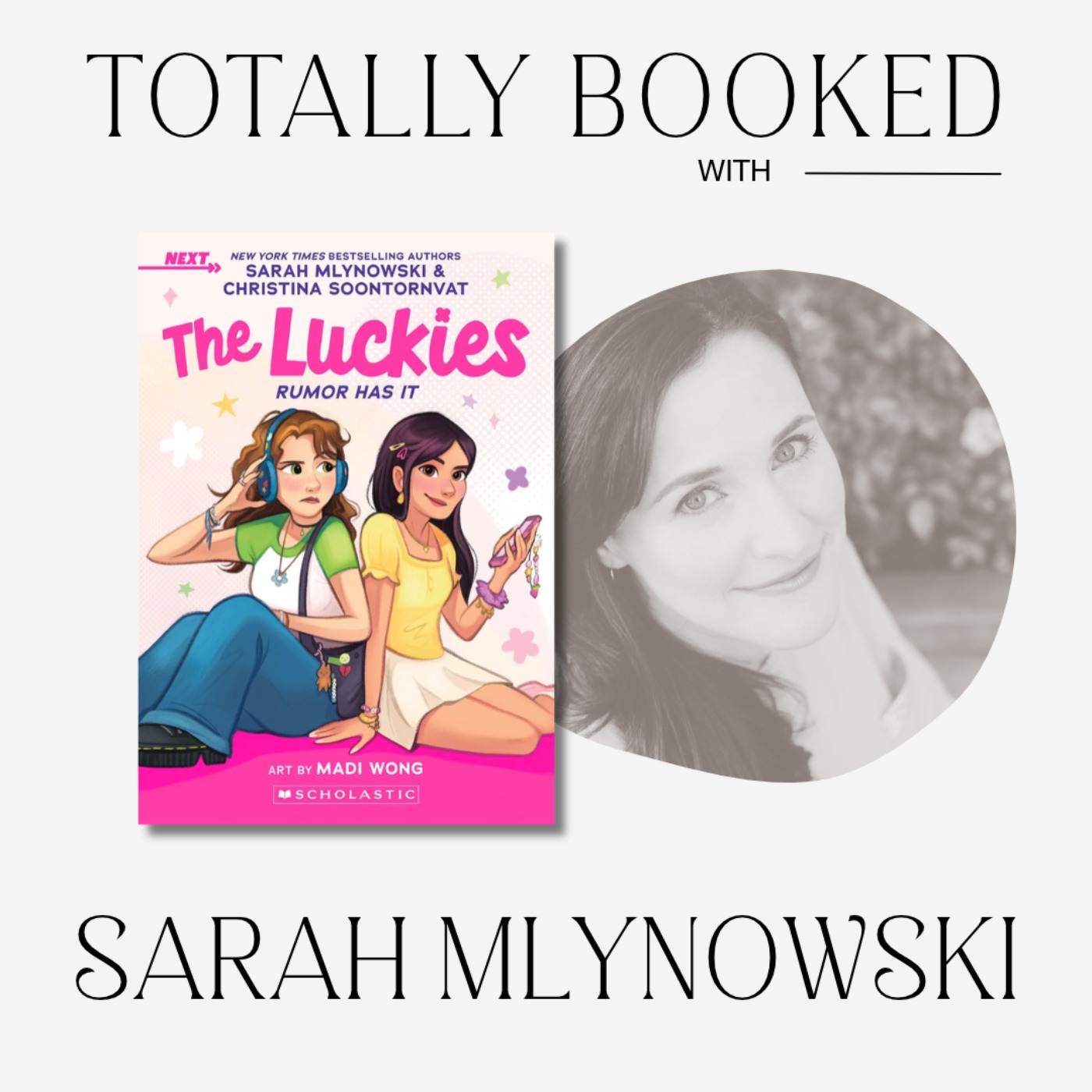
Bestselling middle-grade author Sarah Mlynowski sat down with Zibby Owens at Zibby’s Santa Monica Retreat for Book Lovers to discuss her new collaborative series with Christina Soontornvat, The Luckies: Rumor Has It. Sarah shared the story behind how a 2017 run-in at their kids’ school sparked her friendship with Zibby and led to the creation of this podcast, while reflecting on the creative joy of co-authoring across genres. She also teased her upcoming adult novel, a reimagining of Nancy Drew. Sarah opened up about losing her Palisades home in the fire and how that devastation brought her solo writing life to a sudden halt. Learn more about Sarah’s work here (https://sarahm.com/), and follow her on Instagram @sarahmlynowski (https://www.instagram.com/sarahmlynowski). You can purchase The Luckies: Rumor Has It here (https://bookshop.org/p/books/the-luckies-christina-soontornvat/25d9b09be127a1a9?ean=9798225066499). ********* A story for the messy middle. Love to listen? She narrated th
What happens when China starts exporting the know-how to build things as well as the products themselves? Economist Keyu Jin joins Intelligence Squared co-host Conor Boyle to discuss China’s long game. They explore why Chinese companies are helping other countries build their own industries, whether that creates new rivals or richer customers, and how Europe can adopt Chinese technology without becoming dependent on it. Keyu Jin is an economist and was a tenured professor at LSE for 15 years. Conor Boyle is head of programming at Intelligence Squared. ----- If you'd like to become a Member and get access to all our full conversations, plus all of our Members-only content, just visit intelligencesquared.com/membership to find out more. For £4.99 per month you'll also receive: - Full-length and ad-free Intelligence Squared episodes, wherever you get your podcasts - Bonus Intelligence Squared podcasts, curated feeds and members exclusive series - 15% discount on livestreams and in-person
One of the finest actors of his generation - Michael Sheen -breathes new life into one of Wales’s most defining stories. He stars as Owain Glyndŵrin in Owain & Henry, an epic new play by Gary Owen about a lord of a small northern land in the 15th century who rises in rebellion against King Henry IV. The production, at the Welsh Millennium Centre in Cardiff, is the second production by the new Welsh National Theatre, and Sheen co-directs as well as appears on stage. He talks to us about bringing one of Wales's most defining stories to the stage. From tombstones and altar pieces to rusty nails, battle masks, the remains of a horse and leather shoes worn by children, a new exhibition at the National Museum of Scotland in Edinburgh explores repeated attempts by the Romans to conquer Scotland. Writer and presenter Alistair Heather and writer, comedian and history fanatic Susan Morrison discuss what the artefacts they left behind reveal about that story. How can musicians collaborate with AI
James and Karla Murray have spent almost thirty years photographing the New York City that's disappearing — storefronts, bars, record stores, and now, in their new book Counter Culture (https://www.penguinrandomhouse.com/books/826863/counter-culture-by-photographs-by-james-t-and-karla-l-murray-text-by-emma-orlow/), thirty of Manhattan's diners and luncheonettes. Matt talks to the husband-and-wife duo about how a graffiti project turned into a preservation career, what actually separates a diner from a luncheonette, and the strange, sad timing of finishing a book about places hanging on — only to watch several of them close before it hit shelves. Also on the show it’s the return of Three Things where Aliza and Matt talk about visits to Cello’s Pizza (https://www.cellosnyc.com/), JinXi Dessert (https://www.jinxidessert.com/), and LaRina (https://larinabrooklyn.com/) in New York. Also, Matt is mahjong pilled and recommends the book Mastering American Mahjong (https://www.penguinrandomhous
Happy Thanksgiving from the Deadpod. Every year I try to make the holiday show an acoustic one, and this year we're going to Phoenix, Arizona, for March 8, 1970, at the Star Theatre. The room was also called the Travelodge Theatre in the Round, and it had a revolving stage. Put the Grateful Dead on a turning stage in 1970 and things are bound to get a little strange. This was a time of change for the band. Workingman's Dead was recorded but not yet released, and the Dead were just starting to work an acoustic set into their shows. The night before, in Santa Monica, they didn't play any acoustic songs at all. In Phoenix they put one right in the middle of the show, so the bonus here is that you get everything: a hot electric opening, a quiet acoustic stretch, and a finish that nobody saw coming. The tape cuts in on Cold Rain And Snow. Then there's a long technical delay, and Bob Weir tries to fill it with his rambling "Yellow Dog" story. Once they get going again, they tear into China C
In 1984, Van Halen’s hard-rock jam "Jump" crossed paths on the Hot 100 with a completely different "Jump," the Pointer Sisters’ electro-R&B bop. Eight years later, yet another “Jump,” a hip-hop banger by Kris Kross, topped the chart. In 1959, Frankie Avalon took the dreamy love ballad "Venus" to No. 1. Barely a decade later, the Shocking Blue topped the chart with an entirely different "Venus," before Bananarama took that one back to No. 1 in 1986. For as long as music has been recorded, artists have been recycling the same titles for entirely unrelated songs. On the pop charts, it's been no different. Because, let's be honest: sometimes a good title is just too good not to reuse—even a title as specific or verbose as “Best of My Love,” “How Deep Is Your Love,” “Cruel Summer,” or “Wild, Wild West.” Join Chris Molanphy as he looks at some of the quirkiest, most familiar, and most surprising song titles shared by multiple hits. For more on songs that keep coming back check out Hit Parade
In this episode Magda Keaney, Head Curator of International Art, speaks with the American photographer Catherine Opie (born 1961, Sandusky, Ohio) about her work 105 Freeway, 1994 1994/2024, recently acquired by the National Gallery. Los Angeles has been Opie’s home and subject for more than four decades, as she’s focussed her lens on the people, communities, and places around her. In 1994, she expanded her portrait of the city with a series of work devoted to its iconic network of freeways. In this conversation, recorded between Kamberri/Canberra and Opie’s studio in Los Angeles, Opie explains how she sought to capture these freeways – both part of her lived experience, and modern-day monuments – as sites of connectivity as well as division, nostalgia, history and beauty. 105 Freeway, 1994 1994/2024 appears in the upcoming exhibition Full Throttle (https://nga.gov.au/exhibitions/full-throttle/), on display at the National Gallery from 5 Dec 2026 – 11 Apr 2027. Hosted on Acast.
NGA Art Talks: The Gleeson Tapes (https://nga.gov.au/stories-ideas/the-gleeson-tapes/) is a new series revisiting key conversations from the James Gleeson Oral History Collection. In the late 1970s, before the National Gallery of Australia opened its doors, the surrealist artist and writer James Gleeson set out across Australia with a microphone and a mission: to build an oral history archive that captured the stories behind key works of art in the national collection, told by the artists themselves. In this episode Gleeson speaks with the Melbourne-born painter John Brack, who created some of the most iconic images in 20th century Australian art. Recorded across two sittings, Brack reflects on his early portraits of Melbourne life, which often depicted shop windows and domestic scenes, to later works like The battle 1981-83 which used coloured pencils to evoke themes of conflict and war. Hosted on Acast.
Allegations should not be treated as proven until a fair process establishes the facts.
Share your view, then see how readers voted. No sign-in required. This poll is shared across stories.
Do you agree or disagree?
Common Quandary
A Common Quandary to discuss
Another conversation to explore, separate from this news story.
A disgraced billionaire's name is on the beloved campus library. Does it come down?
A major donor funded a beloved public building decades ago. New evidence shows they also caused serious harm that was legal and accepted by many peers at the time. Removing the name may jeopardize future donations.
What does an institution owe the truth when its history funded the present?