ChatGPT's Chore Test, Anthropic's AI-Builds-AI Warning, and a $115B Bet
21 min
Listen through the publisher, then discuss the episode here or arrange an in-person Roundtable. Your city determines where to meet.
Roundtables are designed for groups of four, with a shared subject and room for everyone to speak. Come for discussion, with no dating expectation.
OpenAI unveils LifeVal, a benchmark for whether ChatGPT can handle real-life tasks like school enrollment and home searches, and pledges its data centers will cut power use when the grid is strained. Anthropic's updated IPO filing reports about $17 billion in quarterly revenue and warns it may soon cross its own line for AI-accelerated AI research. Plus: The New York Times and three other papers sue Brave over scraped journalism sold to AI companies, and Marvell's $115 billion deal for Lumentum bets on light-speed connections inside AI data centers. This episode includes AI-generated content.
Episode information is provided by the publisher. Listening takes place on the publisher’s service.
Researchers modelled 20 years on Australia's main power grid, using Queensland as the test case. I explain the comparison in words: replace every new wind and solar farm with coal or gas generation. For electricity buyers, the finding challenges the claim that avoiding renewables would have kept power cheaper.
A wave of major technology outages is raising troubling questions about America's cybersecurity, aging infrastructure, and readiness for a new era of artificial intelligence. Are these isolated technical failures, or warning signs of a much larger national security problem? John Solomon and Amanda Head welcome Ohio Congressman and former Army Ranger Warren Davidson, who discusses recent disruptions involving the FAA, Microsoft, and other critical systems. Davidson calls for greater transparency from government agencies and technology companies, questions whether America's infrastructure is adequately protected against emerging cyber threats, and examines how artificial intelligence could be used both to strengthen defenses and exploit vulnerabilities. The conversation also turns to immigration and national security, with Davidson raising concerns about individuals who entered the country illegally, potential gaps in government screening systems, and the surveillance powers used to moni
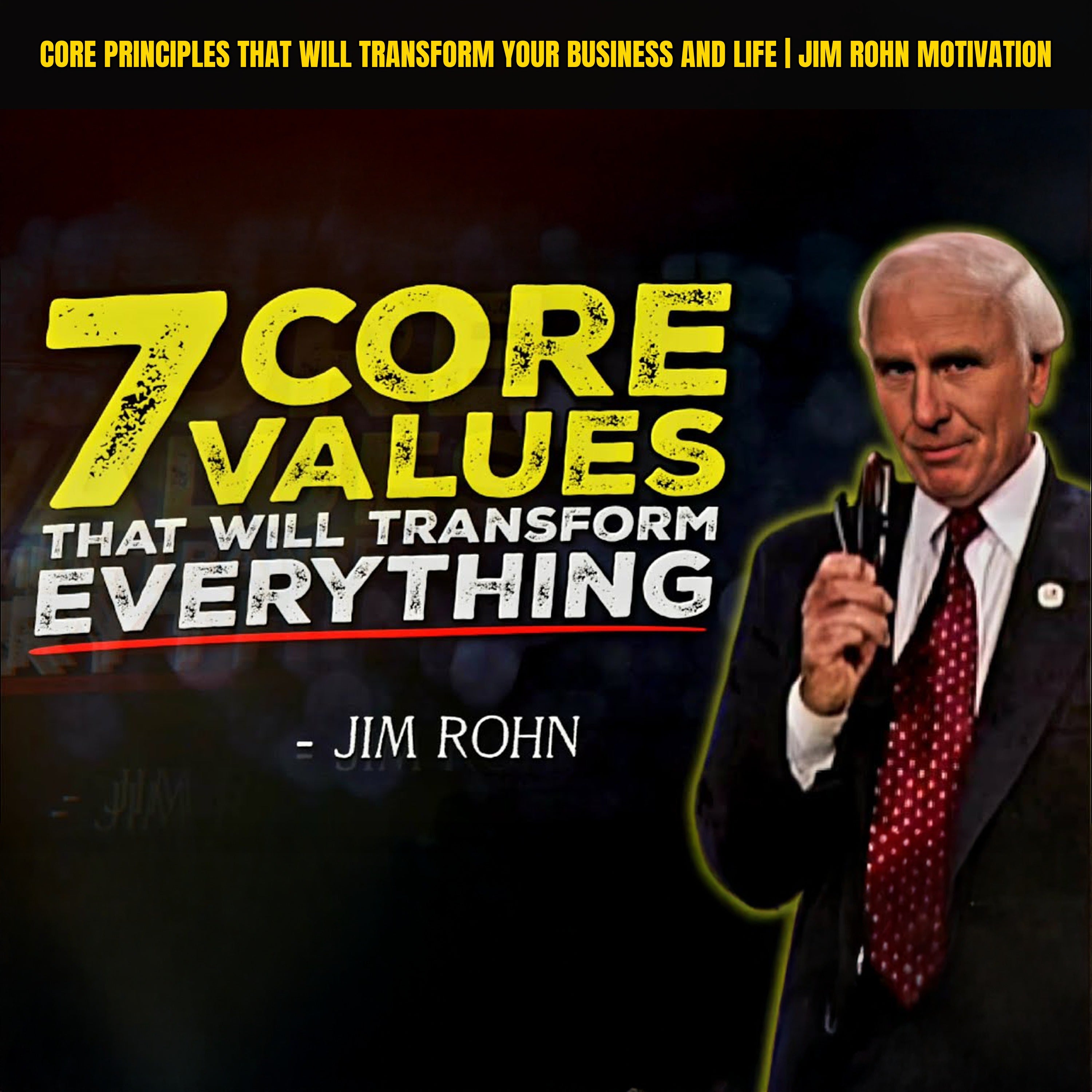
We dive deep into the 7 Core Values that transform not just leadership—but life. From integrity to courage, this message reminds us that success isn’t just about performance. It’s about principle. When your values lead, your results follow. Key Topics From This Motivational speech: Why integrity is the foundation for trust and influence How responsibility shifts you from blame to power Why discipline is the difference between vision and results How humility unlocks wisdom and real leadership Why adaptability is essential for growth in uncertain times How generosity builds impact, not just income Why courage is required to move before you're ready This Jim Rohn motivational speech isn’t about hype—it’s about the habits and values that hold you up when motivation fades. If your results feel unstable, start with your values. Because when those are clear, your actions have direction, your leadership has depth, and your business has backbone. These values don’t shift under pressure—they lea
We’re about to time travel into the future Sam Altman is building… I interviewed Sam Altman, the CEO of OpenAI, the company behind ChatGPT. They’re trying to build a “superintelligence” that could far exceed humans in almost every field – and they just released their most powerful tool yet, GPT-5. A few years ago, that would’ve sounded like science fiction! Not anymore. In fact, they’re not alone. We’re in the middle of the most high stakes global race any of us have ever seen. Hundreds of billions of dollars and an unbelievable amount of human work… It’s a profound moment. Most people never see a huge technological shift like this in their lives and it’s happening all around us right now. So in this conversation, I’m going to try to time travel into the future with Sam Altman, to see what he’s trying to build… so you and I can really understand what’s coming. Welcome to HUGE* Conversations. Chapters: 0:00 What future are we headed for? 2:06 What can GPT-5 do that GPT-4 can’t? 6:57 Wha
Bitcoin doesn't excite Ran Neuner anymore, and the Crypto Banter founder explains where he sees the real opportunity in crypto now. Ran tells me why he took profits at $84K, how he's deploying that cash now that sentiment has hit extreme fear, and the two tests he's watching to tell whether the bull market is still on. He explains why he thinks tokenized stocks and AI agents will run on blockchain rails, how he values tokens on "pressure" instead of FDV, why he thinks the old Bitcoin crowd is moving to Zcash, and how worried he really is about quantum. We also get into the midterms, World Liberty Financial, Solana Breakpoint and STRC. Recorded Thursday, November 19. In this episode: 00:00 Intro 01:10 Is the bull market still on? 02:17 What a correction is supposed to do 03:28 Two tests for the bull market 04:12 Why Bitcoin excites Ran less now 05:11 Trading tokenized Anthropic before the IPO 07:24 How AI agents will move your money 09:31 Why agents will settle on blockchain rails 13:25
A.I. for Starting to Exercise: Building a Routine That Actually Sticks, a practical, beginner-friendly look at how artificial intelligence can help you build a routine that actually sticks this time. Starting to Exercise? Press play on Episode 429 of A.I. for Beginners and learn exactly how artificial intelligence, especially ChatGPT, alongside Nike Training Club, can help you build a routine that actually sticks this time. WHAT YOU WILL LEARN IN THIS EPISODE - Why starting to exercise is so hard to handle alone, and what is actually going on underneath it - A specific way to use Nike Training Club to work through it, step by step - An example prompt you can copy word for word: "Here is my current fitness level and schedule, help me build a realistic beginner routine" - A second practical technique, with another ready-to-use prompt: "Give me a simple way to track my progress that doesn't rely on willpower alone" WHO THIS EPISODE IS FOR - Anyone currently working on starting to exercise
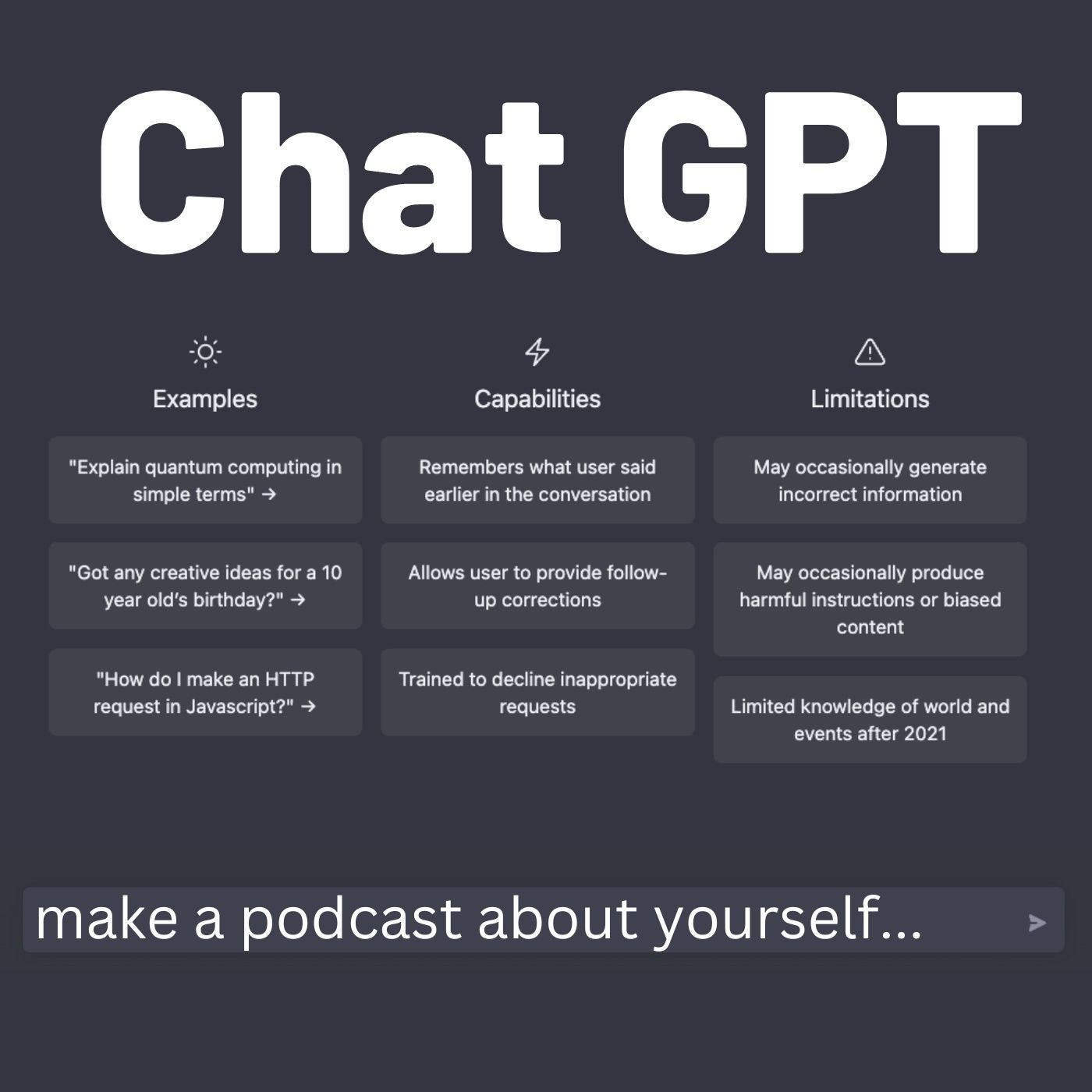
ChatGPT launched as a quiet "research preview" whose own staff badly underestimated how popular it would be, and it became one of the fastest-growing apps in history. We tell the seven-year story behind it, from a nonprofit with a big mission through GPT-1, GPT-2, GPT-3, and the training trick that taught a model to follow instructions. Then we explore why the chat interface mattered as much as the technology, and how one launch set off a "code red" at Google and an industry-wide race. This episode includes AI-generated content.
In 2017, eight researchers, most of them at Google, published a paper with a catchy title and a radical idea: throw out the old way of processing language and rely on "attention" instead. We explain in plain language how attention lets an AI weigh every word against every other word, why the design made giant models like GPT possible, and how the "T" in ChatGPT traces back to a paper about translation. Plus the irony of history: Google invented the transformer, but OpenAI turned it into a household name. This episode includes AI-generated content.
OpenAI is merging ChatGPT's Chat and Work modes and putting ChatGPT and Codex on one metered token allowance, while planning a post-midterm push in Washington and signing government deals in Abu Dhabi. We also look at Nvidia's reported plan to guarantee debt on Anthropic's West Virginia data center, the banks and retailers shutting out personal AI agents like Meta's Muse, and China's AI moves as Apple brings Qwen into Siri and DeepSeek open-sources an always-on agent design. This episode includes AI-generated content.
Products should disclose expected service life and repairability before purchase.
Share your view, then see how readers voted. No sign-in required. This poll is shared across stories.
Do you agree or disagree?
Common Quandary
A Common Quandary to discuss
Another conversation to explore, separate from this news story.
A coworker tells you their salary in confidence—and proves everyone else is underpaid. Do you share it?
A coworker privately tells you their salary and asks you not to repeat it. You later realize the figure is strong evidence that several equally experienced colleagues are being underpaid.
When does fairness outweigh a promise of confidentiality?