Chicks in the Office on Their Biggest Fight and Being Women at Barstool
58 min
Listen through the publisher, then discuss the episode here or arrange an in-person Roundtable. Your city determines where to meet.
Roundtables are designed for groups of four, with a shared subject and room for everyone to speak. Come for discussion, with no dating expectation.
Ria and Fran have spent ten years and 1,000 episodes building Chicks in the Office together at Barstool Sports, and they’re still best friends. Carl sits down with his friends to talk about what makes them such a great team, from starting out as interns to building a show side by side. They get into why women still get pitted against each other, the only real fight they’ve had in a decade, and what it’s like to cover reality stars who’ve become their friends, Carl included. Ria also opens up about her OCD in a way she hasn't on her own show, including the spirals where she was sure the show was over, living with endometriosis, and learning to stop letting mean comments get to her. Plus: how they almost ended up on The Amazing Race instead, and why Glen Powell is the real deal. It’s a conversation about what it really takes to build something with your best friend, and still like each other at the end of the day. Episode Sponsors: Base44: Build the real thing with Base44. Describe the software you need in your own words and get a working build. Talkiatry: Head to Talkiatry.com/LIFE to complete a short assessment and get matched with an in-network psychiatrist in just a few minutes.
Episode information is provided by the publisher. Listening takes place on the publisher’s service.
Imagine if every big change in our lives came with a whole community stepping up beside us… In this episode, I sit down with Dr Arne Rubinstein, former GP and emergency doctor, founder of the Rites of Passage Institute, and a man who's spent more than 30 years walking young people across the threshold into adulthood. Arne's work began around a fire at his very first men's gathering, listening to a hundred men wrestle with the same handful of wounds. Then in the Emergency Dpt, he kept meeting teenagers who'd pushed it one step too far... kids trying to become adults with nobody there to hold them. He came to believe every young person will go through a rite of passage either way. The question is whether we leave them to create their own, or gather around and help. We talk about why our culture is so good at turning away from the big moments - from first periods to menopause to death - and what opens up when we turn towards them. We explore: Separation, transformation and integration, an
Today, Mel is taking 58 years of hard-earned life lessons and is packing them into under an hour, to save you some of the time, frustration, and worry it took her to learn them the hard way. In this episode, Mel is fielding real questions from listeners around the world. From making friends and bouncing back from rejection to feeling stuck in life and wondering if it's all going to work out, Mel is sharing the advice she wishes she'd known sooner. And she's not holding back. You'll hear Mel get personal about her own setbacks, and what she's learned about starting over, going after what you want, and trusting yourself when life doesn't go according to plan. You'll learn: -How to stop worrying about the future when nothing feels certain -How to make big life decisions, including whether or not to have kids -How to make new friends as an adult -What to do when you get rejected from your dream job -What to do when a friend ghosts you -How to stop procrastinating and finally follow through
You think you're hearing wisdom. You're hearing fear that spent a lifetime learning to sound like wisdom. Uploaded 11-05-26 When you were a kid afraid of the water, fear was honest about being fear. Somewhere along the way it got promoted — started speaking in complete sentences, making cases, passing for the smart move. This seminar breaks down the 4 disguises fear puts on so it can pass for common sense — and the practice that lets you catch each one in the act. CHAPTERS: 0:33 When You Were a Kid, Fear Was Honest 5:27 Disguise #1 — The Timing Argument 6:28 Disguise #2 — The Inadequacy Argument 7:40 Disguise #3 — The Consequence Argument 8:52 Disguise #4 — The Responsibility Argument 10:20 The Invisible Cost of Listening to Fear 14:39 The Slow Drift Into Spectator Life 16:27 How to Catch Fear in the Act (4 Tests) 21:54 The Practice of Deciding on Purpose 24:09 Name the Fear Before It Names the Decision THE 4 DISGUISES ▸ TIMING — "Not the right moment. Need a little more prep first." W
This week on The Necessary Conversation, it's Chad, Haley, and Mary Lou. Bob is still recovering but sent in a video message about Trump calling Putin his friend that we watch together. 🇷🇺 Trump held the first-ever three-way talks with Putin and Xi, called it a "12 out of 10," and produced nothing. Then at a press conference he called Putin his friend — and when asked if Putin is a friend to America, the president of the United States said, "I can't speak to America." That same day, Trump's friend Putin launched massive strikes into Ukraine, hit Poland with two missiles — an act of war against a NATO ally — then struck near a Ukrainian restaurant and drone-bombed the first responders, killing a 7-year-old child and a 20-year-old paramedic. We watch Bob's video and ask Mary Lou: is Russia our friend? 🇨🇳 The House Foreign Affairs Committee revealed Trump's Commerce Department approved nearly 880,000 advanced AI chips for Chinese military-linked companies including Alibaba, Tencent, a
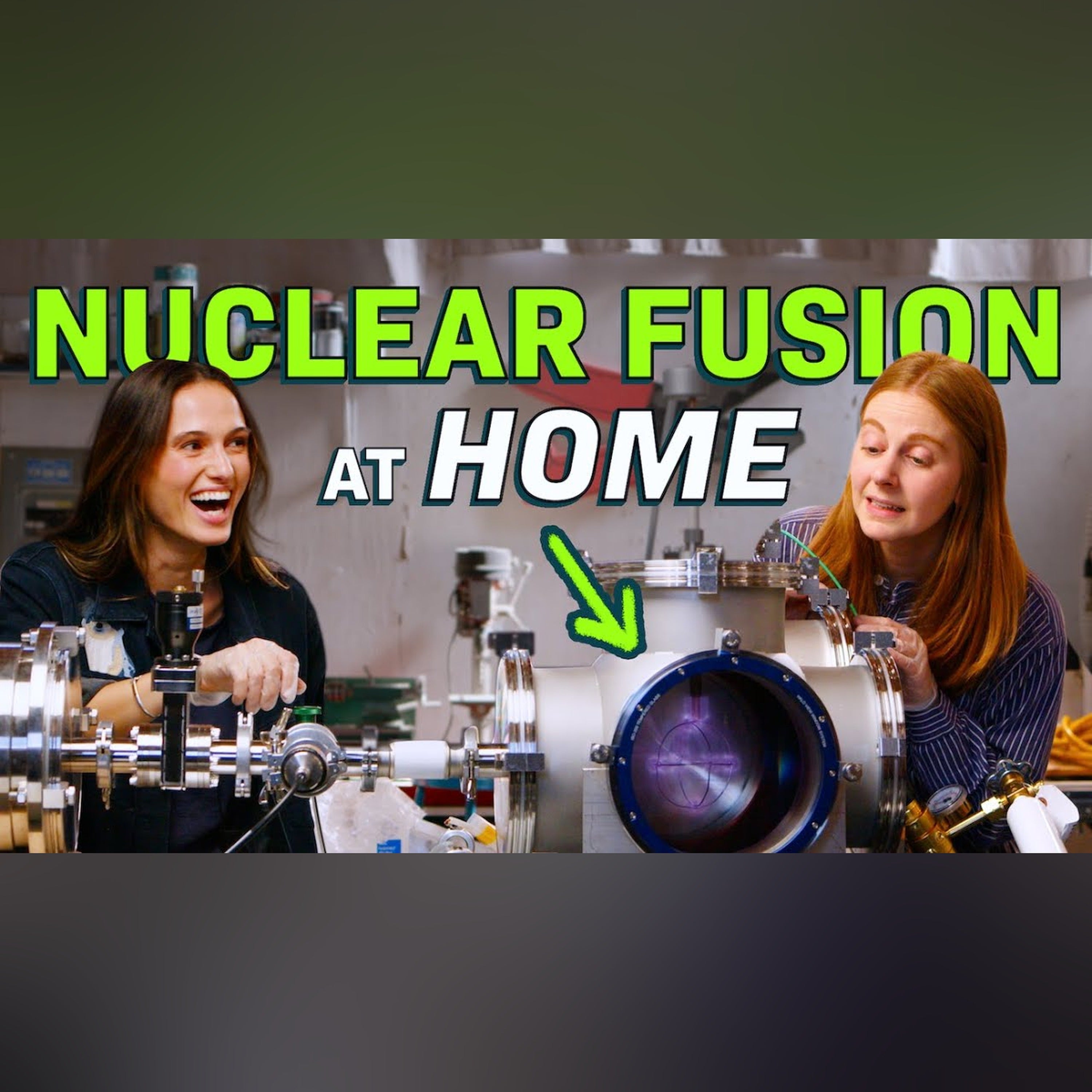
We attempted nuclear fusion. In Simone’s workshop. Disclaimer: This build was supervised by experts at Helion. Do not try this at home. I still can’t believe this video really happened. Back in May, I interviewed Helion CEO David Kirtley. I was trying to understand nuclear fusion: Is nuclear fusion possible now? How does fusion actually work? And most importantly, is nuclear fusion the future? Then, at the end of the interview, I asked David about headlines I’d seen about people building nuclear fusion devices in their backyards - what were they doing? “Oh,” David replied, “you can build one.” What followed is the biggest adventure yet on Huge If True. Together with the team at Helion and my friend fellow YouTuber Simone Giertz, we BUILT A NUCLEAR FUSION DEVICE to show how nuclear fusion works, what the big remaining challenges are, and how it might help us all in the future. Then, the last step was to try to turn it on… WATCH "FUSION, EXPLAINED: PART 1" HERE: https://youtu.be/piPbnKdv
Why is the manosphere so appealing to young men? What does it actually mean to be a good man? To join our journaling club, with 10,600 + others, subscribe to my imperfect email - https://www.theimperfects.com.au/sign-up-to-our-newsletter/ Journalist Marc Fennell joins us in the studio to talk about the manosphere: what is it? what are its consequences? and how can we talk to our kids about it? Marc explores with Hugh, Ryan and Josh why the manosphere is so appealing to young men, especially those who think they have little value to offer, and Josh questions what his reaction would have been, if he had of been exposed to the manosphere at a vulnerable time. We look at ‘toxic masculinity,’ and the impact of being right versus making change, and in a moment of vulnerability, Marc discusses the importance of self reflection of your own behaviour. Chapters: Chapters 00:00:00 – Marc Fennell on the Manosphere [TRAILER] 00:01:01 – Ryan’s doppelganger (and media buff etc) 00:04:24 – The State o
Carl spent years reading Yung Pueblo’s posts during his darkest moments, without knowing the story behind them. Before he became the bestselling poet followed by millions, Yung Pueblo was hiding an addiction to drugs and alcohol behind good grades, until one night left him convinced he was going to die. Now 10 years sober, Yung Pueblo sits down with Carl to share how he climbed out of rock bottom, how Vipassana meditation changed his life, and what 60 days in total silence taught him about recovery and inner peace. They also get into being social without drinking, breaking the people-pleasing habit, and why redefining masculinity starts with men paying attention to their emotions. Yung Pueblo’s new book, Journey: The Year That Changes Everything (https://www.amazon.com/dp/B0GN5MN8YX?channelId=500&lv=shuf&plpRedirect=mhFallback), is out now. Follow Yung Pueblo: @yung_pueblo (https://www.instagram.com/yung_pueblo/?hl=en) Follow Carl: @carlradke (https://www.instagram.com/carlradke/?hl=en
The Real Housewives of New Jersey star and The Traitors Season 3 winner Dolores Catania has built a reputation as the friend who will show up for you at three in the morning — and she wouldn’t have it any other way. On this episode of More Life, Dolores reflects on the life lessons that shaped her, from learning that holding onto anger only hurts you to understanding that no job is beneath you when it’s time to get back on your feet. Growing up in Paterson, New Jersey, in a home where emotions weren’t openly discussed, Dolores learned to be tough early. Before joining the Housewives, she worked in a jail — and she opens up about how those experiences shaped the woman she is today. She also gets real about divorcing while pregnant, maintaining a close family with her ex, what she’d tell her Season 1 self, and why Carl could use a little tough love. Plus, Dolores shares the charitable organizations close to her heart, including St. Joseph’s Children’s Hospital (https://stjosephshealth.or
Long-term public borrowing should account for the burden placed on future generations.
Share your view, then see how readers voted. No sign-in required. This poll is shared across stories.
Do you agree or disagree?
Common Quandary
A Common Quandary to discuss
Another conversation to explore, separate from this news story.
A stranger is behaving horribly in public. Do you record them?
You witness a stranger berating a service worker in public. Recording could create accountability and protect the worker, but posting the video could expose everyone involved to a permanent online audience.
Who gets to decide when public behavior becomes public content?