Christa Pike: Can Tennessee Execute Her Again? | Cruel and Unusual- Part 2
55 min
Listen through the publisher, then discuss the episode here or arrange an in-person Roundtable. Your city determines where to meet.
Roundtables are designed for groups of four, with a shared subject and room for everyone to speak. Come for discussion, with no dating expectation.
Tennessee tried to execute Christa Pike. She survived. Now comes a question with no simple answer: Can the state try again? In Part 2 of Cruel and Unusual, Tyrella and Nikita examine what the Eighth Amendment actually prohibits, what the Supreme Court has said about botched executions, and what happened to other people who survived an execution attempt. From Willie Francis, whose electric chair failed in 1946, to Romell Broom, Doyle Hamm, and Kenneth Smith, these cases reveal just how complicated the law becomes when an execution doesn't go according to plan. But Christa Pike's situation may be different. She reportedly survived after receiving the lethal injection drugs themselves, raising questions that previous cases haven't fully resolved. We examine the legal challenges, the medical ethics, the state's responsibilities, and what another execution attempt could mean for Pike and for Colleen Slemmer's family. Does a death sentence give the government unlimited attempts to carry it out? And is the punishment only the death itself—or does the experience of being executed count, too? You don't have to sympathize with Christa Pike to ask whether the government should be held accountable for how it carries out a death sentence. Listen to Part 1 first for the full story of Tennessee's failed execution attempt. New to This Feels Criminal? Hang with us: Like Us on Facebook (https://www.facebook.com/killerqueenspod/) Bonus Episodes (http://www.patreon.com/killerqueenspod)
Episode information is provided by the publisher. Listening takes place on the publisher’s service.
Matthew Farwell’s conviction settled the federal case against him. It did not settle what may have happened to evidence, what other officers knew, or how many cases depended on his work as a Stoughton police detective. Tony Brueski is joined by retired FBI agents Jennifer Coffindaffer and Robin Dreeke to connect two questions that belong together: could there be more arrests in the Sandra Birchmore case, and should prosecutors review the cases Farwell once investigated? These are not the same question, and neither has an automatic answer. William Farwell, Matthew’s twin, testified under federal immunity. Former Stoughton deputy chief Robert Devine has contested an oversight board’s findings concerning the “Marty Riggs” Facebook account, saying he was hacked. Neither has been charged in Sandra’s death. Coffindaffer lays out what investigators would need: corroborated communications, authenticated account access, consistent timelines and proof of each person’s conduct. Knowing somebody i
Join NCI University today to master human behavior and influence: Uploaded 05-11-21 This is a dive to discover the possibilities, not the case itself. Sirhan Sirhan, in full Sirhan Bishara Sirhan, (born March 19, 1944, Jerusalem), Palestinian-born Jordanian citizen who was convicted (1969) of fatally shooting U.S. Sen. Robert F. Kennedy on June 5, 1968. He received the death penalty, but the sentence was later commuted to life. Sirhan, a Christian Palestinian, was born in Jerusalem. In 1948 Jordan took control of East Jerusalem and what is now the West Bank, and the following year it granted citizenship to people living in those areas. It is believed that this is how Sirhan became a Jordanian citizen. In the 1950s, he and his family moved to the United States and eventually settled in Pasadena, California. There he attended Pasadena City College and later held odd jobs, notably working at a horse stable and later at a health food store. During this time, Sirhan became vocal in his oppo
As a young mother preparing for her first baby, she was delighted when her husband's grandparents offered her an old oak rocking chair. After stripping away layers of paint and restoring it, she placed it in the living room, where she spent countless nights rocking her newborn son. But soon, she began hearing the chair's unmistakable creaking long after everyone had gone to bed. Her husband never found anything unusual, yet the sound continued. Then one night, she woke on the couch to hear the chair rocking behind her—and caught a glimpse of something heartbreaking. Unable to live with the experience, she returned the chair to the grandparents. Their strangely unsurprised reaction, followed by something they revealed about its history, raised an unsettling question: Had another mother's grief remained attached to the chair all those years? #RealGhostStoriesOnline #HauntedRockingChair #HauntedAntiques #HauntedObjects #GhostlyApparitions #SpiritAttachments #ParanormalEncounters #HauntedF
Could an AI model ever be conscious? And if it could, how would we know? The Interface hosts, Thomas Germain and Jessica Maddox, unpack the theories with philosopher Jeff Sebo, director of the Center for Mind, Ethics, and Policy at New York University. Jeff does not claim that AI is conscious, and he is clear that nobody knows. His case is that the possibility is serious enough to study properly and prepare for now, rather than scrambling after the fact, as we did with animals and the climate. Along the way, he explains what consciousness and sentience actually mean, why “it’s just software” is not the end of the argument, and why the idea makes so many people so angry. Tom and Jess push him on the big objections - shouldn’t we fix problems impacting humans first, and can we trust AI companies to answer any of this?
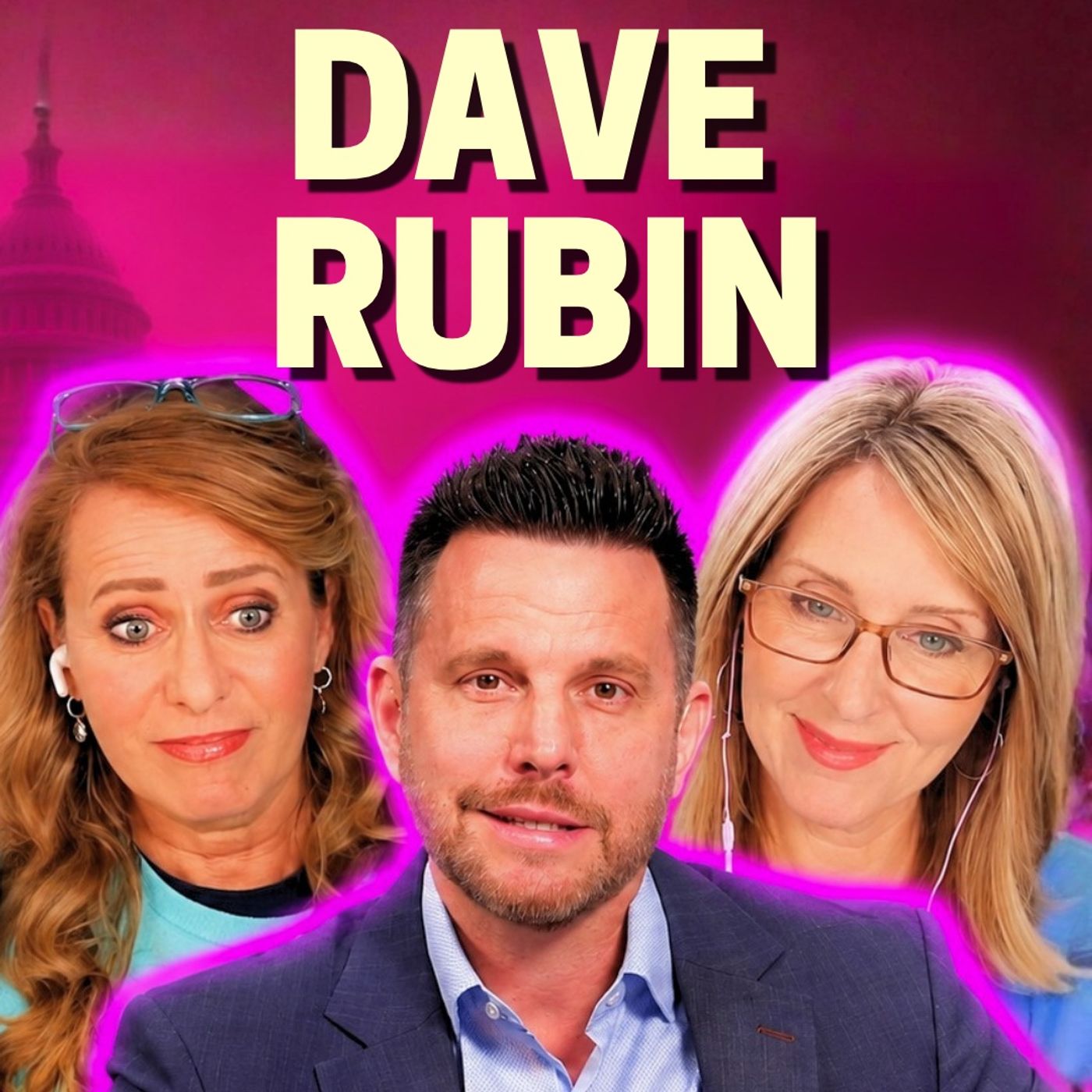
Is the Republican Party heading for a major reckoning in 2028? Dave Rubin joins The Chicks on the Right for a brutally honest conversation about Trump's final two years, the future of the GOP, and the growing divisions threatening conservatives. Dave weighs in on the Republican Party's recent election losses, whether JD Vance, Marco Rubio, or Ron DeSantis can carry Trump's agenda forward, and why he's increasingly concerned about the political direction of America. The conversation heats up as Dave takes on Nick Fuentes, the rise of extremist voices on the right, and the socialist movement gaining influence within the Democratic Party. He also discusses radical Islamism, antisemitism, the dangers of online outrage, and why he believes Western civilization faces serious challenges. Plus, with cyberattacks, banking disruptions, and nationwide outages raising concerns, Dave shares his thoughts on whether Americans should be preparing for more chaos. And don't miss the lighter side of Dave
They broke up with you. They stopped reaching out. Maybe you finally started to move on. And then, just when you were beginning to feel like yourself again, their name appeared on your phone. Why do exes have a habit of coming back, often when we're finally getting over them? The temptation is to believe they've realized what they've lost. That they miss you, regret their decision, and are finally ready to give you the relationship you wanted. But missing someone and being ready to build a relationship with them are two very different things. In this episode, I break down five reasons an ex might come back after a breakup, from loneliness and the need for validation to genuine regret and a desire to try again. More importantly, I share three principles to follow before giving someone a second chance, how to tell the difference between promises and real change, and what to look for so you don't end up repeating the same heartbreak. Before you let someone back into your life, make sure y
"I can say with 100% confidence I was raped." Those were Jane Doe's words to Cornell University Police. But when the district attorney explained why no criminal charges had been filed, he characterized her signed statement as describing sexual activity that was voluntary, conscious, and consensual. Then a much longer police interview became public. The prosecutor said he'd never seen it. In Part 2, Tyrella and Nikita examine the six-page statement at the center of the controversy, the evidence behind the decision not to prosecute, and why Cornell's own investigation reached very different disciplinary outcomes. What does New York law actually require to establish a sexual offense? How does that differ from a university's consent policy? And what happens when two institutions examine the same night but answer fundamentally different questions? With the case reopened and institutional decisions under renewed scrutiny, the Cornell 7 story raises a question much bigger than one fraternity
At 1:42 a.m., a message appeared in a fraternity group chat at Cornell University. What was happening inside that house—and how many people knew? In October 2024, a Cornell student known as Jane Doe went to the Chi Phi fraternity house to spend time with someone she trusted. What followed would become the subject of a sexual assault investigation, university disciplinary proceedings, and a lawsuit naming seven fraternity members. But the story is far more complicated than a single allegation. There are conflicting accounts of consent, messages sent while the night was still unfolding, people who entered and left the room, and questions about who witnessed what—and whether anyone should have intervened. In Part 1, Tyrella and Nikita reconstruct the night through Jane Doe's statements, the men's accounts, text messages, and investigative records. Because this case isn't just about what allegedly happened inside one room. It's about how many people can be present—and how differently they
Erica Kinsman accused Florida State quarterback Jameis Winston of rape. As she fought to have her allegation taken seriously, Winston became one of the biggest stars in college football—and won the Heisman Trophy. Winston maintained that their encounter was consensual. Prosecutors declined to bring criminal charges. But the questions surrounding the investigation, the university's response, and the treatment of Kinsman didn't disappear. In Part 2 of our examination of The Hunting Ground, Tyrella and Nikita revisit Erica's account and explore what happens when a sexual-assault allegation involves a celebrated college athlete. Then we go beyond the documentary. What did federal investigators actually find at UNC? What happened at Baylor? How do universities balance the rights of complainants and accused students? And have changes to Title IX made campuses safer—or simply changed the way these cases are handled? We also examine the difference between an allegation, a criminal charge, a un
Local gatherings should prioritize relationships over attendance numbers.
Share your view, then see how readers voted. No sign-in required. This poll is shared across stories.
Do you agree or disagree?
Common Quandary
A Common Quandary to discuss
Another conversation to explore, separate from this news story.
Your carry-on fits only if you sit on it. Do you try the airport sizer?
Your suitcase is slightly larger than the airline allows, although it has fit overhead on previous flights. Checking it costs extra and risks missing a connection. Other passengers have equally questionable bags and staff are checking inconsistently.
Does uneven enforcement weaken a traveler's duty to follow the rule?