English-language podcasts

Chase Hughes: Behavior, Influence, Lies & Interrogation

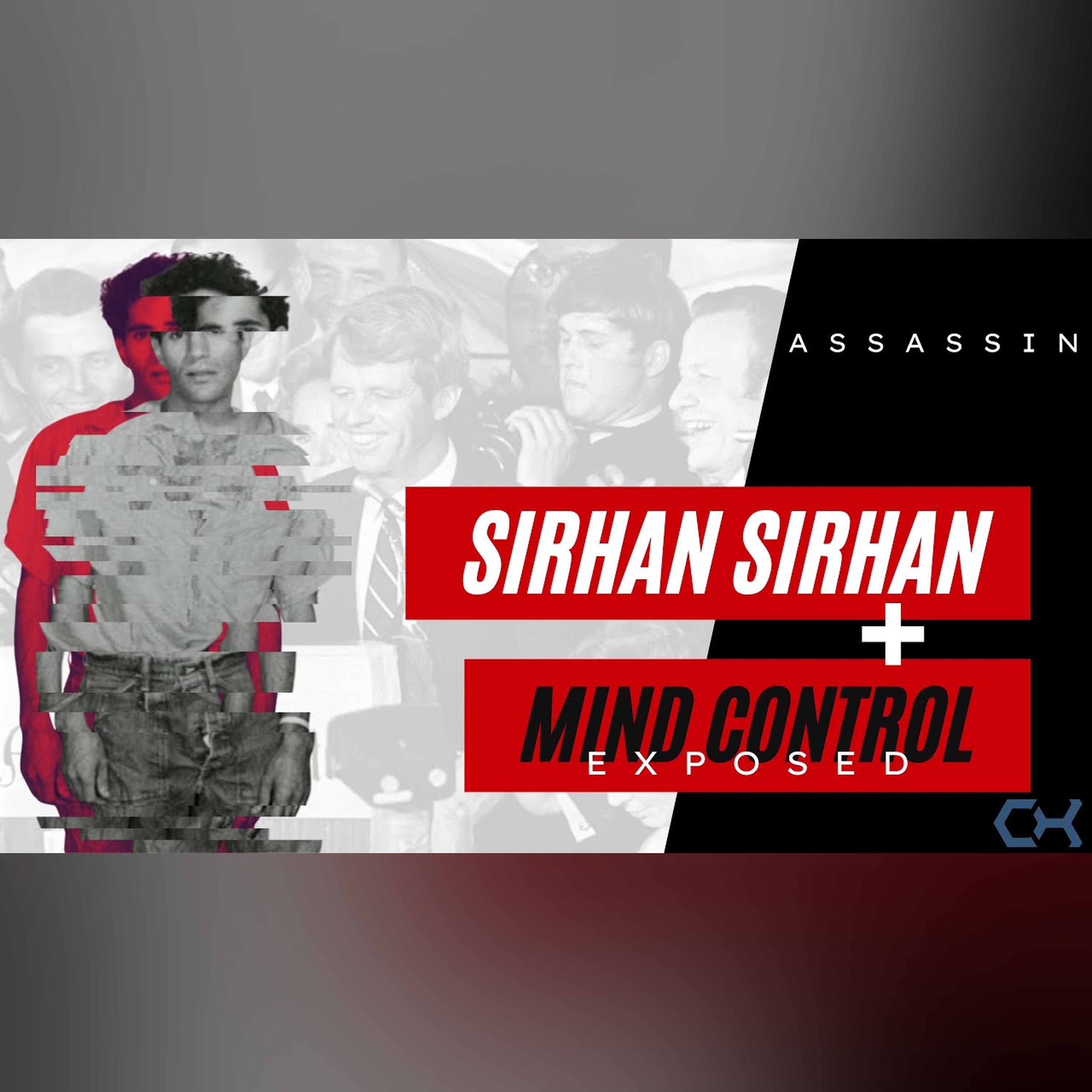
Can you be Programmed to Kill on Command? Fraud and Lies about what happened to RFK?
71 min

Listen through the publisher, then discuss the episode here or arrange an in-person Roundtable. Your city determines where to meet.

Roundtables are designed for groups of four, with a shared subject and room for everyone to speak. Come for discussion, with no dating expectation.

Join NCI University today to master human behavior and influence: Uploaded 05-11-21 This is a dive to discover the possibilities, not the case itself. Sirhan Sirhan, in full Sirhan Bishara Sirhan, (born March 19, 1944, Jerusalem), Palestinian-born Jordanian citizen who was convicted (1969) of fatally shooting U.S. Sen. Robert F. Kennedy on June 5, 1968. He received the death penalty, but the sentence was later commuted to life. Sirhan, a Christian Palestinian, was born in Jerusalem. In 1948 Jordan took control of East Jerusalem and what is now the West Bank, and the following year it granted citizenship to people living in those areas. It is believed that this is how Sirhan became a Jordanian citizen. In the 1950s, he and his family moved to the United States and eventually settled in Pasadena, California. There he attended Pasadena City College and later held odd jobs, notably working at a horse stable and later at a health food store. During this time, Sirhan became vocal in his opposition to Israel, especially after the Six-Day War (June 1967), in which the country seized control of various territories, including the Gaza Strip, the West Bank, and the Old City of Jerusalem. Sirhan began directing his anger at Sen. Robert F. Kennedy, who expressed support for Israel while campaigning for the Democratic presidential nomination in 1968. On June 4, Kennedy won the California primary, and shortly after midnight, he gave a speech at the Ambassador Hotel in Los Angeles. As he left through a service pantry, Kennedy was fatally shot; he died on June 6. In addition, five bystanders were wounded. Sirhan was apprehended at the scene—tackled by George Plimpton, Rosey Grier, and others—and he reportedly said, “I did it for my country.” The attack took place on the one-year anniversary of the start of the Six-Day War. This video is opinion based on research, and opinion alone. Tags: Sirhan Sirhan, the behavior panel, behavior, hypnosis, Manchurian, mind control, body language, persuasion, influence, sales, rfk, Kennedy, assassination, murder, true crime, hypnotized Chapters: 0:01 Introduction 7:23 - Did it all go down that way?

Episode information is provided by the publisher. Listening takes place on the publisher’s service.

Listen at the source ↗

Featured places to meet in Palo Alto, CA

Explore these places and arrange a conversation through ThinkMatch.

City guide for Palo Alto, CA

More from Chase Hughes: Behavior, Influence, Lies & Interrogation

Chase Hughes: Behavior, Influence, Lies & Interrogation

How Cults Recruit and Program People

25 min

DISCOVER NCI - 1: https://nci.university/nci-1v2 Uploaded 09-05-26 ⬆️ Please note that the content provided in this broadcast is for informational and educational purposes only and should not be construed as legal, medical, financial, or professional advice. No material in this communication establishes any form of professional relationship that is privileged or confidential. The insights and opinions expressed herein solely reflect the personal views of the speaker based on his extensive expertise and academic background in his field of study. These are purely personal opinions and should not be taken as direct statements of fact about any individuals, whether stated explicitly or implied. Any opinion shared in this broadcast is drawn from referenced material specific to this publication only. Remember, what's discussed here are perspectives—not claims of fact. Copyright and all rights reserved.

Discuss this episode

Chase Hughes: Behavior, Influence, Lies & Interrogation

Someone Designed This Experience - Here's How

14 min

Master the skills that change lives — enroll in your free human behavior course today: https://nci.university/learn Uploaded 09-01-26 You were never reacting to chaos — you were responding to structure. Outcomes don’t appear suddenly; they’re assembled long before you notice them. Understanding how pressure is built changes how the world feels immediately. All influence follows patterns once you know where to look. Reality doesn’t break — it gets reshaped in layers. Every system depends on predictable human responses. Given the right conditions, behavior becomes almost automatic. Once you see the architecture, panic loses its leverage. Detection beats reaction — every time. Please note that the content provided in this broadcast is for informational and educational purposes only and should not be construed as legal, medical, financial, or professional advice. No material in this communication establishes any form of professional relationship that is privileged or confidential. The insi

Discuss this episode

Chase Hughes: Behavior, Influence, Lies & Interrogation

I’ll Prove It - THE SIMULATION IS REAL

16 min

Instant Access to your FREE training course: https://nci.university (https://nci.university/) Uploaded 27-07-25 This is the simulation you already live inside of—and you’ve been breathing it like oxygen since the day you were born. In this video, we expose the invisible machinery beneath modern life—how symbols have replaced truth, how marketing has replaced meaning, and how our desires are manufactured by the very system that feeds on them. Drawing from the work of Jean Baudrillard and the hidden mechanisms of simulacra, we walk you through 10 real-life “glitches” that reveal the truth: • Why your food is rendered, not real • How social media replaced memory • Why you take photos of things you never actually see • And why even your “rebellion” is likely pre-approved This isn’t a conspiracy. It’s a mirror. And once you see it, you can’t unsee it. simulation theory, simulated reality, Baudrillard simulation, are we in a simulation, hyperreality explained, social media illusion, digital

Discuss this episode

Community Poll

Similar work should receive similar pay despite differences in workers' bargaining power.

Share your view, then see how readers voted. No sign-in required. This poll is shared across stories.

Do you agree or disagree?

Choose one answer

Common Quandary

A Common Quandary to discuss

Another conversation to explore, separate from this news story.

An old friend refuses to use someone's new name. Do you correct them at the reunion?

At a reunion, an old friend repeatedly uses the name a former classmate had years ago. They say shared history gives the old name affectionate meaning; the classmate has clearly introduced themselves with a different name.

When does preserving your shared past deny who someone is now?

Explore this quandary