Classic Australia 3: The Transit of Venus by Shirley Hazzard
79 min
Listen through the publisher, then discuss the episode here or arrange an in-person Roundtable. Your city determines where to meet.
Roundtables are designed for groups of four, with a shared subject and room for everyone to speak. Come for discussion, with no dating expectation.
At the 2003 USA National Book Awards, the horror writer Stephen King gave an impassioned speech criticizing the assembled great and good of the literary world for its critical neglect of popular writers. Next up a 72 year old Australian woman took to the stage to receive an award and found herself arguing with King and defending High Art. Today’s episode is about that woman - Shirley Hazzard - and her masterpiece The Transit of Venus. It’s about two Australian sisters as they navigate life and love in Britain, from the austerity years after WW2 to the 1970s. Shirley Hazzard is something of an outlier in this Classic Australia season. She was not an egalitarian like Miles Franklin and Ruth Park, wanting to knock the stuffing out of the literary Establishment and its cultural subservience to European taste-makers. She adored the European classics and the Old World and happily turned her back on Australia. When an interviewer once asked her to describe the Sydney of her youth, she described it as ‘provincialissimo’, which is pseudo-Italian for the most provincial place on Earth. In this episode we’re following the transit of Shirley as tracks a fiery course across the literary firmament, from humble beginnings in Sydney to a glamorous jet-setting life in-between New York and the Italian island of Capri. Hosted on Acast.
Episode information is provided by the publisher. Listening takes place on the publisher’s service.
Pull up a stool in Tobaro as the Master Tavern Keeper, Sedrik, and Heinrich clear up a classic mix-up: this isn’t Kadon the Shackler, master of beast-binding scrolls. Instead, we’re heading into the frozen, unforgiving Badlands in -1147 I.C. to trace the rise of a young Lodringen shaman who would come to be known as Kadon the Eternal. Follow the dying steps of Alcadizaar, Nehekhara’s last living king, as poison from the Fellblade claims him beside the Blind River, leaving behind Nagash’s Crown of Sorcery. When a curious shaman stumbles upon the remarkably preserved remains, placing that dark diadem upon his head sparks a chain of events: a bewitched tribe, a burial mound built over a leyline nexus, and the first sinister steps toward a necromantic empire. Featuring tavern banter, skeptical pushback from Sedrik, and immersive soundscapes of the Badlands, this episode sets the stage for the dark legacy of Kadon.
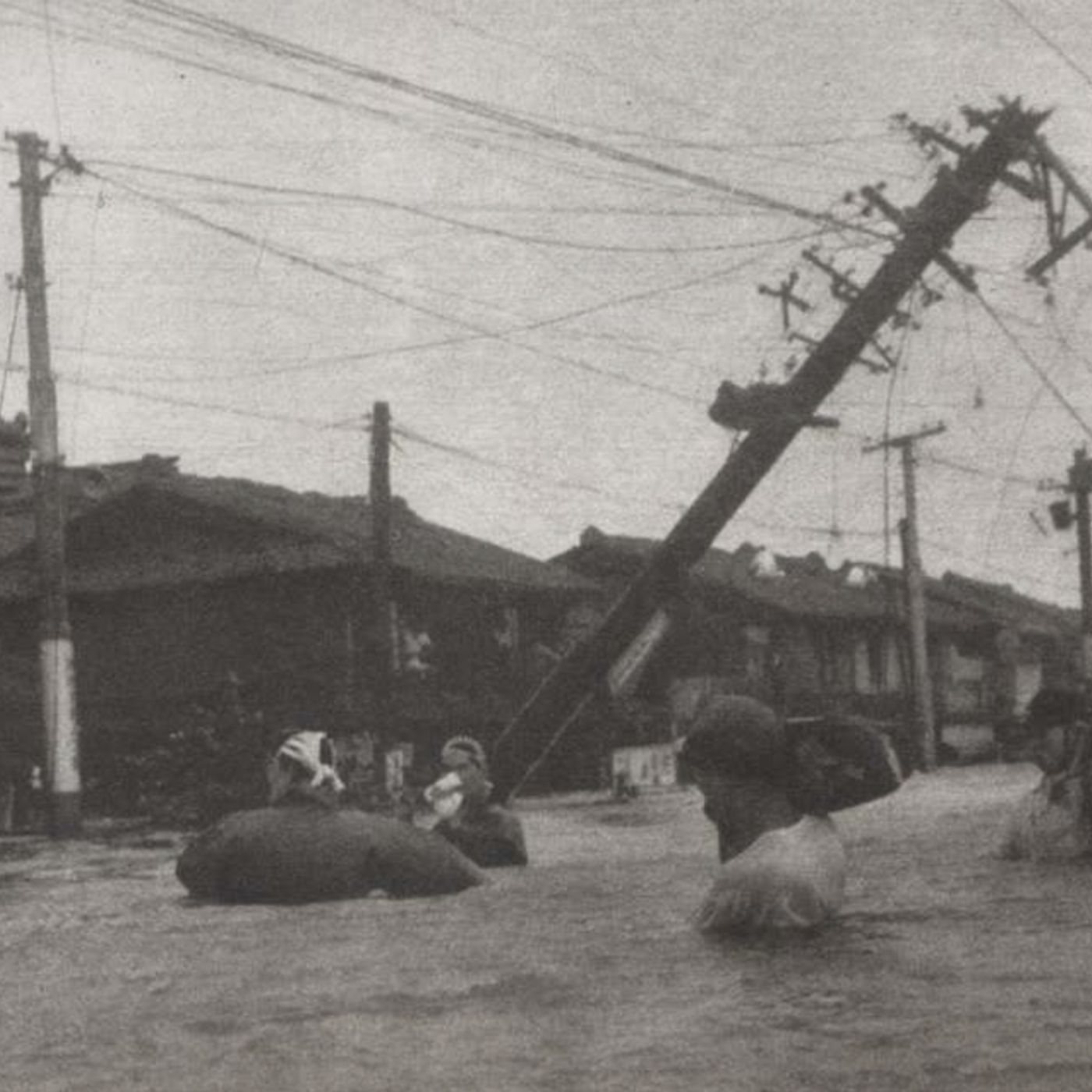
1950 Super El Niño Spring Storms Jeremy Zakis discusses extreme spring weather across Australia, driven by a super El Niño and elevated ocean temperatures. Heavy rain, microbursts, and severe winds in South Australia toppled massive power lines and spawned funnel clouds, while Sydney faces hot, chaotic, (1)
Have you ever tried something so hard, failed, and then tried again anyway? Meet Tony Hawk, the boy who turned his restless energy into skateboarding history! Growing up in sunny San Diego, California, Tony was a frustrated kid until his brother gave him a scratched-up blue skateboard. It was pure magic! By age 14, he was a fearless professional skater inventing wild, sky-high tricks on massive wooden ramps. Imagine being at the 1999 X Games, watching Tony attempt the ultimate, "impossible" trick: the 900! That's two and a half dizzying spins high in the air. Crash after crash, he fell ten times. But on his eleventh try? He landed it perfectly, while the crowd went absolutely wild! That same year, his smash-hit video game made him a superstar all around the world. But Tony didn't just want fame. He wanted every kid to have a safe place to ride, fall, and get back up. Through his charity, he has helped build hundreds of free public skateparks everywhere! Grab your helmet and drop in as
The FIRST Unleash the Power Within of 2022 just wrapped and we had 26,000 households from 151 countries around the world STEP UP and JOIN TOGETHER for one of our largest events in history! Uploaded 23-03-22 Here are some highlights from the week. Enjoy this video for a peek inside our virtual stadium It’s such a privilege to spend time with such DRIVEN, COMMITTED, LOVING SOULS all coming here with a hunger to GROW. For me, getting to hear your goals and witness each of you creating a unique life for yourselves, your loved ones, and your communities is deeply moving. We grow so we have MORE to GIVE, and the truth is, the world is a better, more beautiful and kind place because of people like YOU. If you’ve never experienced an Unleash the Power Within, it can be hard to imagine the HUMAN POTENTIAL and the RAW ENERGY⚡️ that converge over these four days and nights. It's electrifying to feel people from every walk of life, every background, every stage of life UNITE to find a deeper meani
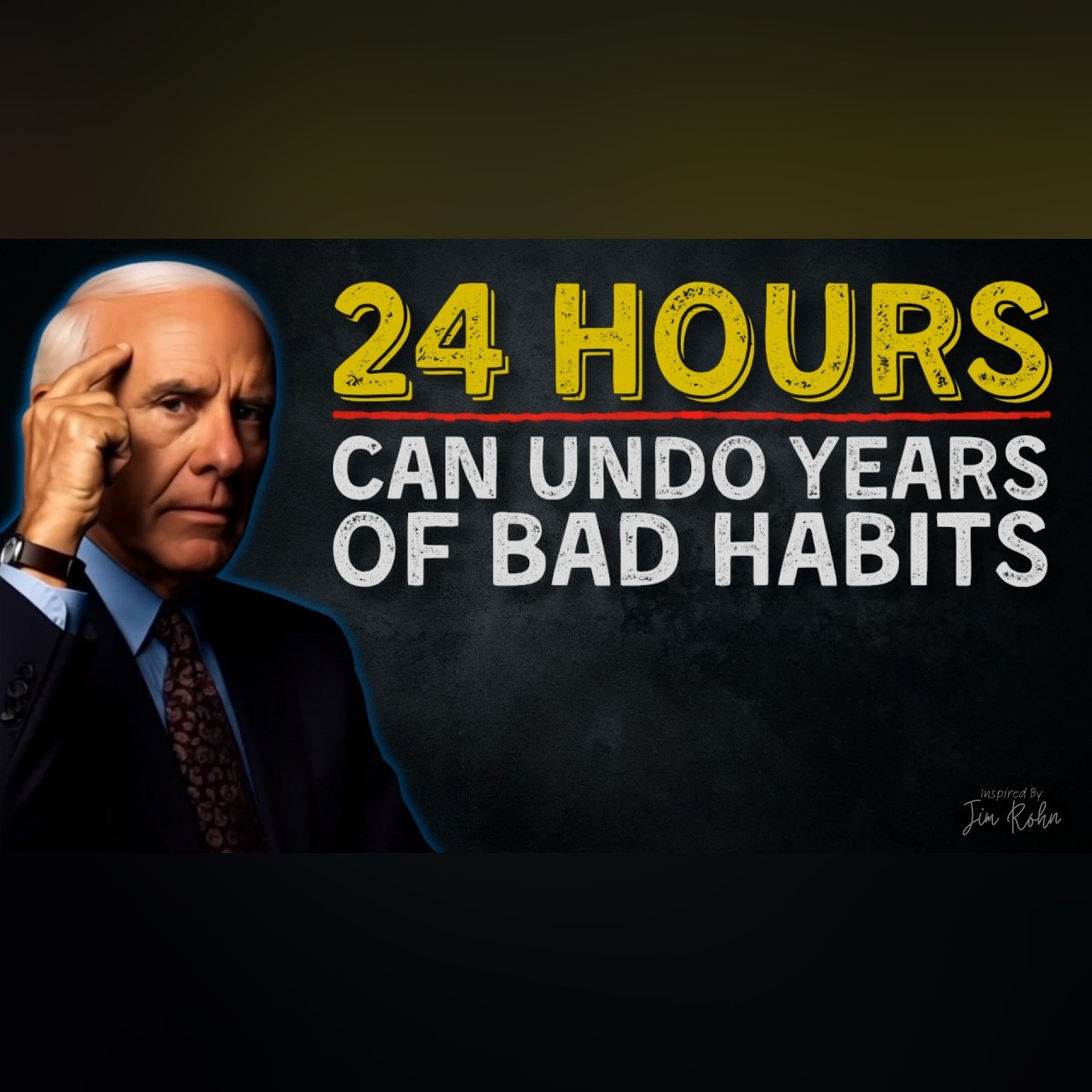
Most people don't fail. They postpone. Uploaded 16-02-26 The big mistakes that wreck a life usually aren't dramatic. They're the same small default repeated for a thousand mornings. Just one more day before I get serious. Just one more day before I start. A day is never neutral. Every day you spend is either building something into your life or quietly tearing something down. Stacking up discipline, or stacking up delay. There is no third option. This seminar lays out the 24-hour rule — a specific move you can make in the next day that reverses the pattern. Not for a lifetime. For 24 hours. CHAPTERS 0:00 Days Are Never Just Slipping By 5:44 Discipline Stacks. So Does Delay. 6:23 You Don't Have to Change Everything at Once 11:42 Busy Isn't the Same as Advancing 12:03 Most Regret Comes From Postponement, Not Failure 17:37 Carry Less, Not More 18:07 The 24-Hour Rule — Here's What to Do 23:23 One More Day. One More Choice. THE CORE REFRAMES ▸ THE TWO STACKS — Every day, you're stacking up
In this conversation I’m speaking to Rebecca Olive. Rebecca is a feminist cultural studies researcher whose work explores how everyday sport and leisure are shaped by cultural politics, relationships between humans and non-humans, environmental wellbeing, and social media. My understanding of her research is she looks very closely at why people do things that make up a culture, and the meaning of everyday practices in people’s lives. We chatted about why people are drawn to the ocean in the first place and what keeps us coming back. How swimming and surfing becomes more than recreation, and into an emotional relationship that shapes how we understand risk, shark risk, and our place in it. She also discusses how storytelling, social media and drone footage may influence our perception of danger and coexistence. Apologies, I’m a Bit under the weather in this one and in the opening couple of minutes, probably would have been a good idea to have the microphone turned on. Recorded at 3pm on
David Malouf, one of Australia’s most loved and respected novelists and poets, died this year. We revisit his writing life and his celebrated novella An Imaginary Life, about the poet Ovid’s life in exile from Rome, after writing his own most celebrated poetry. In David Malouf’s own words, An Imaginary Life solved the problem of the “difficult second novel” by getting as far away from his successful first novel Johnno, a vivid depiction of friendship and growing up in Malouf’s hometown, Brisbane, in the late 50s and 60s. Malouf pivoted away from tropical Australia to Romania under the Caesars. He called it “part prose poem, part speculative essay, part dramatic monologue.” But Malouf – in an audacious repackage – describes An Imaginary Life as being as just Australian as Johnno and his other novels and poems set in Queensland. We’re going to put that claim to the test today, and take a close look at how and why Malouf tackles Ovid, classical writing and exile to write a very unexpected
Plenty of novels entertain and move us, but only a few become cultural landmarks in their own right: capturing the state of a nation at a particular moment in time, and sparking conversations and arguments that continue long after their publication. Christos Tsiolkas’s The Slap is one of them. When it was published in 2008 it scandalized, delighted, outraged and sent shock reverberations literally across the world. The Slap upturned lazy stereotypes about who and what Australia is as a nation. At the Sydney Writers’ Festival Homegrown program in August 2026, Sophie and Jonty interviewed Christos about writing a novel that was destined to become a touchstone for Australian identity, worldwide. The inciting incident of the book is, of course, the slap itself. It’s delivered by Harry, a self-made businessman of Greek heritage, against a four-year-old boy, at a barbeque in suburban Melbourne. Harry’s split-second transgression changes the lives of everyone present, and exposes faultlines t
Demonstration organizers should take reasonable steps to discourage violence by participants.
Share your view, then see how readers voted. No sign-in required. This poll is shared across stories.
Do you agree or disagree?
Common Quandary
A Common Quandary to discuss
Another conversation to explore, separate from this news story.
The proposal is perfect and the ring is terrible. When do you say so?
Your partner proposes with a costly ring chosen after months of secret planning. You love the proposal and want the marriage, but strongly dislike the ring you would be expected to wear every day. Returns are possible for one week.
How much honesty can a loving gesture reasonably be asked to survive?