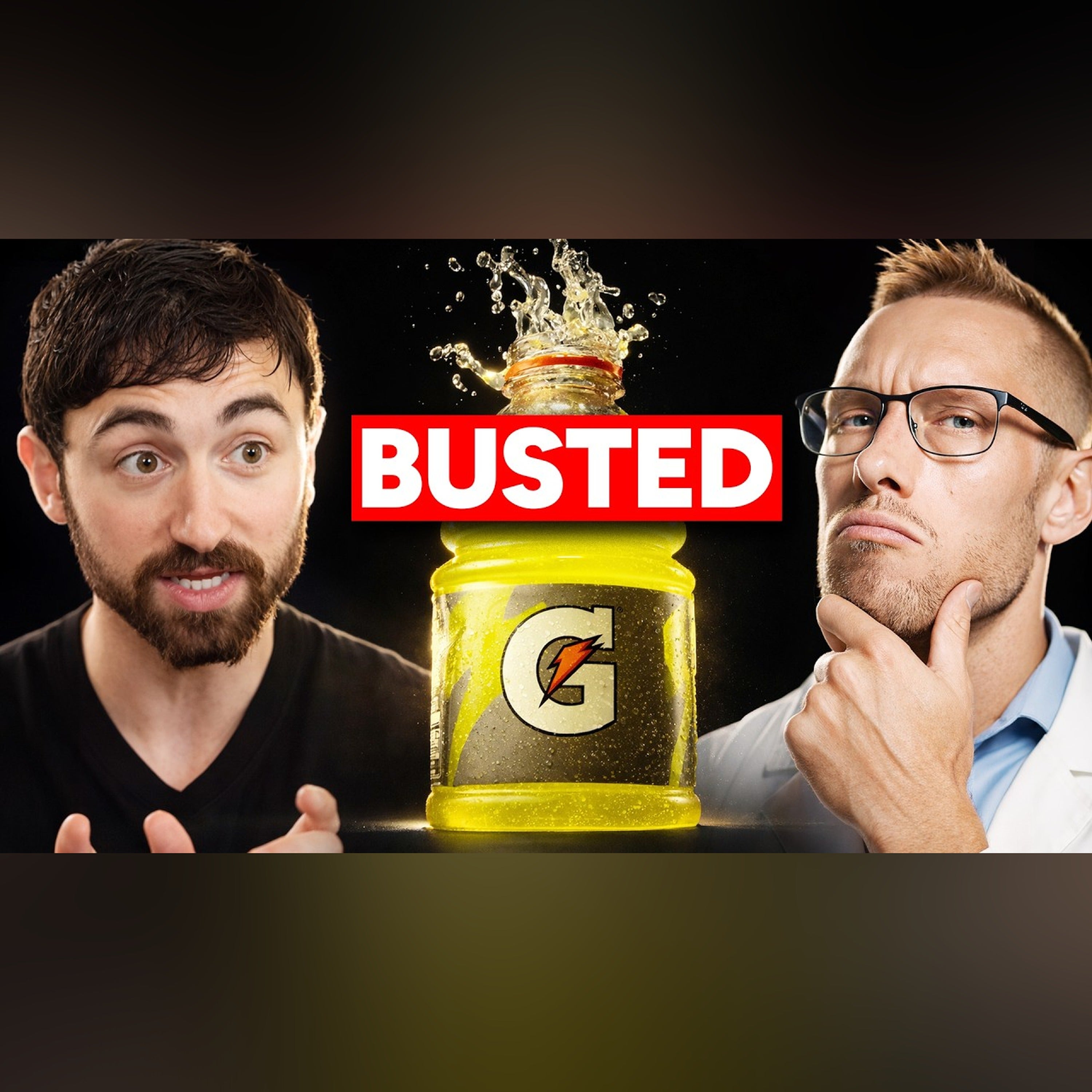
Communists, Nationalists, and China's Revolutions: Crash Course World History #37
18 min
Listen through the publisher, then discuss the episode here or arrange an in-person Roundtable. Your city determines where to meet.
Roundtables are designed for groups of four, with a shared subject and room for everyone to speak. Come for discussion, with no dating expectation.
In which John Green teaches you about China's Revolutions. While the rest of the world was off having a couple of World Wars, China was busily uprooting the dynastic system that had ruled there for millennia. Most revolutions have some degree of tumult associated with them, but China's 20th-century revolutions were REALLY disruptive. In 1911 and 1912, Chinese nationalists brought 3000 years of dynastic rule to an end. China plunged into chaos as warlords staked out regions of the country for themselves. The nationalists and communists joined forces briefly to bring the nation back together under the Chinese Republic, and then they quickly split and started fighting the Chinese Civil War. The fight between nationalists and communists went on for decades and was interrupted by an alliance to fight the invading Japanese during World War II. After World War II ended, the Chinese Civil War was back on. Mao and the communists were ultimately victorious, and Chiang Kai-Shek ended up in Taiwan. And then it got weird. Mao spent years repeatedly trying to purify the Communist Party and build up the new People's Republic of China with Rectifications, Anti Campaigns, Five Year Plans. the Great Leap Forward, and the Cultural Revolution. These had mixed results, to say the least. John will cover all this and more in this week's Crash Course World History. Chapters: Introduction: China's Revolutions 00:00 Calls for Reform in China 0:58 An Open Letter to Sun Yat Sen 1:33 Overthrowing the Qing Dynasty 2:38 The Guomindang and the Chinese Communist Party 3:44 Mao Establishes the People's Republic of China 6:09 China's Soviet-inspired Five Year Plans 8:11 China's Cultural Revolution 9:52 Credits 11:30 Resources: The Search for Modern China by Jonathan D. Spence https://bit.ly/3rLxlCL Blood Red Sunset: A Memoir of the Cultural Revolution by Ma Bo https://bit.ly/3EjstK4 Crash Course is on Patreon! Want to find Crash Course elsewhere on the internet? Facebook - http://www.facebook.com/YouTubeCrashCourse Twitter - http://www.twitter.com/TheCrashCourse Instagram - https://www.instagram.com/thecrashcourse/ CC Kids: http://www.youtube.com/crashcoursekids
Episode information is provided by the publisher. Listening takes place on the publisher’s service.
In 1620, a small ship called the Mayflower crossed the Atlantic carrying English settlers in search of a new life. Their arrival in North America became one of the most familiar stories in American history, but the reality behind the legend was far more complicated than the traditional Thanksgiving tale suggests. Discover why the Pilgrims left England, what their dangerous voyage was really like, and how they survived their first winter in an unfamiliar land. Explore their encounters with the Wampanoag people, the role of Tisquantum, also known as Squanto, and the assistance that helped the struggling settlers establish their colony. Uncover what happened at the harvest gathering of 1621, who actually attended, what was served, and how this event became connected to the modern Thanksgiving holiday. Follow the history beyond the familiar celebration and discover the people, cultural encounters, and historical realities behind the Mayflower story. Boring History for Sleep — Soft stories
Have you ever tried something so hard, failed, and then tried again anyway? Meet Tony Hawk, the boy who turned his restless energy into skateboarding history! Growing up in sunny San Diego, California, Tony was a frustrated kid until his brother gave him a scratched-up blue skateboard. It was pure magic! By age 14, he was a fearless professional skater inventing wild, sky-high tricks on massive wooden ramps. Imagine being at the 1999 X Games, watching Tony attempt the ultimate, "impossible" trick: the 900! That's two and a half dizzying spins high in the air. Crash after crash, he fell ten times. But on his eleventh try? He landed it perfectly, while the crowd went absolutely wild! That same year, his smash-hit video game made him a superstar all around the world. But Tony didn't just want fame. He wanted every kid to have a safe place to ride, fall, and get back up. Through his charity, he has helped build hundreds of free public skateparks everywhere! Grab your helmet and drop in as
Imagine if every big change in our lives came with a whole community stepping up beside us… In this episode, I sit down with Dr Arne Rubinstein, former GP and emergency doctor, founder of the Rites of Passage Institute, and a man who's spent more than 30 years walking young people across the threshold into adulthood. Arne's work began around a fire at his very first men's gathering, listening to a hundred men wrestle with the same handful of wounds. Then in the Emergency Dpt, he kept meeting teenagers who'd pushed it one step too far... kids trying to become adults with nobody there to hold them. He came to believe every young person will go through a rite of passage either way. The question is whether we leave them to create their own, or gather around and help. We talk about why our culture is so good at turning away from the big moments - from first periods to menopause to death - and what opens up when we turn towards them. We explore: Separation, transformation and integration, an
For a written breakdown and key references, see the associated letter: https://open.substack.com/pub/staycuriousmetabolism/p/the-carb-loading-myth-is-finally?r=40ekz2&utm_campaign=post&utm_medium=web&showWelcomeOnShare=true (https://open.substack.com/pub/staycuriousmetabolism/p/the-carb-loading-myth-is-finally?r=40ekz2&showWelcomeOnShare=true) Paper: https://academic.oup.com/edrv/advance-article/doi/10.1210/endrev/bnaf038/8432248?login=false Description: Do you really need to carb-load for peak performance, or is that just sports nutrition inertia? In this conversation, Nick sits down with Dr. Andrew Koutnik to break down a new meta-analysis of randomized controlled trials challenging the classic “you need carbs for performance” narrative. The key twist is that the strongest predictor of fatigue across studies isn’t muscle glycogen, but a subtle drop in blood glucose and overall brain fuel. You’ll learn where the carb-loading doctrine came from, what the original studies missed, why gl
This week on The Necessary Conversation, it's Chad, Haley, and Mary Lou. Bob is still recovering but sent in a video message about Trump calling Putin his friend that we watch together. 🇷🇺 Trump held the first-ever three-way talks with Putin and Xi, called it a "12 out of 10," and produced nothing. Then at a press conference he called Putin his friend — and when asked if Putin is a friend to America, the president of the United States said, "I can't speak to America." That same day, Trump's friend Putin launched massive strikes into Ukraine, hit Poland with two missiles — an act of war against a NATO ally — then struck near a Ukrainian restaurant and drone-bombed the first responders, killing a 7-year-old child and a 20-year-old paramedic. We watch Bob's video and ask Mary Lou: is Russia our friend? 🇨🇳 The House Foreign Affairs Committee revealed Trump's Commerce Department approved nearly 880,000 advanced AI chips for Chinese military-linked companies including Alibaba, Tencent, a
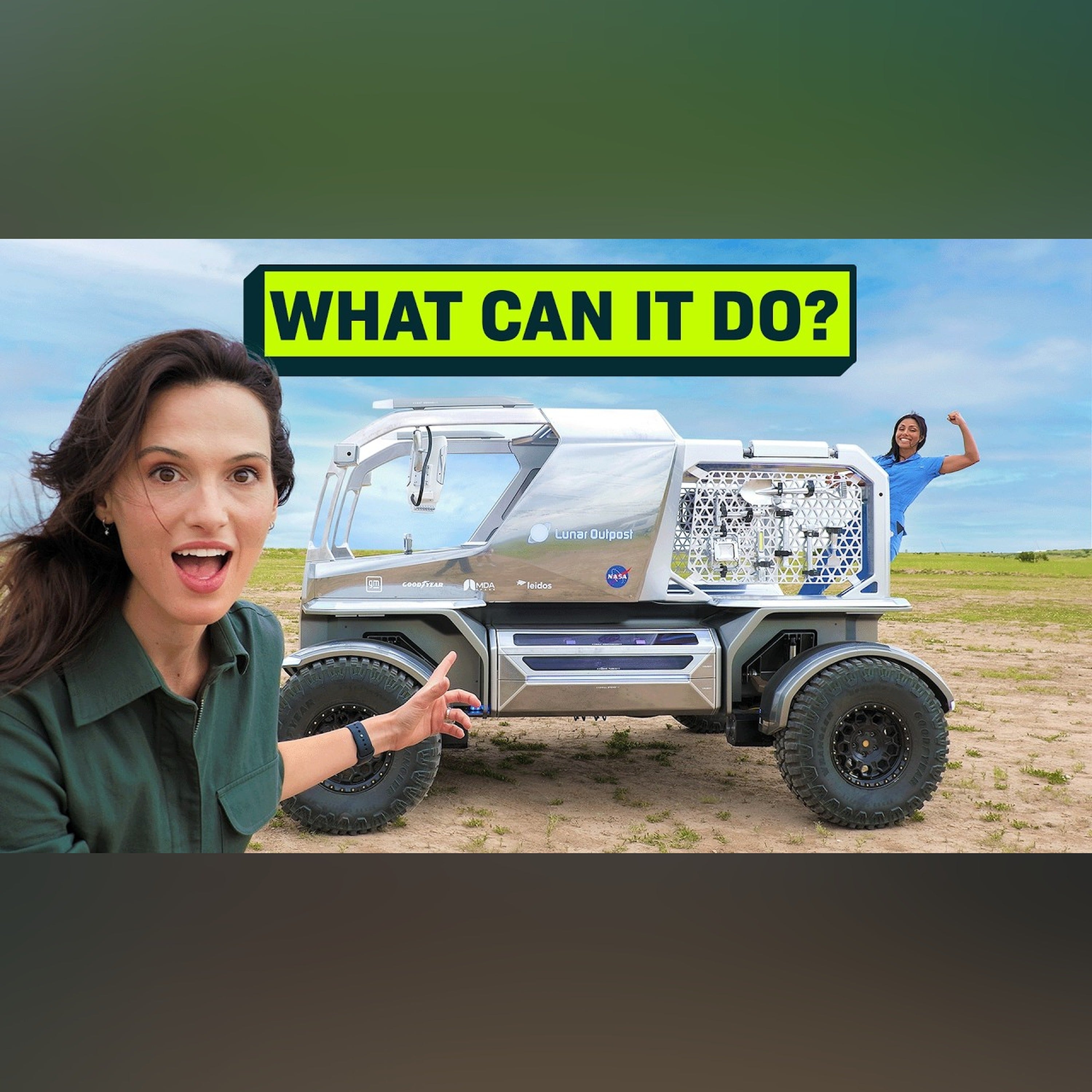
This truck is going to the moon. So we put it to the test… Get an exclusive 15% discount on Saily data plans. Use code CLEO at checkout. Download Saily app or go to https://saily.com/cleo This is the world’s first “space truck.” It’s going to the moon to help us go farther, faster, and discover places we’ve never been… Because humans are about to go back to the moon for the first time in 50 years! And no one but its builders have ever driven it… until today. In this video I'm going to put this brand new space truck to the test in a series of 5 challenges. And I've invited someone who knows a thing or two about challenges: YouTube daredevil and host of Challenge Accepted… Michelle Khare! Let’s go. Chapters: 0:00 This is the world’s first space truck 0:38 Introducing Michelle Khare! 01:04 What is a space truck? 01:52 How do astronauts drive? 02:21 First impressions! 02:47 Moon truck v normal truck 04:47 How fast can you drive on the moon? 05:18 Will we crash? 08:36 Can we break the lunar
The majority of the universe is made up of a currently mysterious entity that pervades space: dark energy. We don’t know exactly what it is, but we do know that dark energy accelerates the expansion of space. We think this means the Universe will expand forever, even as our view of it shrinks while space expands faster all the time. Check out the Crash Course Astronomy solar system poster here: http://store.dftba.com/products/crashcourse-astronomy-poster If you want to learn more about the creation and death of the universe, watch Crash Course Big History here: https://youtube.com/playlist?list=PL8dPuuaLjXtMczXZUmjb3mZSU1Roxnrey -- Chapters: Introduction: The Expanding Universe 00:00 The Expansion of Space is Accelerating 2:17 What is Dark Energy? 4:19 Will the Universe Expand Forever? The Geometry of the Universe 5:20 The Cosmic Horizon of the Observable Universe 6:50 Review 10:20 -- GEOMETRY OF THE UNIVERSE RESOURCES Geometry: Expanding faster than light: General expansion: -- PBS Di
Have you ever wondered where cured meats like salami or pepperoni get their bright red color? Of course its from organic chemistry! A chemical called nitric acid gives them that bright color, while also increasing their shelf. It's also involved in some other interesting reactions. In this episode of Crash Course Organic Chemistry we'll see how nitrous acid reacts with primary amines to form diazonium salts, we'll learn about alkyldiazonium salts and aryldiazonium salts, and see what conditions are necessary for nucleophilic aromatic substitutions. Series Sources: Brown, W. H., Iverson, B. L., Ansyln, E. V., Foote, C., Organic Chemistry; 8th ed.; Cengage Learning, Boston, 2018. Bruice, P. Y., Organic Chemistry, 7th ed.; Pearson Education, Inc., United States, 2014. Clayden, J., Greeves, N., Warren., S., Organic Chemistry, 2nd ed.; Oxford University Press, New York, 2012. Jones Jr., M.; Fleming, S. A., Organic Chemistry, 5th ed.; W. W. Norton & Company, New York, 2014. Klein., D., Organ
Like a trendy dance, a fighting combo, or a secret handshake, organic reactions can be broken down into simpler steps. In this episode of Crash Course Organic Chemistry, we’ll specifically be looking at alkene addition reactions, and with each new reaction ask ourselves three questions to help us puzzle through the mechanism and understand what’s going on. Episode Sources: Le Couteur, P, Burreson, J. Napoleon’s Buttons: 17 molecules that changed history., Penguin, New York, 2004, Chapter 1. Whipps, H., “How the Spice Trade Changed the World,” https://www.livescience.com/7495-spice-trade-changed-world.html Last accessed, 3/28/2020. Henriques, Martha, “How spices changed the ancient world,” http://www.bbc.com/future/bespoke/made-on-earth/the-flavours-that-shaped-the-world/ Last accessed, 3/28/2020. Hashimoto, K., Yaoi, T., Koshiba, H., Yoshida, T., Maoka, T., Fujiwara, Y., Yaamoto, Y, Mori, K., “Photochemical Isomerization of Piperine, a Pungent Constituent of Pepper”, Food Sci. Technol.
Research participants' welfare should take priority over possible benefits to society.
Share your view, then see how readers voted. No sign-in required. This poll is shared across stories.
Do you agree or disagree?
Common Quandary
A Common Quandary to discuss
Another conversation to explore, separate from this news story.
Your adorable child could pay for college by becoming an influencer. Do you start filming?
Parents post cheerful videos of their young child and earn enough to fund the child's education. The child enjoys filming now but cannot understand what it means for strangers to watch those moments years later.
Can parents consent to a permanent public identity on a child's behalf?