Conglomerates and Breccias - Geology 101: Sediments Part 4
18 min
Listen through the publisher, then discuss the episode here or arrange an in-person Roundtable. Your city determines where to meet.
Roundtables are designed for groups of four, with a shared subject and room for everyone to speak. Come for discussion, with no dating expectation.
The Camp Geo mobile app now has the Roadside Geology of Colorado, along with Colorado Rocks, a lower-jargon audiobook on the same landscapes. This episode finishes the clastic sedimentary rocks with the coarsest ones, conglomerates and breccias. Both have clasts of pebble size or larger, and both form in high-energy settings. The difference is rounding. Conglomerate clasts get rounded in mountain streams, floods, and along shorelines, and they get rounder and smaller the farther they travel. Chris and Jesse have looked for these rocks together for years, from Drummond Island puddingstone in Michigan gravel pits to stretched pebble conglomerate in New Hampshire. Jesse also has some news. His research group was just funded to study 2.8-billion-year-old conglomerates, some of which contain diamonds. Each clast is a sample of the rocks being eroded at the time, so the clasts can show what the source area looked like and where the diamonds may have come from. These may be some of the first sediments shed off early continents. Breccia clasts are angular, which means they moved very little before they were cemented. Chris explains how to pronounce the word, and Jesse shows a megabreccia from Death Valley he photographed on an undergrad field trip. Breccias form in fault zones, collapsed caves and sinkholes, landslides, and talus slopes. In each case the broken rock has to be cemented to become a breccia. In the quizzes, Jesse names quartz and clay as the most common minerals in clastic rocks, and Chris picks alluvial fans as the most common place for breccias to form. Next episode covers the biochemical and chemical sedimentary rocks. Download the CampGeo app now at this link (https://campcourses.app.link/planetgeo). On the app you can get tons of free content, exclusive images, and access to our Geology of National Parks series. You can also learn the basics of geology at the college level in our FREE CampGeo content series - get learning now! Like, Subscribe, and leave us a Rating! —————————————————— Instagram: @planetgeocast (https://www.instagram.com/planetgeocast/) Twitter: @planetgeocast (https://twitter.com/planetgeocast) Facebook: @planetgeocast (https://www.facebook.com/planetgeocast/) Support us: https://planetgeocast.com/support-us Email: [email protected] Website: https://planetgeocast.com/
Episode information is provided by the publisher. Listening takes place on the publisher’s service.
The FIRST Unleash the Power Within of 2022 just wrapped and we had 26,000 households from 151 countries around the world STEP UP and JOIN TOGETHER for one of our largest events in history! Uploaded 23-03-22 Here are some highlights from the week. Enjoy this video for a peek inside our virtual stadium It’s such a privilege to spend time with such DRIVEN, COMMITTED, LOVING SOULS all coming here with a hunger to GROW. For me, getting to hear your goals and witness each of you creating a unique life for yourselves, your loved ones, and your communities is deeply moving. We grow so we have MORE to GIVE, and the truth is, the world is a better, more beautiful and kind place because of people like YOU. If you’ve never experienced an Unleash the Power Within, it can be hard to imagine the HUMAN POTENTIAL and the RAW ENERGY⚡️ that converge over these four days and nights. It's electrifying to feel people from every walk of life, every background, every stage of life UNITE to find a deeper meani
On 4th March 2023, UN member states agreed a historic treaty that had been over fifteen years in the making. The High Seas Treaty is the first ever treaty to protect the world’s oceans outside national boundaries. The aim is to meet the 30 by 30 biodiversity target, protecting 30% of the world’s oceans by the year 2030. Also known as the open sea or international waters, the high seas begin at the limit of countries’ exclusive economic zones. That means up to 370km, or 200 nautical miles, from the coastline. They account for 64% of the world’s oceans, and have been referred to as the last true wilderness, given how much mystery still lies within. Why is protecting the oceans so important? What measures are expected to come from the treaty? In under 3 minutes, we answer your questions! To listen to the last episodes, you can click here: How to make the most out of a rental property? (https://originals.bababam.com/do-you-really-know/202303090400-how-make-most-out-rental-property) What is
For the references, deeper nuances, and additional content the StayCurious Metabolism letter: https://staycuriousmetabolism.substack.com/p/can-visceral-fat-cause-depression?r=40ekz2 Hidden in this letter is a secret — a scientific breakthrough more than 75 years in the making. By the end of this video, I’ll show you exactly what’s inside it. But before we get there, understand this: I mean it literally. Scientists have just discovered that fat cells send secret letters to the brain — and the messages encoded inside them control your hunger, your energy, your metabolism, and potentially the root cause of obesity itself. These letters determine whether your brain feels satisfied and energized… or hungry, sluggish, and metabolically broken. Here’s the shocking part: if your biology writes the right message, you stay lean and healthy almost effortlessly. If it writes the wrong one, your brain goes blind to satiety, your metabolism slows, and your body enters a hormonal state that drives we
What if the change you've been asking for is already knocking? In this best-of compilation from The Positive Mindset Podcast, Henry Lawrence pulls together his best moments on letting go and being restored to who God made you to be, from six episodes: the stirring you feel when it's time to change; an opening prayer for anyone who feels alone right now; why your higher self is the true you, the one designed by God, not a more productive version of you; the cast on a broken arm that protected you and now limits you; the old painted-over furniture that gets restored, not rebuilt; why so much of our tiredness comes from holding too tight; how God moves what you couldn't; why everything is borrowed; and choosing to keep believing when it feels like a war broke out around you. It includes a prayer near the start and closes with the rising tide, a blessing and a thank-you. In this episode: • "That stirring is the truth knocking on a door that you've been leaning on with your whole weight." •
We’re about to time travel into the future Sam Altman is building… I interviewed Sam Altman, the CEO of OpenAI, the company behind ChatGPT. They’re trying to build a “superintelligence” that could far exceed humans in almost every field – and they just released their most powerful tool yet, GPT-5. A few years ago, that would’ve sounded like science fiction! Not anymore. In fact, they’re not alone. We’re in the middle of the most high stakes global race any of us have ever seen. Hundreds of billions of dollars and an unbelievable amount of human work… It’s a profound moment. Most people never see a huge technological shift like this in their lives and it’s happening all around us right now. So in this conversation, I’m going to try to time travel into the future with Sam Altman, to see what he’s trying to build… so you and I can really understand what’s coming. Welcome to HUGE* Conversations. Chapters: 0:00 What future are we headed for? 2:06 What can GPT-5 do that GPT-4 can’t? 6:57 Wha
Have you ever told someone, "Thanks a million!" or claimed you have "a million toys to clean up"? We use the word "million" all the time to mean "a whole lot," but have you ever stopped to wonder just how big a real million actually is? Join Mira and Finn on a mind-blowing math adventure as they discover the quiet power of giant numbers! Imagine counting one number every single second without ever stopping to eat or sleep. It wouldn't take a few hours or a long weekend—it would take you about eleven and a half days just to reach one million! And what about its giant neighbor, the billion? Counting to a billion the exact same way would take a whopping thirty-two years. That's a grown-up's whole life so far! In this amazing episode, we won't just look at numbers on a page; we’ll learn to feel their true size. Find out how much space a million grains of rice would take up, and discover exactly how far a million footsteps would carry you. Get ready to stretch your brain and learn why being
Quick reminder up top: the Camp Geo mobile app now has both the Roadside Geology of Colorado audiobook and Colorado Rocks, the shorter, lower-jargon intro. If you’re headed to Colorado, grab one and tell us what you think. Then it’s Episode 3 of our sedimentary rocks series from the Camp Geo audio textbook. With the four steps of making a sedimentary rock behind us, Chris and Jesse get to the rocks themselves, starting with the clastic (or detrital) rocks: the ones built from pieces of older rocks, about two-thirds of all sedimentary rocks. One ground rule first: “sand” and “clay” are grain sizes, not substances. And a rock’s name only matters for what it tells you about where it formed. Smallest and most abundant first: shale. Feldspar, the most common mineral in the crust, weathers into clay, and clay flakes are so small they only settle in truly still water: the deep ocean, a flood plain, a delta, the middle of a big lake. Shale is fissile, splitting along its stacked flakes (withou
Public information should be withheld only when there is a clear reason for confidentiality.
Share your view, then see how readers voted. No sign-in required. This poll is shared across stories.
Do you agree or disagree?
Common Quandary
A Common Quandary to discuss
Another conversation to explore, separate from this news story.
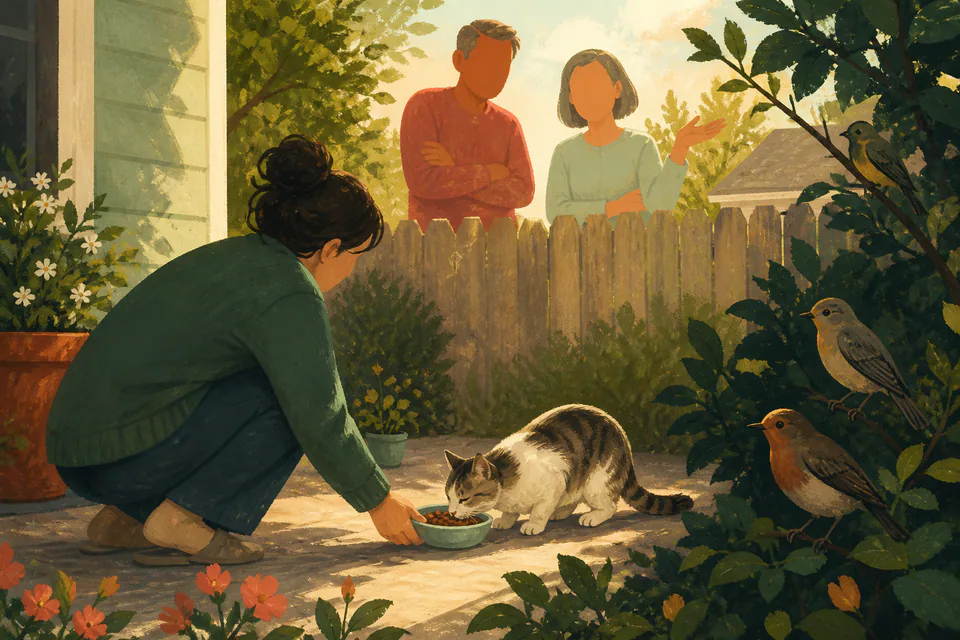
A stray cat adopts you—and starts killing birds. Do you keep feeding it?
A stray cat visits your yard daily and appears to depend on the food you leave out. Neighbors complain that outdoor cats kill birds and say feeding it encourages the problem without taking responsibility for the animal.
Does caring for one visible animal excuse harm to less visible ones?