Listen through the publisher, then discuss the episode here or arrange an in-person Roundtable. Your city determines where to meet.
Roundtables are designed for groups of four, with a shared subject and room for everyone to speak. Come for discussion, with no dating expectation.
In the fall of 1982, seven people in the Chicago area died after taking Tylenol capsules that had been laced with cyanide. The victims ranged from a 12-year-old girl to a young mother who had just given birth. None of them knew each other, and none of them had any idea what was in the bottles sitting in their medicine cabinets. The killings triggered a nationwide panic, transformed how every over-the-counter medication is packaged, and gave rise to the term "product tampering" as a federal crime. But more than four decades later, no one has ever been charged with the murders. In today's second episode of Conspiracies & the Unknown, Carter Roy revisits one of the most chilling unsolved cases in American history, the suspects who came and went over the years, and the question that still haunts investigators: who walked into those stores, and why did they choose Tylenol? And for more cases just like this one, be sure to check out the Crime House Original, Murder: True Crime Stories. Need More to Binge? Follow me on Social X: @crimehousemedia (https://x.com/crimehousemedia)
Episode information is provided by the publisher. Listening takes place on the publisher’s service.
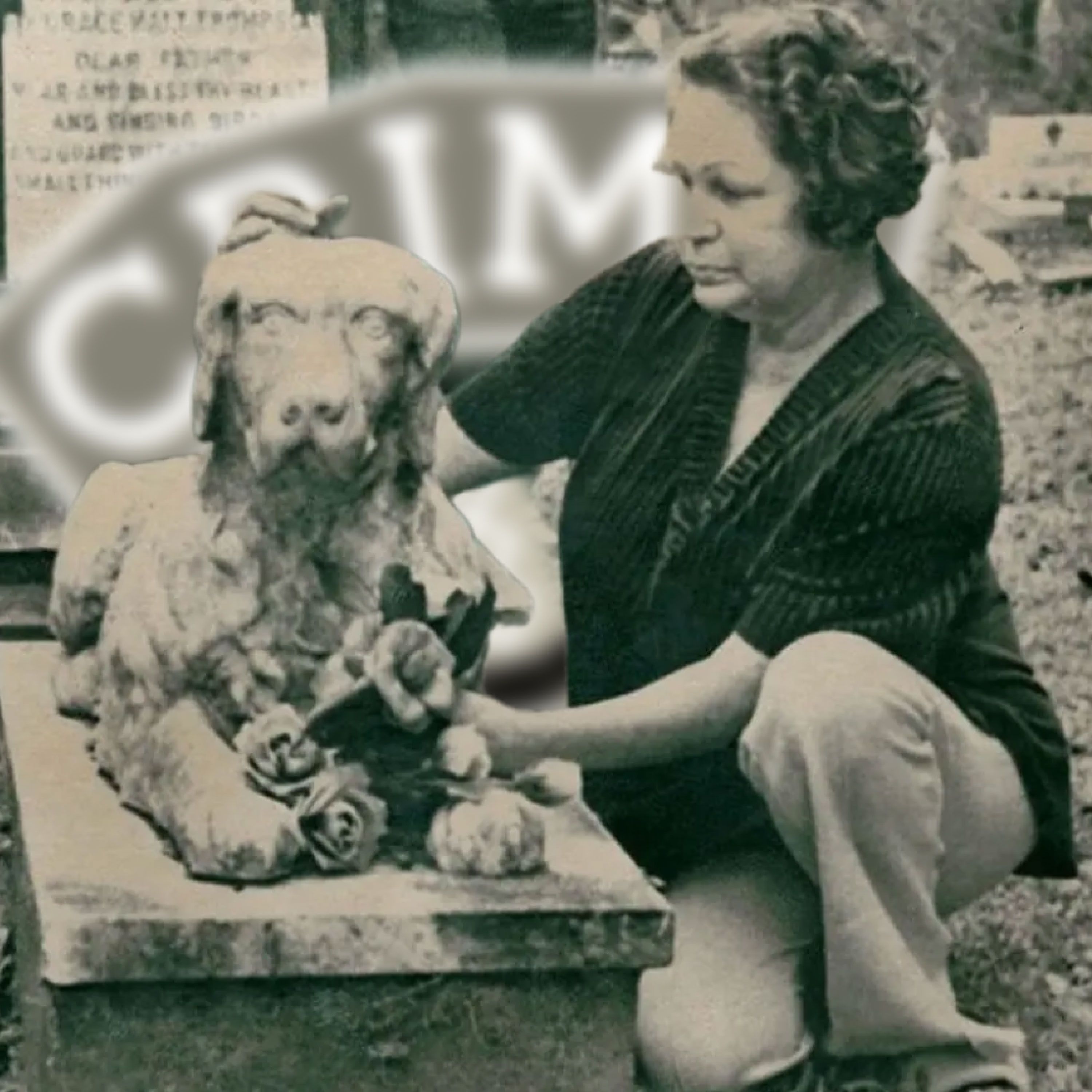
In 1985, when the body of 61-year-old Dorothy Lou Thompson was discovered in the Mississippi River, authorities assumed her murder was somehow connected to her unusual family business. For years her late mother ran a pet cemetery on an abandoned sugar cane plantation, which neighbors found both odd and eerie. While a handful of suspects emerged, the murder case soon went cold. Decades later, witnesses came forward to report what they knew about the homicide. What convinced them to finally tell their stories? They said they were visited by Dorothy’s ghost. The HBO Documentary series “The Pet Cemetery Murders: A Ghost Story” leans into the spooky elements of this Southern Gothic tale. The case goes beyond the homicide and its creepy crime scene, tying historical stories of violence within the family and this community, made for those who like their true crime served with a dash of the supernatural. OUR SPOILER-FREE REVIEWS OF "THE PET CEMETERY MURDERS" BEGIN IN THE FINAL 11 MINUTES OF TH
On the morning of December 16th, 1998, 33-year-old Ronda Reynolds, a former Washington State trooper, was found dead in a closet at her home in Toledo, Washington, less than a year into her second marriage. Her husband Ron called 911 to report a suicide, but the details at the scene troubled investigators from the start: the gun's position kept changing, Ron's hands were never tested for gunshot residue, and Ronda had been booked on a flight home to Spokane that morning. This episode contains discussions of suicide, pregnancy loss, and sexual harassment. Follow Murder: True Crime Stories for Part 2 of this episode: https://pod.link/1745145932 To hear episodes ad-free, subscribe to Crime House+. Need More to Binge? Follow me on Social Instagram: @Crimehouse (https://www.instagram.com/crimehouse/) TikTok: @Crimehouse (https://www.tiktok.com/@crimehouse) X: @crimehousemedia (https://x.com/crimehousemedia)
Nobody has ever been charged in the murder of JonBenét Ramsey, and the first piece of evidence anyone found is still the hardest to explain. Her mother found a ransom note on the back stairs. It was long, it demanded $118,000, and it was written on paper that came from the house itself. Producer Todd and Lisa join me for a staff discussion built on the questions people still ask. Investigators found what looked like a practice draft in the same notepad. The dollar amount nearly matched the bonus John Ramsey had just received. The note told the family not to call anyone, and Patsy called police and then friends. There's the bowl of pineapple on the table and the pineapple the autopsy found in JonBenét's stomach, which Patsy said she never gave her. There's the broken window with a suitcase under it and no sign of forced entry. And there are the first hours, when the house wasn't sealed, the kitchen got wiped down, and JonBenét's body was moved before forensics arrived. Listen Anywhere Y
True Crime Tuesday Presents: The Candy Man Murders: Three Years of Terror in Houston with Podcaster/ Author Jen Schaffer! In the early 1970s, teenage boys began disappearing across Houston, Texas. One by one, they vanished, leaving behind empty bedrooms, unanswered questions, and a city that chose not to look too closely. Police called them runaways. Parents were told to be patient. Lack of concern caused a pattern to go unnoticed, until a single phone call changed everything. On August 8, 1973, a teenage boy confessed to killing a man and exposed a horror hidden in plain sight. What followed was one of the most disturbing discoveries in American criminal history: a network of abduction, torture, and murder that had operated undetected for years. In The "Candy Man" Murders (https://wbp.bz/candymanmurders) (opens in new tab) (https://wbp.bz/candymanmurders), Jen Schaffer delivers a haunting, deeply researched account of the Houston Mass Murders. Through meticulous investigation and grip
News out of Santa Fe, New Mexico -- On September 2022, 38 year old Daniel Reyes had dinner with friends downtown, left Carmen's restaurant alone that night, and wouldn’t be seen again for six months. But what started as a tragic, perplexing missing persons case turned into a homicide investigation — an investigation that would be solved because of a clue that had been sitting there all along, for six months, like the tell tale heart in digital form. Crime Adjacent Live Episode 598: The Venmo Murder, told live in Charlotte during our tour. OK, profilers. Can you solve an unsolvable murder? Join host and serial killer survivor Chase Patrick live on stage for Crime Adjacent, the world’s biggest true crime podcast. Every week, at shows across the country, Chase reopens the most haunting, enduring mysteries from the grim underbelly of American true crime and challenges you to solve them. “An atmospheric and immersive podcast where true crime and psychological thrillers intersect.” — Earwort
On June 19, 2026, a park ranger approached a black BMW parked illegally near Philadelphia's Independence Hall. The woman in the passenger seat said she was afraid of the driver. She was also carrying the ID of Blair Tonzelli, a woman who had been missing since 2023. That encounter led investigators to a rowhouse on West Chew Avenue in the Olney neighborhood, and to one of the most disturbing cases in the country. The house belonged to Eugene Horsch and his late father, Raymond “R.C.” Horsch, a pornographic filmmaker and novelist whose work blurred the line between staged violence and reality for decades. Inside, investigators reportedly found 50 hard drives containing hundreds of thousands of images and videos, a 55-gallon drum connected to the home's plumbing, five urns, and an unsigned letter ending with the words “it was fun.” Police have linked seven missing women to the house. None have been found. Jonathan and Cooper break down what investigators have uncovered so far, including
In the 20th century, a secret society known as the Priory of Sion claimed to protect a hidden bloodline tied to Jesus Christ and Mary Magdalene, a revelation that, if true, would rewrite the foundations of religious history. The group alleged that this lineage had been preserved for centuries and concealed from the public by powerful institutions. In today's first episode of Cults & Cons, Vanessa Richardson examines the origins of the Priory of Sion, the documents that brought it to global attention, and the man behind its most controversial claims. As the story spread through books and media, it blurred the line between historical theory and elaborate hoax. Was the Priory of Sion a genuine secret society guarding a hidden truth, or a myth that spiraled far beyond its origins? And for more cases just like this one, be sure to check out the Crime House Original, Conspiracy Theories, Cults, & Crimes. Need More to Binge? Follow me on Social X: @crimehousemedia (https://x.com/crimehousemed
After Missy Avila’s body is discovered, investigators search desperately for answers...but the truth is closer than anyone expects. As the case drags on, manipulation, false leads, and psychological games torment Missy’s family and friends for decades. In today's second episode of Justice Served, Carter Roy follows the long road to justice, revealing how jealousy and deception masked the identities of those responsible. And how one crucial breakthrough finally exposed a horrifying betrayal. And for more cases just like this one, be sure to check out the Crime House Original, Murder: True Crime Stories. Need More to Binge? Follow me on Social X: @crimehousemedia (https://x.com/crimehousemedia)
Seventeen-year-old Missy Avila was popular, kind, and full of promise...but jealousy simmered beneath the surface of her closest friendships. As rumors, betrayal, and resentment escalated during high school, lines between loyalty and cruelty blurred. In today's first episode of Justice Served, Carter Roy explores Missy’s life, the toxic dynamics surrounding her, and the emotional tensions that built quietly for years. What seemed like ordinary teenage drama would soon spiral into something far darker. And for more cases just like this one, be sure to check out the Crime House Original, Murder: True Crime Stories. Need More to Binge? Follow me on Social X: @crimehousemedia (https://x.com/crimehousemedia)
Disease statistics should include context about who is affected and how counts are collected.
Share your view, then see how readers voted. No sign-in required. This poll is shared across stories.
Do you agree or disagree?
Common Quandary
A Common Quandary to discuss
Another conversation to explore, separate from this news story.
Your family connection could get your child into their dream school. Do you use it?
A university argues that considering family ties builds loyalty and encourages donations that fund scholarships. Critics say the preference preserves inherited advantage and takes places from stronger applicants.
Can benefits to the whole institution justify an unequal admissions advantage?