Corner Post: A Small Gas Station Takes Down a Federal Reserve Rule
29 min
Listen through the publisher, then discuss the episode here or arrange an in-person Roundtable. Your city determines where to meet.
Roundtables are designed for groups of four, with a shared subject and room for everyone to speak. Come for discussion, with no dating expectation.
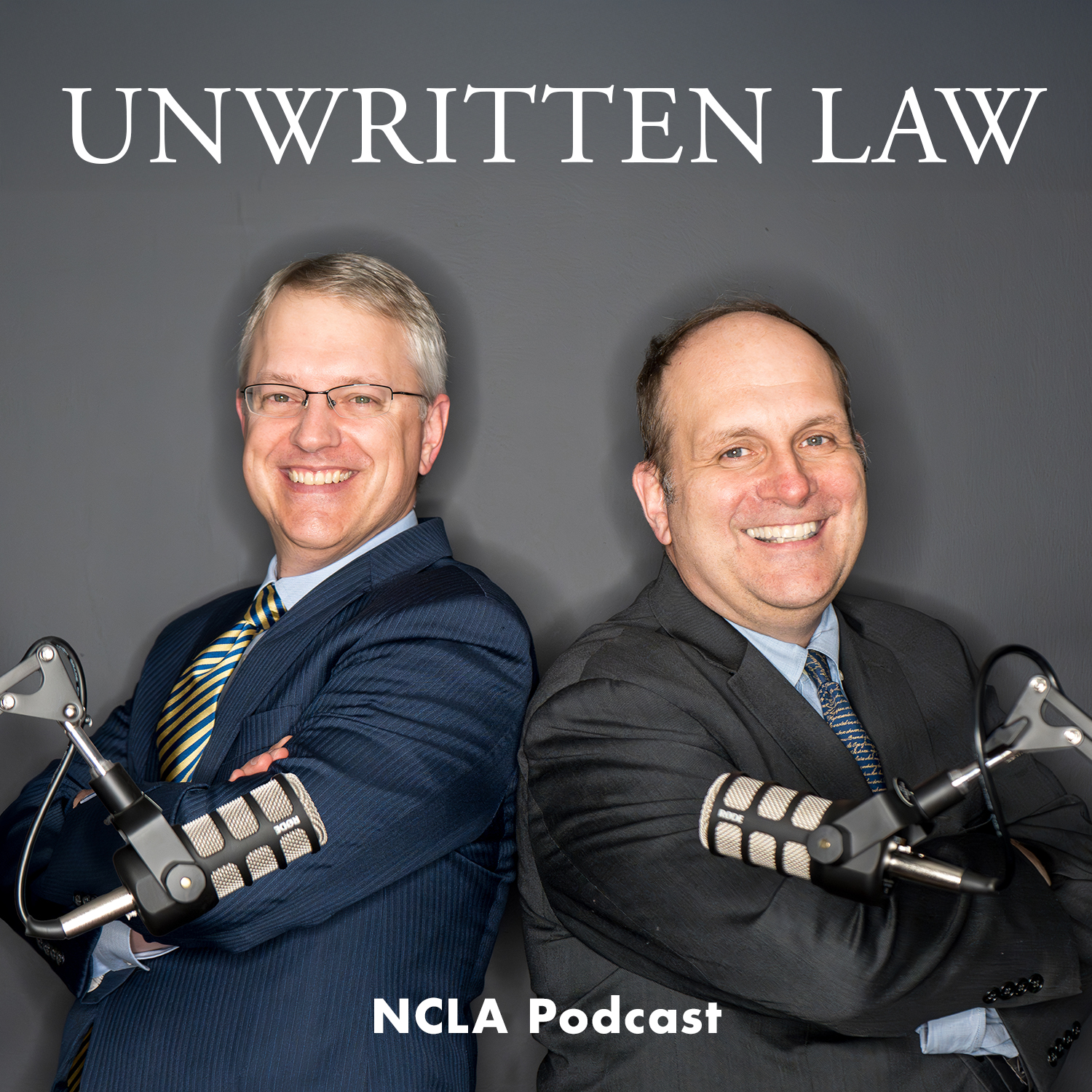
A small North Dakota gas station challenged a Federal Reserve regulation that had been on the books before the business even existed. After winning a landmark Supreme Court ruling in 2024, Corner Post's challenge has now resulted in another major victory. The U.S. Court of Appeals for the Eighth Circuit affirmed a lower court ruling invalidating the Federal Reserve's debit-card interchange fee cap because the agency failed to follow the limits Congress established. On this episode of Unwritten Law, Mark Chenoweth and John Vecchione welcome NCLA Senior Litigation Counsel Kara Rollins to discuss the latest development in Corner Post v. Board of Governors of the Federal Reserve System. They explain how debit-card transaction fees work, why the Federal Reserve exceeded its statutory authority, and how the Supreme Court's decisions in Corner Post and Loper Bright are reshaping challenges to federal regulations. The discussion also examines a troubling trend: After the Supreme Court overturned Chevron deference, federal agencies have increasingly defended their regulatory authority by claiming broad discretion instead. The central principle is simple: Congress writes the laws. Agencies must follow them.
Episode information is provided by the publisher. Listening takes place on the publisher’s service.
November 22, 2026 Trump is trying to block federal contractors from talking to Congress, citing executive privilege, Until 1974, fights over documents and testimony were managed through negotiations, During the Nixon administration, that changed, Special prosecutor Leon Jaworski obtained a subpoena for materials concerning the Watergate break-in and coverup, and Nixon’s lawyer moved to quash the subpoena on grounds of executive privilege, United States v Nixon went to the Supreme Court, and the justices agreed that the courts must give “the utmost deference” to claims of executive privilege but that the president does not have a general right to secrecy, Nixon released the subpoenaed tapes, and then resigned to avoid impeachment, Congress passed a law stipulating that materials related to Watergate would be retained by the National Archives and Records Administration and four years later Congress passed the Presidential Records Act, shifting ownership of official records from the offic
How To Never Lose Money: The Most Important Rule In Investing | Jim Rohn Motivation Wealth isn’t just about making money—it’s about learning how not to lose it. In this eye-opening Jim Rohn motivational video, you’ll discover the golden principle of smart investing and financial growth: protecting what you’ve earned. Uploaded 20-10-25 Jim Rohn shares the timeless rule that every successful investor lives by—preservation before expansion. Before you think about getting rich, you must master how to manage, protect, and grow your money wisely. This lesson isn’t just about finances—it’s about developing the mindset of discipline, patience, and long-term thinking that builds lasting wealth. In this video, you’ll learn: The most important rule in investing that every successful person follows. How to protect your wealth from poor decisions and emotional spending. Why financial discipline is more valuable than financial opportunity. The difference between smart investing and risky gambling. H
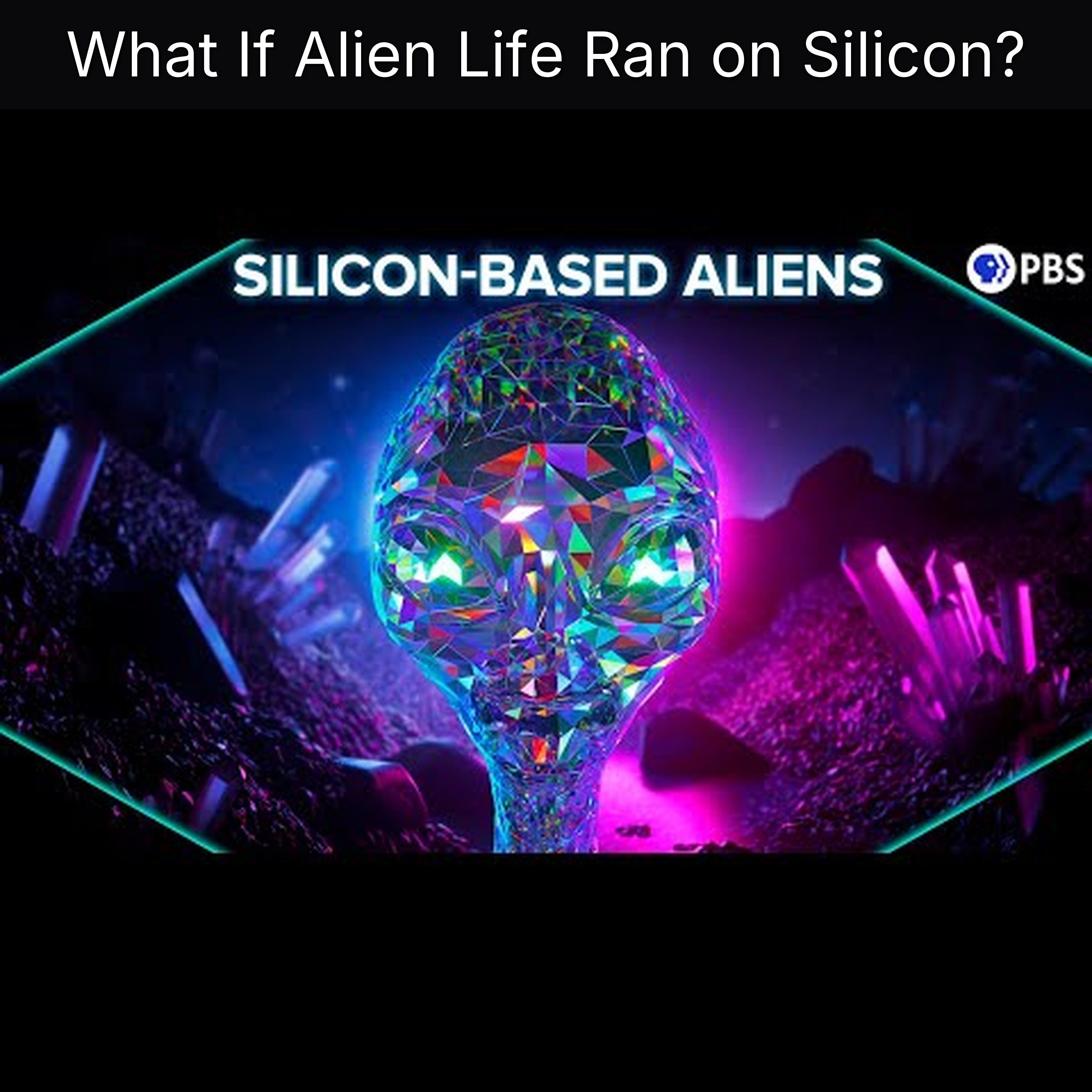
Thank you to Brilliant for Supporting PBS. To learn more go to https://brilliant.org/SpaceTime/ PBS Member Stations rely on viewers like you. To support your local station, go to:http://to.pbs.org/DonateSPACE Sign Up on Patreon to get access to the Space Time Discord! Life as we know it is carbon-based, but does it have to be this way? There’s another element on the periodic table that shares some of the key properties of carbon but is far more abundant on most planets. I’m talking about silicon. So is there silicon-based life out there? Check out the Space Time Merch Store Sign up for the mailing list to get episode notifications and hear special announcements! Search the Entire Space Time Library Here: https://search.pbsspacetime.com/ Hosted by Matt O'Dowd Written by Fernando Franco Félix & Matt O'Dowd Post Production by Leonardo Scholzer, Yago Ballarini & Stephanie Faria Directed by Andrew Kornhaber Associate Producer: Bahar Gholipour Executive Producers: Eric Brown & Andrew Kornhab
Rep. Eli Crane (R-AZ) joins John Solomon to deliver a warning to Republican leadership following the GOP's midterm election losses, arguing that Congress failed to deliver on key elements of President Donald Trump's agenda. Crane takes aim at Senate inaction, discusses the hundreds of House-passed bills awaiting consideration, and weighs in on the party's future under Jim Jordan's leadership. He also raises concerns about the recent wave of technology and infrastructure outages across the country, questioning whether aging systems, government incompetence, or potential cybersecurity threats are responsible. Later, celebrity chef Andrew Gruel joins the show to share his secrets for preparing healthier, affordable meals without spending hours in the kitchen. The host of American Gravy offers practical Thanksgiving cooking tips, budget-friendly alternatives to traditional turkey, and simple kitchen essentials that can make holiday meal preparation easier. Plus, Capsiva co-founder and CEO
Nvidia's board has reinstated Jensen Huang as CEO, days after saying it had no plans to bring him back. It comes as a wave of confirmed cyberattacks hits the federal government, with President Trump saying the FBI's national crime database was targeted and the USDA hit by a breach. Tim breaks down why Huang's return is tied to the cyber war, plays Palmer Luckey's warning that everyone should keep three days of supplies, and debates Luckey's argument for selling American chips to China. YouTube is changing how it counts views again. Public view counts will now include estimated "co-views," meaning everyone presumed to be watching on a TV, not just the one device. Tim argues the change shows YouTube is desperate to look bigger as AI slop floods the platform, explains how brand deals and ad sales really work, and says inflated TV numbers could make it harder for new creators while reshaping what content gets made, and possibly spelling the end for cable news. BUY CAST BREW COFFEE TO FIGHT
Apply for Business Mastery: Apply for Business Mastery: https://tonyr.co/4cB5IkU | Sarah Foley remembers the accident: She was steering her four-wheeler around a curve when she saw her boyfriend’s identical vehicle heading right toward her. She jerked the wheel to the side. Uploaded 03-12-21 The accident left her paralyzed from the waist down. While frustrated with her new circumstances, Sarah was determined to forge ahead. Today, she’s passionate about fitness and is driven to empower other women who use wheelchairs to feel good in their bodies and have access to fitness courses. But at Business Mastery with Tony Robbins, Sarah asked Tony along with ClassPass founder Payal Kadakia, and Dave Dahl, co-founder of Dave’s Killer Bread – what it takes to “get in the room.” If you want to reach the ranks of entrepreneurs like Tony, Payal, and Dave and grow your business into the millions, watch the video now to hear their compelling answers! If you’re a business owner now or want to be one i
Can New York punish someone for an inaccurate business statement even when no one was deceived, no one relied on it, and no one suffered a financial loss? That's the First Amendment issue NCLA is raising in the New York civil fraud case against President Donald Trump. NCLA has submitted an amicus brief to New York's highest court challenging the constitutionality of Executive Law § 63(12), a sweeping statute that NCLA argues allows the state attorney general to punish mere inaccuracies without proving the traditional elements of fraud, including intent to deceive, reliance, and harm. On this episode of Unwritten Law, Mark Chenoweth and John Vecchione welcome NCLA Senior Litigation Counsel Caitlin Moyna, who authored the brief, to explain why the law poses a threat to free speech far beyond this particular dispute. They discuss the enormous financial penalty originally imposed against Trump, the intermediate appellate court's decision to strike down that monetary award, and the danger o
Synthetic images and videos should carry clear labels when presented as real events.
Share your view, then see how readers voted. No sign-in required. This poll is shared across stories.
Do you agree or disagree?
Common Quandary
A Common Quandary to discuss
Another conversation to explore, separate from this news story.
The mayor is excellent at the job—and secretly cheating on a spouse. Is that news?
A local official is effective, honest in office, and privately having an affair. A journalist can verify it but finds no misuse of public resources or direct connection to official duties.
Does private dishonesty reveal something citizens are entitled to judge?