Listen through the publisher, then discuss the episode here or arrange an in-person Roundtable. Your city determines where to meet.
Roundtables are designed for groups of four, with a shared subject and room for everyone to speak. Come for discussion, with no dating expectation.
View full lesson: http://ed.ted.com/lessons/could-your-brain-repair-itself-ralitsa-petrova Uploaded 27-04-15 Imagine the brain could reboot, updating its damaged cells with new, improved units. That may sound like science fiction — but it’s a potential reality scientists are investigating right now. Ralitsa Petrova details the science behind neurogenesis and explains how we might harness it to reverse diseases like Alzheimer’s and Parkinson’s. Lesson by Ralitsa Petrova, animation by Artrake Studio.
Episode information is provided by the publisher. Listening takes place on the publisher’s service.
Access the masterclass instantly for free: https://nci.university/learn Uploaded 10-01-26 Your goals don’t fail because you lack discipline — they fail because they were aimed at the wrong system. Optimizing behavior without fixing brain chemistry is like issuing commands to a damaged machine. Until the chemical environment is right, effort just increases friction and burnout. All goals live in the conscious mind — but control does not. Real behavior is governed by the mammalian brain, the ancient systems that decide safety, threat, and energy allocation. Every resolution collapses when those lower systems detect risk, even if you consciously “want” the outcome. Goal-setting ignores this hierarchy — and that’s why it keeps failing. Once you target the parts of the brain actually in charge, change stops feeling like force. Discipline becomes unnecessary when the system itself is aligned. Please note that the content provided in this broadcast is for informational and educational purpose
I know it sounds like an exaggeration. It sounds like the kind of thing a man says to sound wise. But I have tested it against the lives of people who succeeded and people who struggled, and the pattern is so consistent it stopped surprising me a long time ago. Uploaded 23-08-26 The ones who built something lasting almost all had a grip on their mornings. They owned the first hour. They did not let the day happen to them. They happened to the day. And the ones who felt forever behind had lost their mornings without ever noticing they had lost them. A morning does not announce its importance. It slips by so quietly that most people never stop to ask what happened to it. And what slips away with it is the one stretch of the day when you had the clearest access to yourself. Here is the truth: whatever you give your freshest attention to, you have declared to be most important. Most people, without ever deciding to, have crowned their interruptions. This seminar unpacks the single mechanic
To check the transcript: https://www.buzzsprout.com/2379282 Imagine someone who has lived abroad for many years. One evening, they're talking to a friend about their hometown. They mention the streets they used to walk down, the familiar voices, and the little things they never thought they'd miss. Their friend asks: “Why do you get so emotional whenever you talk about your hometown? Do you want to move back?” They reply: “It's not that simple. It goes deeper than that. I miss a version of my life that doesn't exist there anymore.” Hello everyone, and welcome to Daily English. Today's expression is “It goes deeper than that.” We use this expression when something is more complicated, meaningful, or emotionally significant than it first appears. In other words, there's something beneath the surface that people might not immediately recognize. In our opening example, the person isn't necessarily longing to return to their hometown. What they miss might be their childhood, the people they
Today, Mel is doing something she's never done before on The Mel Robbins Podcast. She's bringing members of her team into the studio for live coaching with world-renowned communications expert Vinh Giang. Vinh is known for teaching millions of people online how to stop sounding insecure, speak more clearly, and get people to listen when you talk. And when you hear him coaching today, it will be like he’s coaching you. One person freezes when they're put on the spot. Another can't stop interrupting people. Someone else has great ideas but stays quiet because they're afraid of being judged. Does any of that sound familiar? And Vinh isn't just giving advice. He's coaching real people through practical exercises, right there in the studio, so you can hear the difference and start making those same changes in your own life. As Mel says, put yourself in their shoes. As Vinh works with each person, you'll recognize things you struggle with, too. You'll learn: -What to do when your mind goes b
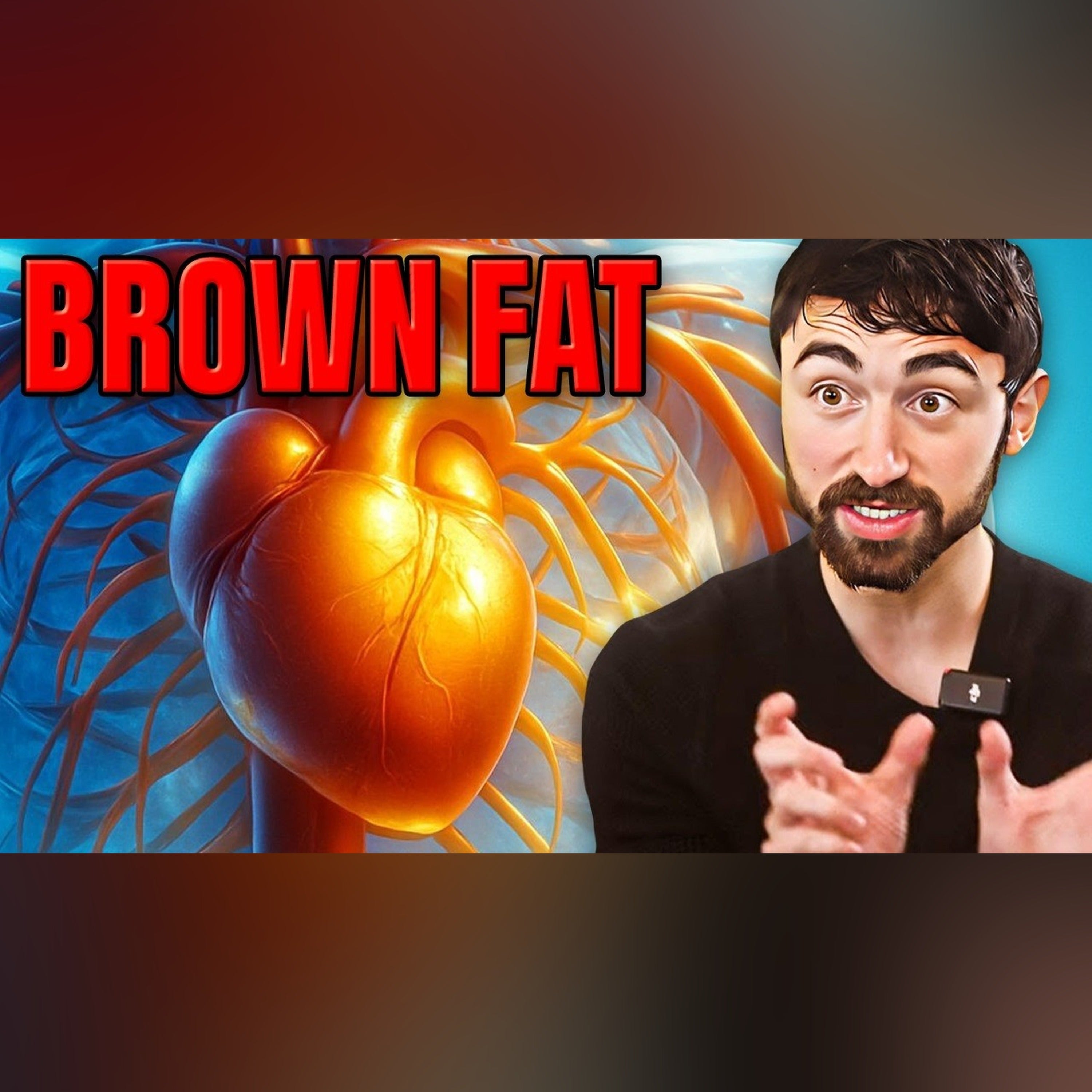
For all references and a written breakdown, see the associated StayCurious Metabolism Newsletter: https://staycuriousmetabolism.substack.com/p/the-fat-derived-hormone-that-could?r=40ekz2 Exciting new research in 2025 suggests that a fat-derived hormone called 12,13-diHOME may help to reverse age-related decline in cardiac function and slowing heart aging. The best part? You can boost it naturally — not with drugs or supplements, but with a simple lifestyle intervention that’s accessible today. In this video, we break down the latest metabolic health and longevity science on how this lipid hormone made by brown fat cells declines with age, how that hormonal drop contributes to cardiovascular aging, and what evidence-based lifestyle interventions can increase 12,13-diHOME to more youthful levels. If you care about heart health, reversing aging, and boosting metabolic resilience, this is essential science you should know. CHAPTER *Call our service line at 815-STAY-CUR (815-782-9287) or vi
For most of her life, Emily Mayles, tonight's guest, felt right at home in the woods of southeastern Ohio. Whether she was mushroom hunting, digging ginseng, or simply enjoying the outdoors, being surrounded by nature was something she loved. That all changed after a series of terrifying experiences convinced her that something enormous and mysterious was lurking in the forests near her home. Emily's first frightening experience happened in March of 2020, when an unbelievably powerful scream erupted from the woods behind her house. The sound was so terrifying that she found herself practically paralyzed with fear. Years later, she and her husband heard something equally disturbing while standing on their back deck. This time, however, the sounds seemed to be coming from multiple locations. As frightening as those experiences were, neither could have prepared Emily for what she would witness on the Fourth of July, while riding through the Ohio countryside on the back of her husband's mo
Damon Horowitz reviews the enormous new powers that technology gives us: to know more -- and more about each other -- than ever before. Drawing the audience into a philosophical discussion, Horowitz invites us to pay new attention to the basic philosophy -- the ethical principles -- behind the burst of invention remaking our world. Where's the moral operating system that allows us to make sense of it? (Filmed at TEDxSiliconValley.) Uploaded 08-08-13 Talk by Damon Horowitz.
View full lesson: http://ed.ted.com/lessons/how-to-defeat-a-dragon-with-math-garth-sundem Having trouble remembering the order of operations? Let's raise the stakes a little bit. What if the future of your (theoretical) kingdom depended on it? Garth Sundem creates a world in which PEMDAS is the hero but only heroic when in the proper order. Lesson by Garth Sundem, animation by Mark Phillips.
View full lesson: http://ed.ted.com/lessons/the-secret-lives-of-baby-fish-amy-mcdermott Uploaded 11-08-14 Coral reef fish, like the yellow tang surgeonfish, begin life in a fascinating and weird way – as tiny floating larvae! These babies are capable of drifting thousands of miles on ocean currents, far from the reefs where they were born. Amy McDermott describes how these tiny trekkers travel across vast oceans, searching for the far-flung reefs they will one day call home. Lesson by Amy McDermott, animation by Reflective Films.
Research announcements should give uncertainty as much attention as promising findings.
Share your view, then see how readers voted. No sign-in required. This poll is shared across stories.
Do you agree or disagree?
Common Quandary
A Common Quandary to discuss
Another conversation to explore, separate from this news story.
You both hate the invitation. Which partner has to become the excuse?
A couple receives an invitation neither wants to accept. One suggests claiming the other is ill, reasoning that friends will question a vague excuse but respect sickness. The proposed patient dislikes lying but also wants to stay home.
Is a shared lie fair when only one person's reputation carries it?