Listen through the publisher, then discuss the episode here or arrange an in-person Roundtable. Your city determines where to meet.
Roundtables are designed for groups of four, with a shared subject and room for everyone to speak. Come for discussion, with no dating expectation.
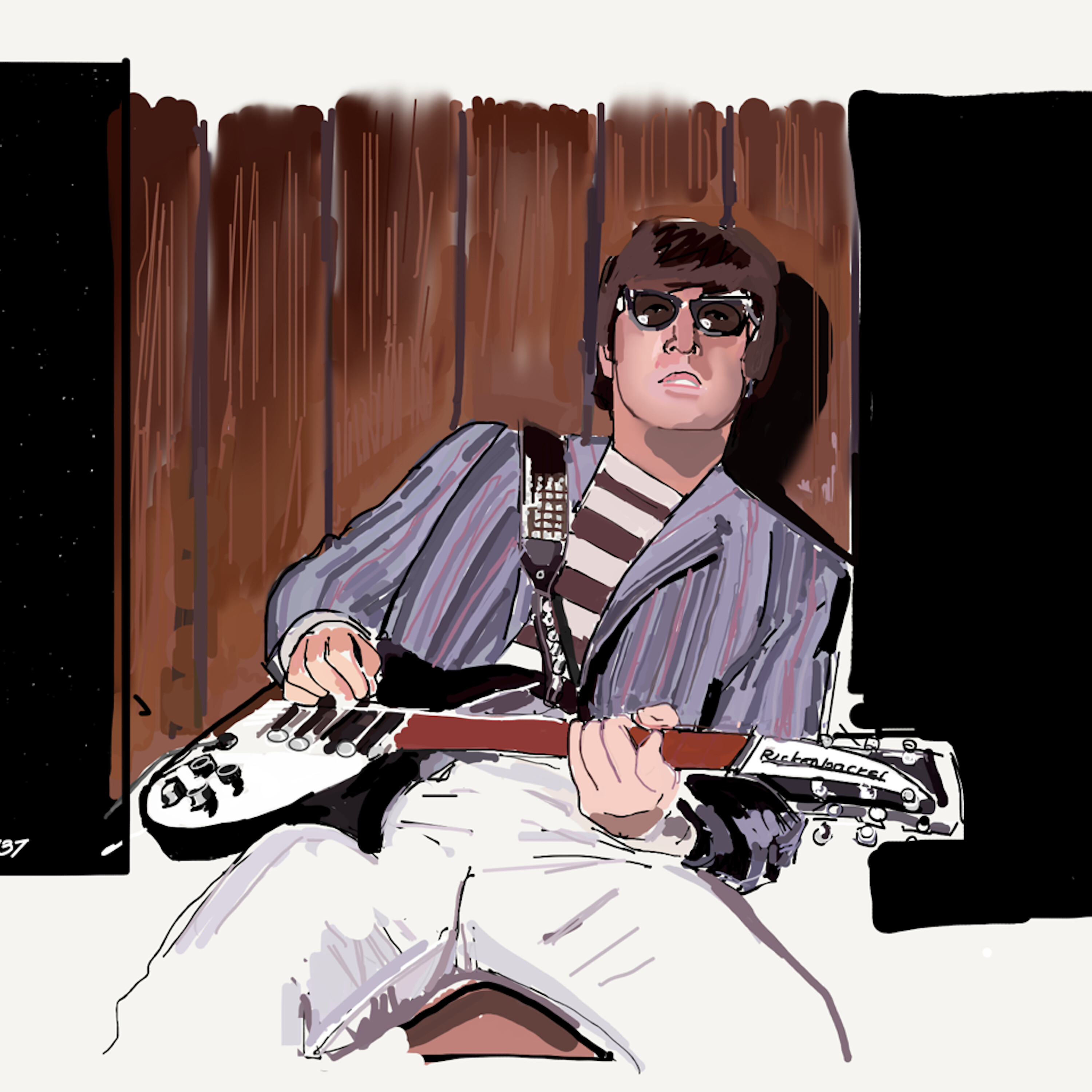
In this Beatles lecture series, we look at the music and lyrics of Day Tripper. Lennon uses ambiguous language to give overlapping meanings. Musically, the song begins with familiar blues gestures before taking a series of harmonic detours on its way home. The instrumental middle section builds tension by layering a repeating riff, rising guitar and vocal lines, and a sustained bass note over a prolonged dominant chord. Throughout, we trace how a few recurring gestures connect the riff, melody, refrain, and outro, giving the song a strong internal unity even as its harmony moves in unexpected directions. Instagram: https://www.instagram.com/notebynoteseries Hosted on Acast.
Episode information is provided by the publisher. Listening takes place on the publisher’s service.
Is John Lennon the peace-loving saint in the white suit, or the villain some social media posts make him out to be? Biographer Jude Southerland Kessler says neither: "He's just a person." In Episode 336 of Something About The Beatles, host Robert Rodriguez talks with Jude about The John Lennon Series. She planned one book. It is now nine, probably ten, and she footnotes nearly every sentence. They cover why she tells John's life as narrative nonfiction, how she settles conflicting Beatles accounts, and what really happened with the Maureen Cleve interview in 1966. They also look at why John spun yarns about his own past, and how his tragedies turned into the songs that changed our lives. In this episode: • Why one planned book became nine, and the question that keeps it growing: "What day would you leave out?" • How John wrote I'm Only Sleeping on the back of an overdue car-phone bill • The ADT myth: why Jude left it out of her Tomorrow Never Knows chapter • Sweater or blanket? Even on
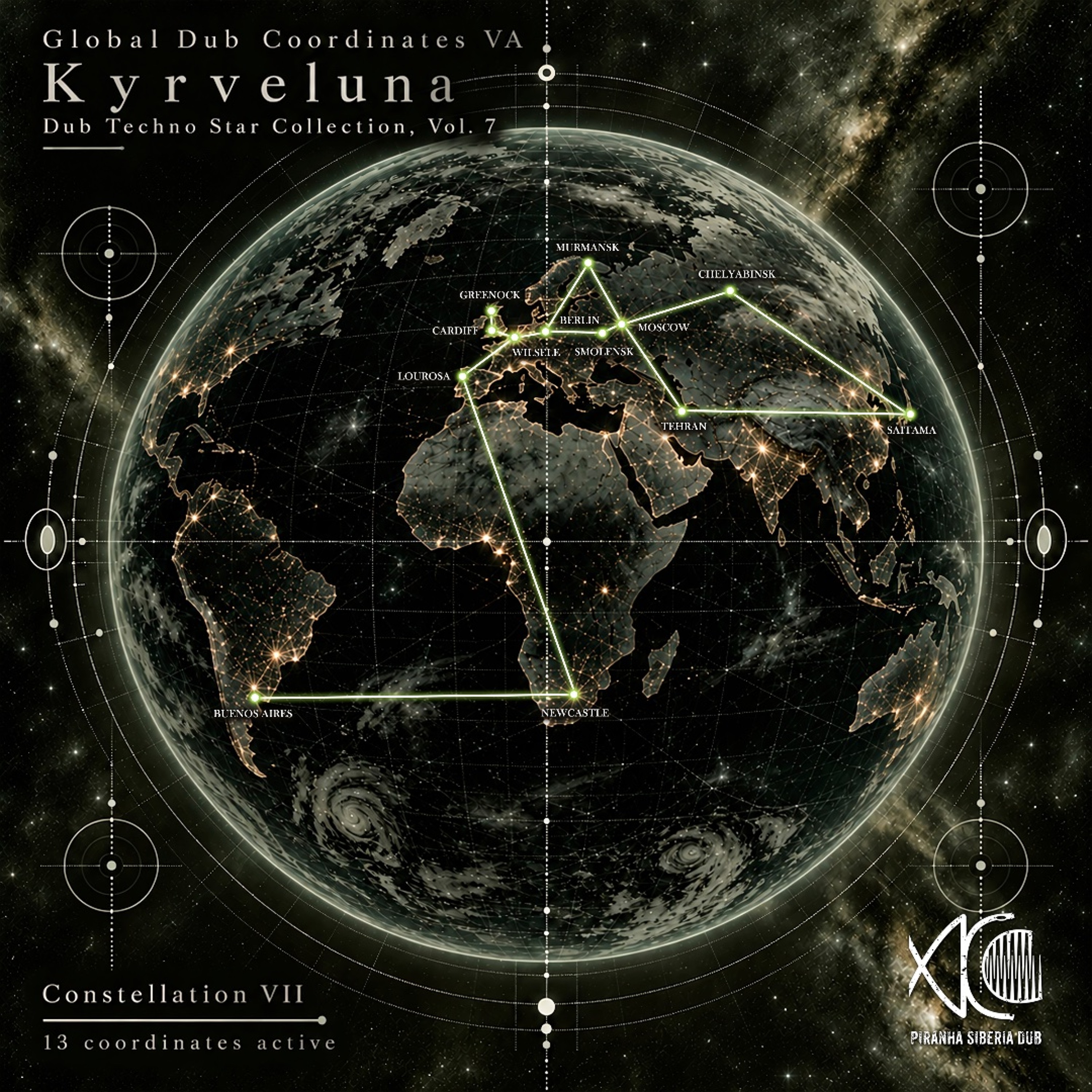
[PIRANHA SIBERIA DUB] is tremendously pleased to present the 120th release — Global Dub Coordinates VA: Kyrveluna Dub Techno Star Collection, Vol. 7 The seventh constellation of Global Dub Coordinates is called Kyrveluna. Thirteen more coordinates continue to assemble the global map of the series — from South Africa, Belgium, and Argentina to Wales, Russia, Portugal, Iran, Germany, and Japan. But in Kyrveluna, geography increasingly begins to function as a system of signs: an ancient temple becomes a personal memory, a house number turns into a recurring code throughout an entire life, a thunderstorm becomes part of a recording, and ordinary weather can completely alter the perception of a familiar city. Here, the map no longer simply shows where a person is — it begins to preserve coincidences, routes, symbols, and traces that cannot be explained by coordinates alone. :::Sergio Sincopa (@sergiosincopa) — 7 comes from Moscow, Russia, and turns a single number into a personal code runni
P1Harmony are back on the couch for the fourth time! Keeho, Theo, Jiung, Intak, Soul and Jongseob join us discuss their latest release, ‘MOMENTUM,’ the success of their last EP ‘UNIQUE,’ and how seven years of hard work, patience and consistency have paid off. They get into experimenting with electronic music, drawing inspiration from Nelly Furtado, Frost Children and Tiffany Day, writing their own lyrics, and why love songs have never really been their thing. They also talk about the ongoing superhero storyline connecting their albums, Theo's ambitious Horror Haven project, reinventing Rain's “Hip Song,” and embracing their sexier side onstage. And, of course, there's plenty of P1Harmony lore: a Princess Theo update, Soul's unforgettable pink-suited performance, their individual fashion choices, collecting live bugs, sleep-talking, tiny heads, and whether Intak really saved someone's life. "BLOW UP" ►►https://youtu.be/pdqij5LE7Hc?si=eJBTNhNM6GzVofUP
Ken Womack lectures and writes about the Beatles and his latest (with Scott Freiman) dismantles every track they released up to 1966 to work out the recording process and the instruments used. It’s a labour of love and, at times, detective work. He talks here from his guitar-stacked room in New Jersey about ‘The Beatles’ Touring Era’ and what he learnt from writing it. High in the mix … … the value of the ‘secret weapons’ George Martin, Ken Scott, Norman Smith and Mal Evans and the fact that EMI owned the building … the forces that had to be aligned to make those records work and why “the odds were off the chart” … how George Harrison transformed And I Love Her, She Loves You and Nowhere Man … Dylan’s reaction when they played him Tomorrow Never Knows and how “he changed their art forever” … what 18 year-olds see in the Beatles … ‘banger moments’ on Long Tall Sally, This Boy, Baby’s In Black and She Loves You … the celeste on Baby It’s You, the ‘harpsichord’ on In My Life and the glori
Owen Ramsingh first came to the U.S. from the Netherlands when he was a kid and was a legal green-card holder for decades. But in February of 2026, a felony drug-dealing offense on Owen’s record from when he was 16 flashed up when he was reentering the country from a trip abroad. He was arrested, detained for months, and eventually deported. This week on the show, Owen talks about the life he’d built in the States, the poor conditions he endured in immigration detention, and having to live apart from his American kids while his wife moves back and forth. He also talks about how he eventually landed in Mexico and is piecing together a new life there with the support of his family and community in Columbia, Missouri. We first heard about Owen from reporter Addison Zanger, from a story she reported for NPR (https://www.npr.org/2026/05/05/nx-s1-5805229/detained-and-deported-a-missouri-man-must-make-a-new-life-in-the-netherlands) last summer. We also hear from Elora Mukherjee (https://www.l
Myf is dying to talk about You Can See Everything, the three-hour documentary from Nathan Fielder and Lance Oppenheim, so she brings in someone who can see what she couldn’t: writer Sarah Krasnostein, author of The Mushroom Tapes, The Trauma Cleaner and The Believer. They unpack the 30 days with Elizabeth Holmes before prison, why we’re so fascinated (and so quick to laugh) at women who commit crimes, and where the line sits between fact and fiction. Fair warning: spoilers ahead. Guest: Sarah Krasnostein Author of The Mushroom Tapes, The Trauma Cleaner and The Believer Insta - @sarahkwrites Website - sarahkrasnostein.com (http://sarahkrasnostein.com/) Chapters 0:00 You Can See Everything review: why Myf couldn't look away 3:04 Why are we fascinated by women who commit crimes? 5:02 Elizabeth Holmes and the "narcissist's vacation" 6:45 Nathan Fielder's career: Nathan For You to The Rehearsal 8:39 Why the three-hour runtime works 11:50 Elizabeth Holmes, neurodiversity and guilt 17:48 Spoi
In this Beatles lecture series, we examine the music and lyrics of Drive My Car. Beginning with a close reading of the lyrics, we explore the dialogue, word choice, double meanings, and vocal delivery to tell a story and establish character. We then turn to the music, examining how the vocal harmonies, melodic ideas, and instrumental riffs interact with the underlying chord structure. We also compare these techniques with those found in earlier Beatles songs, looking at how familiar musical ideas can be developed and combined to create something new. Instagram: https://www.instagram.com/notebynoteseries Hosted on Acast.
This time on our Beatles podcast, we're beginning Rubber Soul with Drive My Car, and Peter is taking the wheel! We change things up a little as Peter decides where the conversation goes while Kenyon supplies the research. We start with the song's comedic side, its unusual writing history, and what John and Paul were trying to accomplish. We cover: -Paul's original Golden Rings lyrics and John's contributions -Comedy songs, George Martin, Peter Sellers, and the Goons -We break down the vocal harmonies -The guitar introduction and its unusual rhythm -A new revelation about the recording process -Otis Redding's Respect and the Motown influence -The sparse arrangement, piano, cowbell, and the slide guitar solo -The complete Rubber Soul recording timeline Instagram: https://www.instagram.com/notebynoteseries Hosted on Acast.
In this Beatles lecture series, we explore the music and lyrics of We Can Work It Out. Paul’s verses frame an argument around seeing things his way, while John’s middle eight questions the value of fighting at all. We consider how these sections might represent a conversation between friends or competing thoughts within one mind. Musically, we explore how the two sections perfectly contrast with each other, and how the argument may be resolved musically by the end. Instagram: https://www.instagram.com/notebynoteseries Hosted on Acast.
Predictable working hours are more important than maximum scheduling flexibility.
Share your view, then see how readers voted. No sign-in required. This poll is shared across stories.
Do you agree or disagree?
Common Quandary
A Common Quandary to discuss
Another conversation to explore, separate from this news story.
Your friend is forty minutes late. Can the restaurant give away their chair?
A busy restaurant seats your group only after everyone arrives. One friend is forty minutes late and keeps texting that they are almost there. A couple waiting nearby could use the empty place, and the server asks your group to order without them.
How long should one person's delay control everyone else's evening?