Listen through the publisher, then discuss the episode here or arrange an in-person Roundtable. Your city determines where to meet.
Roundtables are designed for groups of four, with a shared subject and room for everyone to speak. Come for discussion, with no dating expectation.
Do the hard thing first — and the rest of the day gets better from there. Spartan Raches founder Joe De Sena returns to Better Every Shift this week (turning down Joe Rogan’s podcast to be with us, we might add) to talk all things motivation and the creature comforts that have clouded our view of accomplishment. He shares his daily routine, explains what separates quitters from finishers, and offers his best tip for getting unstuck. De Sena also breaks down what keeps people moving forward: friends who hold you accountable and having an event on the calendar, like a Spartan Race or DEKA event. Email [email protected] for information about how to get a complimentary entry for first-time Spartan racers. This episode of the Better Every Shift Podcast is sponsored by TheFireStore (https://go.lexipol.com/?target=lnk_gJwUyLzy5fzELcZZ). Learn more about getting the gear you need at prices you can afford by visiting TheFireStore (https://go.lexipol.com/?target=lnk_gJwUyLzy5fzELcZZ). Enjoying the show? Email [email protected] to share feedback.
Episode information is provided by the publisher. Listening takes place on the publisher’s service.
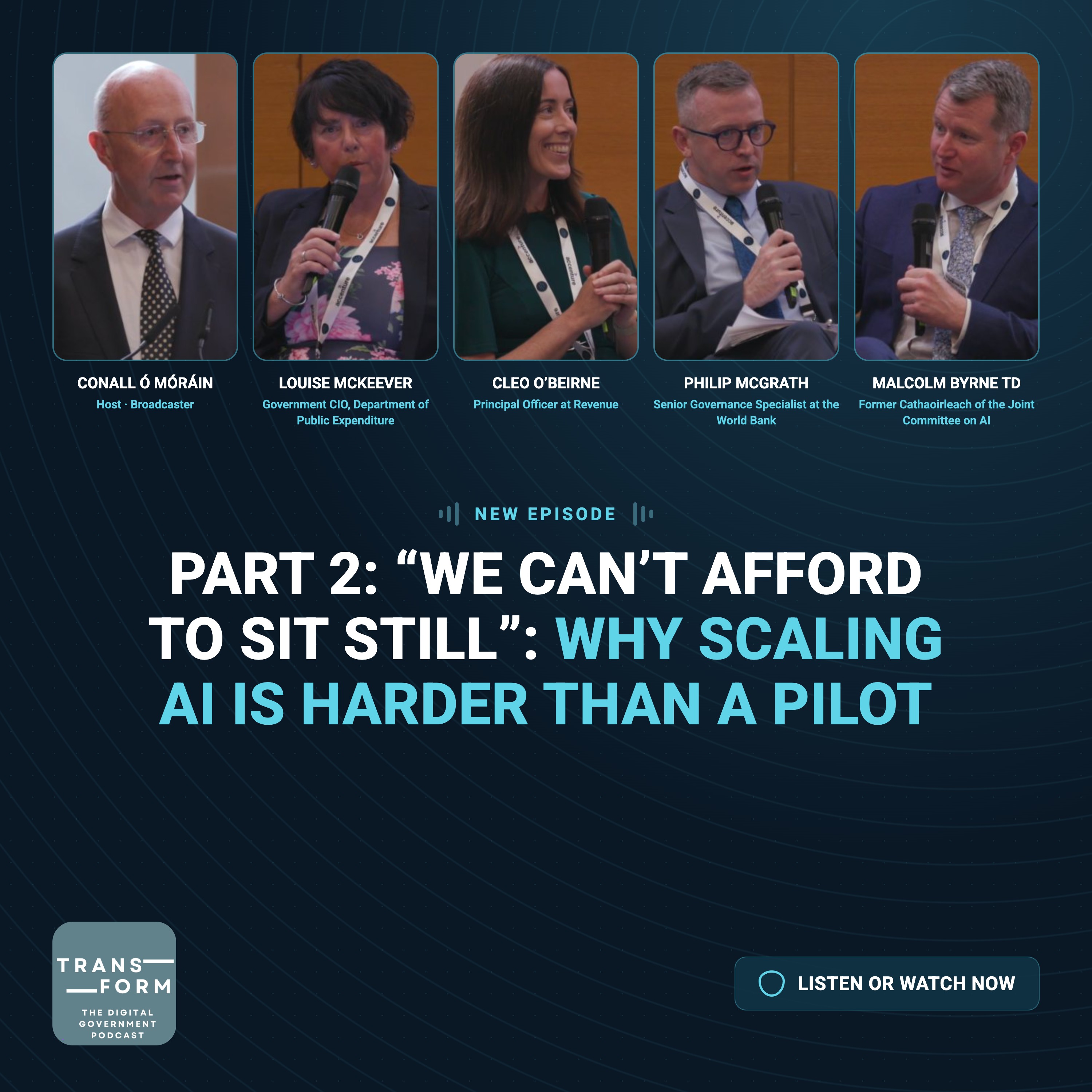
The pilot worked. Now what? In Part 2 of this panel discussion, four leaders explain how they're taking AI from pilot to scale, and what it takes to get data and governance right. This panel discussion took place at the Ireland eGovernment Awards and Leadership Summit 2026 on 24 September 2026 at UCD's O'Reilly Hall. We bring together Louise McKeever, Government CIO; Cleo O'Beirne, Principal Officer at Revenue; Philip McGrath, Senior Governance Specialist at the World Bank; and Malcolm Byrne TD, former Cathaoirleach of the Joint Committee on AI. The panel is chaired by Conall Ó Móráin. If you're taking AI beyond the pilot, here's what to do: Start small, prove it, then scale. Revenue tested agentic AI on a small application first, stage by stage. Redesign the whole process, not one stage. Individual productivity gains only go so far. Plan for lost knowledge, and recovered knowledge. As AI scales, people may know less, but AI can also capture knowledge that has already been lost. Reuse
Guest Andrew Klavan, Host, The Andrew Klavan Show Guest Bio Andrew Klavan is a bestselling crime novelist and screenwriter whose novel True Crime became a film directed by Clint Eastwood. He hosts The Andrew Klavan Show at The Daily Wire and is a contributing editor at City Journal. With his son Spencer, he writes The New Jerusalem Substack, a monthly case for human life against what they call the forces of anti-humanism. His latest Cameron Winter thriller, Find Me Nowhere, comes out in late October. Show Summary In this episode of State of Gold, host Jon Slavet sits down with the novelist and Daily Wire host to ask why so much conservative filmmaking ends up “sodden with ideology,” and why the left fights so hard to hold its cultural power. Klavan calls One Battle After Another “a piece of garbage with so much talent in it” that the talent masked it, and says the Reagan biopic turned the president into “a plaster saint.” When Rob Bonta and 11 other states sued to block the Paramount-W
Forget cyberattacks, war, politics and actual consequential news. Aaron is Outside The Wire to address something far more important: a completely unimpeachable ranking of special operations units based on quality of life. According to the internet’s most rigorous scientific methodology — allegedly involving roughly 200 million Americans, a statistic Aaron openly admits he made up — Pararescue sits at #1, Combat Control at #2 and EOD at #3. Clearly, democracy has spoken. Aaron works through the rankings from SEALs, Green Berets and Coast Guard MSRT to TACP, rescue swimmers and the 160th Night Stalkers, while explaining exactly why every unit below the Air Force clearly made catastrophic career decisions. Night Stalkers receive one of the few genuinely universal compliments because apparently the entire SOF community has collectively agreed that making fun of the 160th is unacceptable. TACP nearly scores higher but suffers the unfortunate quality-of-life penalty of having to work with th
After a week of tech chaos with flights grounded, plus outages at Microsoft, Apple, US banks, and the National Security Agency, questions continue to be asked about the cause of the disruption and whether it’s more than a series of coincidences. Now the government’s top cyber security official, Sean Cairncross, is leaving his post, with CBS reporting he was fired. Trump says these were “individual events”. But Republican Senator Josh Hawley says if it is all a coincidence, “it’s like the greatest coincidence in the history of the world”. So who’s right? In this episode, Sarah, Marianna and Anthony discuss the doubts over the official explanation, cuts to America’s cyber defences, and whether people trust what they’re being told by the White House. Plus, Sarah talks to the cybersecurity and cyberespionage expert Dmitri Alperovitch about the fall of Nvidia’s Jensen Huang and the race with China over AI chips. Are rushed fixes for problems found by AI behind the disruption? HOSTS • Sarah
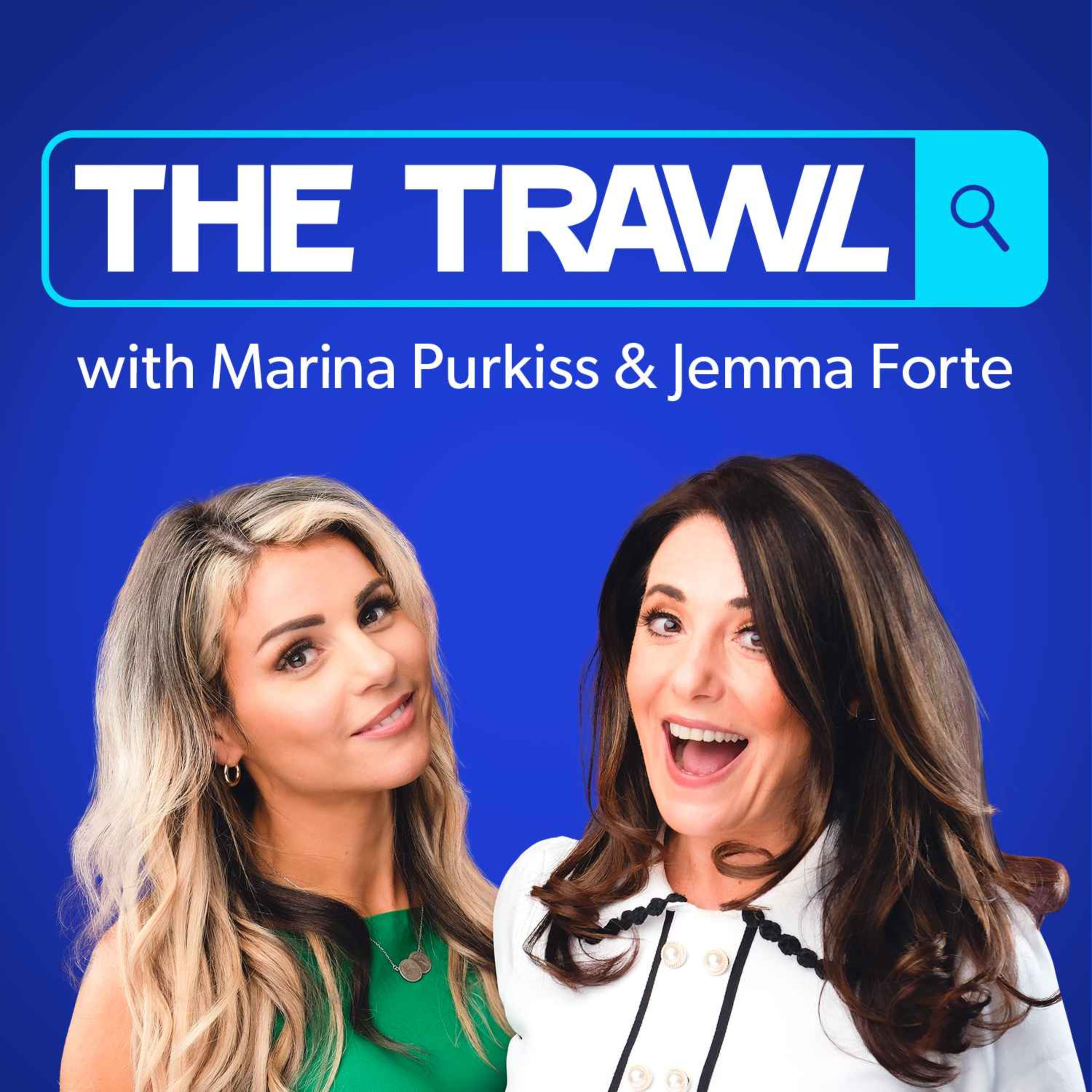
The world appears to be falling apart, and the Trawl ladies are beginning to wonder whether anyone is actually in charge. From America's air traffic control system grinding to a halt, banking glitches and our ever-growing dependence on technology, Jemma and Marina are asking what happens when the infrastructure we rely on is run by systems, and people, we can't trust. Trump's America is proving quite the masterclass in chaos. There's Transportation Secretary Sean Duffy, whose career has taken him from reality TV to running America's transport network; questions over the new AI technology, the FAA's failures and the government's handling of the crisis; and another extraordinary display of Trump's blame-shifting when things go wrong. We also look at Markwayne Mullin's rather unfortunate timing when it comes to a trip to a college football game, the questions surrounding donations to Trump's enormous new ballroom and the companies subsequently winning government contracts. Are these isola
**BREAKING MEDICARE 2027 NEWS: THE OFFICIAL NUMBERS ARE OUT! HOW MUCH MORE WILL YOU PAY?** The Centers for Medicare & Medicaid Services (CMS) has just announced the new **2027 Medicare premiums, deductibles, and hospital costs**. But what do these changes mean for YOUR Medicare coverage, your monthly expenses, and the Social Security check you actually receive? Need help with your Medicare plan? Contact our friends at Chapter Medicare: 352-841-0632 In today's video, **Dr. Ed Weir, former Social Security Administration District Manager**, breaks down the newly announced Medicare 2027 costs and explains what you need to know before the new year. Some costs are increasing. Others depend on your income, coverage choices, and the type of Medicare plan you have. And with the **December 7, 2026 Medicare Open Enrollment deadline approaching**, now is an important time to review your options. **IN THIS VIDEO, YOU'LL LEARN:** What's changing with Medicare Part B premiums in 2027. How the new Med
For years, the line has been that it takes 12 to 16 firefighters to get one down firefighter out. The survey data says most maydays are mitigated by fewer than three. Orlando Lt. Bassel Ibrahim, founder of the Firefighter Mayday Survey (https://firefightermaydaysurvey.com/), shares what 348 validated surveys are showing about radio calls, command and training — and why tactics that sound good in theory don’t always hold up on the fireground. Ibrahim makes the case for sending a full mayday message the way you’d actually talk, keeping crews on one tactical channel early and making the rapid intervention team proactive instead of reactive. Read next: What 100 firefighter maydays tell us about survival, culture and training (https://www.firerescue1.com/mayday/what-100-firefighter-maydays-tell-us-about-survival-culture-and-training) More training data: What Firefighters Want 2026: Time to train (https://www.firerescue1.com/what-firefighters-want/) This episode of the Better Every Shift pod
For years, fire research went to a file drawer at the National Fire Academy instead of the fireground. Dr. Dan Madrzykowski of UL Research Institutes’ Fire Safety Research Institute (FSRI) has spent decades closing that gap, and he tells Zam how it happened — from the computer modeling of the 1999 Cherry Road fire in Washington, D.C., to research now built with firefighters, not just for them. Madrzykowski breaks down what that work means in the updated NFPA 1700: stream choice, coordinated ventilation and search, including why the fastest rescuers in one study weren’t necessarily the youngest or fittest, just the most recently trained. He also shares what to know about lithium-ion and EV fires, starting with staying on air. It’s a practical look at how the science behind your tactics got to the street — and where it’s headed next. Also, don’t miss next week’s webinar: Putting EV fire tactics to the test (https://www.firerescue1.com/firerescue1-webinars/webinar-putting-ev-fire-tactics-
Workers should retain the right to strike even when a dispute inconveniences the public.
Share your view, then see how readers voted. No sign-in required. This poll is shared across stories.
Do you agree or disagree?
Common Quandary
A Common Quandary to discuss
Another conversation to explore, separate from this news story.
The best garden plot has been abandoned for months. Who gets to take it?
Garden plots have a three-year waiting list. One member's plot has gone untended for months and messages go unanswered, but other gardeners know they recently faced serious health problems.
How long should a shared resource remain reserved out of compassion?