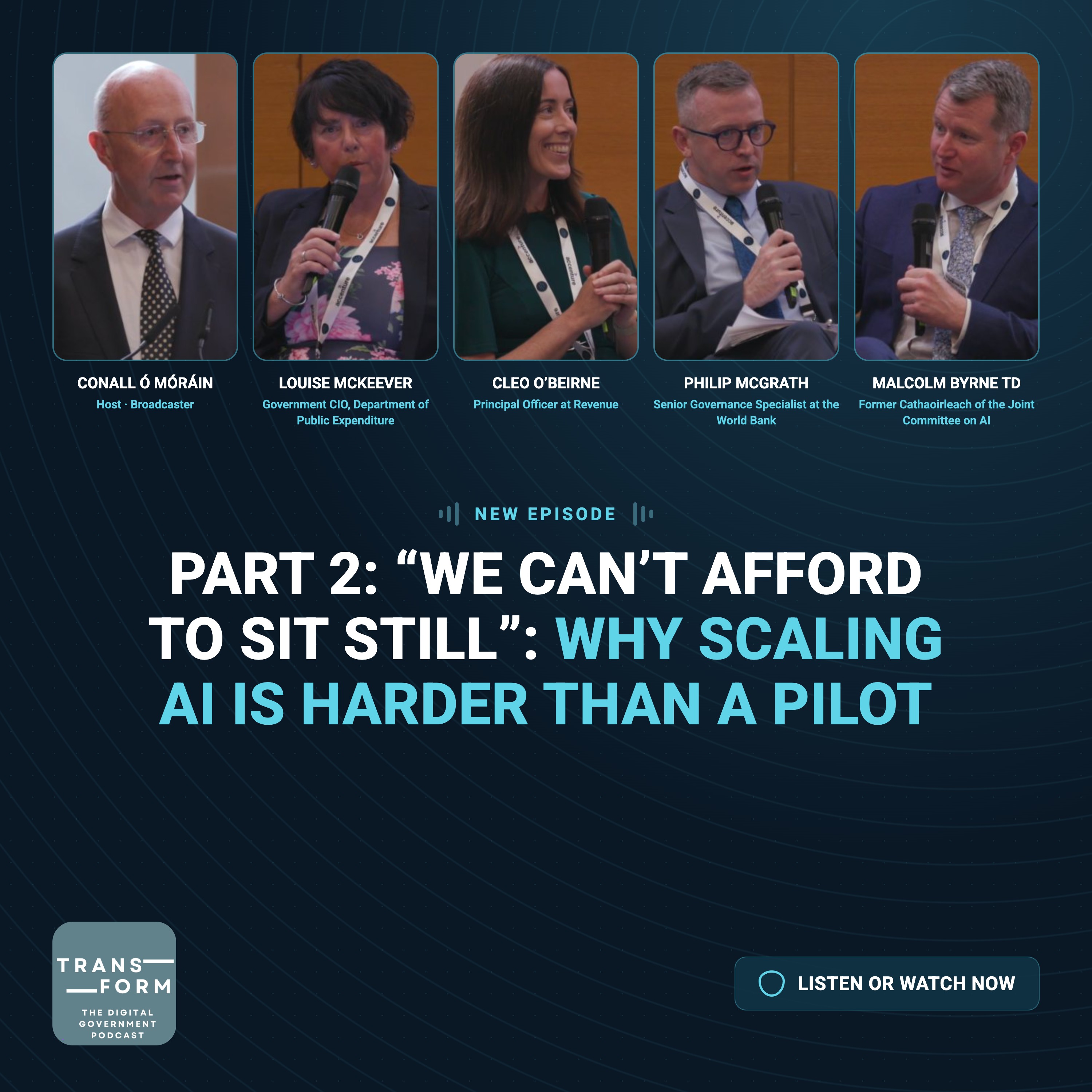
The pilot worked. Now what? In Part 2 of this panel discussion, four leaders explain how they're taking AI from pilot to scale, and what it takes to get data and governance right. This panel discussion took place at the Ireland eGovernment Awards and Leadership Summit 2026 on 24 September 2026 at UCD's O'Reilly Hall. We bring together Louise McKeever, Government CIO; Cleo O'Beirne, Principal Officer at Revenue; Philip McGrath, Senior Governance Specialist at the World Bank; and Malcolm Byrne TD, former Cathaoirleach of the Joint Committee on AI. The panel is chaired by Conall Ó Móráin. If you're taking AI beyond the pilot, here's what to do: Start small, prove it, then scale. Revenue tested agentic AI on a small application first, stage by stage. Redesign the whole process, not one stage. Individual productivity gains only go so far. Plan for lost knowledge, and recovered knowledge. As AI scales, people may know less, but AI can also capture knowledge that has already been lost. Reuse
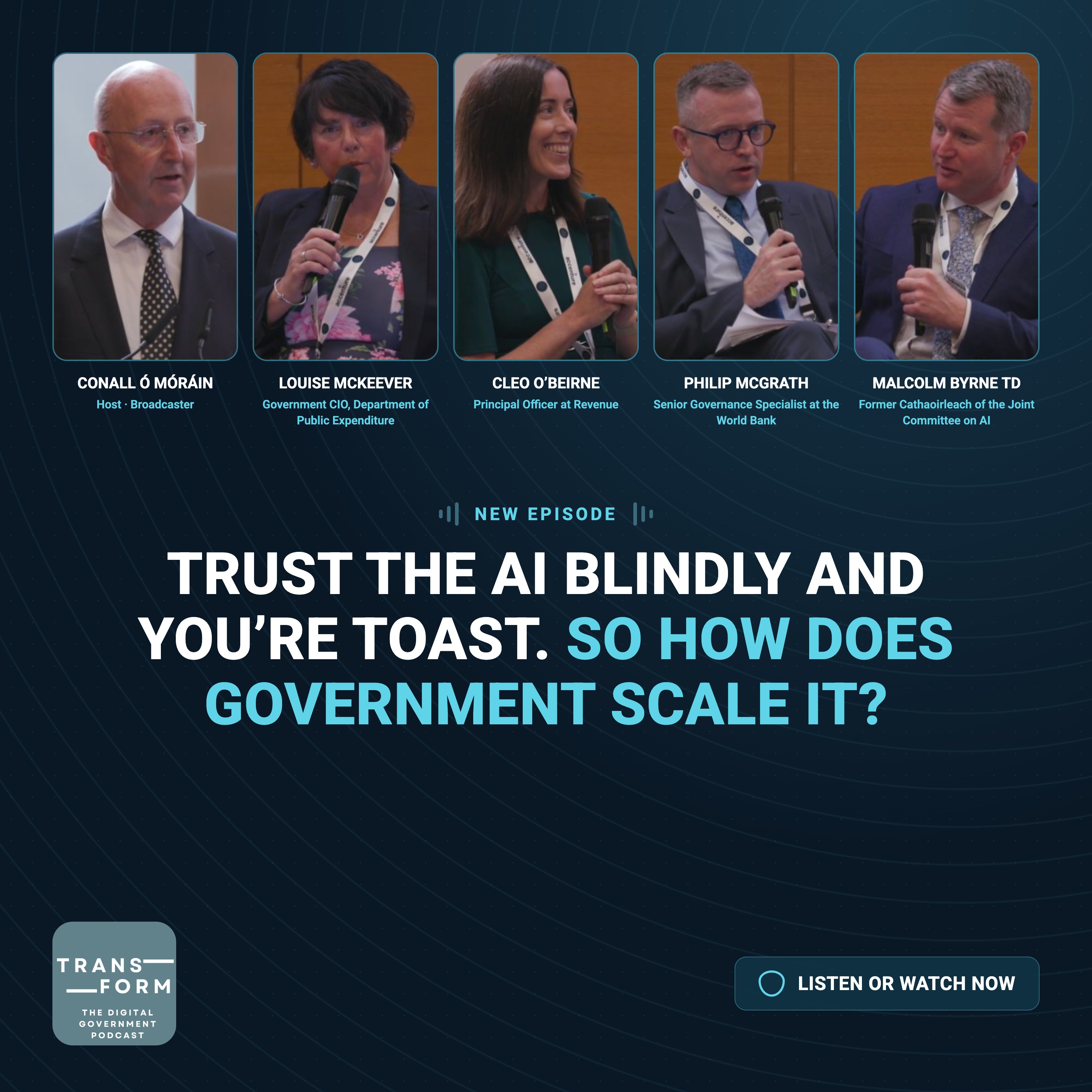
How do you scale AI across a public service without losing the public's trust? That was the burning question put to our panel, chaired by Conall Ó Móráin, at the Ireland eGovernment Awards and Leadership Summit 2026 on 24 September 2026 at UCD's O'Reilly Hall. We brought together Louise McKeever, Government CIO; Cleo O'Beirne, Principal Officer at Revenue; Philip McGrath, Senior Governance Specialist at the World Bank; and Malcolm Byrne TD, former Cathaoirleach of the Joint Committee on AI to discuss the challenges of hyperscaling AI across government departments. If you're taking AI beyond the pilot, here's what to do: Be open about where AI is used. Canada publishes algorithmic impact assessments, so the public always knows where AI is applied. Start small, prove it, then scale. Revenue tested agentic AI on a small application first, stage by stage, before looking at scaling it. Begin with lower-risk questions. Decide where AI answers and where a human takes over. Check the output ev
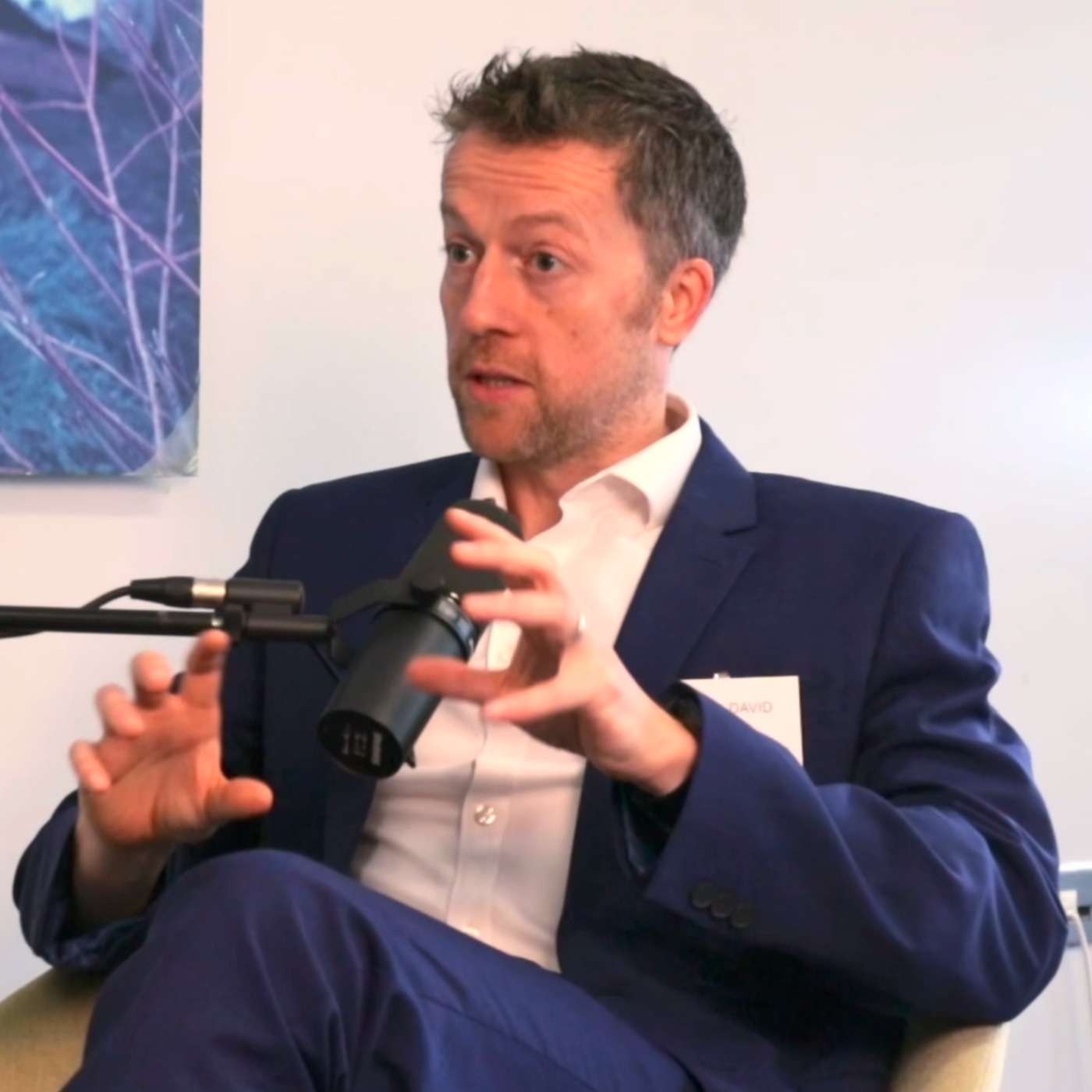
AI scribes can turn a consultation into a draft clinical record, giving clinicians more time to spend with patients. But what happens when you roll it out across the health service? In this episode, we speak to Professor David Lowe, Clinical Director of Innovation at the University of Glasgow and a consultant in emergency medicine, about what it really takes to get AI scribes working in practice. Here’s what you can learn: Treat it as a pathway change. Think about how the technology works within the pathway, and how clinicians’ consultation style has to change. Plan for consent from day one. Explain to patients that an AI scribe is in use, make it easy to opt out, and develop the conversation with patients and the public. Train people to check what looks plausible. AI scribe errors are idiosyncratic rather than predictable. Automation bias ensures a note may look fine, but not that it is correct. Start where the benefit is clearest. Short, high-volume consultations without secretarial